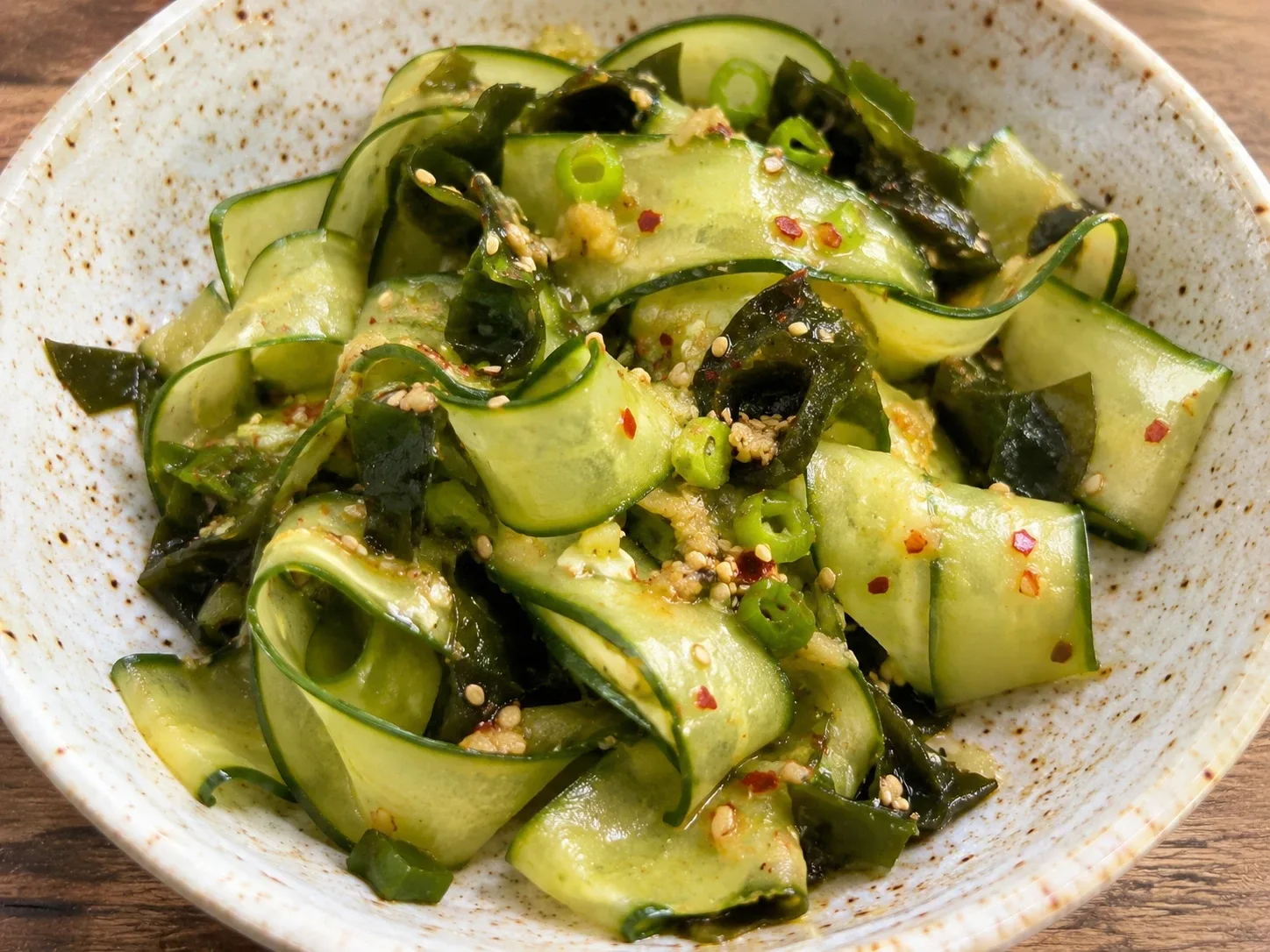
Cucumber Wakame Salad with Ginger-Sesame Dressing
A crisp, cooling Japanese salad of thinly sliced cucumber and silky wakame in a light, sweet-tart dressing with ginger and toasted sesame. It takes 15 minutes and goes with almost any summer meal.
Yield: Serves 4–6 as a side · Active: 15 min · Total: 25 min · Season: Best in North America in summer, when local cucumbers are crisp and plentiful · Best eaten: midday or early evening
Ingredients
For the salad
- 4 Persian or 2 Japanese cucumbers (about 1 lb)
- ½ tsp sea salt
- 2 tbsp dried cut wakame (it expands to about 1 cup)
- 1 tbsp toasted sesame seeds
For the dressing
- ¼ cup raw apple cider vinegar
- 2 tbsp homemade dashi or filtered water
- 1 tbsp raw honey
- 1 tsp tamari or coconut aminos
- 1 tsp finely grated fresh ginger
- Pinch of sea salt
Method
- Soak the wakame. Cover the wakame with cold water and soak 5–10 minutes, until soft and silky. Drain, squeeze out the water gently, and roughly chop any large pieces.
- Slice the cucumbers. Slice the cucumbers paper-thin, about 1/16 inch, with a mandoline or a sharp knife. If you’re using larger cucumbers, peel them in stripes first.
- Salt the cucumbers. Toss the slices with the salt in a bowl and let them sit 10 minutes. They’ll soften and release water.
- Make the dressing. Whisk the vinegar, dashi or water, honey, tamari, ginger, and a pinch of salt until the honey dissolves. If it won’t dissolve, warm the dashi first.
- Squeeze. Take a handful of cucumbers at a time and squeeze firmly to press out as much liquid as you can. This keeps the salad crisp and the dressing from getting watery.
- Dress. Toss the cucumbers and wakame with the dressing. Let it sit 5 minutes, or chill up to 30 minutes.
- Serve. Divide into small bowls with a little of the dressing, and scatter with sesame seeds.
Storage
This salad is best the day it’s made. It keeps up to 1 day in a covered glass container in the fridge, though the cucumbers soften as they sit. Keep the dressing separate if you’re making it ahead; it keeps up to 1 week in the fridge.
Variations
- Traditional dressing: Japanese sunomono is usually made with rice vinegar. I use raw apple cider vinegar to keep it grain-free, cut with a little dashi so it’s just as mild.
- With seafood: Add 4 oz cooked shrimp, crab, or thinly sliced octopus for a classic Japanese starter.
- No added sweetener: Leave out the honey and add 2 tbsp freshly grated apple to the dressing.
- Bigger seaweed salad: For a heartier side with more texture, try my Wakame Cabbage Salad with Tahini Dressing.
Season & Circadian Timing
Sunomono is a summer salad in Japan, served in small portions to cool and refresh alongside a heavier main dish. It’s made for the weeks when cucumbers are crisp and plentiful. It’s a good partner for grilled fish or chicken at lunch or an early dinner, when its tangy brightness wakes up the rest of the meal.
Nourishment Notes
- Wakame: A tender seaweed rich in iodine, magnesium, calcium, and folate, plus fucoxanthin, the pigment that gives brown seaweeds their color. A small amount goes a long way.
- Cucumbers: Hydrating and light, with potassium and a little vitamin K.
- Raw apple cider vinegar: Unfiltered vinegar with the mother adds tang and acetic acid. Vinegar with meals is a traditional practice in many cuisines.
- Ginger: Adds warmth and has a long history as a digestive aid.
- Sesame seeds: Bring calcium, magnesium, and healthy fats, plus a nutty, toasty flavor.
Sourcing
- Wakame: dried, from a brand that tests for heavy metals (Maine Coast Sea Vegetables or Eden)
- Apple cider vinegar: raw, unfiltered, with the mother (Bragg)
- Tamari: organic and wheat-free (San-J), or coconut aminos (Coconut Secret)
- Raw honey: organic, local, and unfiltered
- Sesame seeds: organic, hulled or unhulled
- Fruits, vegetables, and herbs: organic, from a farmers’ market or local farm
With Love, Light, and Health,
Anna (aka Food Marshall)
Food Marshall Approved. Grain-free, seed-oil-free and refined-sugar-free, made from organic, local and seasonal ingredients. Our standards
More Salads
Get new recipes and essays
Seasonal recipes and writing on light, circadian health, and living with nature.
Subscribe on Substack