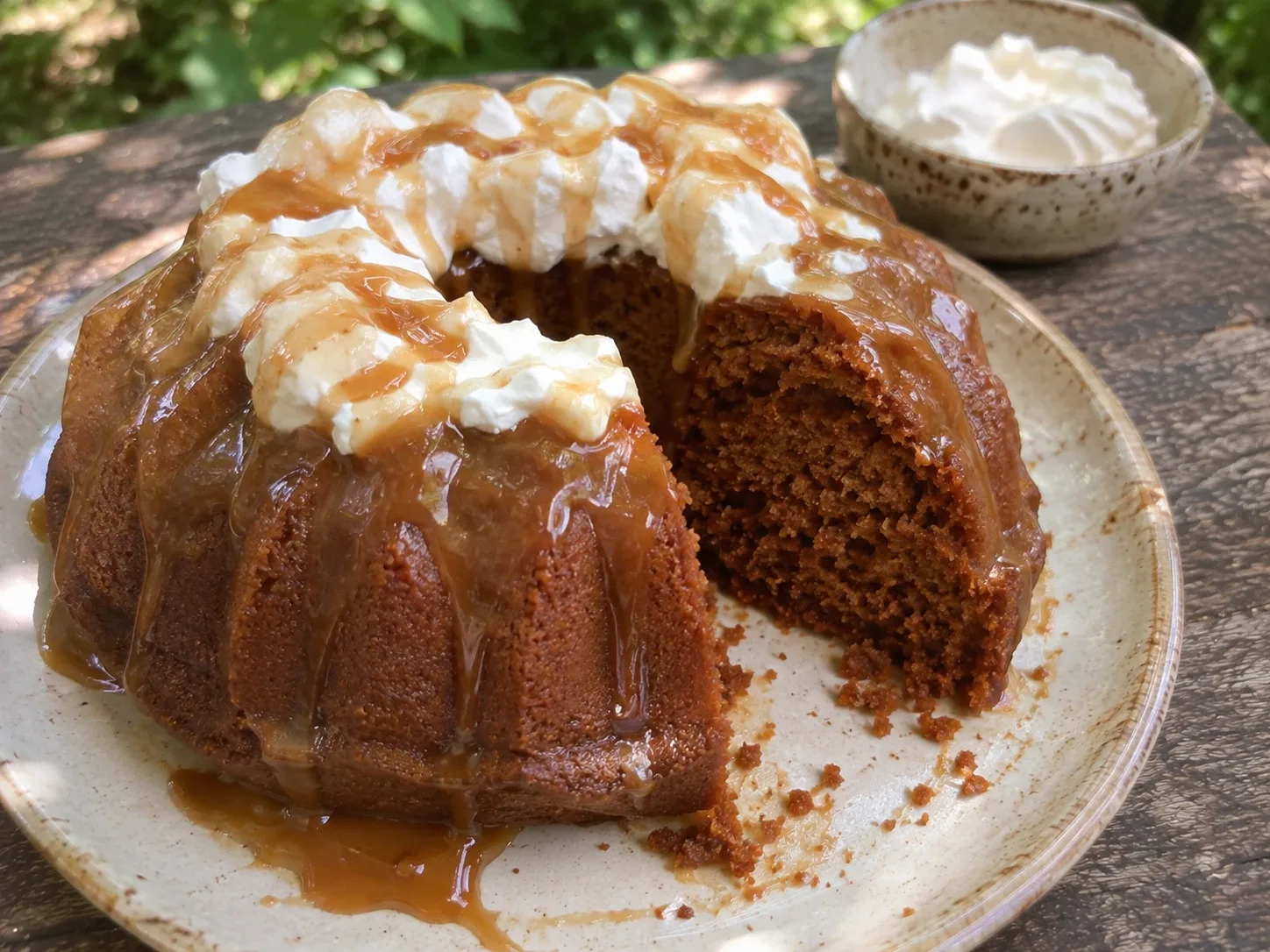
Gingerbread Pumpkin Caramel Cake
A moist pumpkin gingerbread Bundt cake made with almond flour and warm spices, drenched in a silky coconut sugar and cream caramel and served with maple whipped cream. A showstopper for Thanksgiving through the new year.
Yield: One 10-cup Bundt cake (12–14 slices) and about 1 cup caramel · Active: 35 min · Total: 2 hr 30 min (including cooling) · Season: Best in North America in fall and early winter, when pie pumpkins and winter squash are at their peak · Best eaten: afternoon
Ingredients
For the pumpkin gingerbread cake
- 2½ cups fine-ground blanched almond flour
- ⅓ cup coconut flour
- ¼ cup arrowroot
- 1½ tsp baking soda
- ½ tsp sea salt
- 1 tbsp ground ginger
- 2 tsp ground Ceylon cinnamon
- ½ tsp freshly grated nutmeg
- ¼ tsp ground cloves
- 5 pasture-raised eggs, at room temperature
- 1 cup pumpkin purée (homemade roasted, or canned)
- ½ cup pure maple syrup
- ⅓ cup coconut sugar
- ½ cup grass-fed butter, melted and slightly cooled
- 1 tbsp freshly grated ginger
- 1 tsp pure vanilla extract
- 1 tbsp raw apple cider vinegar
- Softened butter and a little arrowroot, for the pan
For the coconut sugar caramel
- ½ cup coconut sugar
- ½ cup raw or grass-fed heavy cream
- 3 tbsp grass-fed butter
- ¼ tsp sea salt
- 1 tsp pure vanilla extract
For the maple whipped cream
- 1 cup raw or grass-fed heavy cream
- 1 tbsp pure maple syrup
- Pinch of ground cinnamon
For garnish (optional)
- ⅓ cup toasted pecans, chopped
Method
- Prep the pan. Heat the oven to 350°F. Brush every ridge of a 10-cup Bundt pan generously with softened butter, then dust with arrowroot and tap out the excess. Grain-free cakes love to stick, so be thorough.
- Mix the dry. Whisk the almond flour, coconut flour, arrowroot, baking soda, salt, and ground spices.
- Mix the wet. In a large bowl, whisk the eggs, pumpkin, maple syrup, coconut sugar, melted butter, fresh ginger, vanilla, and vinegar until smooth.
- Combine. Stir the dry into the wet until no streaks remain. Rest 5 minutes, then spoon into the pan and smooth the top.
- Bake. Bake 45–55 minutes, until the cake springs back and a skewer comes out clean.
- Release. Cool in the pan exactly 15 minutes, then invert onto a rack. Too soon and it’s fragile; too long and it sticks. Cool completely, about 1 hour.
- Make the caramel. While the cake cools, combine the coconut sugar, cream, butter, and salt in a small heavy saucepan. Bring to a gentle boil over medium heat, stirring, then simmer 6–8 minutes, stirring often, until it darkens slightly and coats a spoon. Off the heat, stir in the vanilla. It thickens as it cools.
- Whip the cream. Whip the cream with the maple syrup and cinnamon to soft peaks.
- Finish. Move the cake to a platter. Spoon about half the warm (not hot) caramel over the top so it runs down the sides, and scatter with pecans. Serve slices with whipped cream and more caramel.
Storage
Refrigerate the cake, covered, up to 5 days; bring slices to room temperature before serving. Keep the caramel in a jar in the fridge up to 2 weeks and rewarm gently. Freeze the unglazed cake up to 3 months.
Variations
- Maple caramel: Replace the coconut sugar with ⅔ cup pure maple syrup and simmer 10–12 minutes, until thick and amber.
- Bourbon caramel: Stir 1 tbsp bourbon into the caramel with the vanilla. For alcohol-free, add ½ tsp extra vanilla and a pinch of cinnamon instead.
- Layer cake: Bake in two buttered, parchment-lined 8-inch rounds for 28–32 minutes, then fill and frost with the whipped cream and drizzle with caramel.
- Sweet potato or squash: Use roasted sweet potato or butternut squash purée in place of pumpkin.
- Dairy-free: Use ghee or coconut oil in the cake, make the caramel with full-fat coconut milk and coconut oil, and serve with whipped coconut cream.
Season & Circadian Timing
This is the cake I bring to the table from Thanksgiving through the darkest weeks of winter, when pumpkins from the fall harvest and warm ginger feel most at home. Serve it in the afternoon or at an early holiday dinner, rather than late at night, while there’s still some daylight and evening left to enjoy it.
Nourishment Notes
- Pumpkin — Rich in beta-carotene, which the body converts to vitamin A, plus fiber and potassium.
- Ginger — A warming root traditionally used to support digestion, here both fresh and ground.
- Pasture-raised eggs — Protein, choline, and fat-soluble vitamins A and D.
- Grass-fed butter and cream — Vitamins A and K2 and CLA, and the base of a real caramel.
- Coconut sugar — Less refined than white sugar, with a natural caramel flavor; this is a celebration cake, so enjoy it as one.
Sourcing
- Almond flour — organic and blanched (keep it in the fridge)
- Coconut flour — organic
- Tapioca / arrowroot — organic
- Pumpkin — organic pie pumpkin, roasted and puréed, or organic canned pumpkin in a BPA-free can
- Eggs — organic and pasture-raised, from a local farm (Alexandre Family Farm)
- Grass-fed butter — organic, cultured butter from 100% grass-fed cows, or raw butter from a local dairy
- Cream — raw or organic, grass-fed, low-temperature pasteurized (Kalona SuperNatural)
- Coconut sugar — organic
- Maple syrup — organic Grade A dark
- Walnuts / pecans / hazelnuts / macadamias — organic and raw; soak and dry (or sprout) for easier digestion
- Fresh ginger — organic
- Spices — organic and non-irradiated (Ceylon cinnamon from Sri Lanka)
- Salt — unrefined sea salt (Baja Gold)
With Love, Light, and Health,
Anna (aka Food Marshall)
Food Marshall Approved. Grain-free, seed-oil-free and refined-sugar-free, made from organic, local and seasonal ingredients. Our standards
More Desserts
Get new recipes and essays
Seasonal recipes and writing on light, circadian health, and living with nature.
Subscribe on Substack