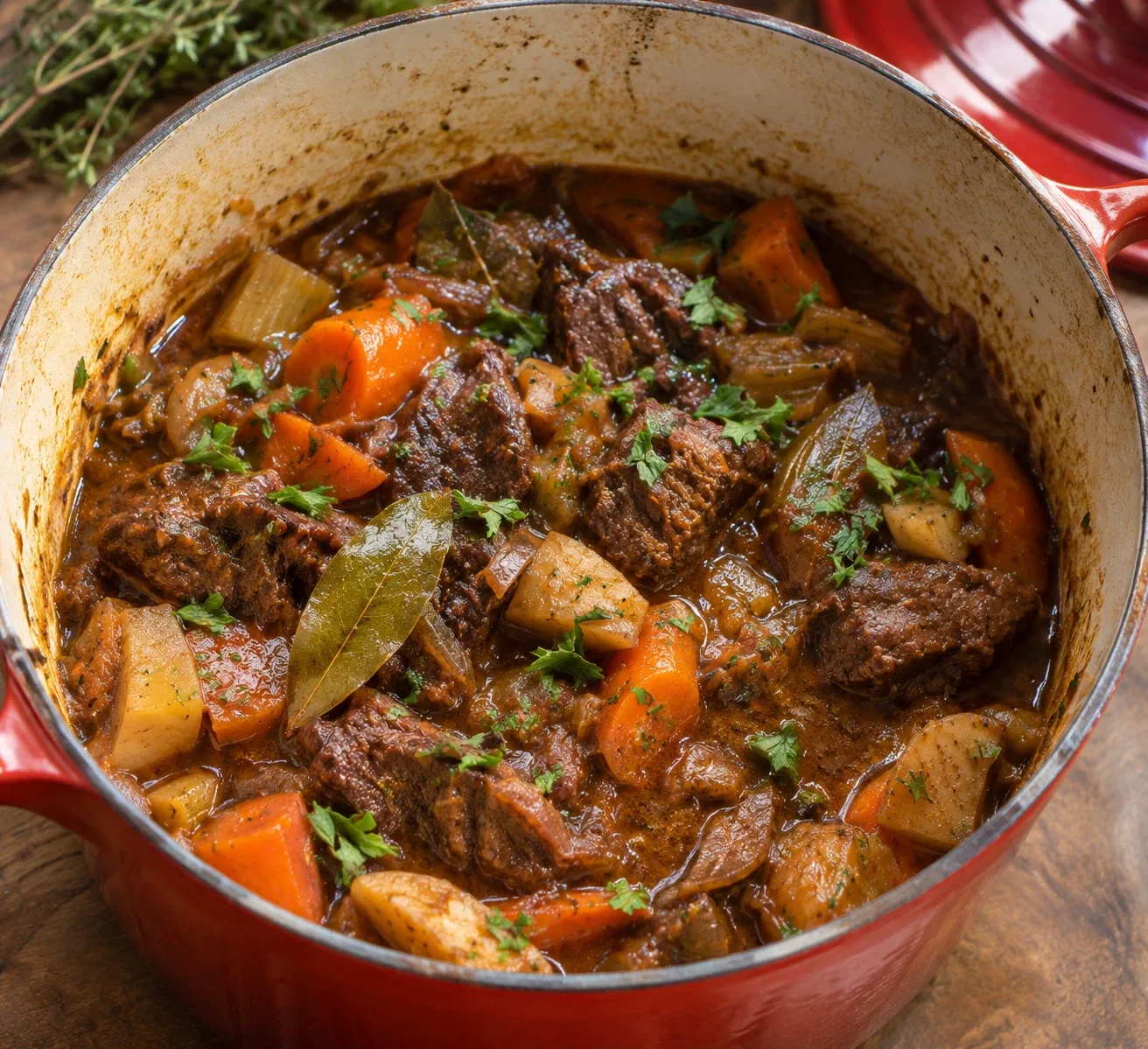
Grass-Fed Beef Stew with Red Wine, Root Vegetables, and Bay
The centerpiece of the fall kitchen. Grass-fed chuck braised low and slow in red wine and bone broth with carrots, parsnips, celeriac, and bay. Make it on Sunday and it feeds you well into the week.
Yield: Serves 6, with leftovers · Active: 50 min · Total: 4 hr 15 min · Season: Best in North America in fall and winter, when carrots, parsnips, and celeriac are at their peak · Best eaten: early evening
Ingredients
For the stew
- 3 lb grass-fed beef chuck (or bone-in short ribs), cut into 2-inch pieces
- 2 tsp sea salt, plus more to taste
- 1 tsp freshly cracked black pepper
- 3 tbsp grass-fed tallow or duck fat
- 2 large yellow onions, roughly diced
- 4 garlic cloves, smashed
- 2 tbsp tomato paste
- 2 cups dry red wine (Burgundy, Côtes du Rhône, or a decent Zinfandel)
- 5 cups beef bone broth
- 4 sprigs fresh thyme
- 2 sprigs fresh rosemary
- 3 bay leaves
- 1 Parmigiano-Reggiano rind (optional; it adds savory depth)
- 1 tbsp arrowroot powder mixed with 2 tbsp cold water (optional, to thicken)
For the root vegetables
- 3 carrots, cut thick on the diagonal
- 2 parsnips, cut into thick pieces
- 1 small celeriac (celery root), peeled and cut into 1-inch cubes
- 6 small Yukon Gold potatoes, halved
- 8 cipollini or pearl onions, peeled
To finish
- 2 tbsp chopped fresh flat-leaf parsley
Method
For the stew
- Season. Pat the beef very dry and season it all over with the salt and pepper. If you have time, let it sit 20 minutes at room temperature. Heat the oven to 325°F.
- Sear. Heat the tallow in a heavy Dutch oven over medium-high heat until it shimmers. Sear the beef in batches, without crowding, until deep brown on all sides, about 8 minutes per batch. Move each batch to a plate. This browning is where the flavor comes from, so take your time.
- Soften the onions. Lower the heat to medium. Add the onions with a pinch of salt and cook 8 minutes, until soft and browned at the edges. Add the garlic and stir 30 seconds.
- Deglaze. Stir in the tomato paste and cook 2 minutes, until it darkens. Pour in the wine and scrape up every browned bit from the bottom of the pot. Simmer until reduced by half, about 5 minutes.
- Braise. Return the beef and its juices to the pot. Add the broth, thyme, rosemary, bay, and Parmigiano rind. The liquid should just cover the meat. Bring to a simmer, cover, and move to the oven. Braise 2 hours without stirring.
For the root vegetables
- Add the roots. Take the pot out of the oven and tuck the carrots, parsnips, celeriac, potatoes, and pearl onions down into the liquid.
- Finish braising. Return the pot to the oven, uncovered, for 1 hour more, until the beef is fork-tender and the vegetables are soft but still hold their shape.
To serve
- Rest and skim. Let the stew rest 20 minutes. Skim any excess fat from the surface with a spoon. Remove the herb stems, bay leaves, and rind.
- Thicken (optional). For a thicker stew, set the pot over medium heat, stir in the arrowroot mixture, and simmer 1–2 minutes, just until glossy. Don’t boil it hard, or arrowroot can thin out again.
- Plate. Taste for salt. Ladle into warm, deep bowls and shower with parsley.
Storage
- The stew keeps up to 4 days in the fridge in covered glass containers. It gets better each day as the flavors settle.
- Rewarm gently on the stove over medium-low heat, covered, until bubbling at the edges.
- To freeze, make it without the potatoes, which turn mealy. Freeze up to 3 months, then add freshly boiled potatoes when you reheat.
Variations
- Short rib stew: Use 4 lb bone-in short ribs and pull the bones out before serving.
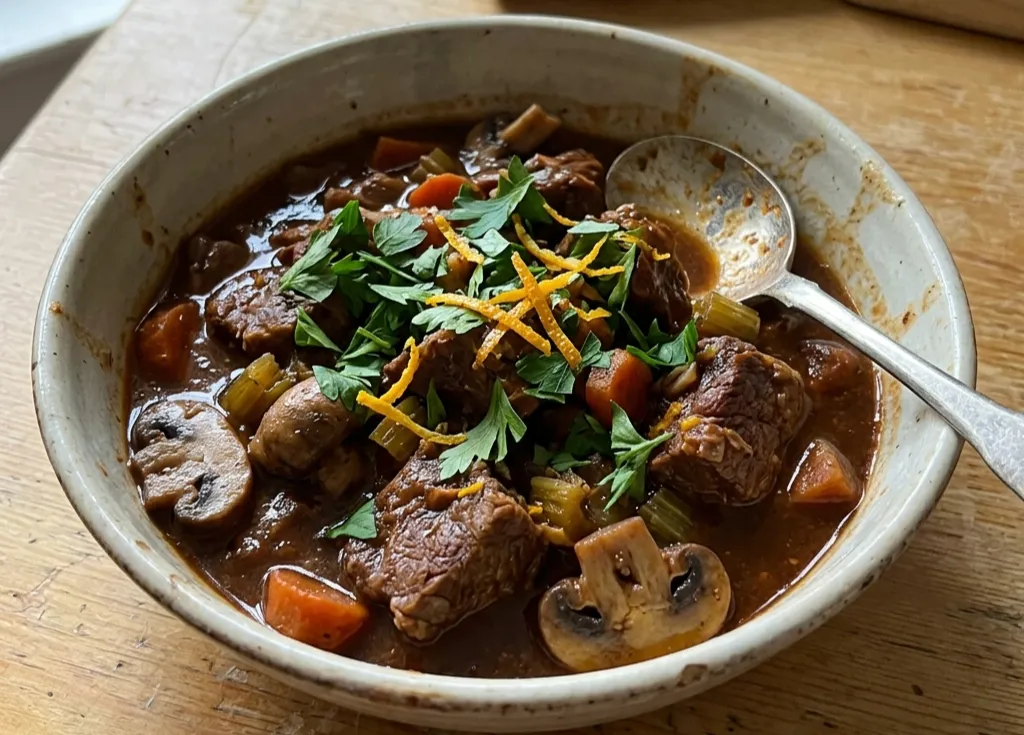
- Mushroom: Add 8 oz quartered cremini or wild mushrooms, browned in a little tallow, along with the root vegetables.
- No potatoes: Swap the potatoes for chunks of rutabaga or turnip.
- Slow cooker: After step 4, move everything to a slow cooker with the broth and herbs. Cook on low 6 hours, add the roots, and cook 2 hours more.
- Lamb: Use boneless lamb shoulder and swap the rosemary for extra thyme.
Season & Circadian Timing
Beef stew marks the full arrival of fall, when the roots come in and the oven feels welcome again. Make it on a Sunday afternoon and eat from it through midweek. Serve it in the early evening so this warming, slow-cooked meal has time to settle before bed.
Nourishment Notes
- Grass-fed chuck — long, slow, moist heat melts its collagen into gelatin, which gives the stew its body and supplies glycine, an amino acid your body uses in many ways.
- Bone broth — adds more gelatin and minerals and makes the sauce rich without any flour.
- Root vegetables — carrots, parsnips, and celeriac bring fiber, potassium, and beta-carotene, which your body absorbs better when eaten with the fat in the stew.
- Red wine — most of the alcohol cooks off in the long braise, leaving acidity and deep flavor behind.
- Bay and thyme — classic aromatics that perfume the whole pot.
Sourcing
- Beef — 100% grass-fed and grass-finished, from a local farm (White Oak Pastures or US Wellness Meats)
- Tallow / duck fat — from pasture-raised animals, from a local farm or butcher
- Bone broth — homemade from pasture-raised bones, or organic and sold frozen (Bonafide Provisions)
- Parmigiano-Reggiano — authentic, aged at least 24 months; save your rinds in the freezer for stews and soups
- Arrowroot powder — organic
- Potatoes — organic; conventional potatoes are often treated with sprout inhibitors after harvest
- Salt — unrefined sea salt (Baja Gold); flaky sea salt for finishing (Maldon)
- Fruits, vegetables, and herbs — organic, from a farmers’ market or local farm
You might also like: Grass-Fed Pot Roast · Beef Heart Stew with Bone Broth · Broths 101 — A Foundation
With Love, Light, and Health,
Anna (aka Food Marshall)
Food Marshall Approved. Grain-free, seed-oil-free and refined-sugar-free, made from organic, local and seasonal ingredients. Our standards
More Soups & Stews
Get new recipes and essays
Seasonal recipes and writing on light, circadian health, and living with nature.
Subscribe on Substack