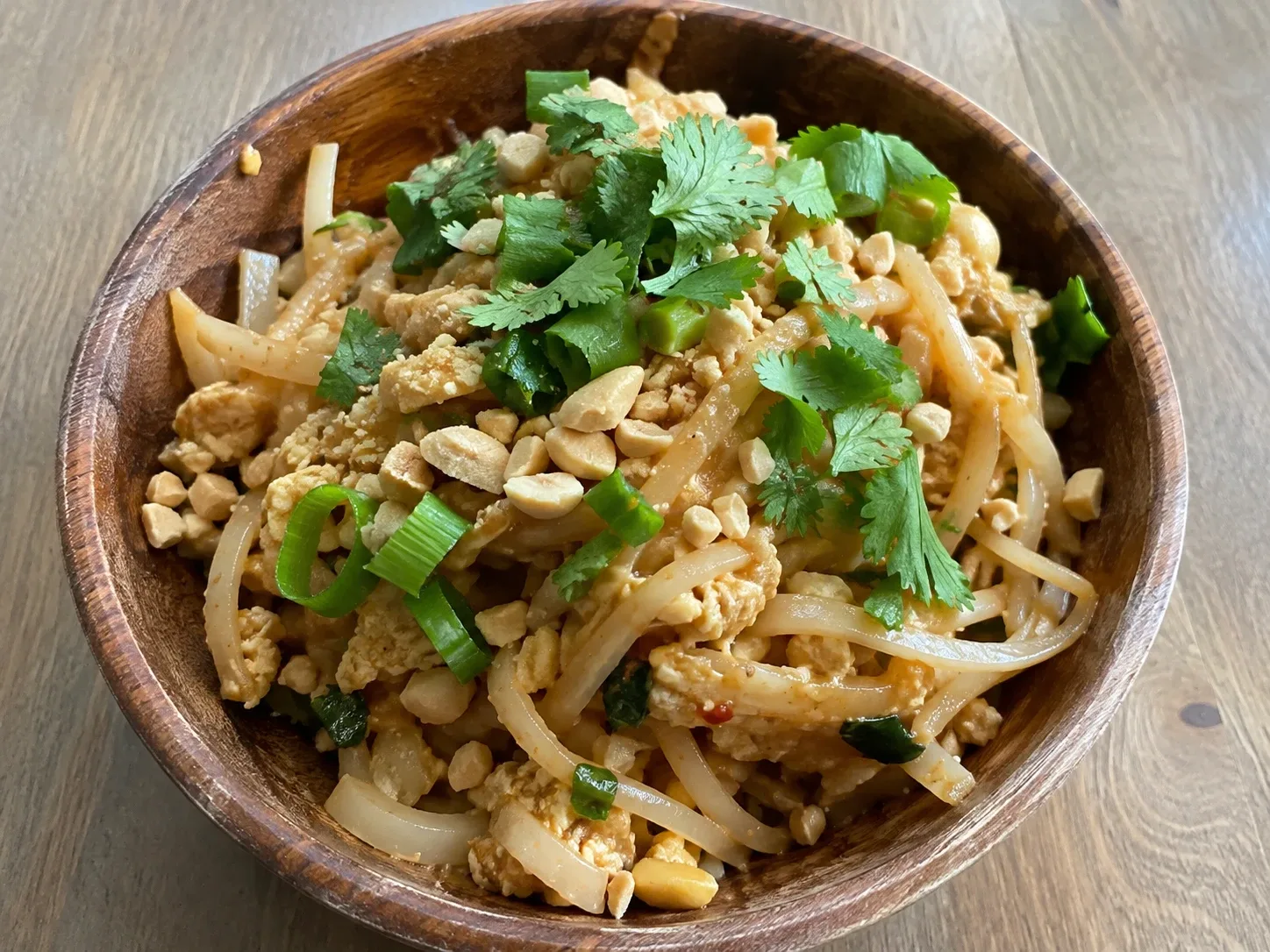
Kohlrabi Pad Thai
A grain-free pad thai made with quick-sautéed kohlrabi noodles, tossed in a tangy lime-ginger peanut sauce and piled with peanuts, cilantro, and green onions. A fun, crunchy way to eat spring’s most underrated vegetable.
Yield: Serves 4 · Active: 20 min · Total: 25 min · Season: Best in spring, when young kohlrabi is tender and sweet · Best eaten: midday or early evening
Ingredients
For the noodles
- 4 medium kohlrabi bulbs, peeled and spiralized (or shredded)
- 2 tbsp coconut oil or grass-fed butter
- 4 garlic cloves, minced
- ½ cup green onions, thinly sliced
- ½ cup fresh cilantro, chopped
- 1 cup roasted peanuts
- handful of microgreens, for garnish
- lime wedges, for serving
Optional additions
- 1 red bell pepper, julienned
- 2 carrots, ribboned
- 1 cup broccoli florets
- 2 tbsp toasted coconut flakes
- 1–2 pasture-raised eggs, beaten and scrambled
- handful of fresh mint leaves
- cooked wild shrimp or shredded chicken
For the peanut sauce
- ¼ cup peanut butter (or almond butter)
- ¼ cup coconut aminos
- 2–3 tbsp toasted sesame oil
- juice and zest of 1 lime
- 1 tbsp raw honey
- 1 tsp fresh ginger, grated
- 1 garlic clove, minced
Method
- Make the noodles. Peel the kohlrabi and spiralize it, or shred it on the largest holes of a box grater.
- Make the sauce. Whisk all the peanut sauce ingredients until smooth. Thin with a tablespoon of water if needed.
- Bloom the garlic. Heat the coconut oil in a large skillet over medium-high heat. Add the garlic and sauté 30 seconds, until fragrant.
- Cook the noodles. Add the kohlrabi and sauté 2–3 minutes, just until tender but still with some bite. Don’t overcook; kohlrabi loses its texture quickly. If using bell pepper, carrots, or broccoli, add them in the last minute.
- Sauce. Transfer to a serving bowl, pour the sauce over, and toss gently.
- Top and serve. Top with the green onions, cilantro, peanuts, microgreens, and any optional additions. Serve with lime wedges.
Storage
Best eaten right away; the kohlrabi noodles soften a lot within an hour of being sauced.
Season & Circadian Timing
Kohlrabi is a cool-weather brassica with two seasons, spring and fall. Young spring kohlrabi is especially tender and sweet, perfect for crisp noodles. This light, quick-cooked dish works well at midday or as an easy early-evening meal, especially with eggs, shrimp, or chicken added for protein.
Nourishment Notes
- Kohlrabi — A member of the cabbage family, rich in vitamin C and fiber, with a mild, sweet crunch.
- Peanuts — Bring plant protein, healthy fats, and niacin.
- Garlic and ginger — Aromatic, flavorful staples that have been used for digestion for centuries.
- Lime — Adds vitamin C and a bright tang that balances the rich sauce.
- Cilantro and microgreens — Fresh greens that add vitamin K and a pop of flavor.
Sourcing
- Coconut oil — organic, virgin, and unrefined
- Grass-fed butter — organic, cultured butter from 100% grass-fed cows, or raw butter from a local dairy
- Peanuts and peanut butter — organic Valencia, with just peanuts (and salt)
- Coconut aminos — organic and soy-free (Coconut Secret)
- Toasted sesame oil — organic and cold-pressed, in dark glass
- Raw honey — organic, local, and unfiltered
- Lemons / limes / oranges — organic (you’re using the zest)
- Fruits, vegetables, and herbs — organic, from a farmers’ market or local farm
With Love, Light, and Health,
Anna (aka Food Marshall)
Food Marshall Approved. Grain-free, seed-oil-free and refined-sugar-free, made from organic, local and seasonal ingredients. Our standards
More Vegetable Sides & Mains
Get new recipes and essays
Seasonal recipes and writing on light, circadian health, and living with nature.
Subscribe on Substack