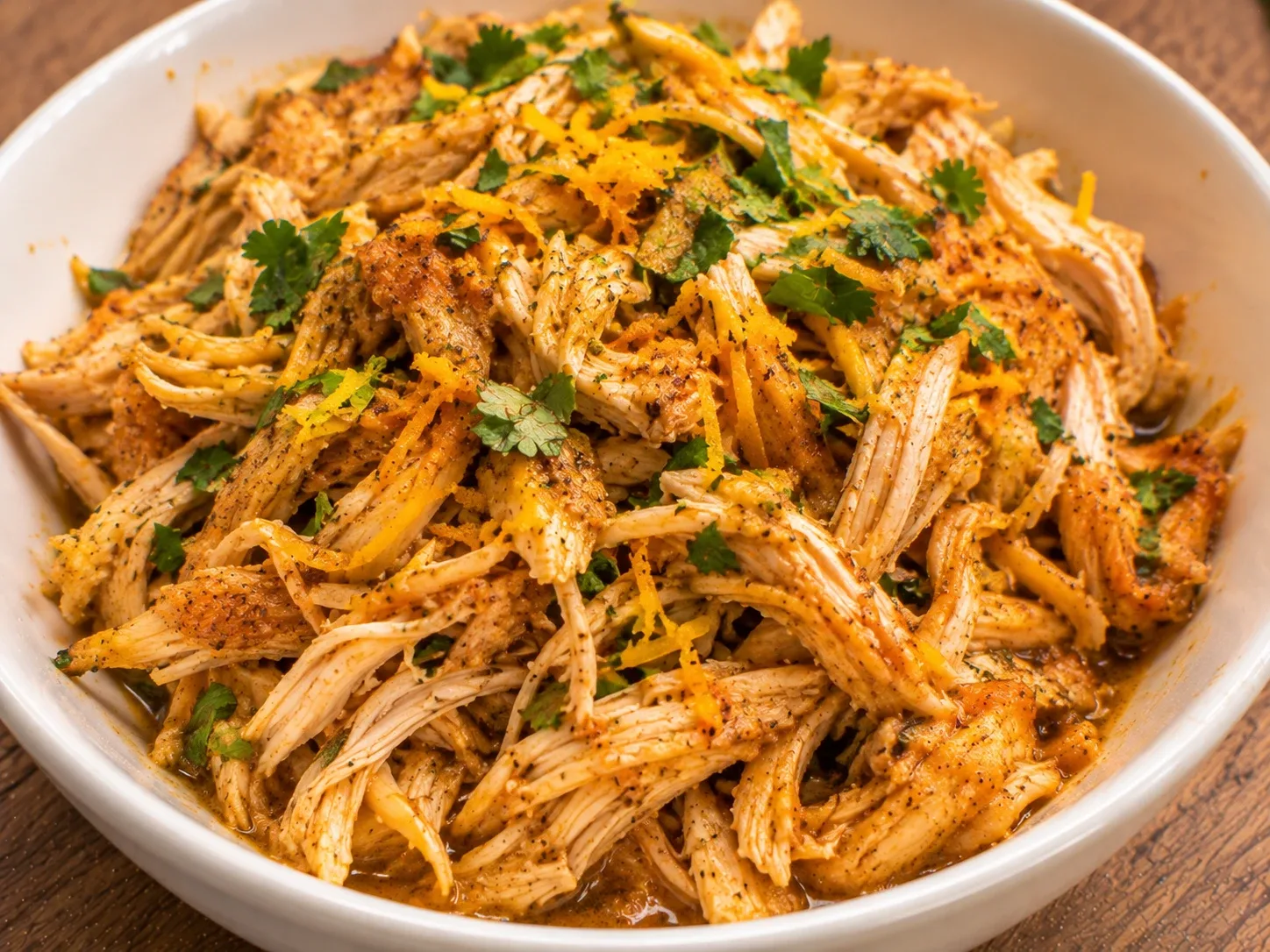
Pasture-Raised Chicken Two Ways: Italian Herb with Basil-Mint Dressing and Slow-Cooked Citrus Pulled Chicken
Two easy ways to cook a big batch of pasture-raised chicken: a quick Italian herb roast drenched in a chunky basil-mint dressing for spring and summer, and a make-ahead orange-lime pulled chicken that carries you through the week.
Yield: Serves 8–10 per recipe · Active: 20–25 min · Total: 45 min (Italian herb); 2½ hr plus marinating (citrus pulled) · Season: Best in North America in spring and summer, when basil, mint, and marjoram are at their peak (the citrus pulled chicken is year-round) · Best eaten: midday or early evening
Ingredients
Italian Herb Chicken with Basil-Mint Dressing
For the chicken
- 4 lbs pasture-raised chicken breasts or thighs
- 3 tbsp extra virgin olive oil
- Sea salt and freshly ground black pepper
For the basil-mint dressing (makes about 1¼ cups; double it for a table sauce)
- ½ cup extra virgin olive oil
- ½ small red onion, roughly chopped
- Juice of 1 lemon
- 2 garlic cloves
- ½ cup fresh basil leaves
- ¼ cup fresh mint leaves
- 2 tbsp fresh rosemary leaves
- 2 tbsp fresh marjoram (or oregano)
- Sea salt and freshly ground black pepper
Slow-Cooked Citrus Pulled Chicken
- 4 lbs pasture-raised chicken thighs (bone-in and skin-on for the richest flavor)
- 1 cup fresh-squeezed orange juice
- ½ cup fresh-squeezed lime juice
- 6 garlic cloves, minced
- 2 tsp ground cumin
- 2 tsp smoked paprika
- 1 tsp ground coriander
- 1 tsp ground Ceylon cinnamon
- 1 tsp sea salt
- ½ tsp freshly ground black pepper
- 3 tbsp extra virgin olive oil
- 1 cup homemade chicken bone broth
Method
Italian Herb Chicken with Basil-Mint Dressing
- Heat the oven. Preheat to 425°F.
- Season the chicken. Toss the chicken with the olive oil, salt, and pepper and spread it on a sheet pan.
- Roast. Roast 15–20 minutes for breasts or 25–30 minutes for thighs, until the internal temperature reaches 165°F.
- Make the dressing. While the chicken roasts, pulse all the dressing ingredients in a food processor or blender until chunky and spoonable, not fully smooth.
- Dress and serve. Move the chicken to a platter and spoon the dressing over it while it’s hot so it soaks into the meat. Serve extra dressing alongside as a table sauce, with roasted summer vegetables or a fresh green salad.
Slow-Cooked Citrus Pulled Chicken
- Marinate. Whisk the orange juice, lime juice, garlic, spices, salt, pepper, and olive oil in a large bowl. Add the chicken thighs and toss to coat. Marinate at least 2 hours, ideally overnight in the fridge.
- Heat the oven. Preheat to 325°F.
- Sear the chicken. Heat a large Dutch oven over medium-high heat. Lift the chicken out of the marinade (save the marinade) and sear in batches, skin-side down first, until deeply golden, about 4 minutes per side.
- Add the liquid. Return all the chicken to the pot, pour in the reserved marinade and the broth, and bring to a gentle simmer.
- Braise. Cover and move to the oven. Braise 1½–2 hours, until the chicken is fall-apart tender.
- Shred. Lift out the chicken with a slotted spoon. Discard the skin and bones and shred the meat with two forks.
- Reduce the juices. Simmer the braising liquid on the stovetop for 5–7 minutes to concentrate it, then return the shredded chicken and toss to coat.
- Serve. Pile it over greens, into warm cassava flour tortillas or lettuce wraps, or over cauliflower rice with a crunchy cabbage slaw. It’s even better made the day before.
Storage
- Cooked chicken keeps 3–4 days in the fridge. The roasted Italian herb chicken holds its texture best; the pulled chicken gets softer (in a good way) as it sits.
- The basil-mint dressing keeps 4 days in the fridge.
- Freeze leftover citrus braising liquid in ice cube trays for instant pan sauces.
Variations
- Moroccan version: For a spiced take with chermoula, see my Moroccan-Spiced Roast Chicken with Caramelized Root Vegetables, Chermoula, and Green Yogurt.
- For a crowd: For 12 or more, double either recipe; both scale evenly.
Season & Circadian Timing
The Italian herb chicken belongs to spring and summer, when basil, mint, and marjoram are lush and fragrant, while the citrus pulled chicken works in any season (and tastes especially bright in winter, when oranges and limes are at their best). Both are midday or early-evening meals: a substantial serving of protein and fat sits best while there’s still daylight, and one Sunday batch of pulled chicken gives you easy meals for days.
Nourishment Notes
- Pasture-raised chicken — Birds raised outdoors on pasture tend to have a better omega-3 to omega-6 balance than confinement-raised chicken, and the skin and dark meat bring rich flavor and fat-soluble nutrients.
- Bone-in, skin-on thighs — Slow braising on the bone draws collagen and gelatin into the juices, the same building blocks found in bone broth.
- Basil, mint, rosemary, and marjoram — These Mediterranean herbs are rich in aromatic compounds and polyphenols and have long been used to aid digestion.
- Extra virgin olive oil — Fresh, high-quality olive oil contains oleocanthal, a polyphenol with anti-inflammatory effects, and its fat helps you absorb the fat-soluble compounds in the herbs and spices.
- Citrus — Fresh orange and lime juice add vitamin C and brightness that balances the richness of the dark meat.
Sourcing
- Chicken — pasture-raised, from a local farm (White Oak Pastures)
- Extra virgin olive oil — organic, single-estate, harvest-dated, in dark glass
- Bone broth — homemade from pasture-raised bones, or organic and sold frozen (Bonafide Provisions)
- Salt — unrefined sea salt (Baja Gold); flaky sea salt for finishing (Maldon)
- Spices — organic and non-irradiated (Ceylon cinnamon from Sri Lanka)
- Cassava flour tortillas — organic, made with simple ingredients and no seed oils
- Fruits, vegetables, and herbs — organic, from a farmers’ market or local farm
With Love, Light, and Health,
Anna (aka Food Marshall)
Food Marshall Approved. Grain-free, seed-oil-free and refined-sugar-free, made from organic, local and seasonal ingredients. Our standards
More Poultry
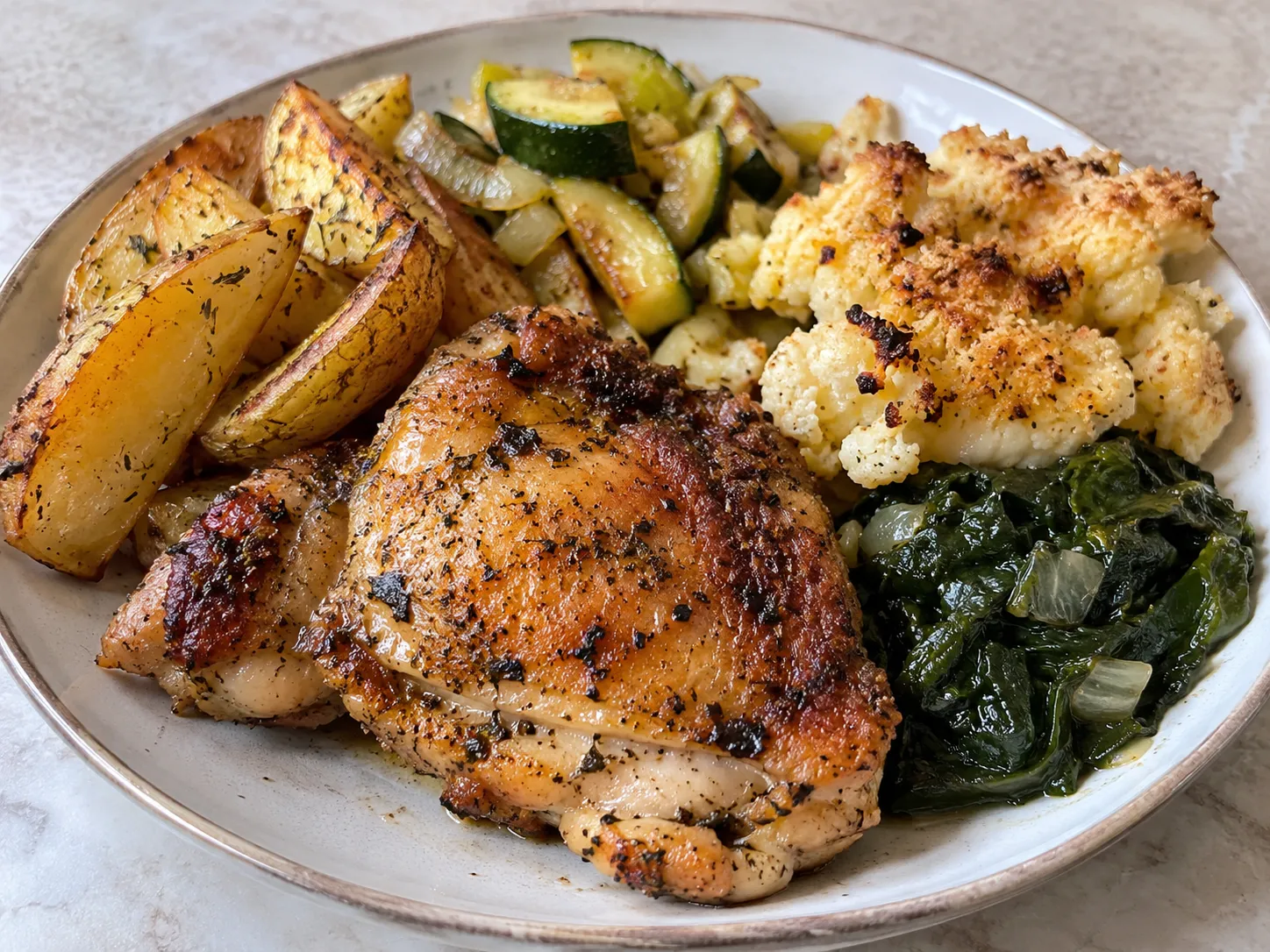
Buttermilk-Marinated Chicken Thighs with Yukon Gold Wedges, Sautéed Zucchini and Leeks, Cauliflower Parmesan, and Braised Summer Greens
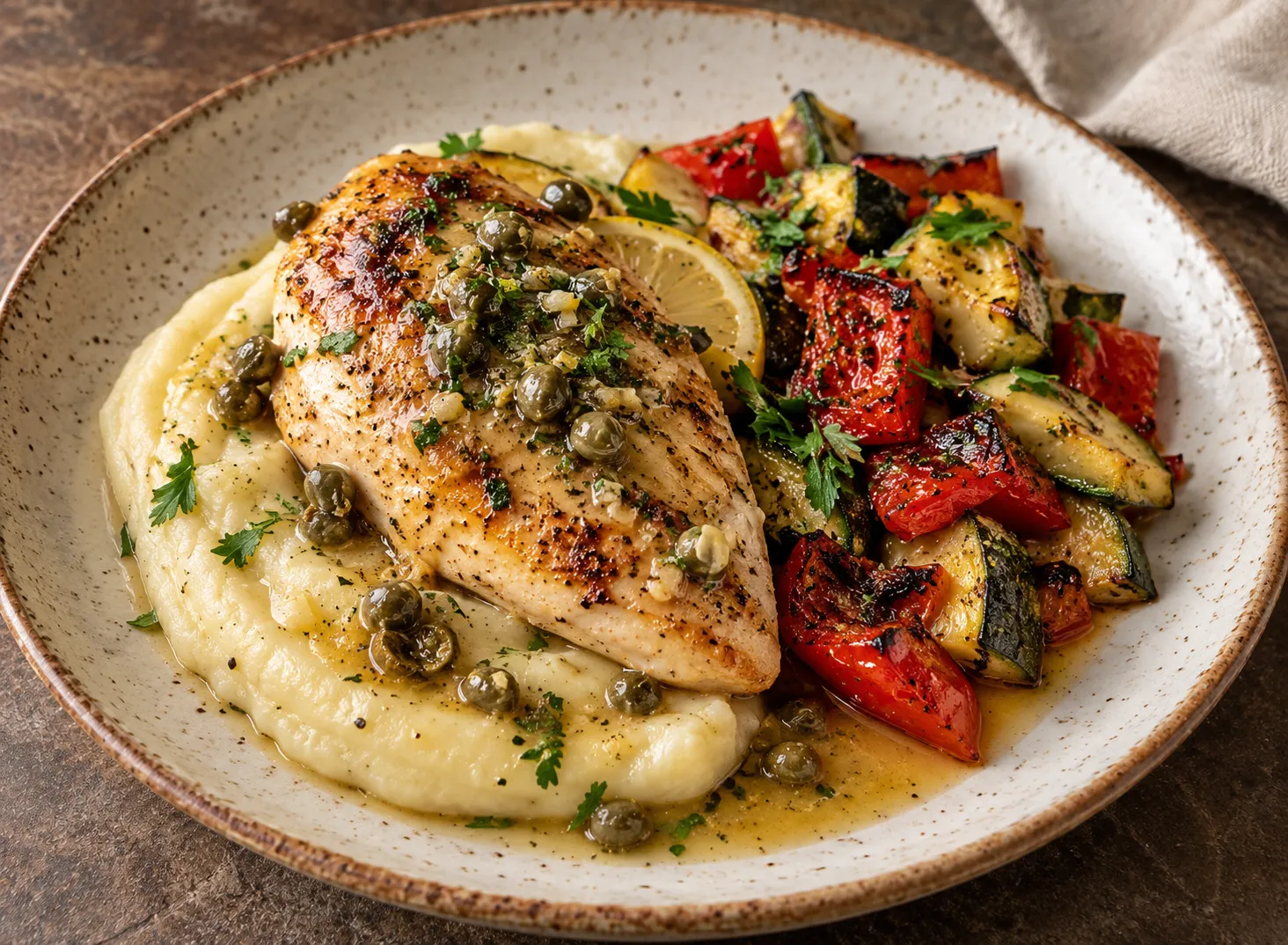
Chicken Breast with Lemon-Caper Butter, Potato Purée, and Roasted Pepper-Zucchini Medley
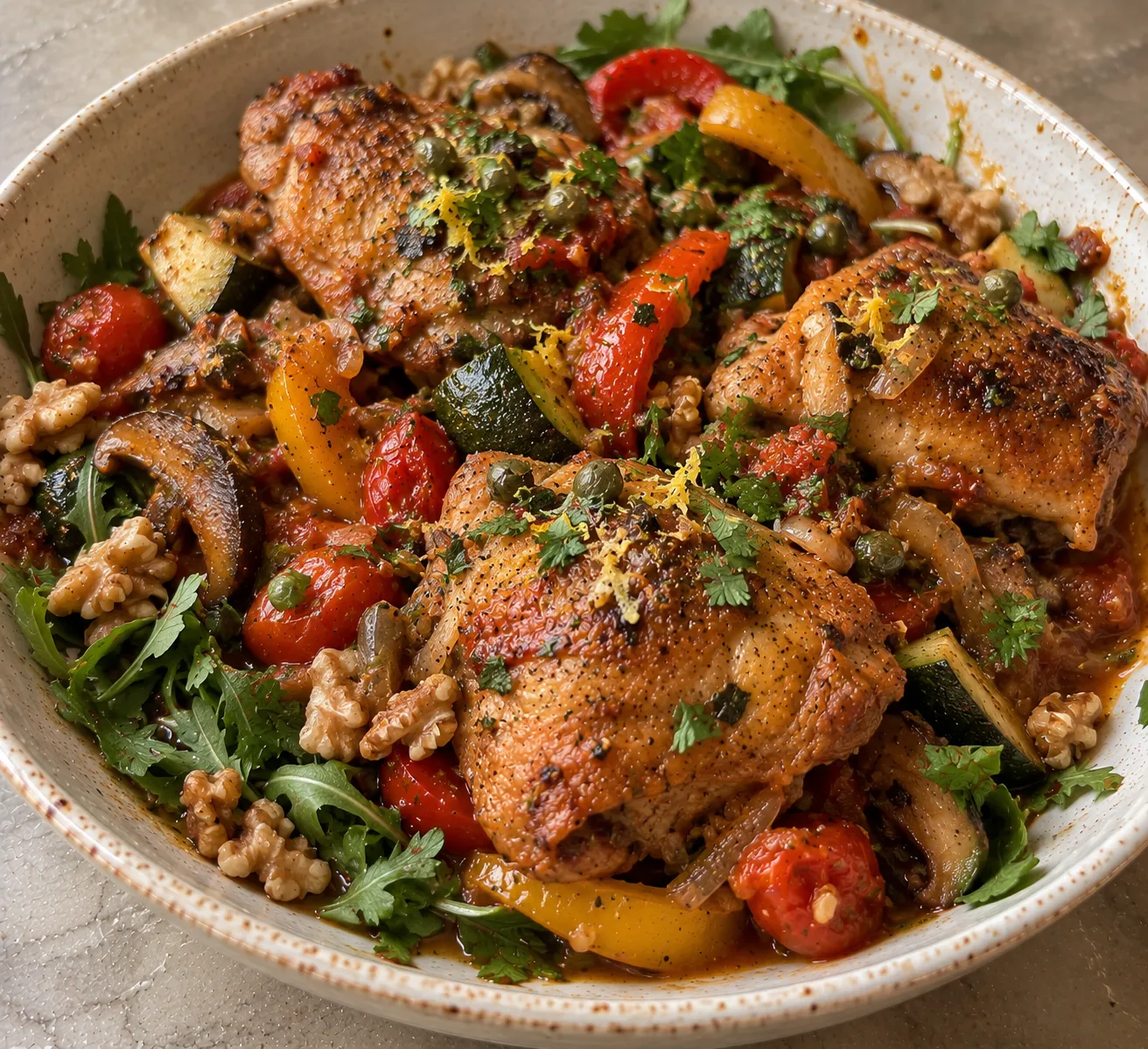
Chicken Cacciatore with Shiitakes, Cherry Tomatoes, and Fresh Herbs
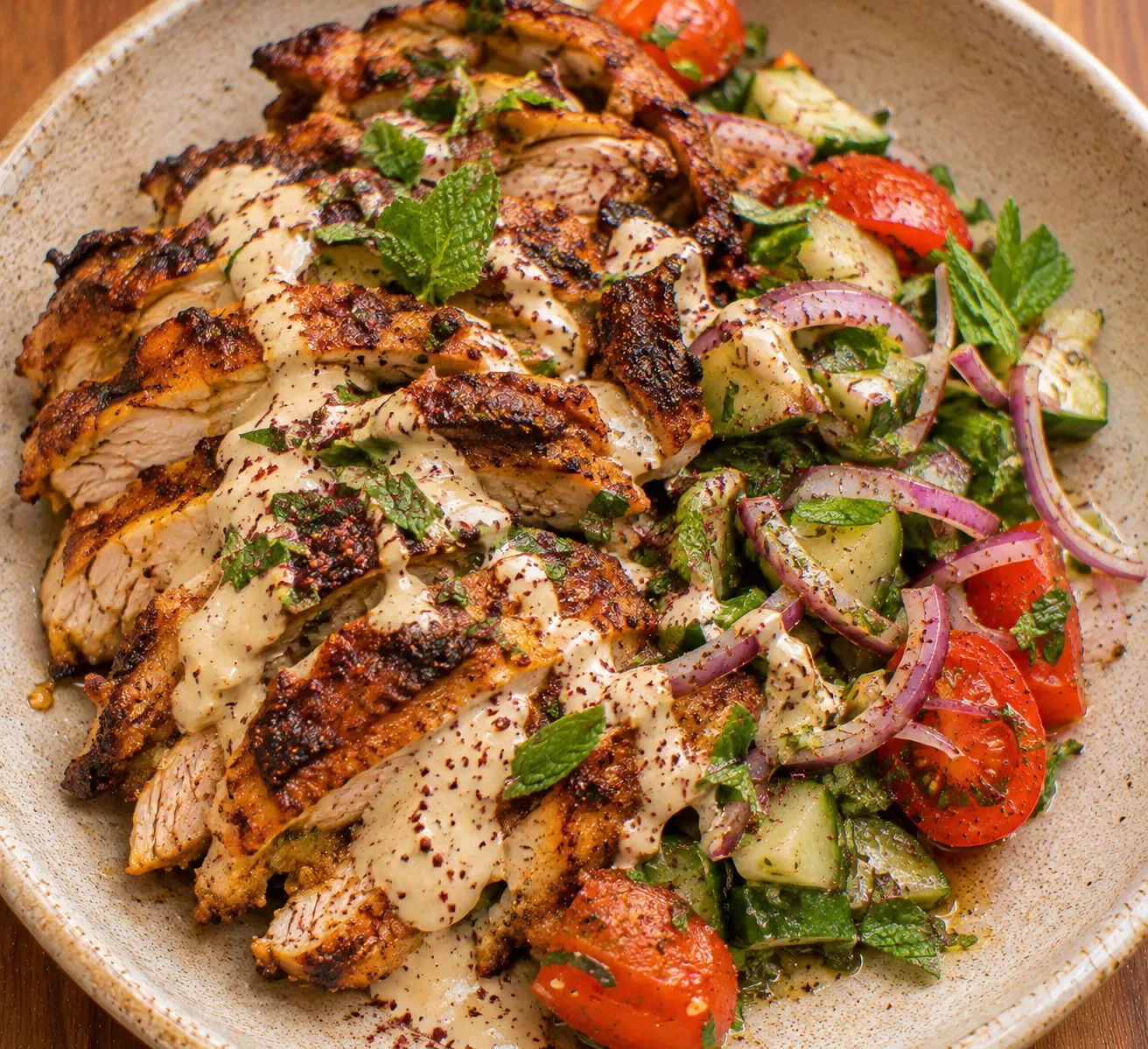
Chicken Shawarma with Tahini Sauce and Sumac Salad
Get new recipes and essays
Seasonal recipes and writing on light, circadian health, and living with nature.
Subscribe on Substack