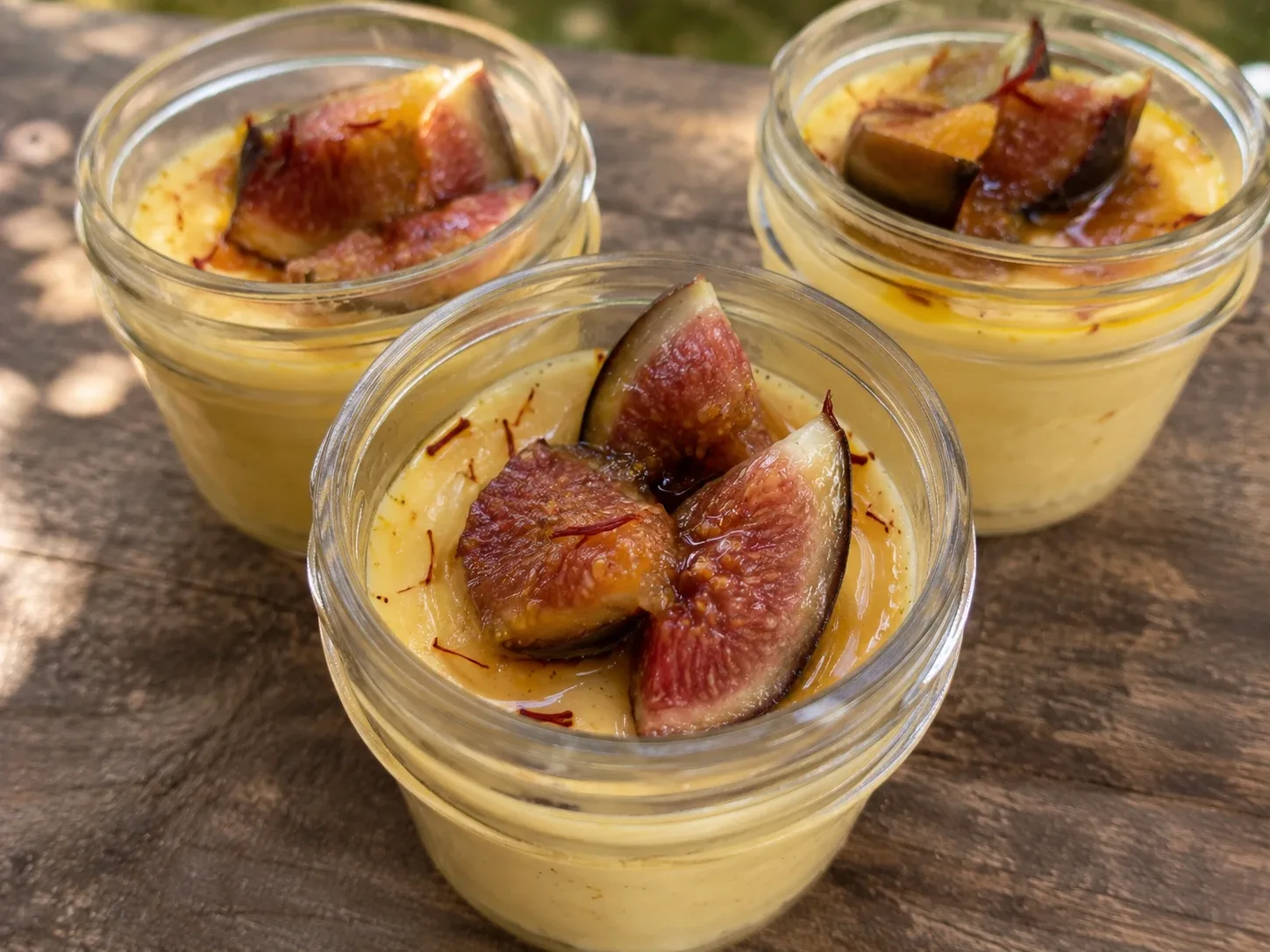
Raw Milk Panna Cotta with Saffron and Ripe Figs
The classic Italian cooked cream, made with raw cream, set with grass-fed gelatin, and lightly sweetened with raw honey. Saffron turns it gold, and honeyed ripe figs go on top.
Yield: Serves 6 · Active: 25 min · Total: 30 min, plus 4 hr to overnight chilling · Season: Best in North America in late summer and early fall, when fresh figs are at their peak · Best eaten: early evening
Ingredients
For the panna cotta
- 2½ cups raw cream (or 2 cups raw cream plus ½ cup raw milk for a lighter set)
- ⅓ cup raw wildflower honey, plus more to taste
- A generous pinch of saffron threads (about ¼ tsp)
- 1 vanilla bean, split and scraped (or 1 tbsp vanilla paste)
- Pinch of sea salt
- 2 tsp grass-fed gelatin (the kind that gels, not collagen peptides)
- 3 tbsp cold filtered water
For the figs
- 8 ripe fresh figs (Black Mission or Brown Turkey), quartered
- A drizzle of raw honey
- 1 tsp aged balsamic vinegar
- A few torn basil or thyme leaves
- Flaky sea salt
Method
For the panna cotta
- Bloom the gelatin. Sprinkle the gelatin over the cold water in a small bowl and leave it 5 minutes. Blooming just means letting the gelatin soak up the water, and it will turn into a soft, spongy solid.
- Infuse. In a small saucepan, combine ½ cup of the cream with the saffron, vanilla seeds and pod, and salt. Warm over the lowest heat until it just steams and feels like a warm bath, about 105°F. Turn off the heat, cover, and let it steep 15 minutes so the saffron turns the cream gold. Keeping the heat low protects the flavor of the raw cream.
- Dissolve the gelatin. Rewarm the cream gently to about 105°F if it has cooled, then whisk in the bloomed gelatin until it disappears completely, about 30 seconds.
- Sweeten and strain. Off the heat, whisk in the honey until dissolved. Pour through a fine-mesh sieve into a bowl or large measuring cup and discard the vanilla pod.
- Add the rest of the cream. Whisk in the remaining 2 cups of cold cream (or cream and milk). Taste and add a little more honey if you like. It should be lightly sweet, not sugary.
- Chill. Divide among six small ramekins, glasses, or bowls. Cover and chill at least 4 hours, or overnight. It’s ready when it trembles when you tap the dish but doesn’t collapse.
For the figs
- Dress. Just before serving, toss the figs with a drizzle of honey, the balsamic, and the torn herbs. Let them sit 5 minutes so they release a little juice.
To serve
- Top. Serve the panna cotta in its ramekins, or unmold it by dipping the bottom of each ramekin in hot water for 5–10 seconds, running a thin knife around the edge, and turning it out onto a plate. Spoon the figs and their juices over the top and finish with a pinch of flaky salt.
Storage
- Covered panna cotta keeps up to 3 days in the fridge. Add the figs just before serving.
- Don’t freeze it; the texture turns grainy when it thaws.
Variations
- Firmer set for unmolding: Use 2½ tsp gelatin if you want to turn them out onto plates.
- Rose and pistachio: Skip the saffron, stir ½ tsp rose water into the cream, and top with chopped pistachios.
- Other fruit: Use ripe peaches, apricots, or berries when figs aren’t in season, or roasted pears in late fall.
- Goat milk: Replace the ½ cup raw milk with raw goat milk for a tangier panna cotta.
Season & Circadian Timing
Fresh figs have a short, sweet season from mid-August through September, which makes this a late-summer and early-fall dessert. It’s small, cool, and light, so it works well after an early dinner. Gelatin is rich in glycine, an amino acid that some people find helps them wind down in the evening.
Nourishment Notes
- Raw cream — carries the fat-soluble vitamins A, D, E, and K2, and keeps its full, fresh flavor because it’s never boiled here.
- Grass-fed gelatin — supplies glycine and other amino acids found in connective tissue, which support skin, joints, and the gut lining.
- Saffron — gets its color and aroma from crocin and safranal, compounds that small studies suggest may gently support mood and sleep.
- Fresh figs — bring fiber, potassium, and natural sweetness.
- Raw honey — sweetens gently and keeps its natural enzymes because it’s only added once the cream is off the heat.
Sourcing
- Heavy cream — raw from a farmer you know and trust, or organic, grass-fed, low-temperature pasteurized cream (Kalona SuperNatural); raw cream gives the best flavor here
- Raw milk — from a farmer you know and trust (find one at realmilk.com), or organic, grass-fed, low-temperature pasteurized milk (Kalona SuperNatural)
- Gelatin — from grass-fed, pasture-raised cattle, with nothing added (Great Lakes Wellness)
- Saffron — whole threads that are deep red all the way through, from Iran or Spain; orange-yellow threads are a lower grade
- Raw honey — organic, local, and unfiltered
- Vanilla — organic pure vanilla extract, or vanilla bean
- Aged balsamic vinegar — traditional, from Modena, with no added sugar or caramel color
- Salt — unrefined sea salt (Baja Gold); flaky sea salt for finishing (Maldon)
- Fruits, vegetables, and herbs — organic, from a farmers’ market or local farm
You might also like: Little Pots: Vanilla Gelatin Pots, Chocolate Custard Pots, and Dulce de Leche · Fresh Fig Tart and Fresh Fig Cheesecake (2 Recipes) · Fresh Figs from the Tree: With Homemade Ricotta and Bee Pollen, Plus Seven More Ways to Enjoy Them
With Love, Light, and Health,
Anna (aka Food Marshall)
Food Marshall Approved. Grain-free, seed-oil-free and refined-sugar-free, made from organic, local and seasonal ingredients. Our standards
More Desserts
Get new recipes and essays
Seasonal recipes and writing on light, circadian health, and living with nature.
Subscribe on Substack