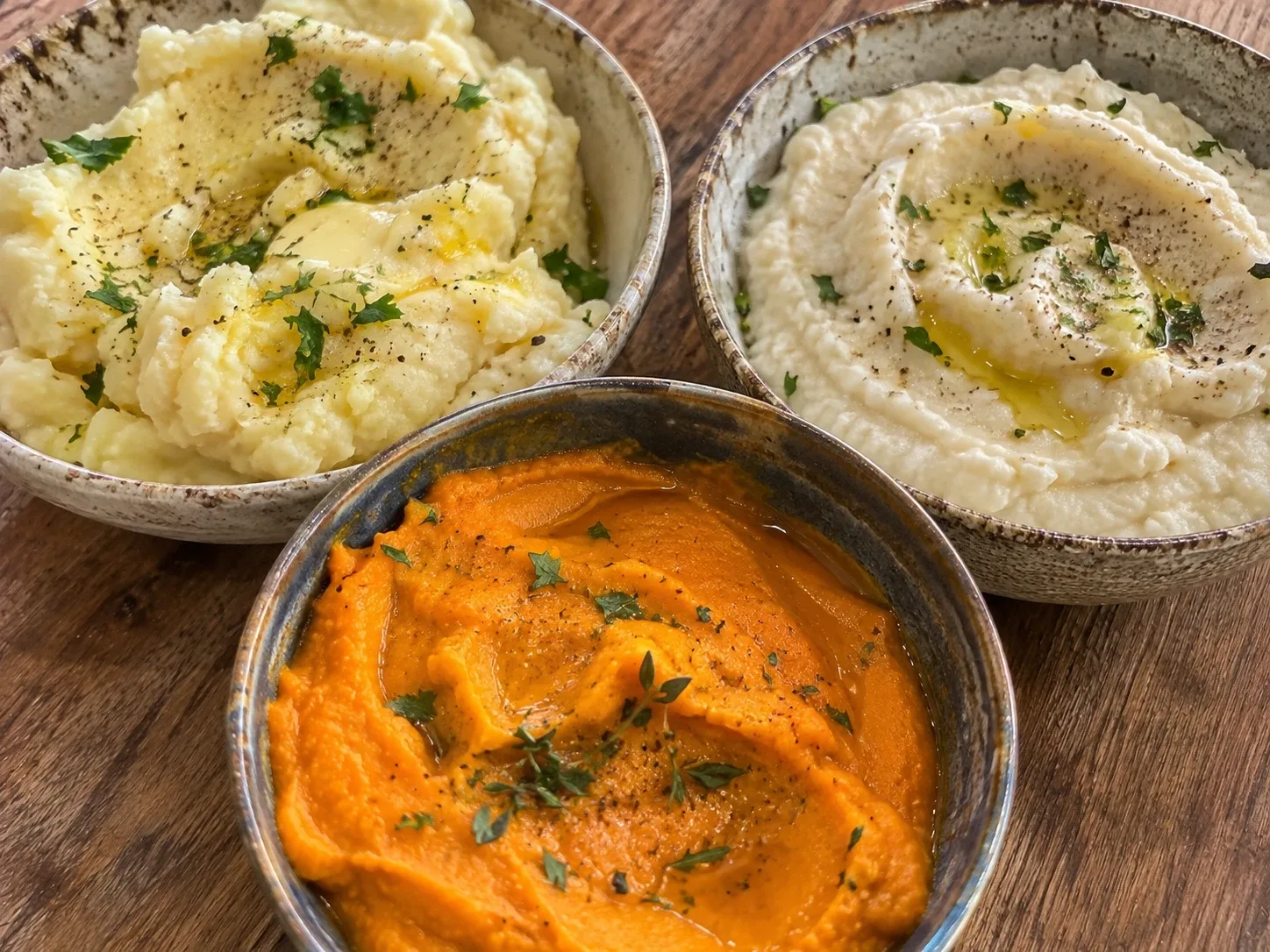
Silky Purées Three Ways: Buttery Mashed Potatoes, Whipped Cauliflower Purée, and Roasted Carrot Purée
Three soft, buttery sides to spoon under a roast, a seared steak, or a piece of wild fish. Fluffy Yukon Gold mash, a whipped cauliflower purée with just three ingredients, and a sweet roasted carrot purée with garlic and thyme.
Yield: Serves 4–6 per recipe · Active: 15–20 min each · Total: 30 min (cauliflower), 35 min (potatoes), 55 min (carrots) · Season: Best in North America in fall and winter, when potatoes, cauliflower, and sweet storage carrots are at their peak · Best eaten: early evening
Ingredients
Buttery Mashed Potatoes
- 3 lb Yukon Gold potatoes (about 6 medium), peeled and cut into 2-inch chunks
- 1 tbsp sea salt, for the cooking water
- 6 tbsp raw butter (or grass-fed butter), at room temperature
- ¾–1 cup raw cream, warmed
- Sea salt and white or black pepper, to taste
Whipped Cauliflower Purée
- 1 large head cauliflower (about 2 lb), cut into florets
- ½ stick (4 tbsp) grass-fed butter
- Pinch of sea salt, plus more to taste
Roasted Carrot Purée
- 2 lb carrots, peeled and julienned
- 2 tbsp extra virgin olive oil
- ½ tsp sea salt
- ¼ tsp freshly ground black pepper
- 1 garlic clove
- Leaves from a few sprigs fresh thyme (about 1 tsp)
- ¼ cup grass-fed butter
- ¼–½ cup bone broth, if needed
Method
Buttery Mashed Potatoes
- Start in cold water. Put the potatoes in a large pot, cover with cold water by an inch, and add the salt. Starting cold helps the chunks cook evenly all the way through. Bring to a boil, then simmer 15–20 minutes, until a knife slides through with no resistance.
- Dry them out. Drain well and return the potatoes to the hot pot over low heat for 1–2 minutes, shaking the pot, to steam off extra water. Drier potatoes soak up more butter and cream.
- Rice. Pass the hot potatoes through a ricer back into the pot. A ricer is a simple press that pushes cooked potatoes through small holes, giving you the smoothest, fluffiest mash with no lumps. A food mill or a hand masher works too. (Skip the blender or food processor, which turns potatoes gluey.)
- Enrich. Stir in the butter until melted, then add the warm cream a splash at a time, folding gently, until the potatoes are as soft and creamy as you like. Season with salt and pepper. Keep covered over very low heat until serving.
Whipped Cauliflower Purée
- Steam. Steam the florets in a steamer basket over simmering water, covered, for 10–12 minutes, until very soft and easily pierced with a fork.
- Drain. Let the cauliflower sit in the basket for a minute so extra water drips off. Too much water makes a thin purée.
- Blend. Place in a blender with the butter and a pinch of salt. Blend until smooth, starting on low and increasing to high, and stop to scrape down the sides as needed. Taste and add more salt if you like. Serve warm.
Roasted Carrot Purée
- Preheat. Heat the oven to 400°F and line a large sheet pan with parchment.
- Prep the carrots. Julienne the carrots, which means cutting them into thin matchsticks about ¼ inch thick and 2–3 inches long. Thin pieces roast faster and caramelize more.
- Roast. Toss the carrots with the olive oil, salt, and pepper and spread them in a single layer (use two pans if crowded). Bake 35–40 minutes, tossing halfway, until very tender and browned at the edges.
- Purée. Put the hot carrots in a food processor with the garlic, thyme leaves, and butter. Process until smooth, scraping down the sides a few times. If it’s too thick to turn smoothly, add bone broth a few tablespoons at a time until silky. Taste for salt and pepper.
Storage
- All three keep 4 days in the fridge in covered glass containers.
- Reheat the potatoes over low heat with a splash of extra cream and a knob of butter, stirring often.
- Reheat the cauliflower and carrot purées gently in a small pot, adding a splash of bone broth if they’ve thickened.
- The cauliflower and carrot purées freeze well for up to 3 months. Mashed potatoes freeze too, though they turn a little softer once thawed.
Variations
- Brown butter: Melt the butter in a small pan over medium heat and cook 3–5 minutes, swirling, until it smells nutty and the milk solids turn golden brown. Use it in any of the three purées.
- Roasted garlic: Slice the top off a whole head of garlic, drizzle with olive oil, wrap in foil, and roast at 400°F for 40 minutes. Squeeze the soft cloves into the potatoes or cauliflower (or use it in place of the raw clove in the carrot purée).
- Parmesan: Fold ½ cup finely grated Parmigiano-Reggiano into the potatoes or cauliflower.
- Parsnip: Swap up to half the potatoes or carrots for peeled parsnips. Boil them with the potatoes, or julienne and roast them with the carrots.
- Celery root: Peel 1 large celery root (celeriac), cut into 1-inch cubes, and steam 15–20 minutes, until very tender. Blend with the cauliflower method, or swap it in for half the potatoes.
- Sweet potato: Roast 2 lb whole sweet potatoes at 400°F for 45–60 minutes, until soft, then scoop out the flesh and mash with the butter, a pinch of cinnamon or nutmeg, and salt.
- Extra creamy cauliflower: Blend in 2–3 tbsp warm raw cream along with the butter.
Season & Circadian Timing
Potatoes, cauliflower, and carrots are all at their sweetest in fall and early winter, after cool nights and the first frosts turn some of their starch to sugar. These soft, warm sides are a natural fit for the early evening, when a comforting plate helps you wind down, and many people find a little starch with dinner helps them settle in for the night.
Nourishment Notes
- Potatoes — a good source of potassium and vitamin C, especially when they’re fresh from the farm.
- Cauliflower — brings vitamin C, fiber, and the sulfur compounds found in all cabbage-family vegetables.
- Carrots — rich in beta-carotene, which your body turns into vitamin A. Cooking them with butter and olive oil helps you absorb it, since it’s fat-soluble.
- Raw butter and cream — carry fat-soluble vitamins A and K2, and grass-fed dairy is richer in them than grain-fed.
- Bone broth — adds gelatin and savory depth to the carrot purée.
Sourcing
- Grass-fed butter — organic, cultured butter from 100% grass-fed cows, or raw butter from a local dairy
- Heavy cream — raw from a farmer you know and trust, or organic, grass-fed, low-temperature pasteurized cream (Kalona SuperNatural)
- Extra virgin olive oil — organic, single-estate, harvest-dated, in dark glass
- Bone broth — homemade from pasture-raised bones, or organic and sold frozen (Bonafide Provisions); see Broths 101 — A Foundation
- Parmigiano-Reggiano — DOP, aged 24+ months, made from raw milk by law
- Potatoes — organic; conventional potatoes are often treated with sprout inhibitors after harvest
- Salt — unrefined sea salt (Baja Gold); flaky sea salt for finishing (Maldon)
- Fruits, vegetables, and herbs — organic, from a farmers’ market or local farm
You might also like: Velvet Vegetable Purées: A Foundation, Thanksgiving Centerpiece: Pasture-Raised Turkey with Mushroom Gravy and Spiced Cranberry Sauce, Broths 101 — A Foundation
With Love, Light, and Health,
Anna (aka Food Marshall)
Food Marshall Approved. Grain-free, seed-oil-free and refined-sugar-free, made from organic, local and seasonal ingredients. Our standards
More Vegetable Sides & Mains

Get new recipes and essays
Seasonal recipes and writing on light, circadian health, and living with nature.
Subscribe on Substack