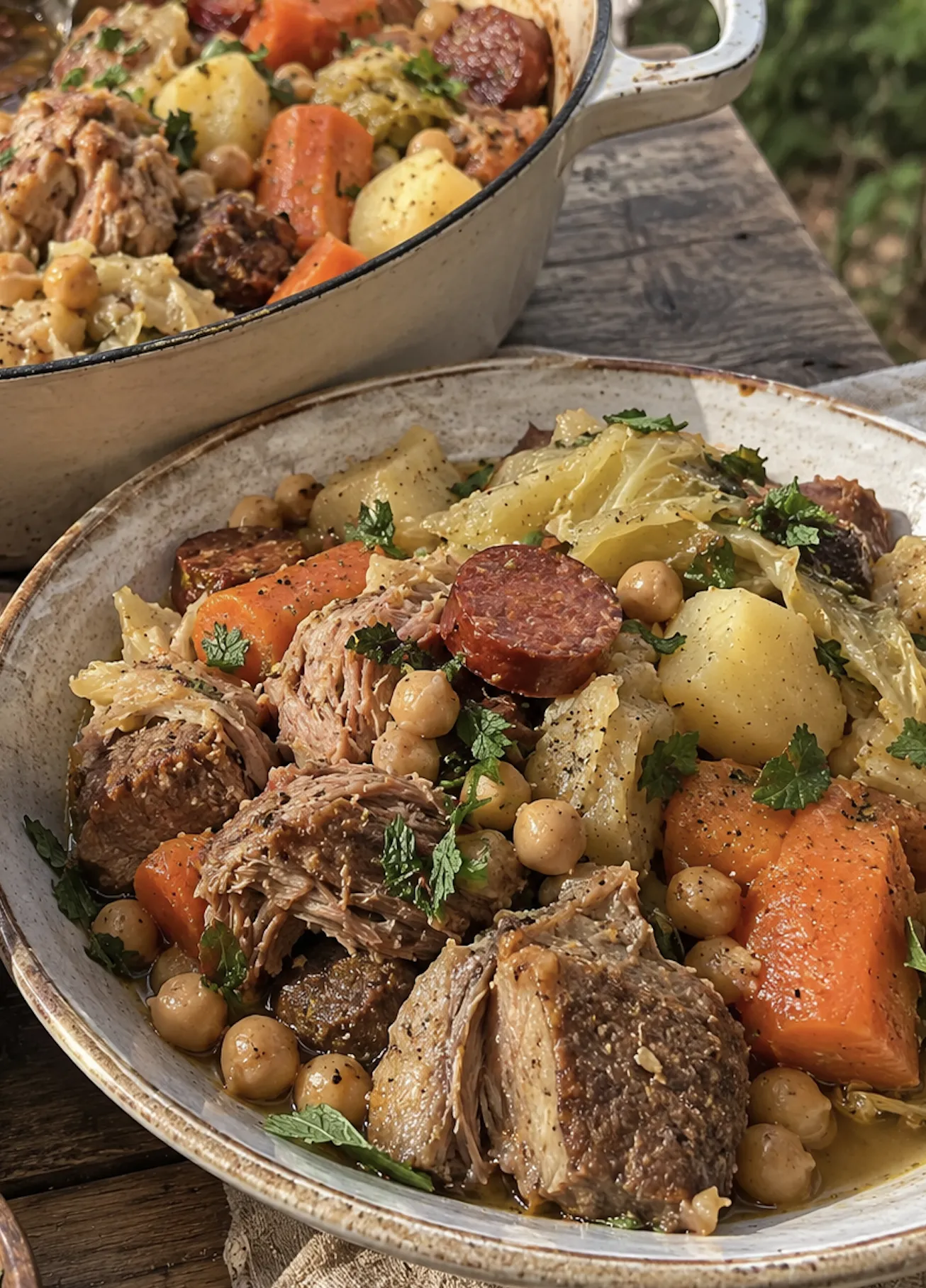
Sopa da Panela: Alentejo Pot of Mixed Meats
Beef, pork, and lamb slow-simmered with chickpeas, garlic, and bay, then finished with smoked sausage, potatoes, carrots, cabbage, and fresh mint. Serve the broth first as soup, then the meats and vegetables as the main.
Yield: Serves 6–8 · Active: 30 min · Total: 3½–4 hours, plus soaking the chickpeas overnight · Season: Best in the Mediterranean in fall, when cabbage, carrots, and potatoes are at their peak · Best eaten: midday or early evening
Ingredients
- 1 lb beef shin or brisket
- 1 lb pork shoulder or ribs
- ¾ lb lamb neck or shoulder
- 1½ cups dried chickpeas, soaked overnight and drained (optional)
- 1 lb good-quality smoked sausage, pork or beef, with no added sugar, nitrates, or fillers (traditionally chouriço and morcela)
- 4 potatoes, peeled and quartered
- ½ head cabbage, cut into wedges
- 3 carrots, cut into chunks
- 1 onion, halved
- 4 garlic cloves, smashed
- 2 bay leaves
- A handful of fresh mint
- Sea salt and black pepper
Method
- Start the pot. Place the beef, pork, lamb, chickpeas, onion, garlic, and bay leaves in a large pot. Cover with plenty of water (about 4 quarts), and bring to a gentle simmer.
- Simmer slowly. Skim off any foam, then simmer gently, partly covered, for 2–3 hours, until the meats are fork-tender and the chickpeas are soft. Add the sausage for the last 45 minutes.
- Add the vegetables. Add the potatoes and carrots, and simmer 10 minutes. Add the cabbage, and simmer 15–20 minutes more, until everything is tender. Season with salt and pepper.
- Finish with mint. Stir a handful of torn fresh mint into the broth.
- Serve in two courses. Ladle the broth (with some chickpeas) into bowls as a soup course, then slice the meats and sausage, and plate them with the vegetables as the main. Scatter more mint on top.
Storage
- Refrigerated up to 4 days, with the meats and broth stored together; it tastes even better the next day.
- Freeze the broth and meats up to 3 months (the potatoes and cabbage don’t freeze well).
- Shred any leftover meats into the broth with some greens for a quick soup.
Variations
- No chickpeas: Leave them out for a strict ancestral or grain-free kitchen, and add extra root vegetables, like turnips or parsnips.
Season & Circadian Timing
In the Alentejo, this is the pot kitchens turn to once fall cabbages sweeten and the evenings cool, and it carries on through early spring. A big, protein-rich pot like this is best at midday or early evening, so you have time to digest before bed.
Nourishment Notes
- Beef, pork, and lamb — Complete protein, heme iron, zinc, and B12; shin, neck, and ribs are rich in collagen, which melts into gelatin during the long simmer.
- The broth — Gelatin and glycine from the slow-cooked cuts, plus minerals from the bones.
- Chickpeas — Plant protein, fiber, folate, and magnesium; soaking them overnight makes them easier to digest.
- Cabbage — Vitamin C, vitamin K, and glucosinolates.
- Carrots — Beta-carotene, better absorbed with the fat in the broth.
Sourcing
- Beef — 100% grass-fed and grass-finished, from a local farm (White Oak Pastures or US Wellness Meats)
- Pork — pasture-raised heritage breed, from a local farm (White Oak Pastures)
- Lamb — 100% grass-fed, from a local farm (White Oak Pastures)
- Smoked sausage — pasture-raised pork or grass-fed beef, with no added sugar, nitrates, or fillers, from a local butcher (Teton Waters Ranch or Force of Nature)
- Chickpeas — organic, dried (Rancho Gordo)
- Bay leaves — organic, dried
- Salt — unrefined sea salt (Baja Gold)
- Fruits, vegetables, and herbs — organic, from a farmers’ market or local farm
You might also like: Cozido das Furnas — Slow-Cooked Azorean Stew
With Love, Light, and Health,
Anna (aka Food Marshall)
Food Marshall Approved. Grain-free, seed-oil-free and refined-sugar-free, made from organic, local and seasonal ingredients. Our standards
More Soups & Stews
Get new recipes and essays
Seasonal recipes and writing on light, circadian health, and living with nature.
Subscribe on Substack