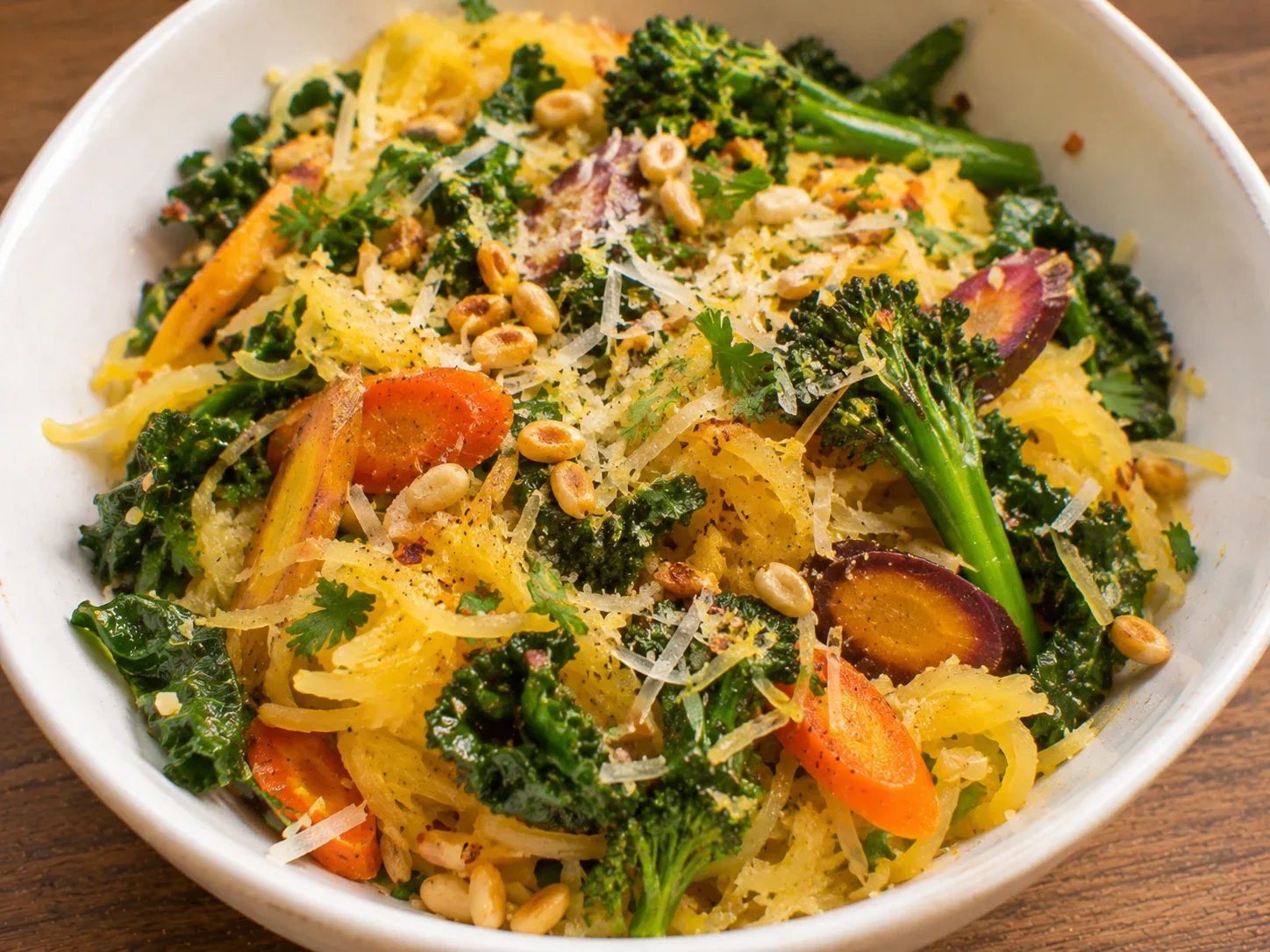
Spaghetti Squash Aglio e Olio with Kale, Broccolini, and Rainbow Carrots
Roasted spaghetti squash strands tossed in slow-cooked garlic and olive oil with silky kale, broccolini, and rainbow carrots, then finished with lemon, pine nuts, and Parmigiano. A bright, grain-free take on the Roman classic for fall and winter.
Yield: Serves 4 as a main, 6 as a side · Active: 25 min · Total: 1 hr · Season: Best in North America in fall and winter, when spaghetti squash, kale, and carrots are at their peak · Best eaten: midday or early evening
Ingredients
For the spaghetti squash
- 1 medium-large spaghetti squash (about 3–4 lbs)
- 2 tbsp extra virgin olive oil
- Sea salt and freshly ground black pepper
For the aglio e olio
- 1–2 bunches lacinato or curly kale, ribs removed, leaves torn into bite-size pieces
- 1 bunch broccolini, trimmed and cut into 2-inch pieces
- 8 small rainbow carrots, thinly sliced on the diagonal
- 1 small head purple cauliflower, cut into florets (optional, but beautiful)
- 5 cloves garlic, crushed and peeled (left whole, not minced)
- 6 tbsp extra virgin olive oil, plus 1 tbsp for the cauliflower and more for finishing
- Zest of 1 lemon plus 1 tbsp fresh lemon juice
- ¼ cup pine nuts, lightly toasted
- ¼ cup fresh flat-leaf parsley, chopped
- 2 green onions, thinly sliced
- ½–1 cup Parmigiano-Reggiano, freshly grated
- ¼ tsp red pepper flakes (or to taste)
- Flaky sea salt and freshly ground black pepper
Method
Roast the spaghetti squash
- Heat the oven. Preheat to 400°F and line a sheet pan with parchment.
- Halve the squash. Cut it lengthwise, stem to blossom end, with a sharp, heavy chef’s knife; rock the knife through rather than pressing down. If the skin is very tough, roast the whole squash for 10 minutes first to soften it slightly. Scoop out the seeds and stringy pulp.
- Season and roast. Brush the cut sides with the olive oil, season with salt and pepper, and place cut-side down on the pan. Roast 40–45 minutes, until a fork pierces the skin easily and the flesh shreds readily.
- Shred. Flip cut-side up and cool 5 minutes. Scrape a fork across the flesh from side to side to pull it into long strands (a 3-lb squash gives 4–5 cups).
- Drain. Let the strands drain in a colander 5–10 minutes; spaghetti squash releases water as it sits, and you want that gone before saucing. Season with another pinch of salt and pepper.
Make the aglio e olio
- Roast the cauliflower (if using). Toss the florets with 1 tbsp olive oil, salt, and pepper, and roast at 400°F for 20–25 minutes alongside the squash in its final minutes, until tender and caramelized at the edges.
- Blanch the kale. Cook in boiling salted water 2 minutes, drain, rinse briefly with cold water, and squeeze dry with your hands.
- Cook the garlic. In a large, wide skillet, heat ¼ cup olive oil over medium heat. Add the garlic and a generous pinch of black pepper and cook gently 3–4 minutes, smashing the cloves now and then with the back of a wooden spoon, until pale gold and deeply fragrant. Don’t let the garlic burn.
- Wilt the kale. Add the kale to the garlic oil and cook 8–10 minutes, stirring occasionally, until silky and tender.
- Add the broccolini and carrots. Cook 3–4 minutes, just until the broccolini is bright green and tender-crisp. Add a splash of water if the pan goes dry.
- Add the squash. Fold in the squash strands gently and cook 1–2 minutes more to warm through.
- Dress. Whisk the remaining 2 tbsp olive oil with the lemon juice and zest, pour it over, and toss.
- Plate. Transfer to a wide platter and scatter with the roasted cauliflower, pine nuts, parsley, green onions, Parmigiano, red pepper flakes, and flaky salt. Finish with a grind of black pepper and a thread of your best olive oil. Serve warm.
Storage
- This one is best eaten fresh from the pan. Leftovers keep 3 days in the fridge; reheat gently in a skillet with a splash of water or olive oil, or eat them cold tossed with olive oil and lemon as a simple lunch salad.
- You can roast the spaghetti squash up to 2 days ahead and keep it covered in the fridge.
Variations
- Sage-parsley pesto with ricotta: for a richer, more fall-forward version, see my Spaghetti Squash, Eight Ways: Weeknight to Dinner Party.
Season & Circadian Timing
Spaghetti squash is at its best from October through December, alongside the kale, broccolini, and carrots that make this dish so colorful, and it stores well through the cold months. It’s a lovely midday or early evening meal: the squash’s gentle carbohydrates come with plenty of olive oil, pine nuts, and Parmigiano, which makes for steady energy without feeling heavy.
Nourishment Notes
- Spaghetti squash — A true winter squash with vitamin C, manganese, vitamin B6, and fiber, and only about a quarter of the carbohydrates of the same amount of cooked pasta.
- Extra virgin olive oil — Rich in polyphenols, including oleocanthal, which has well-documented anti-inflammatory effects.
- Garlic — Crushing it forms allicin, the sulfur compound behind its signature aroma and many of its benefits; cooking it gently in oil keeps the flavor sweet and mellow.
- Kale and broccolini — Brassicas that bring vitamin K, vitamin C, carotenoids, and calcium. A quick blanch softens the fiber so the greens are easier to digest.
- Rainbow carrots — Each color brings its own pigment: beta-carotene in the orange, anthocyanins in the purple, and lutein in the yellow.
Sourcing
- Extra virgin olive oil — organic, single-estate, harvest-dated, in dark glass
- Parmigiano-Reggiano — DOP, aged 24+ months, made from raw milk by law
- Pine nuts — organic, ideally Mediterranean (keep them in the fridge)
- Lemons — organic (you’re using the zest)
- Spices — organic and non-irradiated
- Salt — unrefined sea salt (Baja Gold); flaky sea salt for finishing (Maldon)
- Fruits, vegetables, and herbs — organic, from a farmers’ market or local farm
With Love, Light, and Health,
Anna (aka Food Marshall)
Food Marshall Approved. Grain-free, seed-oil-free and refined-sugar-free, made from organic, local and seasonal ingredients. Our standards
More Vegetable Sides & Mains
Get new recipes and essays
Seasonal recipes and writing on light, circadian health, and living with nature.
Subscribe on Substack