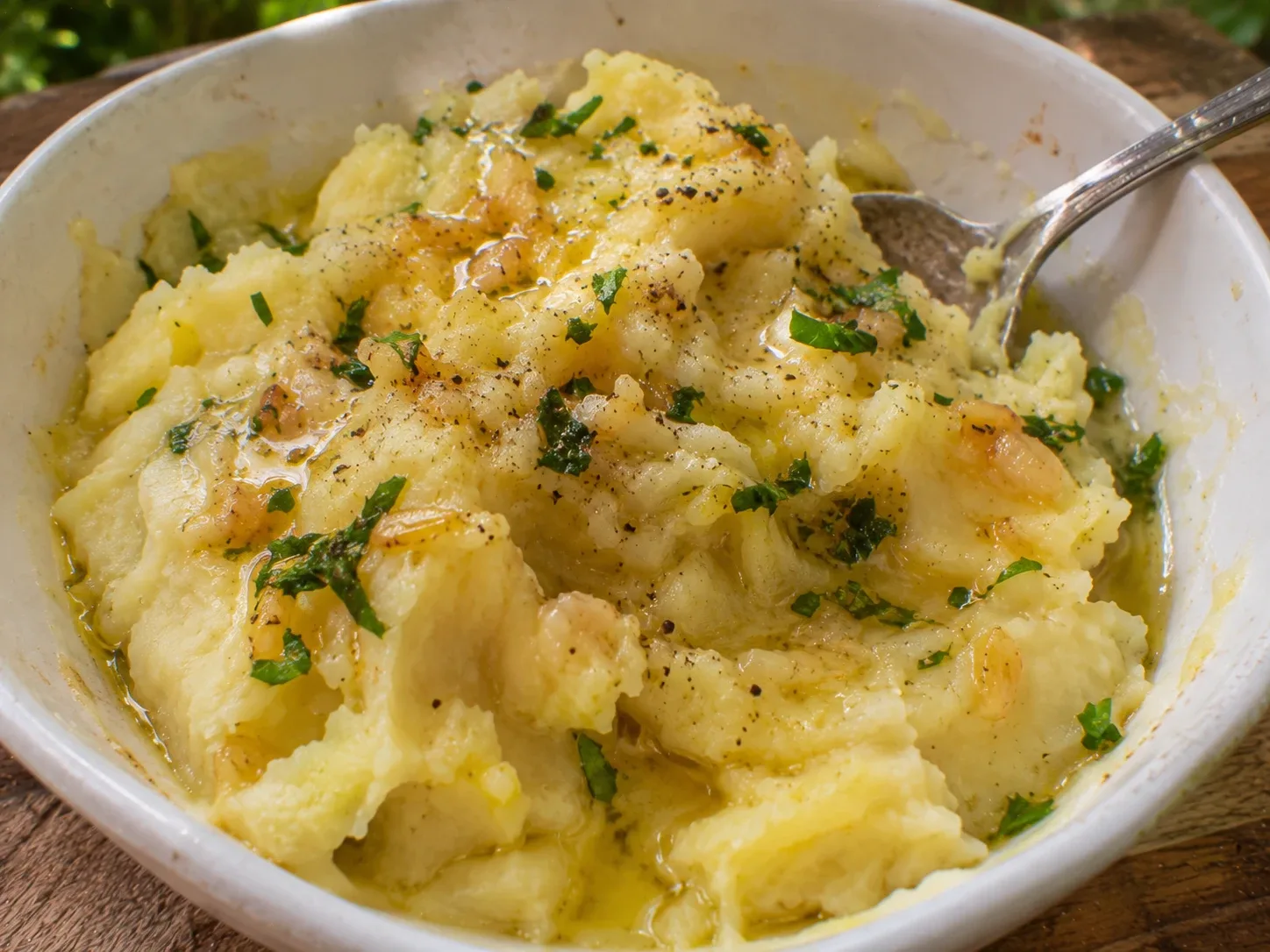
Yuca Mash
Silky, buttery yuca mashed with warm garlic butter and raw cream or bone broth. It’s the Latin and Caribbean answer to mashed potatoes, a little stretchy, deeply comforting, and naturally grain-free.
Yield: Serves 4–6 · Active: 20 min · Total: 50 min · Season: Best in tropical regions year-round, when fresh yuca is always in season · Best eaten: midday
Ingredients
For the yuca
- 2½ lb fresh yuca (cassava root), about 2 medium roots, or 2 lb frozen peeled yuca
- 1 tbsp sea salt, for the cooking water
For the garlic butter and mash
- 4 tbsp grass-fed butter or grass-fed ghee (or 2 tbsp of each)
- 5 garlic cloves, minced
- ½–¾ cup raw cream or bone broth, warmed
- ¾ tsp sea salt, plus more to taste
- ¼ tsp freshly cracked black pepper
- 1 tbsp fresh lime juice (optional)
- 2 tbsp chopped fresh cilantro or parsley, for finishing
Method
- Peel the yuca. Cut off both ends and cut each root crosswise into 3-inch pieces. Stand each piece on its end and slice down the sides to remove the thick, waxy brown skin along with the pinkish layer underneath, until only bright white flesh remains. (Frozen yuca comes peeled; skip this step.)
- Halve it. Cut each piece in half lengthwise so you can see the thin, woody core running through the center. You can cut it out now, or pull it out after boiling, when it lifts away easily.
- Boil. Put the yuca in a large pot, cover with cold water by 2 inches, and add 1 tbsp salt. Bring to a boil, then simmer 20–30 minutes (frozen may take a little less), until the yuca is fork-tender, starting to split, and slightly translucent. Yuca must always be fully cooked, never eaten raw.
- Drain and remove the core. Drain well and discard the cooking water. Pull out and discard any remaining fibrous cores.
- Make the garlic butter. While the yuca drains, melt the butter or ghee in the same pot over medium-low heat. Add the garlic and cook gently 1–2 minutes, until fragrant and just turning golden.
- Mash. Return the hot yuca to the pot and mash with a potato masher, adding the warm cream or broth a little at a time until smooth and creamy. Mash by hand; a food processor or blender turns yuca gluey.
- Season and serve. Season with salt, pepper, and lime juice, if using. Finish with cilantro or parsley and serve hot.
Storage
Fridge up to 4 days.
Yuca firms up as it cools. Reheat in a pot over low heat with a splash of broth or cream, stirring until smooth again.
Freezes well for up to 3 months; thaw in the fridge before reheating.
Variations
- Mojo-style: Swap the cream for broth and finish with the juice of 1 orange and 1 lime, plus a pinch of ground cumin and dried oregano, for a Cuban-inspired mojo mash.
- Extra rich: Fold in ½ cup grated raw cheese (aged cheddar, Manchego, or Parmigiano-Reggiano) at the end.
- Coconut: Use full-fat coconut milk in place of the cream for a Caribbean flavor.
- Crispy yuca cakes: Shape cold leftover mash into patties and pan-fry in ghee or tallow over medium heat until golden on both sides.
- With chicharrón: Top with crumbled crispy pork skin or bacon for crunch.
Season & Circadian Timing
Yuca grows year-round in tropical regions, and in North America you’ll find it fresh or frozen in Latin markets and many grocery stores in any season. Starchy roots sit best earlier in the day, so this is a great midday side, alongside a slow-braised pork or chicken dish, when daylight and activity help you put that energy to good use.
Nourishment Notes
- Yuca (cassava) — a naturally grain-free, gluten-free starchy root with vitamin C and potassium. Peeling and fully boiling it, then discarding the water, removes the natural compounds that make raw cassava unsafe.
- Cooled yuca — like potatoes, cooked and cooled yuca forms some resistant starch, a type of starch that feeds beneficial gut bacteria.
- Grass-fed butter and ghee — rich, satisfying fats that carry fat-soluble vitamin A.
- Bone broth — brings gelatin and deep savory flavor if you choose it over cream.
- Garlic — aromatic sulfur compounds, gently bloomed in butter for a mellow, sweet flavor.
Sourcing
- Yuca — firm and heavy, with no soft spots, mold, or dark streaks; the cut flesh should be bright white. Frozen peeled yuca from a Latin market is a great backup.
- Grass-fed butter — organic, cultured butter from 100% grass-fed cows, or raw butter from a local dairy
- Ghee — grass-fed ghee, or homemade from organic grass-fed butter
- Heavy cream — raw from a farmer you know and trust, or organic, grass-fed, low-temperature pasteurized cream (Kalona SuperNatural)
- Bone broth — homemade from pasture-raised bones (see Broths 101 — A Foundation), or organic and sold frozen (Bonafide Provisions)
- Coconut milk — organic and full-fat, made with just coconut and water, with no guar gum, in BPA-free cans (Native Forest Simple)
- Tallow / lard / duck fat — from pasture-raised animals, from a local farm or butcher
- Salt — unrefined sea salt (Baja Gold); flaky sea salt for finishing (Maldon)
- Fruits, vegetables, and herbs — organic, from a farmers’ market or local farm
You might also like: Slow-Braised Tacos Two Ways: Mexican-Spiced Lamb Shoulder & Cinnamon-Orange Pork Carnitas · Broths 101 — A Foundation
With Love, Light, and Health,
Anna (aka Food Marshall)
Food Marshall Approved. Grain-free, seed-oil-free and refined-sugar-free, made from organic, local and seasonal ingredients. Our standards
More Vegetable Sides & Mains
Get new recipes and essays
Seasonal recipes and writing on light, circadian health, and living with nature.
Subscribe on Substack