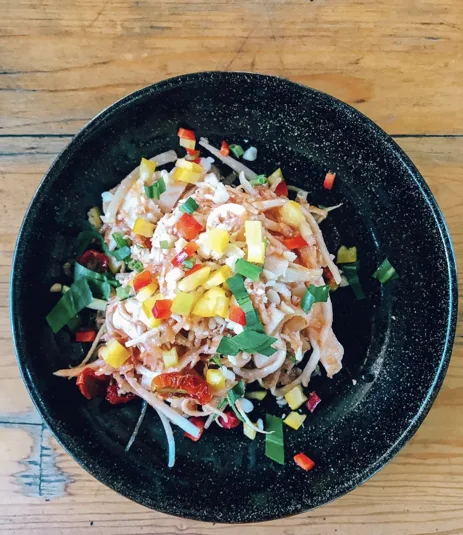
Asian Ceviche Noodle Salad with Lime-Ginger Dressing
Tender lime-cured fish and shrimp tossed with kelp noodles, crunchy bean sprouts, sweet peppers, sun-dried tomatoes, and garlic chives in a tangy, savory lime-ginger dressing. It’s bright, cooling, and comes together without turning on the stove.
Serves 2 as a main, 4 as a starter
Prep time 25 minutes
Curing time 15 to 20 minutes
Ingredients
Ceviche
- ½ lb sushi-grade wild white fish (halibut, snapper, or sea bass), cut into ½-inch pieces
- ¼ lb wild shrimp or squid rings, thinly sliced
- ¾ cup fresh lime juice (about 6 limes)
- ½ tsp sea salt
Lime-Ginger Dressing
- 3 Tbsp coconut aminos (or tamari)
- 1 Tbsp fish sauce (Red Boat)
- 1 Tbsp fresh lime juice
- 1 Tbsp toasted sesame oil
- 1 tsp raw honey
- 1 tsp freshly grated ginger
- 1 clove garlic, minced
- 1 small red chili or ¼ tsp red pepper flakes, to taste
- 1 Tbsp sun-dried tomato paste or 2 sun-dried tomatoes, finely minced (gives the dressing its blush color)
Salad
- 1 package (12 oz) kelp noodles, rinsed (or 2 cups spiralized daikon radish)
- 1 cup mung bean sprouts
- 1 small yellow bell pepper, finely diced
- 1 small red bell pepper, finely diced
- ¼ cup oil-packed sun-dried tomatoes, sliced
- 1 small bunch garlic chives or scallions, cut into 1-inch pieces
To Finish
- ¼ cup macadamias or cashews, roughly chopped
- Fresh cilantro or Thai basil
- Lime wedges
Instructions
- Cure the seafood. Place the fish and shrimp in a glass or ceramic bowl, add the lime juice and salt, and stir so every piece is submerged. Refrigerate for 15 to 20 minutes, until the fish turns opaque and the shrimp turns pink. Drain, saving 1 tablespoon of the lime liquid.
- Soften the noodles. Rinse the kelp noodles well, then soak them in warm water with a squeeze of lime for 10 minutes. This turns them from crunchy to tender and springy. Drain and cut into shorter lengths with kitchen scissors.
- Make the dressing. Whisk together the coconut aminos, fish sauce, lime juice, sesame oil, honey, ginger, garlic, chili, sun-dried tomato, and the reserved curing liquid.
- Toss. In a large bowl, combine the noodles, bean sprouts, half the diced peppers, sun-dried tomatoes, and half the chives. Pour in the dressing and toss well, then gently fold in the ceviche.
- Plate and finish. Pile into bowls and top with the remaining peppers, chives, chopped nuts, and fresh herbs. Serve with lime wedges.
Variations
- All Shrimp or All Fish: use ¾ lb of either one.
- Scallop Version: swap in thinly sliced wild sea scallops, which cure in about 10 minutes.
- Seared Version: for anyone who prefers cooked seafood, quickly sear the shrimp and fish in ghee, cool, then toss with lime and continue with the recipe.
- Mango Version: add diced ripe mango for a sweet, tropical contrast.
- Cucumber Crunch: add thin cucumber matchsticks or shredded purple cabbage.
- Avocado Version: fold in diced avocado just before serving for creaminess.
Season & Circadian Timing
Bell peppers and tomatoes are seasonal to North America in summer, and limes and fresh seafood are year-round in tropical coastal areas, which is exactly where ceviche was born. This is a cooling, hydrating midday meal, perfect for hot days or after a morning in the sun when your appetite wants something fresh and light.
Storage
Ceviche is best eaten within a few hours of making. Leftovers keep in the fridge for up to 1 day, though the fish will firm up as the lime keeps working. Store the dressing separately for up to 5 days.
Nourishment Notes
- Wild seafood brings DHA and EPA, the omega-3 fats your brain, eyes, and cell membranes are built from, plus iodine, selenium, and zinc.
- Kelp noodles are made from seaweed, so they’re naturally grain-free and offer trace minerals from the ocean, including iodine, which your thyroid depends on.
- Lime juice “cooks” the fish through acid instead of heat, changing the shape of the proteins so they turn firm and opaque, while also delivering vitamin C.
- Bell peppers are one of the richest vegetable sources of vitamin C, with red and yellow peppers carrying even more than green.
- Ginger and garlic support digestion and circulation and bring natural antimicrobial compounds to a raw dish.
- Fish sauce is a traditional fermented food that adds savory depth (umami) along with minerals from the fish.
Sourcing
- Fish and shrimp: sushi-grade, wild-caught seafood from a trusted local fishmonger who can tell you when and where it was caught; ask for sustainably harvested
- Kelp noodles: (Sea Tangle Noodle Company)
- Fish sauce: (Red Boat), made with just anchovies and sea salt
- Coconut aminos: organic, soy-free coconut aminos (Coconut Secret)
- Toasted sesame oil: organic toasted sesame oil (Eden Organic)
- Raw honey: local, raw organic honey
- Peppers, sprouts, garlic chives, herbs, limes, ginger: organic from your local farmers market or Asian market
- Sun-dried tomatoes: organic sun-dried tomatoes packed in olive oil
- Macadamias or cashews: raw organic nuts (Terrasoul)
With Love, Light, and Health,
Anna (aka Food Marshall)
Food Marshall Approved. Grain-free, seed-oil-free and refined-sugar-free, made from organic, local and seasonal ingredients. Our standards
More Seafood
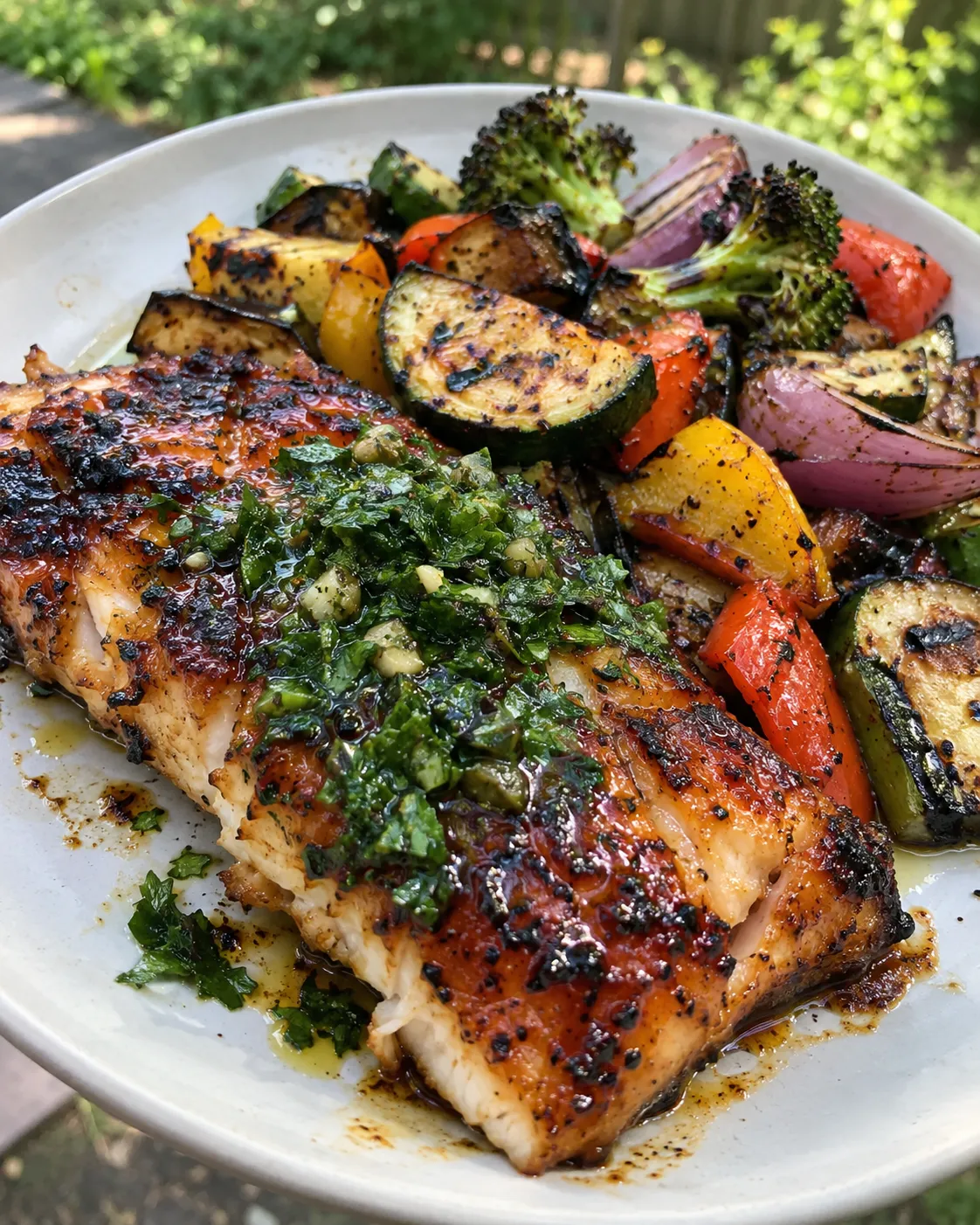
BBQ Wild Sablefish (or Cod) with Parsley Verde and Charred Summer Vegetables
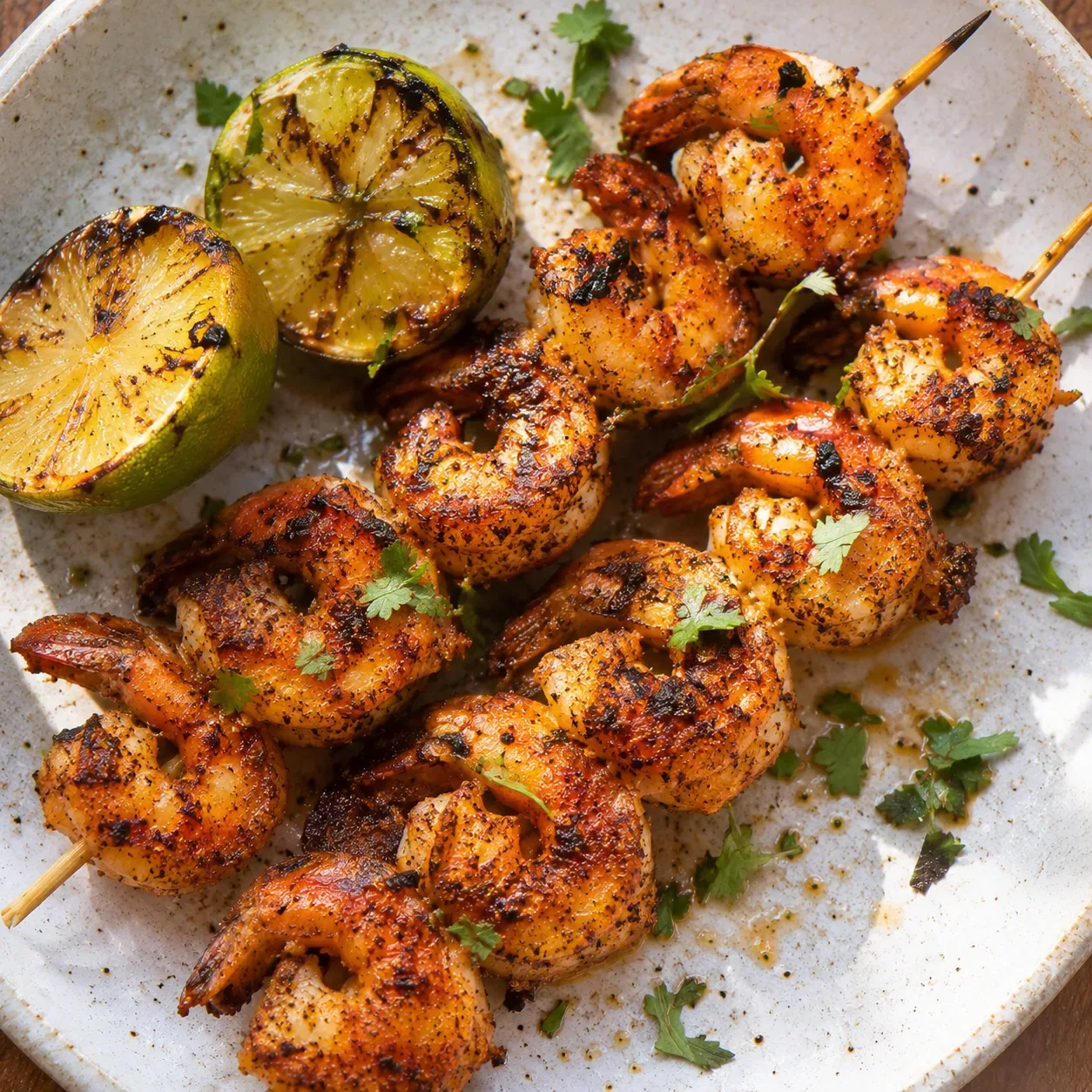
Blackened Wild Shrimp Skewers with Charred Lime
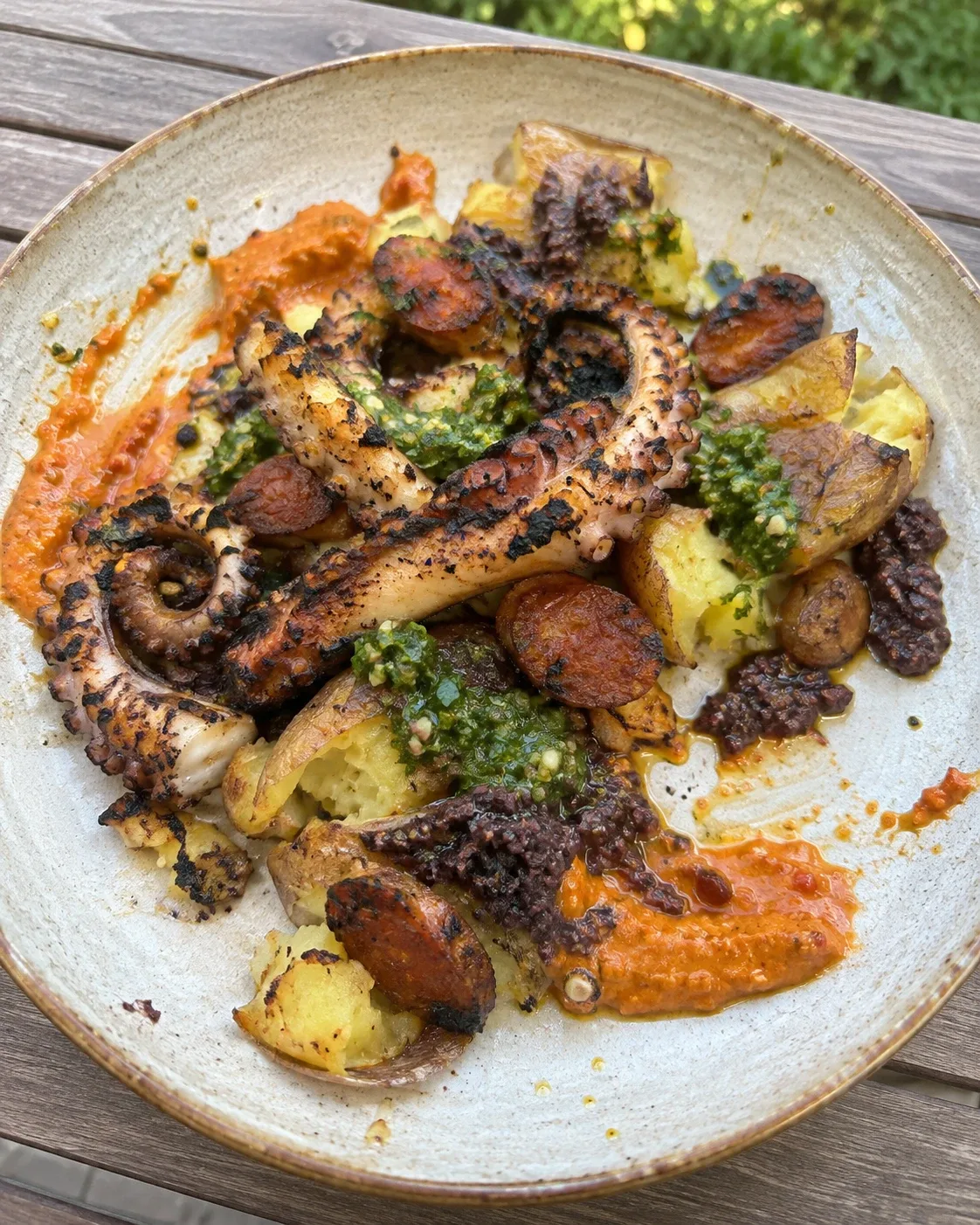
Charred Octopus with Chorizo, Crushed Fingerling Potatoes, Olive Tapenade, Romesco, and Chimichurri
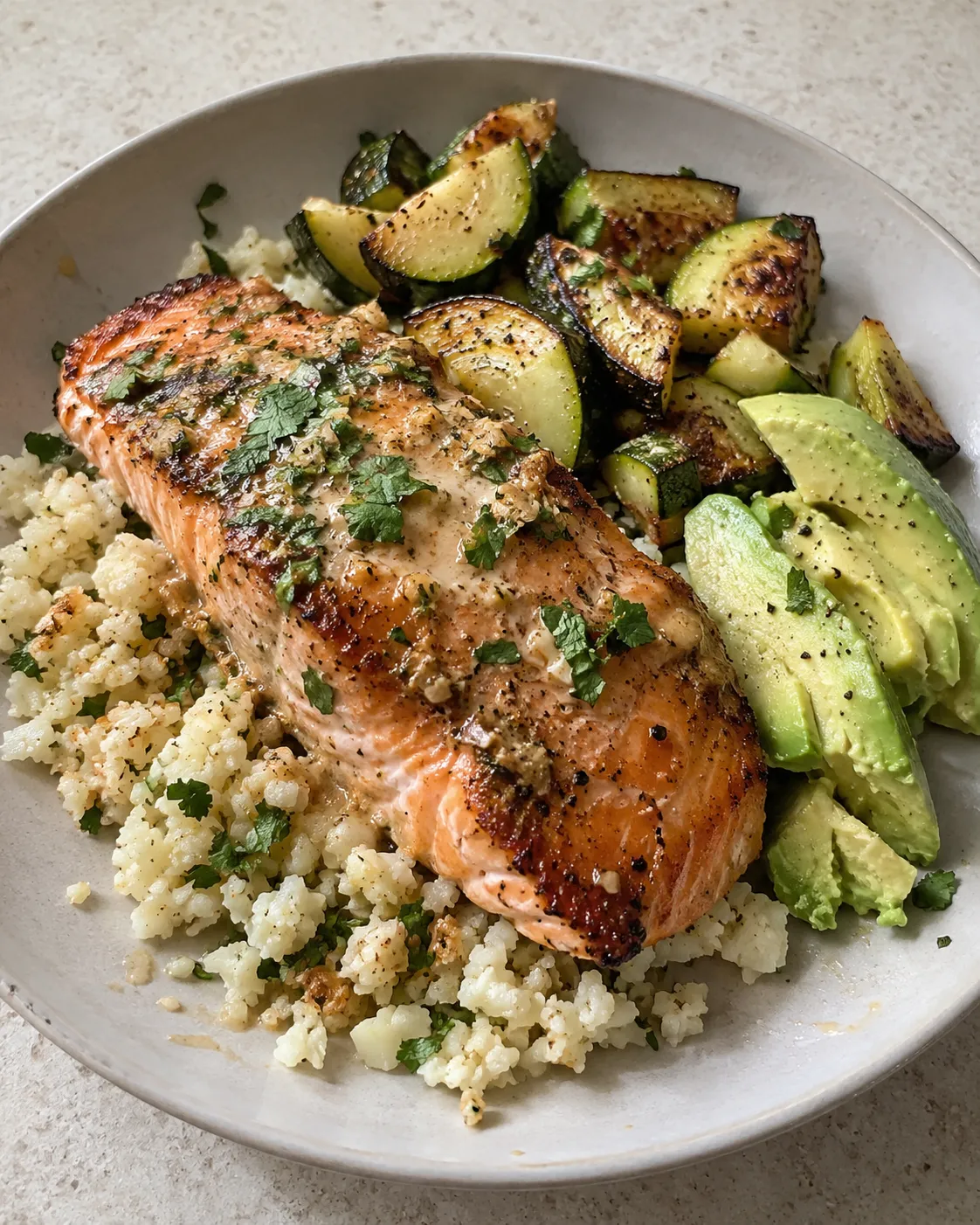
Coconut-Lime Wild Salmon with Coconut Cauliflower Rice, Roasted Zucchini, and Avocado
Get new recipes and essays
Seasonal recipes and writing on light, circadian health, and living with nature.
Subscribe on Substack