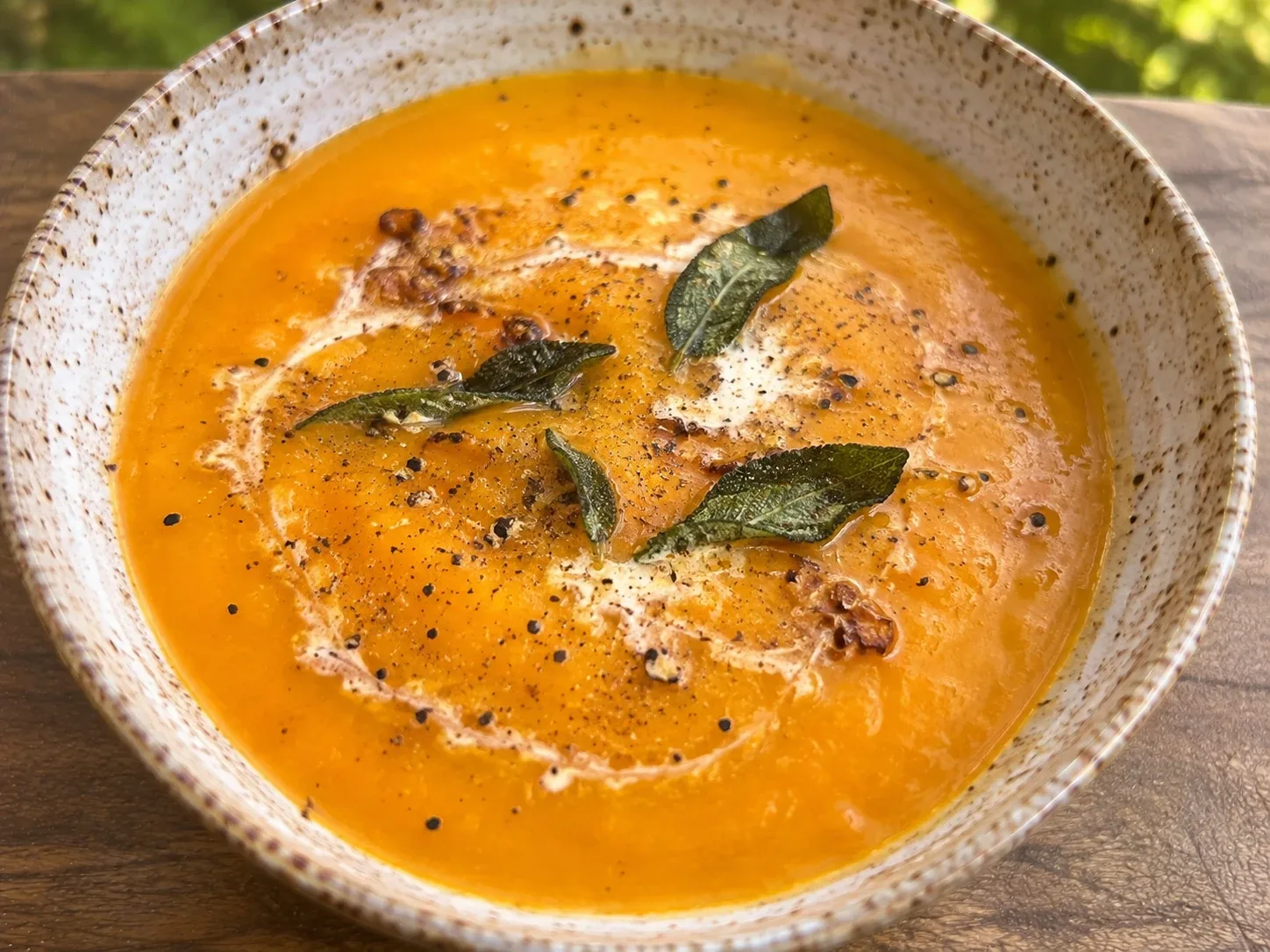
Butternut & Sage Brown-Butter Soup
Roasted butternut squash simmered with leeks, a tart apple, and chicken bone broth, blended silky, then finished with a spoonful of nutty brown butter and crisp fried sage. No cream needed.
Yield: Serves 6 · Active: 30 min · Total: 1 hr 15 min · Season: Best in North America in fall and early winter, when butternut squash and hardy sage are at their peak · Best eaten: midday
Ingredients
For the soup
- 1 large butternut squash (about 3 lbs), halved lengthwise and seeded
- 1 tbsp extra virgin olive oil
- 2 tbsp grass-fed butter or ghee
- 2 medium leeks, white and light green parts only, sliced and well rinsed
- 1 tart apple (Granny Smith or Northern Spy), peeled, cored, and chopped
- 3 garlic cloves, smashed
- 4 fresh sage leaves
- 4–5 cups chicken bone broth
- 1½ tsp sea salt, plus more to taste
- ¼ tsp freshly grated nutmeg
- Freshly cracked black pepper
- 1 tsp raw apple cider vinegar or fresh lemon juice
For the sage brown butter
- 4 tbsp grass-fed butter
- 16–20 fresh sage leaves, patted completely dry
- Flaky sea salt
Method
- Roast the squash. Heat the oven to 400°F. Brush the cut sides of the squash with olive oil, sprinkle with salt, and roast cut-side down on a parchment-lined sheet pan 45–50 minutes, until a knife slides through the neck with no resistance. Let it cool a few minutes, then scoop out the flesh. Roasting it in halves, rather than cubes, gives a deeper, sweeter flavor and saves the peeling.
- Soften the aromatics. While the squash roasts, melt the 2 tbsp butter in a large pot over medium-low heat. Add the leeks and a pinch of salt and cook gently 8–10 minutes, until very soft but not browned. Add the apple, garlic, and the 4 sage leaves, and cook 3 minutes more.
- Simmer. Add the roasted squash, 4 cups of the broth, the salt, and nutmeg. Bring to a gentle simmer and cook 10 minutes, so the flavors come together.
- Blend. Blend with an immersion blender (or carefully, in batches, in a regular blender with the lid vented) until completely smooth. Thin with the remaining broth until it pours like heavy cream. Stir in the vinegar, then taste for salt and pepper. That small splash of acid wakes the whole pot up.
- Make the sage brown butter. Melt the 4 tbsp butter in a small skillet over medium heat. When it foams, add the sage leaves in a single layer and fry 30–60 seconds, until they turn darker green and crisp, and the butter beneath them has browned and smells like toasted hazelnuts. Lift the leaves onto a paper towel and sprinkle with flaky salt. Pour the brown butter into a small bowl, scraping in the browned bits.
- Serve. Ladle the soup into warm bowls. Spoon brown butter over each, top with a few crisp sage leaves, and finish with black pepper.
Storage
Refrigerate the soup up to 5 days, or freeze up to 3 months (leave 1½ inches of headspace in glass jars). Reheat gently. The brown butter keeps refrigerated up to 2 weeks; warm it to pour. The fried sage is best the day it’s made but stays crisp for a day or two in a dry, airtight container.
Variations
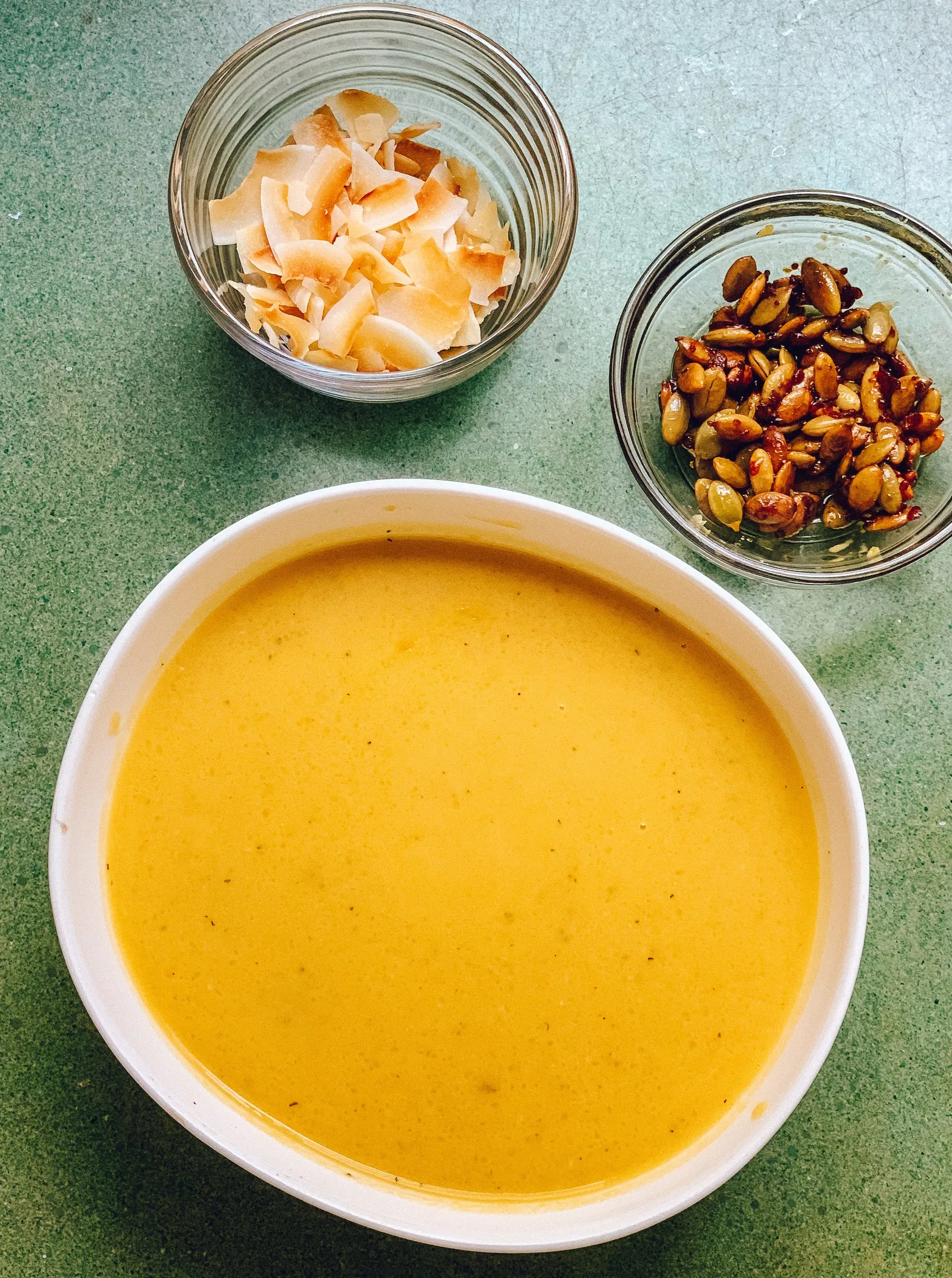
- Creamier: Stir in ½ cup raw cream or crème fraîche off the heat, or see my Butternut Squash Soup with Caramelized Pumpkin Seeds and Toasted Coconut for a creamy, coconut-topped version.
- Dairy-free: Use extra virgin olive oil for the soup and fry the sage in olive oil or duck fat.
- Deeper broth: Use my Beef Bone Broth with Roasted Marrow for a richer, darker soup.
- Other squash: Kabocha, red kuri, or a sugar pumpkin all work; kabocha makes the thickest soup, so you may need extra broth.
- Vegetarian: Use the mineral broth from my Broths 101.
Season & Circadian Timing
Butternut squash comes in at the start of fall and keeps on a cool shelf well into winter, and sage holds on in the garden long after the basil is gone. This is a midday soup: warm, steady carbohydrates and good fat that carry you through a cold afternoon. Make a big pot on Sunday and you have lunch for the week.
Nourishment Notes
- Butternut squash — One of the richest sources of beta-carotene, plus potassium, vitamin C, and fiber. Eating it with fat, like the brown butter here, helps you absorb far more of it.
- Chicken bone broth — Gelatin, glycine, and proline, plus minerals pulled from the bones during the long simmer.
- Grass-fed butter — Vitamins A, D, E, and K2; browning it adds flavor without adding anything else.
- Leeks and garlic — Members of the allium family, rich in sulfur compounds and prebiotic fiber.
- Sage — An aromatic herb traditionally paired with rich, fatty foods to help with digestion.
Sourcing
- Bone broth — homemade from pasture-raised bones (see my Broths 101), or organic and sold frozen (Bonafide Provisions)
- Grass-fed butter — organic, cultured butter from 100% grass-fed cows, or raw butter from a local dairy
- Raw apple cider vinegar — organic, with the mother (Bragg)
- Extra virgin olive oil — organic, single-estate, harvest-dated, in dark glass
- Spices — organic and non-irradiated
- Salt — unrefined sea salt (Baja Gold); flaky sea salt for finishing (Maldon)
- Fruits, vegetables, and herbs — organic, from a farmers’ market or local farm
With Love, Light, and Health,
Anna (aka Food Marshall)
Food Marshall Approved. Grain-free, seed-oil-free and refined-sugar-free, made from organic, local and seasonal ingredients. Our standards
More Soups & Stews
Get new recipes and essays
Seasonal recipes and writing on light, circadian health, and living with nature.
Subscribe on Substack