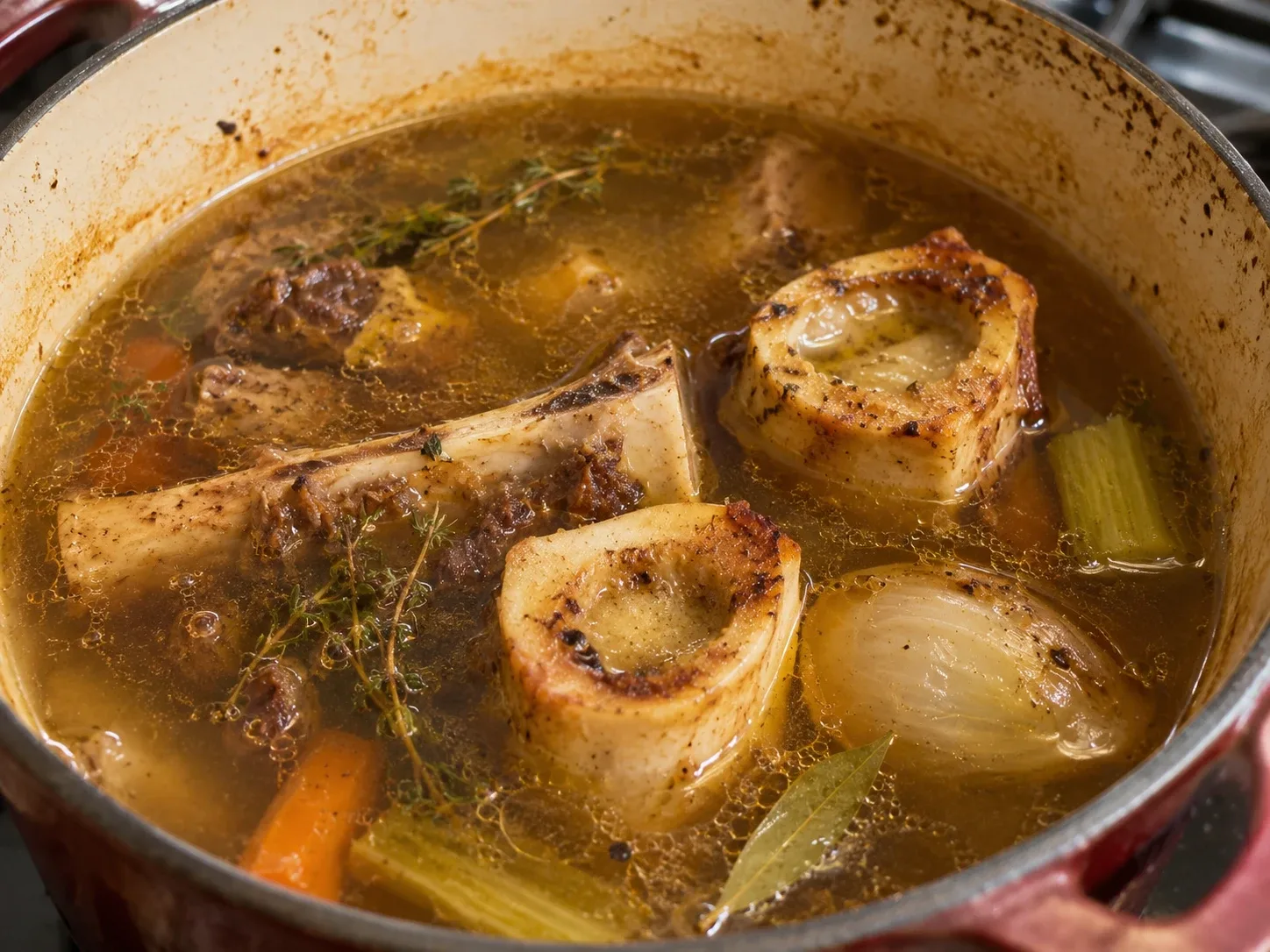
Beef Bone Broth with Roasted Marrow
A deep, gelatin-rich beef bone broth simmered for 36 hours from roasted knuckle and marrow bones, served in mugs with the roasted marrow spread on the side, flaky salt, and a sharp little parsley salad.
Yield: About 4 quarts broth; the marrow serves 4–6 · Active: 45 min · Total: About 37 hours, mostly hands-off · Season: Best in North America in fall and winter, the traditional season for long-simmered broths · Best eaten: morning, or an hour or two before bed
Ingredients
For the broth
- 4 lbs grass-fed beef knuckle and neck bones (the knuckles bring the gelatin)
- 1 lb grass-fed oxtail or beef feet (for extra body)
- 3–4 lbs grass-fed beef marrow bones, cut canoe-style (lengthwise) or into 2-inch rounds, divided
- 2 tbsp raw apple cider vinegar with the mother
- About 6 quarts cold filtered water
- 1 large yellow onion, halved, skin on
- 2 carrots, cut into chunks
- 2 celery stalks, cut into chunks
- 1 head garlic, halved horizontally
- 2 bay leaves
- 1 tsp black peppercorns
- A small bunch of fresh thyme
- 1 tbsp sea salt, plus more to taste
For the roasted marrow and parsley salad
- The reserved marrow bones (about 6–8 canoe halves or rounds)
- Flaky sea salt
- 1 cup fresh flat-leaf parsley leaves
- 1 small shallot, very thinly sliced
- 1 tbsp capers, rinsed
- 1 tbsp fresh lemon juice
- 1 tbsp extra virgin olive oil
- Roasted root slices, grain-free crackers, or a spoon, to serve
Method
- Soak the marrow bones (optional). For the marrow you’ll serve, soak those bones in cold salted water in the fridge for 12–24 hours, changing the water once. This draws out blood and gives you clean, pale marrow. The bones that go in the pot don’t need it.
- Roast the broth bones. Heat the oven to 425°F. Spread the knuckle and neck bones, oxtail, and about half the marrow bones on a large sheet pan with the onion and carrots. Roast 45–60 minutes, turning once, until deeply browned. Browned is flavor; blackened is bitter.
- Start the soak. Move the roasted bones to a large stockpot (at least 12 quarts). Refrigerate the roasted onion and carrots in a covered container for later. Pour a little water onto the hot sheet pan, scrape up every browned bit, and add it to the pot. Cover the bones with the cold filtered water by about 2 inches and stir in the apple cider vinegar. Let it stand 30 minutes before you turn on the heat.
- Bring it up slowly. Bring the pot just to a boil, then turn it down to the lowest bare simmer, with a bubble breaking the surface only every few seconds. Skim off the gray foam during the first hour.
- Simmer long. Simmer 30–36 hours, partly covered, topping up with hot water to keep the bones covered. A slow cooker on Low or a 200°F oven with the lid ajar both work well overnight.
- Add the aromatics late. In the last 3 hours, add the roasted onion and carrots, the celery, garlic, bay, peppercorns, thyme, and salt. Added any earlier, they turn bitter.
- Strain. Strain through a colander, then again through a fine-mesh sieve lined with cheesecloth. Taste and add salt.
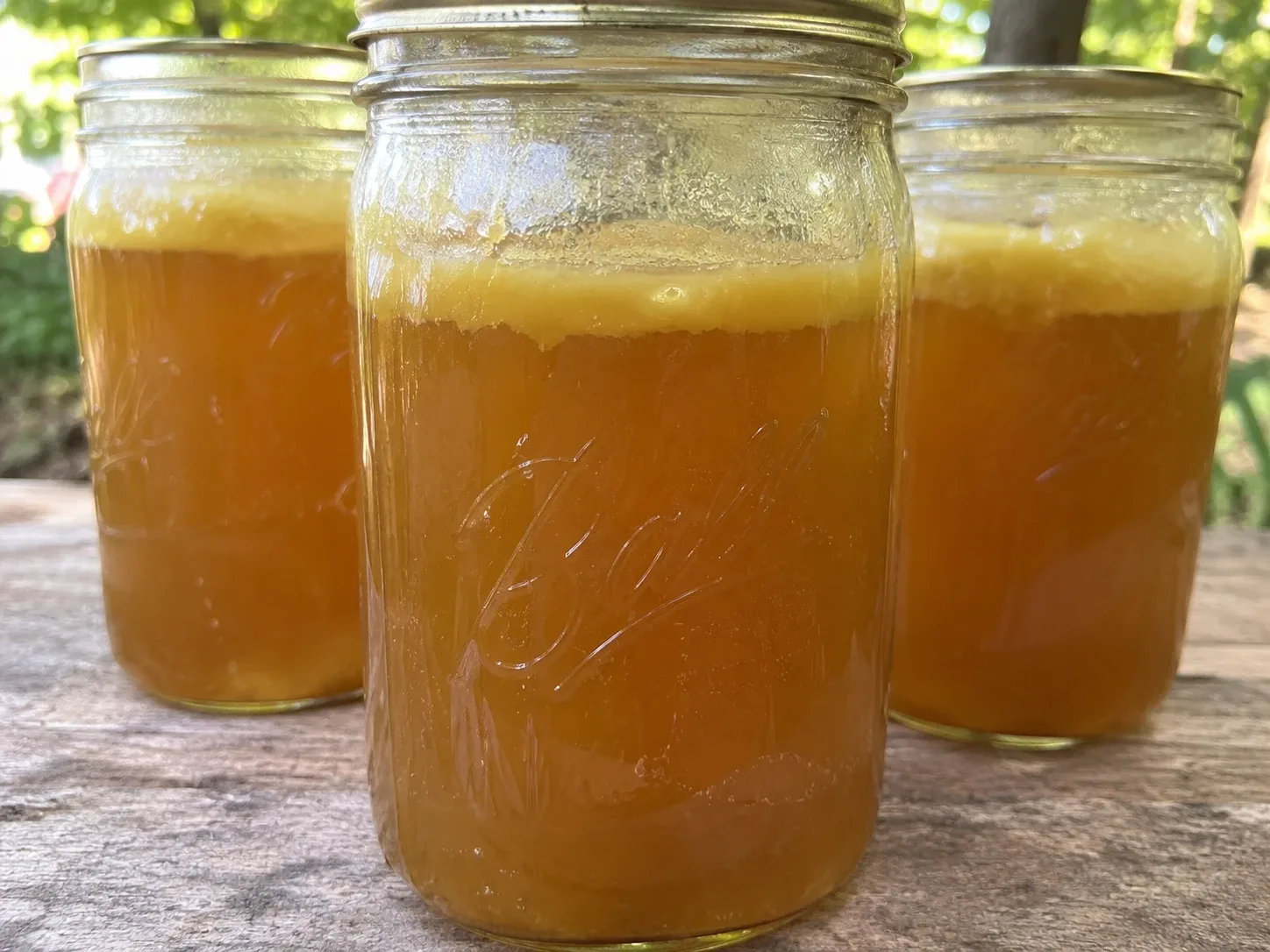
- Chill and lift the fat. Cool quickly (set the pot in a sink of ice water), then refrigerate overnight. Lift off the hard layer of tallow and save it for roasting vegetables. The broth beneath should be firmly jelled; that’s the sign of a good, long bone broth.
- Roast the marrow to serve. On serving day, heat the oven to 450°F. Pat the soaked marrow bones dry, stand them (or lay canoes cut-side up) on a foil-lined pan, and roast 15–20 minutes, until the marrow is soft, bubbling, and just pulling away from the bone. Don’t overcook it, or it melts away.
- Make the parsley salad. Toss the parsley, shallot, and capers with the lemon juice, olive oil, and a pinch of flaky salt.
- Serve. Heat the broth until steaming and pour it into mugs. Set out the hot marrow bones with flaky salt and the parsley salad. Scoop out the marrow, sprinkle with salt, and top with a little salad, or slide a spoonful of marrow right into your mug.
Storage
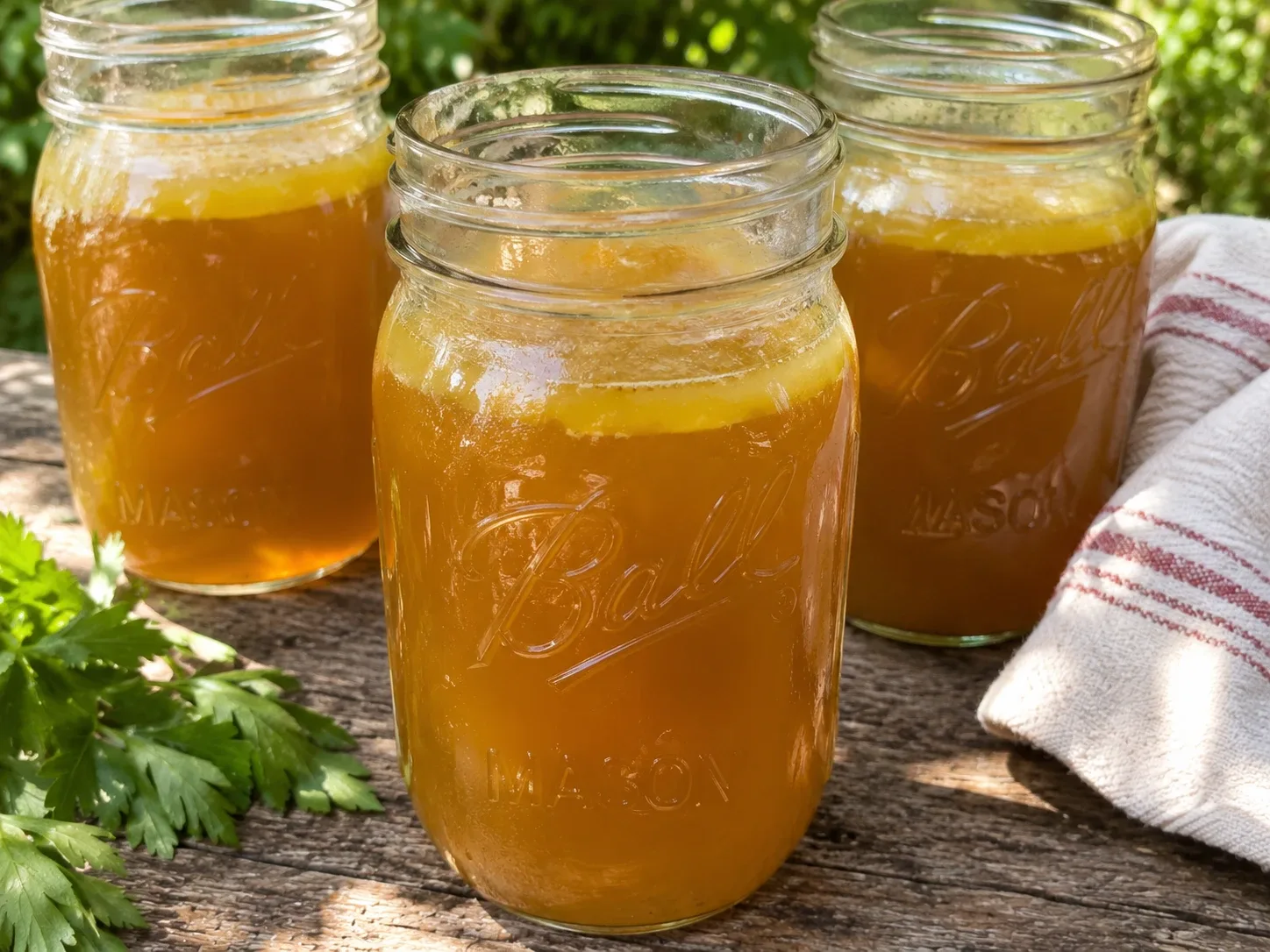
Refrigerate the broth in glass jars up to 5 days (the fat cap seals it), or freeze up to 6 months. When freezing in glass, leave 1½ inches of headspace and keep the lid loose for the first 24 hours. Roasted marrow is best right away; leftover marrow can be refrigerated, covered, up to 3 days and stirred into soups or spread on hot vegetables.
Variations
- Pressure cooker: Cook the roasted bones on high pressure for 4 hours with a natural release, adding the aromatics for the final hour on the sauté setting.
- Second batch: Cover the strained bones with fresh water and simmer another 12–24 hours for a lighter, still useful broth for cooking.
- Morning cup: Whisk a spoonful of ghee and a pinch of salt into a hot mug of broth.
- Lamb or bison: Use lamb or bison bones the same way; see my Bison Bone Broth Soup with Root Vegetables and Greens.
- Cooking stock: For a shorter, meatier stock to use in sauces and braises, try my 24-Hour Beef Stock. For the basics of every broth, see Broths 101.
Season & Circadian Timing
In cold weather, a pot of bones on the back of the stove has been a constant in kitchens all over the world. Start this on a Friday and it’s ready by Sunday. A mug of broth with salt is a lovely way to open a cold morning, and many people like a warm cup an hour or two before bed, when the glycine in broth is at its most welcome. Save the roasted marrow for a slow weekend lunch.
Nourishment Notes
- Beef knuckle bones and oxtail — Collagen that cooks down into gelatin, rich in the amino acids glycine and proline.
- Bone marrow — A dense, rich fat that carries fat-soluble vitamins and was prized in traditional diets.
- Raw apple cider vinegar — A little acid at the start helps draw minerals like calcium, magnesium, and phosphorus out of the bones.
- Parsley and lemon — Vitamin C and vitamin K, and a bright, sharp contrast to all that richness.
Sourcing
- Beef bones and marrow bones — 100% grass-fed and finished, from a local ranch or butcher (ask for knuckles and canoe-cut marrow)
- Raw apple cider vinegar — organic, with the mother (Bragg)
- Water — filtered
- Extra virgin olive oil — organic, single-estate, harvest-dated, in dark glass
- Salt — unrefined sea salt (Baja Gold); flaky sea salt for finishing (Maldon)
- Fruits, vegetables, and herbs — organic, from a farmers’ market or local farm
With Love, Light, and Health,
Anna (aka Food Marshall)
Food Marshall Approved. Grain-free, seed-oil-free and refined-sugar-free, made from organic, local and seasonal ingredients. Our standards
More Ferments & Broths
Get new recipes and essays
Seasonal recipes and writing on light, circadian health, and living with nature.
Subscribe on Substack