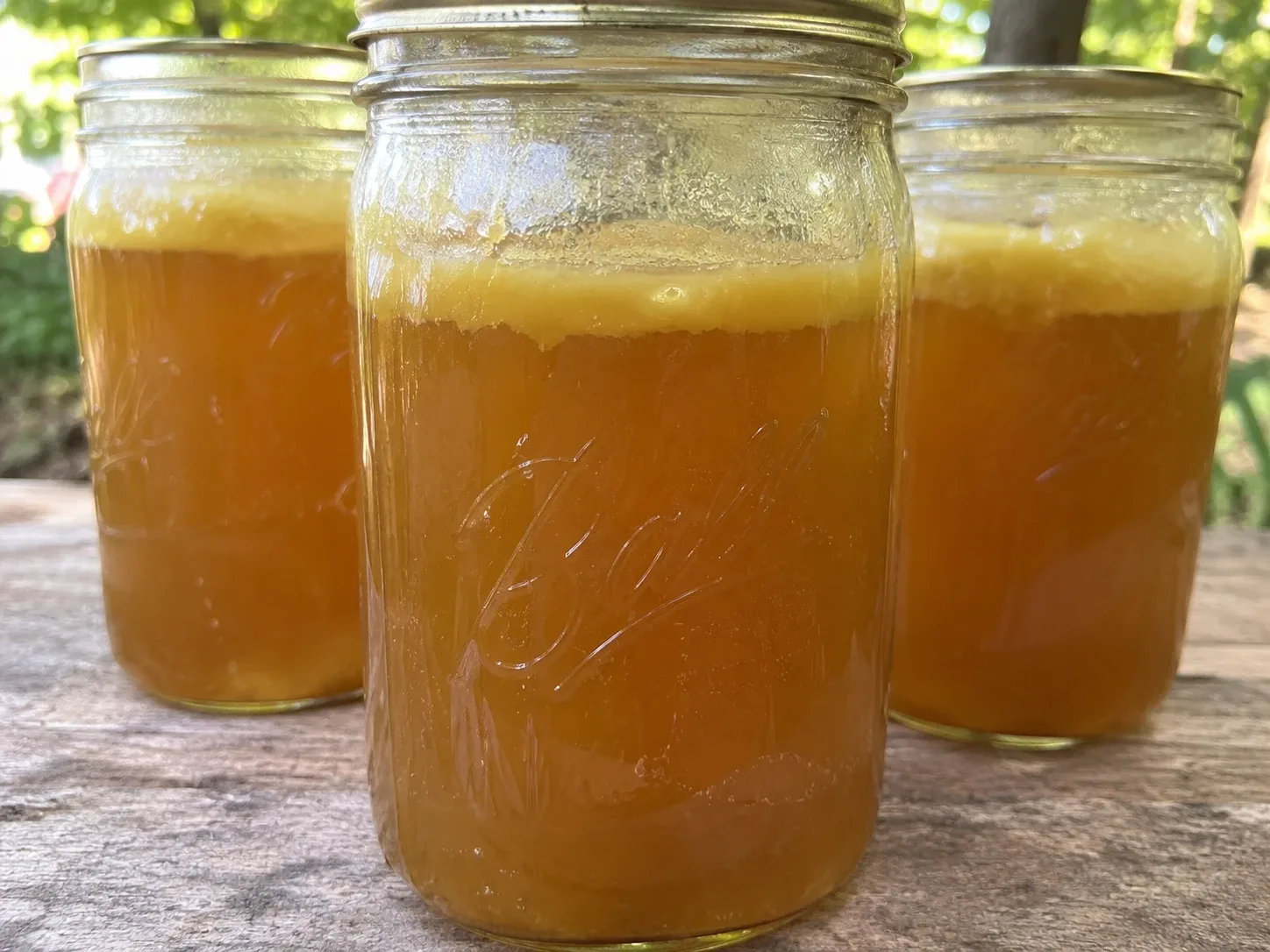
Deep Immune Broth
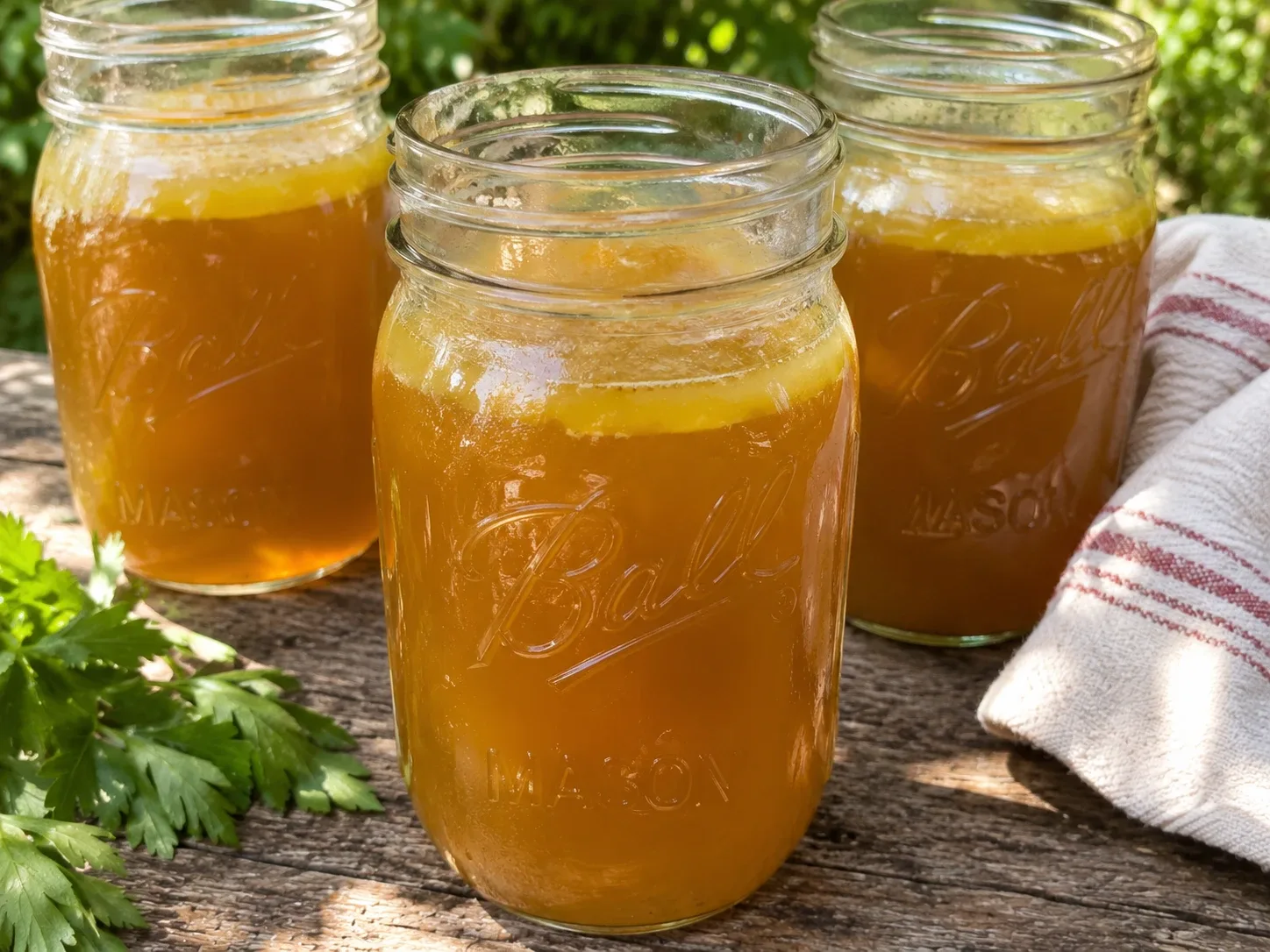
A slow-simmered chicken bone broth layered with shiitake, kombu, ginger, garlic, burdock, astragalus root, and nettle. Mineral-rich, earthy, and golden, it’s the broth I keep on the stove through the cold months.
Yield: About 3½ quarts · Active: 30 min · Total: About 14 hours, mostly hands-off · Season: Best in North America in fall and winter, when broths like this are traditionally made · Best eaten: morning, or as a warm cup in the late afternoon
Ingredients
For the bone broth
- 2 lbs pasture-raised chicken backs, necks, or a leftover roast chicken carcass
- 1 lb pasture-raised chicken feet (for gelatin)
- 2 tbsp raw apple cider vinegar with the mother
- About 5 quarts cold filtered water
For the herbs and vegetables
- 1 oz dried shiitake mushrooms (about 10), or 6 oz fresh
- 1 strip kombu, about 6 inches long
- 5–6 slices dried astragalus root (huang qi, about ½ oz)
- 1 fresh burdock root (about 12 inches), scrubbed and sliced into coins, or 2 tbsp dried burdock
- 3-inch piece fresh ginger, sliced
- 1 head garlic, halved horizontally
- 1 large yellow onion, quartered, skin on
- 2 carrots, cut into chunks
- 2 celery stalks with leaves, cut into chunks
- 3-inch piece fresh turmeric, sliced (or 1 tsp ground)
- 1 tsp black peppercorns
- 1 cup loosely packed dried nettle leaf
- A handful of fresh flat-leaf parsley
- 1 tbsp sea salt, plus more to taste
To serve (optional)
- Thinly sliced scallions, a squeeze of lemon, and a spoonful of ghee
Method
- Blanch the feet. Put the chicken feet in a pot, cover with cold water, and bring to a boil for 5 minutes. Drain and rinse. If they still have the yellow outer skin, peel it off, and clip off the nails with kitchen shears. This gives a cleaner broth.
- Start the bones. Put the chicken backs and blanched feet in a large stockpot (at least 10 quarts). Cover with the cold filtered water and stir in the vinegar. Let it sit 30 minutes.
- Bring up and skim. Bring slowly to a boil, then turn it down to the barest simmer. Skim off the foam during the first 30–45 minutes.
- Add the roots. Add the shiitake, kombu, astragalus, burdock, ginger, and turmeric. These slow, earthy ingredients do best with a long simmer.
- Simmer. Keep it at a bare simmer, partly covered, 10–12 hours. Top up with hot water as needed. Lift out the kombu after the first hour, before it turns slimy, and save it for soup.
- Add the vegetables. For the final 2 hours, add the garlic, onion, carrots, celery, peppercorns, and salt.
- Steep the greens. Turn off the heat. Stir in the dried nettle and parsley, cover, and let steep 20 minutes. Nettle is delicate and gives the most flavor and color with a gentle steep, not a long boil.
- Strain. Strain through a colander, then a fine-mesh sieve. Save the shiitake to slice into soup. Discard the astragalus slices (they stay woody) and the rest of the solids.
- Chill. Cool quickly and refrigerate overnight. Skim off the fat if you like, or leave it for flavor. It should set to a soft jelly.
- Serve. Heat a mug until steaming, season with salt, and finish with scallions, a squeeze of lemon, and a spoonful of ghee.
Storage
Refrigerate in glass jars up to 5 days, or freeze up to 4 months, leaving 1½ inches of headspace and keeping the lid loose for the first 24 hours.
Variations
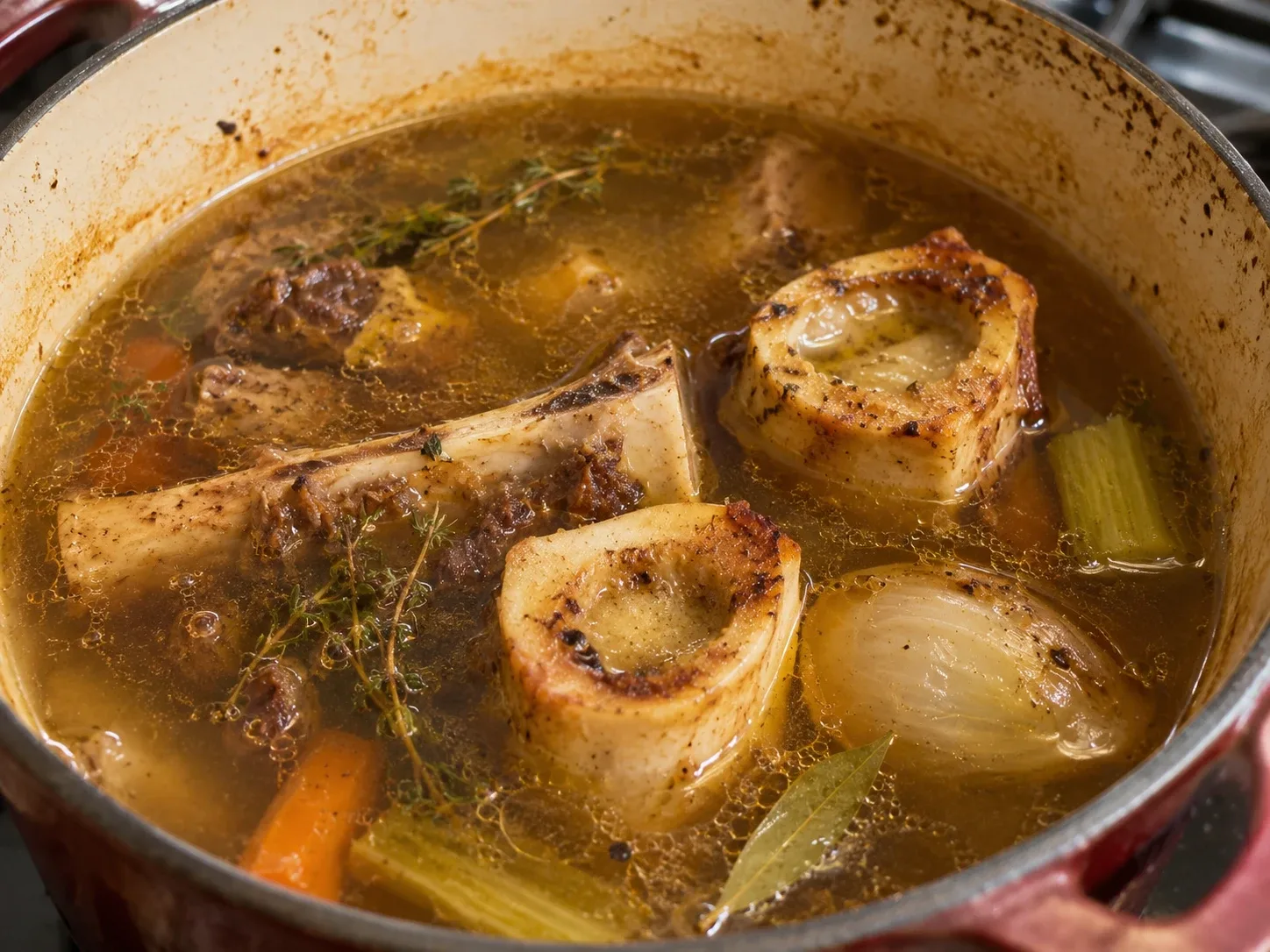
- Beef or lamb: Use 3 lbs beef or lamb knuckle and marrow bones and simmer 24 hours; see my Beef Bone Broth with Roasted Marrow.
- Vegetarian: Leave out the chicken, double the shiitake and kombu, and simmer just 2 hours, like the mineral broth in my Broths 101.
- Pressure cooker: Cook the bones, roots, and vinegar on high pressure for 2 hours with a natural release, then add the vegetables and simmer 1 hour on sauté before steeping the nettle.
- More mushrooms: Add a few slices of dried reishi or a handful of maitake with the roots.
- Soup: Simmer sliced shiitake, shredded chicken, bok choy, and a soft egg in a few cups of the broth for a quick lunch.
Season & Circadian Timing
Across many traditions, from Chinese kitchens simmering astragalus into chicken soup to European grandmothers making broth with nettles and roots, this kind of pot has always been made in the cold season. It’s a mug I like first thing on a dark winter morning, before coffee, or as a warm, savory pause in the late afternoon. Keep a jar in the fridge from November through March.
Nourishment Notes
- Chicken feet and bones — Collagen that becomes gelatin, rich in glycine and proline, plus minerals drawn out by the vinegar.
- Astragalus root — A mild, slightly sweet root traditionally simmered into soups in Chinese cooking through fall and winter. If you’re pregnant, nursing, or on medication, check with your practitioner before adding it.
- Shiitake and kombu — Shiitake brings B vitamins, vitamin D (especially when sun-dried), and deep savory flavor; kombu brings iodine and other trace minerals from the sea.
- Nettle — A wild green rich in minerals, including calcium, magnesium, potassium, and iron, long used in European folk kitchens.
- Burdock, ginger, garlic, and turmeric — Burdock is a prebiotic-fiber root common in Japanese cooking; ginger and turmeric are warming roots, and garlic adds sulfur compounds. Black pepper helps you absorb turmeric’s curcumin.
Sourcing
- Chicken backs and feet — pasture-raised, from a local farm (ask the farmer to save the feet)
- Astragalus root, nettle, and burdock — organic, from a trusted herb supplier (Mountain Rose Herbs) or an Asian market
- Shiitake — organic and sun-dried, or fresh from a local grower
- Kombu — wild-harvested and tested for heavy metals (Maine Coast Sea Vegetables)
- Raw apple cider vinegar — organic, with the mother (Bragg)
- Water — filtered
- Spices — organic and non-irradiated
- Salt — unrefined sea salt (Baja Gold)
- Fruits, vegetables, and herbs — organic, from a farmers’ market or local farm
With Love, Light, and Health,
Anna (aka Food Marshall)
Food Marshall Approved. Grain-free, seed-oil-free and refined-sugar-free, made from organic, local and seasonal ingredients. Our standards
More Ferments & Broths
Get new recipes and essays
Seasonal recipes and writing on light, circadian health, and living with nature.
Subscribe on Substack