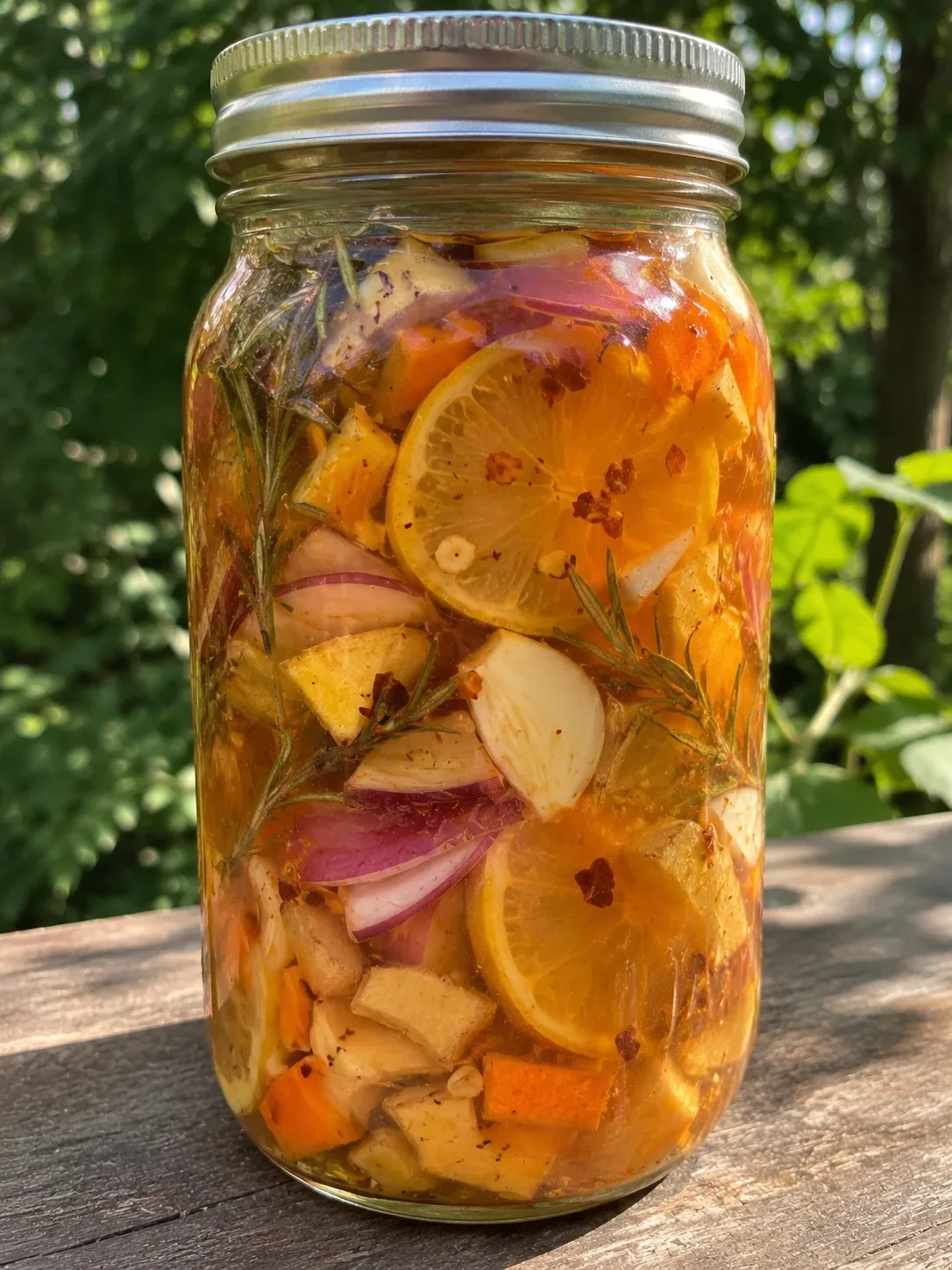
Fire Cider: A Folk Tonic in a Jar
The classic American herbal tonic. Raw apple cider vinegar steeped for 4 weeks with horseradish, ginger, garlic, onion, turmeric, chile, and citrus, then sweetened with raw honey.
Yield: About 3 cups · Active: 30 min · Total: 4 weeks, mostly hands-off · Season: Best in North America in fall and winter, when fresh horseradish, ginger, and citrus are at their peak · Best eaten: morning
Ingredients
For the infusion
- ½ cup peeled and grated fresh horseradish root
- ½ cup peeled and grated fresh ginger
- ¼ cup grated fresh turmeric root (or 2 tbsp dried)
- 1 whole head garlic, cloves peeled and smashed
- 1 large white onion, roughly chopped
- 2 fresh jalapeños or serranos, chopped (or 1 tbsp dried cayenne)
- Zest and juice of 2 organic lemons
- Zest and juice of 1 organic orange
- 2 tbsp whole black peppercorns
- 1 sprig fresh rosemary
- 1 sprig fresh thyme
- About 3 cups raw apple cider vinegar, with the mother
To finish
- ⅓–½ cup raw honey, to taste
You’ll also need
- A clean quart glass jar
- A plastic lid, or a square of parchment paper to put under a metal lid
- A fine mesh sieve and cheesecloth
Method
Day 1: Fill the jar
- Prep. Grate the horseradish, ginger, and turmeric, smash the garlic, and chop the onion and chiles. Grate horseradish in a well-aired kitchen; it is strong enough to sting your eyes. Wear gloves for the turmeric if you don’t want yellow fingers.
- Pack. Put everything except the honey in the jar, including the citrus zest and juice, peppercorns, and herb sprigs. Press down firmly.
- Cover with vinegar. Pour in vinegar until every piece is fully covered, with about ½ inch of vinegar above the solids.
- Seal. Cap tightly with a plastic lid, or lay a square of parchment over the jar before screwing on a metal lid. Vinegar eats through bare metal.
- Store. Shake well and set it in a cool, dark cupboard.
Days 2–28: Shake daily
- Shake. Give the jar a good shake once a day. If the solids poke above the vinegar, top up with a splash more.
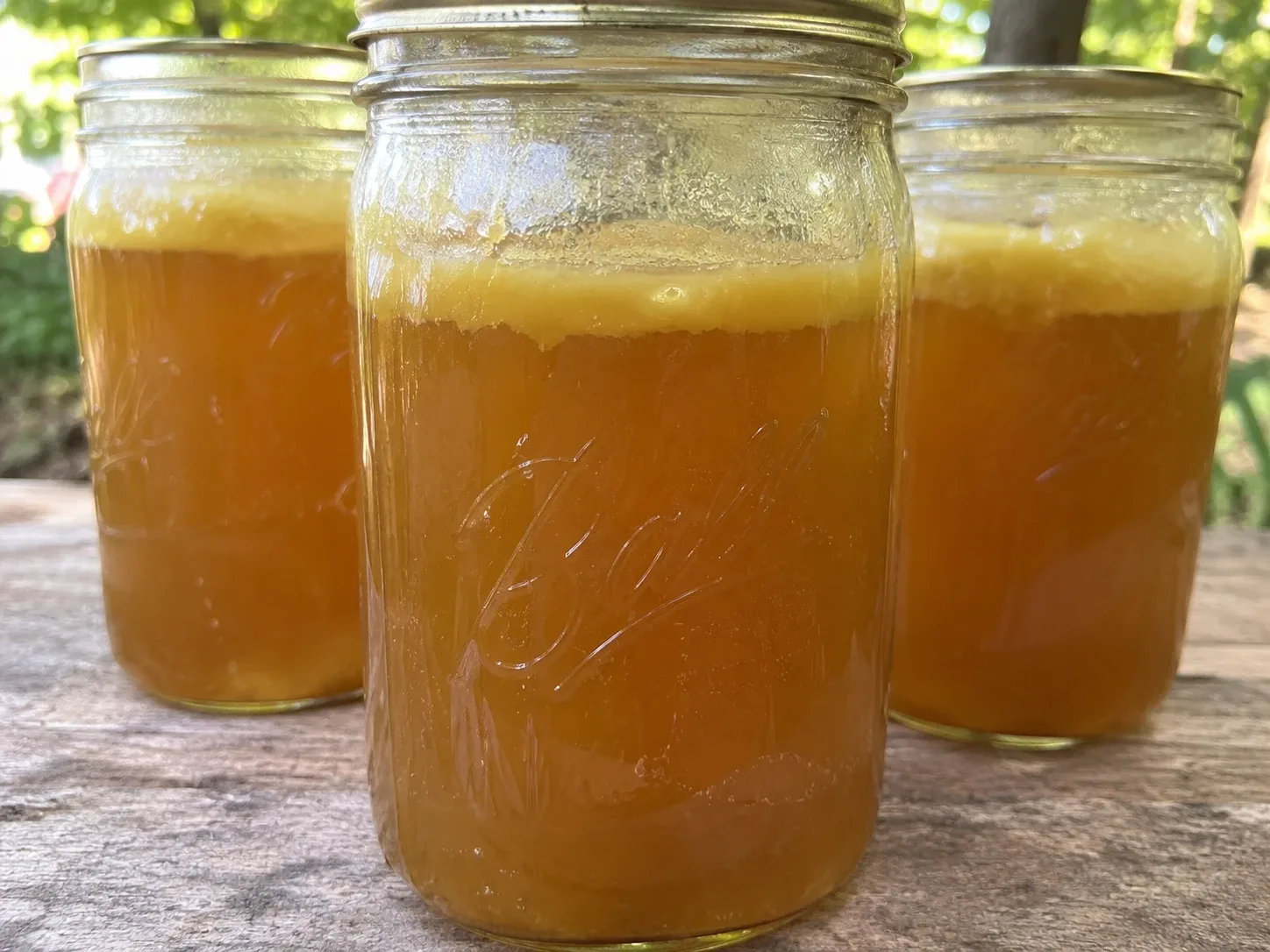
- Know what’s normal. The liquid will turn golden orange and cloudy, and the jar will smell fiery and sharp. That’s exactly right. Since the vinegar does the preserving here, mold is rare; if any appears, it’s from a piece left above the liquid, and the batch should be tossed.
Day 28: Strain and sweeten
- Strain. Line a fine mesh sieve with cheesecloth and set it over a bowl. Pour in the contents of the jar, then gather the cloth and squeeze hard to get every drop. Compost the solids.
- Sweeten. If the honey is thick, warm the jar in a bowl of warm (not hot) water for a few minutes to loosen it. Whisk ⅓ cup into the strained vinegar until dissolved, then taste and add more if you like. Some people like it quite sharp; others prefer it sweeter.
- Bottle. Pour into clean glass bottles or a jar, cap, and refrigerate.
To serve
- Take a spoonful. Many people take 1 tbsp a day through the cold months, either straight or stirred into a small glass of warm water with a squeeze of lemon. Some take a spoonful a few times a day when they feel a cold coming on.
Storage
- Keeps 6 months or more in the fridge. The vinegar and honey preserve it.
- It may settle; shake before using.
Variations
- Salad dressing: Whisk 2 tbsp fire cider with 6 tbsp extra virgin olive oil and a pinch of salt for a punchy vinaigrette.
- Shrub: Stir 1–2 tbsp into a glass of sparkling mineral water over ice.
- Warming drink: Add 1 tbsp to a mug of hot bone broth.
- Extra herbs: Add a few sprigs of fresh oregano or sage, or a handful of rose hips or hibiscus.
- Milder: Use one jalapeño, seeded, and halve the horseradish.
Season & Circadian Timing
Start a batch in mid-November so it’s ready for the holiday season, and a second batch in February to carry you through the tail end of winter. A spoonful in the morning is a bracing way to start a cold, dark day, and the heat of the horseradish and chile opens up the sinuses right away.
Nourishment Notes
- Raw apple cider vinegar — pulls flavor and plant compounds out of everything in the jar; the cloudy “mother” is a sign it is unpasteurized.
- Horseradish — part of the mustard family, with the same sharp compounds that give wasabi and mustard their bite.
- Garlic and onion — rich in sulfur compounds that give them their pungency and have a long history in folk remedies.
- Ginger and turmeric — warming roots with a long traditional use for digestion and comfort in cold weather; black pepper helps your body absorb turmeric’s curcumin.
- Citrus and raw honey — citrus brings vitamin C and bright flavor, and raw honey softens the heat.
Sourcing
- Raw apple cider vinegar — organic, with the mother (Bragg)
- Raw honey — organic, local, and unfiltered
- Horseradish, ginger, and turmeric — fresh, firm roots; organic, from a farmers’ market or good grocer
- Lemons / limes / oranges — organic (you’re using the zest)
- Spices — organic and non-irradiated
- Fruits, vegetables, and herbs — organic, from a farmers’ market or local farm
You might also like: Fermented Foods 101: Make Your Own Probiotic Vegetables · Ferment Foundations: Lacto-Fermented Carrots and Sauerkraut (Plus Seven Kraut Variations) · Bison Bone Broth Soup with Root Vegetables and Greens
With Love, Light, and Health,
Anna (aka Food Marshall)
Food Marshall Approved. Grain-free, seed-oil-free and refined-sugar-free, made from organic, local and seasonal ingredients. Our standards
More Ferments & Broths
Get new recipes and essays
Seasonal recipes and writing on light, circadian health, and living with nature.
Subscribe on Substack