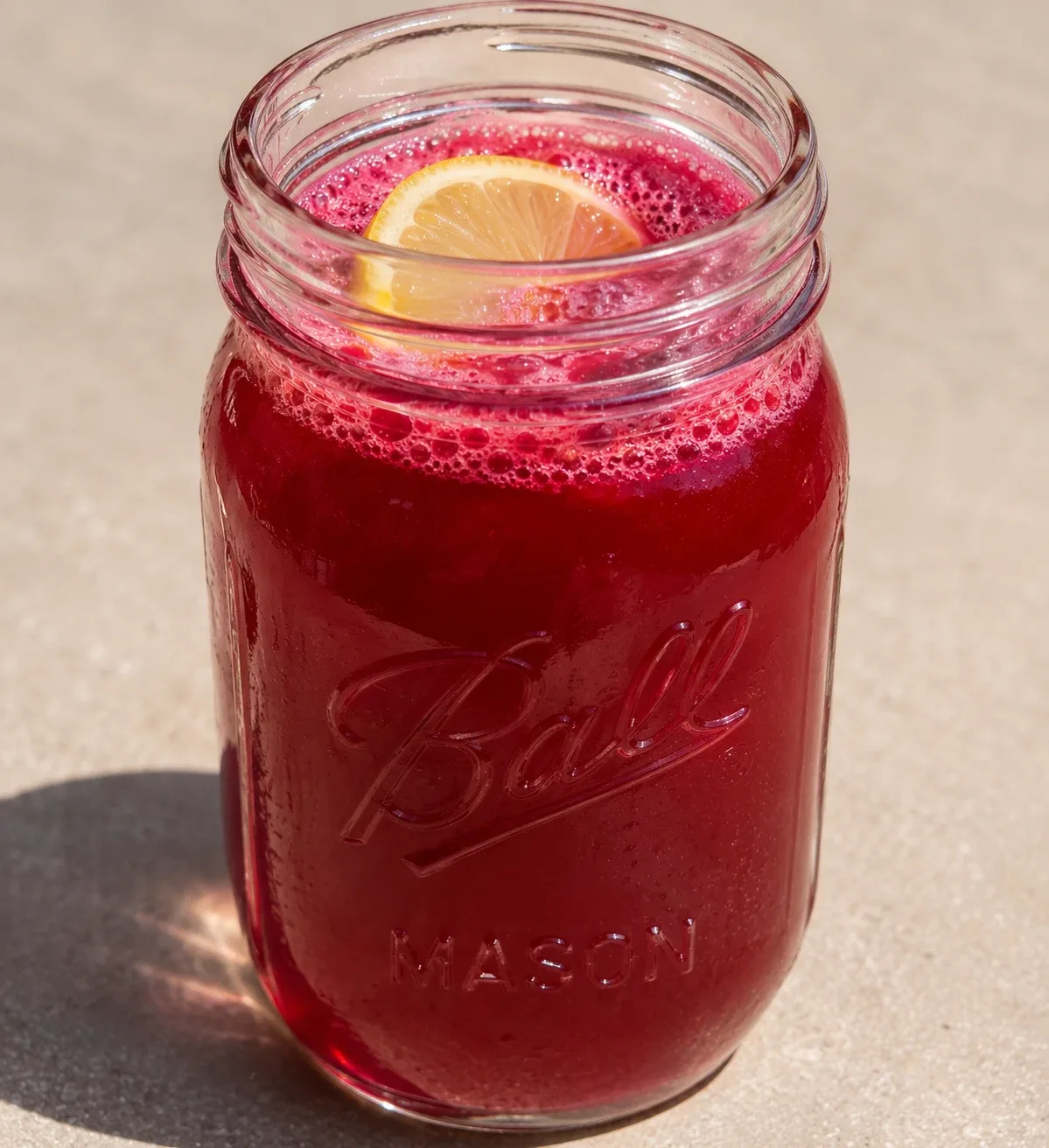
Beet Kvass with Lemon and Ginger
A deep ruby, gently salty tonic from the Russian, Ukrainian, and Polish kitchen, brightened with lemon peel and ginger. Just beets, salt, water, and about a week on the counter.
Yield: About 1½ quarts · Active: 15 min · Total: 5–7 days, mostly hands-off · Season: Best in North America in fall and winter, when beets are fresh from the ground and sweet from the cold · Best eaten: morning
Ingredients
For the kvass
- 2 medium organic beets (about 1 lb), scrubbed but not peeled
- 1 inch fresh ginger, thinly sliced
- Peel of 1 organic lemon, cut off in strips with a vegetable peeler (no white pith)
- 2 tbsp fine unrefined sea salt
- 6 cups filtered, unchlorinated water
- 1 large outer cabbage leaf, to keep everything under the brine
You’ll also need
- A clean half-gallon glass jar
- A loose lid, or a cloth and rubber band
Method
Day 1: Set up the jar
- Cube the beets. Trim the tops and root tails and cut the beets into ½-inch cubes. Leave the skin on, since it carries the wild bacteria that start the ferment. Don’t grate them; tiny pieces ferment too fast and turn boozy instead of tangy.
- Fill the jar. Add the beets, ginger, and lemon peel to the jar.
- Make the brine. Stir the salt into the water until it dissolves. Pour it over the beets, leaving about 2 inches of headspace (empty room at the top of the jar).
- Weigh it down. Fold the cabbage leaf and wedge it on top so the beets stay below the liquid.
- Cover. Set the lid on loosely, or cover with a cloth and rubber band. Put the jar on a plate in case it bubbles over, and keep it at room temperature (65–75°F) out of direct sun.
Days 2–3: Let it work
- Check daily. Press the cabbage leaf back down if anything floats up. The brine will turn from pink to deep red, and you may see a few small bubbles. That’s a good sign.
- Skim if needed. A thin white film on the surface is a harmless wild yeast called kahm yeast; just skim it off. Fuzzy blue, green, or black mold means the batch should go in the compost.
Days 4–7: Taste and strain
- Taste. Starting on day 4, dip in a clean spoon. You want it deep ruby, lightly salty, earthy, faintly tart, with a whisper of fizz. In a warm kitchen (around 80°F) it may be ready by day 3–4; in a cool winter kitchen it can take the full 7 days.
- Strain. When it tastes bright and alive, not sharply sour or vinegary, pour the liquid through a sieve into clean bottles or a jar. Save the beets if you want a second batch.
- Chill. Refrigerate. The cold slows the ferment and keeps the flavor where you like it.
Optional second batch
- Re-brine. Return the beets (with fresh ginger and lemon peel, if you like) to the jar, cover with another 6 cups water mixed with 2 tbsp salt, and ferment 5 days more. The second batch is milder and lighter in color.
To serve
- Pour a small glass. Serve ¼–½ cup chilled, with breakfast or an afternoon meal.
Storage
- Strained kvass keeps about 3 weeks in the fridge in a closed glass bottle or jar. It will slowly get more sour.
- After the second batch, the beets are spent. Compost them, or chop them into a salad for a salty-tangy bite.
Variations
- Plain and traditional: Leave out the ginger and lemon for the classic Slavic version.
- Orange-clove: Swap the lemon peel for orange peel and add 2 whole cloves.
- Herbal: Add a sprig of fresh dill or a few black peppercorns to the jar.
- Fizzy: After straining, bottle in swing-top bottles and leave out 12–24 hours before chilling for extra sparkle. Open carefully over the sink.
Season & Circadian Timing
Beets come out of the ground sweet and firm through fall and keep well into winter, which makes this a good cold-season project, even if it takes a little longer in a cool kitchen. A small glass with breakfast is the traditional way to drink it, and the salty, tangy flavor wakes up the palate early in the day.
Nourishment Notes
- Beets — get their deep color from betalains, a family of antioxidant plant pigments, and are a natural source of nitrates, folate, and potassium.
- Lacto-fermentation — the salt brine lets lactic acid bacteria grow and sour the drink, so raw, unpasteurized kvass carries live cultures, like sauerkraut does.
- Unrefined sea salt — keeps unwanted microbes in check while the good bacteria take hold, and adds trace minerals.
- Ginger — adds warmth and has a long folk history as a digestive aid.
- Lemon peel — brings bright aroma from its oils without making the drink acidic.
Sourcing
- Beets — small to medium, from a farmers’ market, ideally with greens still attached (big storage beets are sweeter and ferment toward alcohol). Sauté the greens in butter for dinner.
- Lemons / limes / oranges — organic (you’re using the zest)
- Salt — unrefined sea salt (Baja Gold)
- Water — filtered, with no chlorine or chloramine, which can stall the ferment
- Fruits, vegetables, and herbs — organic, from a farmers’ market or local farm
You might also like: Fermented Foods 101: Make Your Own Probiotic Vegetables · Ferment Foundations: Lacto-Fermented Carrots and Sauerkraut (Plus Seven Kraut Variations) · Roasted Beet Soup with Whipped Goat Cheese, Toasted Hazelnuts, and Dill
With Love, Light, and Health,
Anna (aka Food Marshall)
Food Marshall Approved. Grain-free, seed-oil-free and refined-sugar-free, made from organic, local and seasonal ingredients. Our standards
More Ferments & Broths
Get new recipes and essays
Seasonal recipes and writing on light, circadian health, and living with nature.
Subscribe on Substack