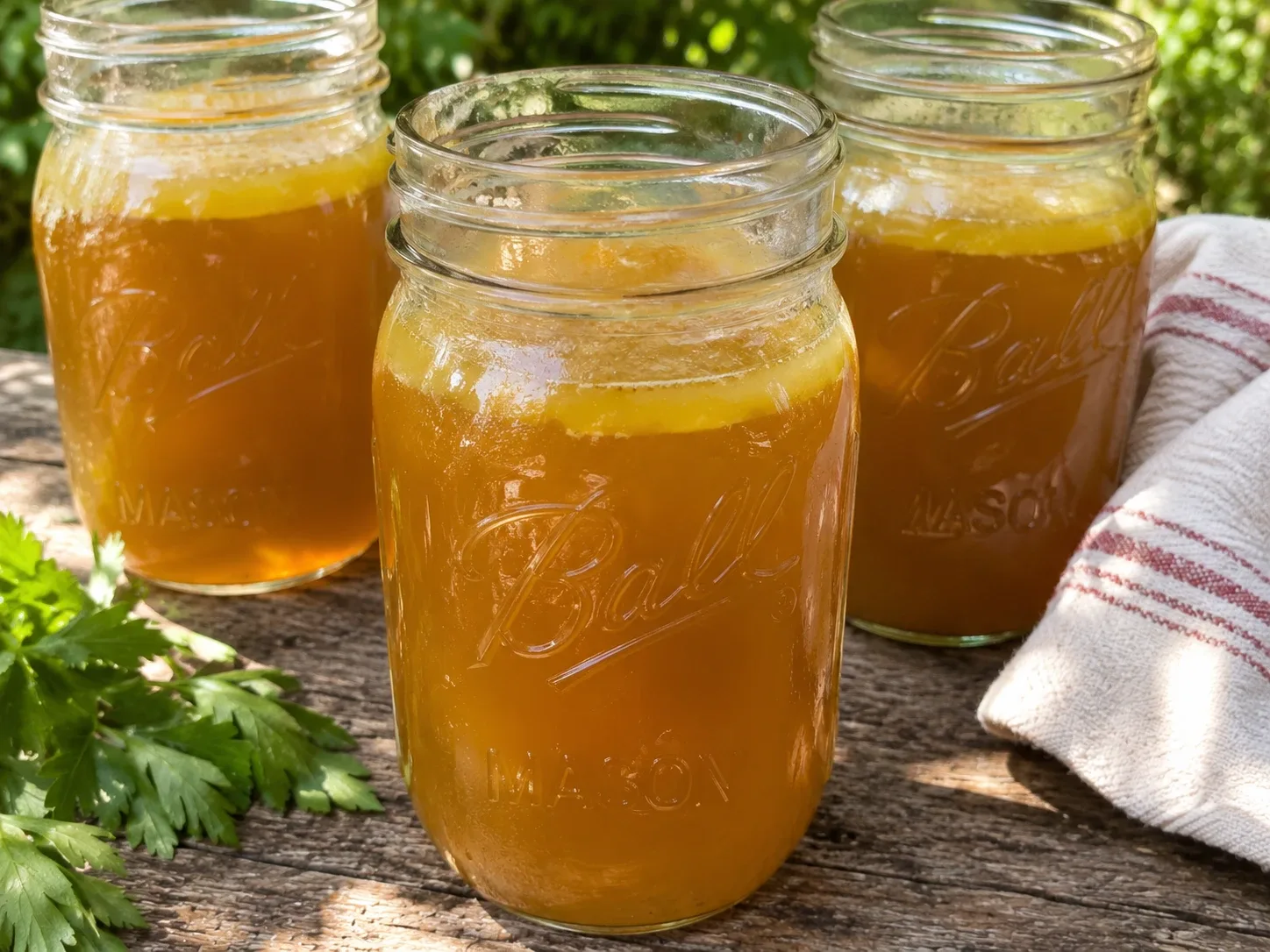
24-Hour Beef Stock
A clear, deeply browned beef stock made from meaty shanks, oxtail, and knuckles, simmered for a full day. This is the kitchen workhorse behind my braises, gravies, pan sauces, and winter soups.
Yield: About 4 quarts · Active: 1 hr · Total: About 26 hours, mostly hands-off · Season: Best in North America in fall and winter, when braising season begins · Best eaten: as a base for midday soups and evening braises
Ingredients
For the roasting pan
- 2½ lbs grass-fed beef shank, cut crosswise into 1½–2-inch pieces (meat and bone)
- 2 lbs grass-fed oxtail
- 2 lbs grass-fed beef knuckle bones
- 2 large yellow onions, quartered, skins on (the skins give a deep amber color)
- 3 carrots, cut into 3-inch pieces
- 1 tbsp beef tallow, melted
For the pot
- ½ cup water, for deglazing
- About 6 quarts cold filtered water
- 1 tbsp raw apple cider vinegar with the mother
- 3 celery stalks, cut into 3-inch pieces
- 1 leek, green tops only, rinsed well
- 6 garlic cloves, smashed
- 8–10 parsley stems
- 6 sprigs fresh thyme
- 2 bay leaves
- 1 tsp black peppercorns
- 2 whole cloves
- 2 tsp sea salt (keep it lightly salted, since it will be reduced in sauces)
Method
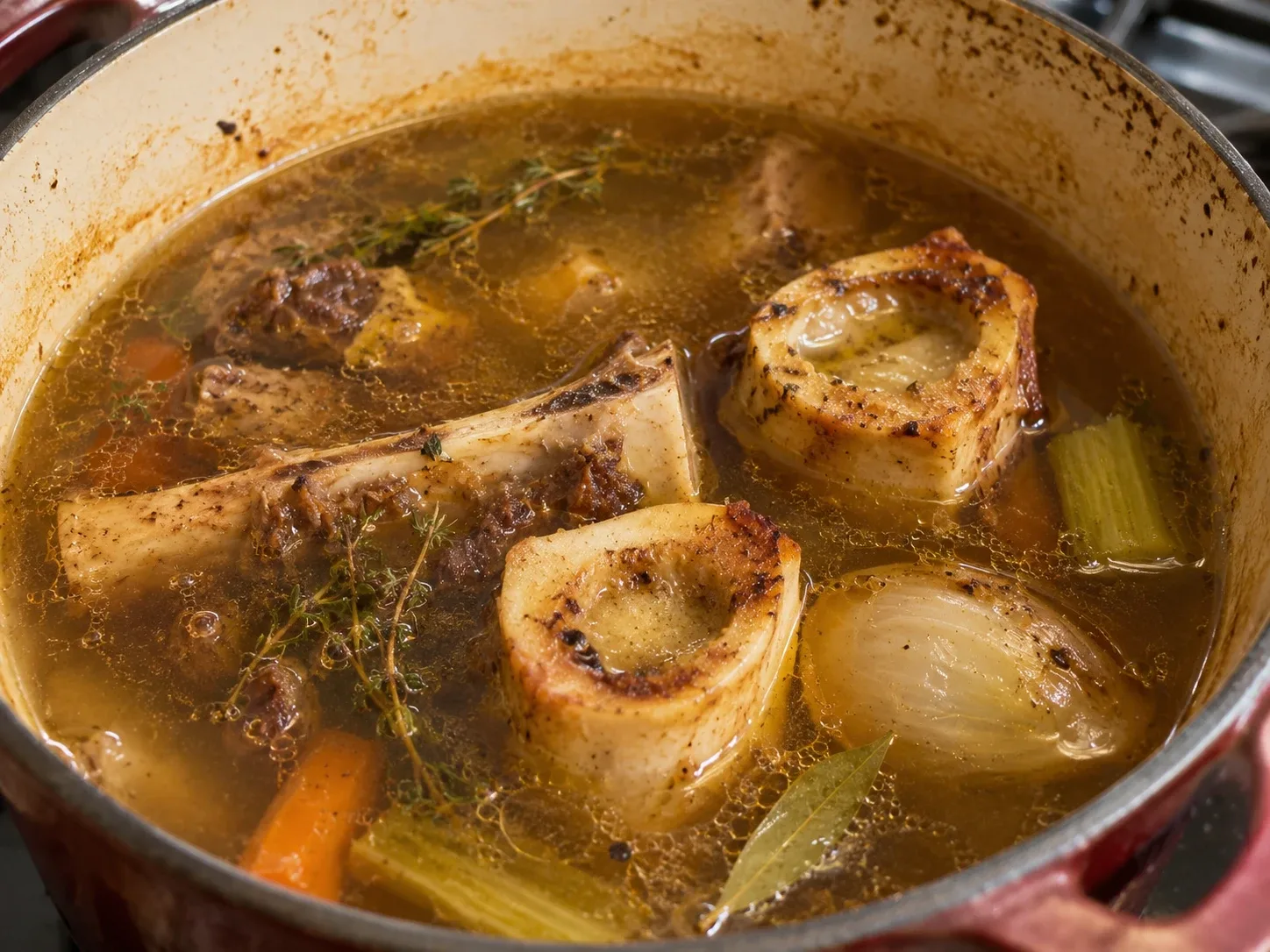
- Roast the bones and meat. Heat the oven to 450°F. Toss the shank, oxtail, knuckle bones, onions, and carrots with the melted tallow and spread on 1–2 large sheet pans. Roast 50–60 minutes, turning halfway, until everything is deep mahogany brown.
- Deglaze. Move everything to a large stockpot (at least 12 quarts). Pour the ½ cup water onto the hot sheet pans and scrape up the browned bits with a wooden spatula. Pour it all into the pot. Those browned bits are the heart of a good dark stock.
- Cover and rest. Add the cold filtered water to cover by 2 inches and the vinegar. Let it sit 30 minutes.
- Bring up slowly and skim. Bring it slowly to a simmer over medium-low heat, which takes about 45 minutes. Just before it reaches a simmer, the foam rises; skim it off carefully. Never let it boil hard. Boiling churns the fat into the stock and turns it cloudy.
- Simmer 24 hours. Keep it at the barest simmer, uncovered or with the lid ajar, for 24 hours. Top up with hot water as needed so everything stays submerged. Overnight, a 200°F oven with the lid ajar is the easiest way to hold a steady, gentle heat.
- Pull the meat. After about 4 hours, the shank meat will be tender. Lift out the shank pieces, pull off the meat, and return the bones to the pot. Save the meat for soup, hash, or tacos.
- Add the aromatics. In the last 2 hours, add the celery, leek tops, garlic, parsley stems, thyme, bay, peppercorns, cloves, and salt.
- Strain without pressing. Lift out the big bones with tongs, then ladle the stock through a fine-mesh sieve lined with cheesecloth. Don’t press on the solids, which clouds the stock.
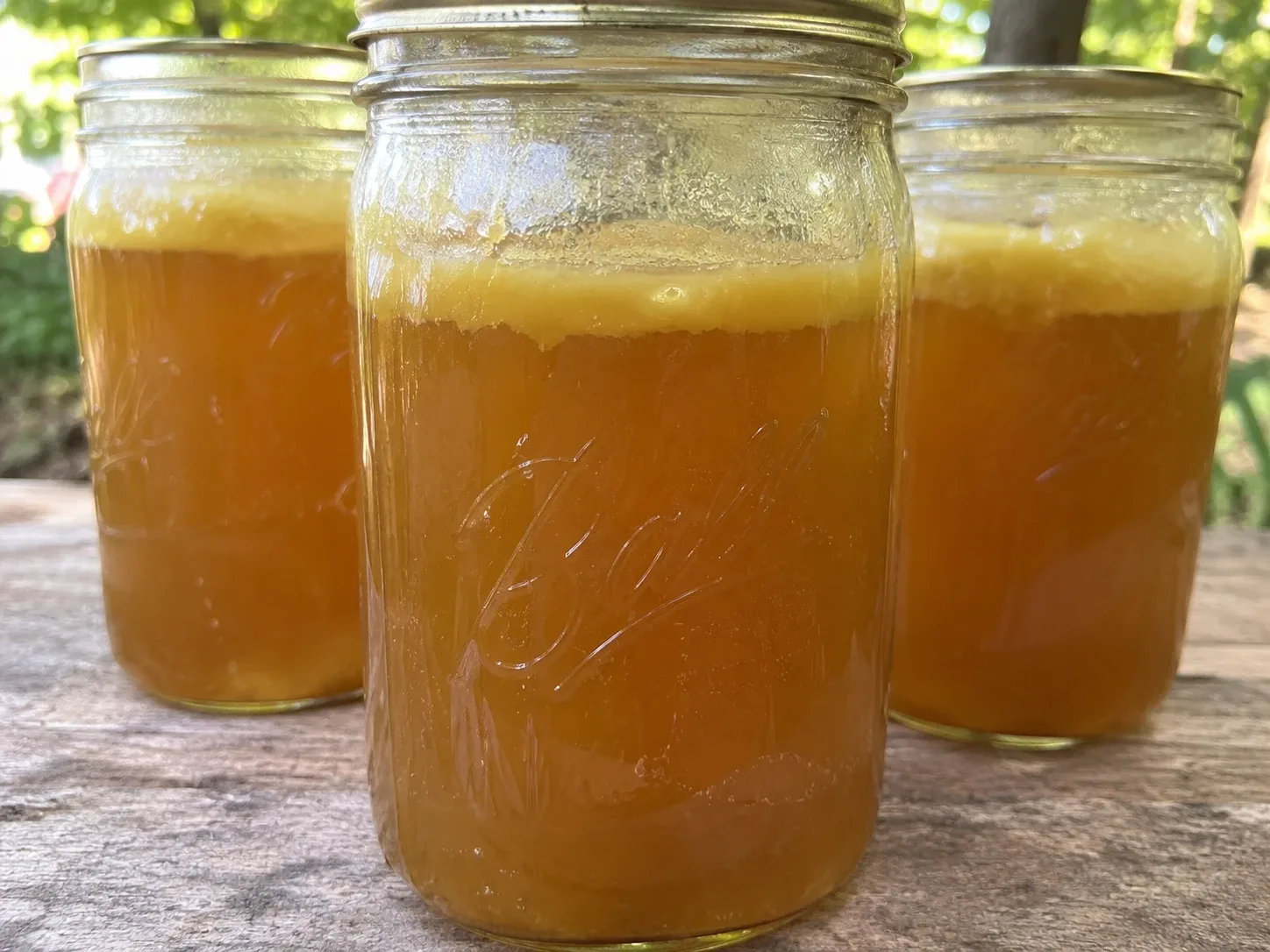
- Chill and defat. Cool the stock quickly in an ice bath, then refrigerate overnight. Lift off the fat cap (save it; it’s beautiful tallow) and portion the stock into jars.
Storage
Refrigerate up to 5 days, or freeze up to 6 months. Freeze some in ice-cube trays or silicone molds (about 2 tbsp each) for pan sauces. For a rich glaze, simmer 4 cups of stock down to about ½ cup, until syrupy; it keeps refrigerated up to 2 weeks and freezes beautifully.
Variations
- Tomato depth: Rub 2 tbsp tomato paste over the bones for the last 10 minutes of roasting, the classic French move (the stock is then no longer nightshade-free).
- Red wine: Deglaze the pan with ½ cup dry red wine instead of water. For alcohol-free, use water and add 1 tsp extra vinegar.
- Veal: Use veal knuckles and shank for a lighter, even more gelatinous stock.
- For sipping: For a longer-simmered broth meant for the mug, with roasted marrow on the side, see my Beef Bone Broth with Roasted Marrow.
- Use it: This is the stock I reach for in my Holiday Brisket and my Grass-Fed Beef Stew with Red Wine, Root Vegetables, and Bay.
Season & Circadian Timing
When the evenings turn cold, the oven goes back on and braises, stews, and gravies return to the table. A freezer full of good stock makes every one of those dishes better and faster. Start it on a Saturday morning and it’s ready Sunday morning, in time for a midday soup or an evening braise.
Nourishment Notes
- Shank, oxtail, and knuckles — Collagen that becomes gelatin, rich in glycine and proline, plus some protein and iron from the meat.
- Raw apple cider vinegar — A little acid helps draw minerals from the bones.
- Onions, carrots, and herbs — Flavor, color, and a little sweetness, plus potassium and other minerals that end up in the stock.
- Beef tallow — A traditional, heat-stable cooking fat; save the fat cap for roasting.
Sourcing
- Beef shank, oxtail, and bones — 100% grass-fed and finished, from a local ranch or butcher
- Beef tallow — from grass-fed beef, rendered at home or from a local ranch (Fatworks)
- Raw apple cider vinegar — organic, with the mother (Bragg)
- Water — filtered
- Spices — organic and non-irradiated
- Salt — unrefined sea salt (Baja Gold)
- Fruits, vegetables, and herbs — organic, from a farmers’ market or local farm
With Love, Light, and Health,
Anna (aka Food Marshall)
Food Marshall Approved. Grain-free, seed-oil-free and refined-sugar-free, made from organic, local and seasonal ingredients. Our standards
More Ferments & Broths
Get new recipes and essays
Seasonal recipes and writing on light, circadian health, and living with nature.
Subscribe on Substack