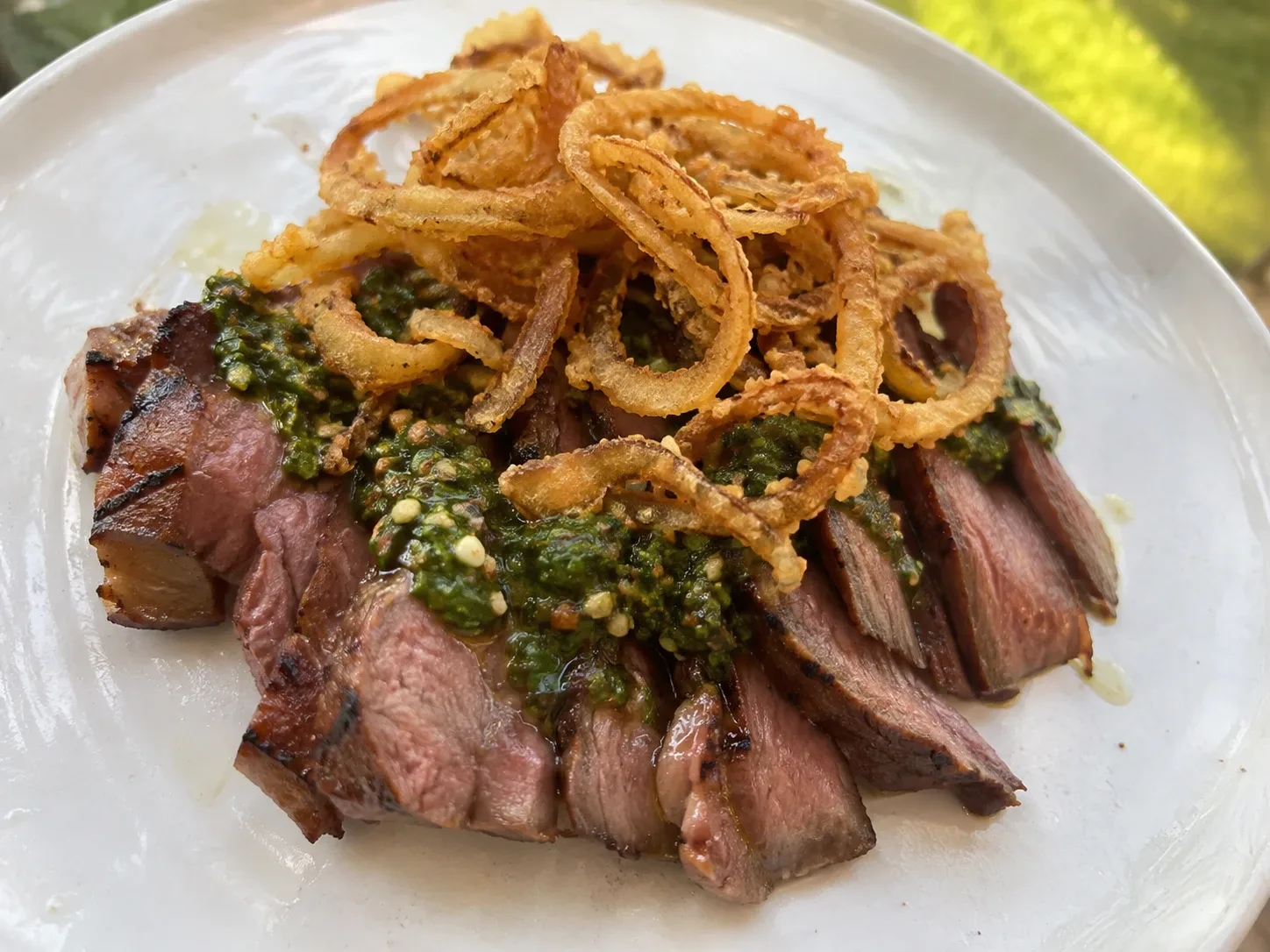
Chimichurri Flank Steak with Grain-Free Onion Straws
Grass-fed flank steak marinated in scallions and herbs, seared hot, sliced thin against the grain, and piled with garlicky chimichurri and crisp onion straws fried in tallow with a cassava coating.
Yield: Serves 4 · Active: 45 min · Total: 1 hr 15 min, plus 2–8 hr marinating · Season: Best in North America in summer, when sweet onions, parsley, and cilantro are at their peak · Best eaten: early evening
Ingredients
For the flank steak
- 1 grass-fed flank steak (about 1½ lb)
- ½ bunch scallions, roughly chopped
- ¼ cup flat-leaf parsley leaves
- 2 tbsp cilantro leaves
- 2 garlic cloves
- 3 tbsp extra virgin olive oil
- Zest and juice of ½ lemon
- 1½ tsp sea salt, divided
- ½ tsp freshly cracked black pepper
For the chimichurri
- 1 cup finely chopped flat-leaf parsley (about 1 small bunch)
- ¼ cup finely chopped cilantro
- 3 garlic cloves, minced
- 1 small shallot, minced
- 1 tsp dried oregano
- ½ tsp red pepper flakes
- ¼ cup red wine vinegar
- ½ cup extra virgin olive oil
- ½ tsp sea salt
For the grain-free onion straws
- 1 large Vidalia or other sweet onion
- ¾ cup raw whole milk or buttermilk
- ½ cup cassava flour
- 3 tbsp arrowroot
- ½ tsp smoked paprika
- ½ tsp sea salt
- ¼ tsp black pepper
- ¼ tsp garlic powder
- About 3 cups tallow or pastured lard, for frying
- Flaky sea salt, for finishing
Method
For the flank steak marinade
- Blend. Pulse the scallions, parsley, cilantro, garlic, olive oil, lemon zest and juice, and ½ tsp of the salt in a food processor to a coarse paste.
- Marinate. Rub the paste all over the steak, put it in a glass dish, cover, and refrigerate 2–8 hours. Take it out 30 minutes before cooking.
For the chimichurri
- Mix. Stir the parsley, cilantro, garlic, shallot, oregano, red pepper flakes, vinegar, olive oil, and salt together in a bowl.
- Rest. Let it sit at room temperature at least 20 minutes so the garlic and vinegar soften and the herbs release their flavor. It can be made up to a day ahead and refrigerated; bring it back to room temperature before serving.
For the grain-free onion straws
- Slice and soak. Peel the onion, cut it in half from top to root, and shave it paper-thin on a mandoline (or slice as thinly as you can with a sharp knife). Separate the slices into strands and soak them in the milk for 20 minutes. The milk helps the coating stick and mellows the onion’s bite.
- Heat the fat. Melt the tallow in a heavy, deep pot, at least 1½ inches deep. Heat it over medium heat to 350°F on a deep-fry or instant-read thermometer.
- Mix the coating. Whisk the cassava flour, arrowroot, smoked paprika, salt, pepper, and garlic powder in a wide bowl.
- Dredge. Drain the onions well. Toss a handful at a time in the flour mixture, then shake off the extra in a mesh strainer.
- Fry. Fry in small batches, stirring gently with a spider or slotted spoon, for 2–3 minutes, until golden and crisp. Crowding the pot drops the temperature and makes them greasy, so keep batches small and let the fat return to 350°F between them.
- Drain and salt. Lift the straws onto a parchment- or towel-lined tray and sprinkle with flaky salt right away, while they are still hot.
To cook the steak
- Heat. Heat a grill to high, or set a large cast iron skillet over high heat until it smokes.
- Dry and salt. Scrape off most of the marinade and pat the steak dry with paper towels. Season it generously on both sides with the remaining 1 tsp salt and the pepper.
- Sear. Grill or sear the steak 3–4 minutes per side, until well browned and 125–130°F in the thickest part for medium-rare. Grass-fed beef is leaner and cooks faster than grain-fed, so start checking early.
- Rest. Move the steak to a cutting board and rest it 10 minutes. This lets the juices settle back into the meat instead of running out when you slice.
To serve
- Slice. Look for the long lines of muscle fiber running along the steak. Cut across them, not along them, in thin slices on a slight angle. Slicing this way, called slicing against the grain, makes flank steak tender.
- Plate. Fan the slices on a platter, spoon chimichurri over the top, and pile the onion straws on just before serving so they stay crisp. Pass extra chimichurri at the table.
Storage
- Sliced steak keeps up to 3 days in the fridge in a covered glass container. Enjoy it cold over greens, or warm it briefly in a hot skillet.
- Chimichurri keeps up to 5 days in the fridge with a thin layer of olive oil on top. The herbs darken a little but taste just as good.
- Onion straws are best fresh. Leftovers can be re-crisped on a sheet pan in a 400°F oven for 3–4 minutes.
- Let the frying fat cool, strain it through a fine-mesh sieve, and store it in a jar in the fridge to reuse once or twice more.
Variations
- Skirt or hanger steak: Use either in place of flank. Skirt cooks even faster, about 2–3 minutes per side.
- Red chimichurri: Add 1 tsp smoked paprika and 1 small finely diced roasted red pepper to the chimichurri.
- Steak salad: Serve the sliced steak over arugula and sliced tomatoes, with chimichurri as the dressing and the onion straws on top.
- Onion rings: Cut the onion into ½-inch rings instead of shaving it, and fry 3–4 minutes.
- Without frying: Skip the onion straws and serve with grilled sweet onion wedges brushed with olive oil.
Season & Circadian Timing
This is a summer grill dinner, made when sweet onions arrive and herbs are growing fast. Red meat and a rich side suit an early evening meal, when there is still time to digest before bed.
Nourishment Notes
- Grass-fed flank steak — an excellent source of protein, iron, zinc, and vitamin B12. Grass-fed beef also tends to carry more omega-3 fats and CLA, a fat found in meat from grazing animals.
- Parsley and cilantro — the heart of chimichurri, bringing vitamin K, vitamin C, and a fresh, green flavor.
- Garlic — chopping it creates allicin, the compound behind its bold aroma.
- Tallow — beef fat that stays stable at frying temperatures, so it’s a sound choice for deep-frying.
- Cassava flour — a grain-free flour made from the whole cassava root; with arrowroot, it fries up crisp like wheat flour.
Sourcing
- Beef — 100% grass-fed and grass-finished, from a local farm (White Oak Pastures or US Wellness Meats)
- Tallow / lard / duck fat — from pasture-raised animals, from a local farm or butcher
- Raw milk — from a farmer you know and trust (find one at realmilk.com), or organic, grass-fed, low-temperature pasteurized milk (Kalona SuperNatural)
- Cassava flour — organic, made from the whole root (Otto’s Naturals)
- Extra virgin olive oil — organic, single-estate, harvest-dated, in dark glass
- Red wine vinegar — organic and naturally fermented, in glass
- Spices — organic and non-irradiated (Ceylon cinnamon from Sri Lanka)
- Lemons / limes / oranges — organic (you’re using the zest)
- Salt — unrefined sea salt (Baja Gold); flaky sea salt for finishing (Maldon)
- Fruits, vegetables, and herbs — organic, from a farmers’ market or local farm
You might also like: Grass-Fed Carne Asada with Chimichurri and Arugula-Fig Salad with Hazelnuts · Four Homemade Sauces: Chimichurri, Romesco, Tzatziki, and Hummus · Grass-Fed Ribeye or Lamb with Marrow Butter, Chimichurri, and Three Roasted Sides
With Love, Light, and Health,
Anna (aka Food Marshall)
Food Marshall Approved. Grain-free, seed-oil-free and refined-sugar-free, made from organic, local and seasonal ingredients. Our standards
More Meat
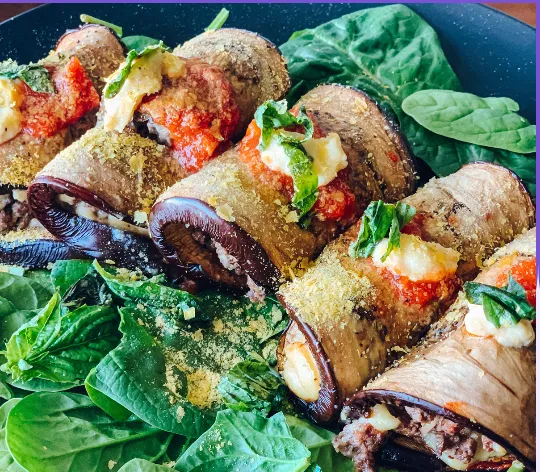
Beef Eggplant Rollatini with Ricotta and Slow-Simmered Tomato Sauce
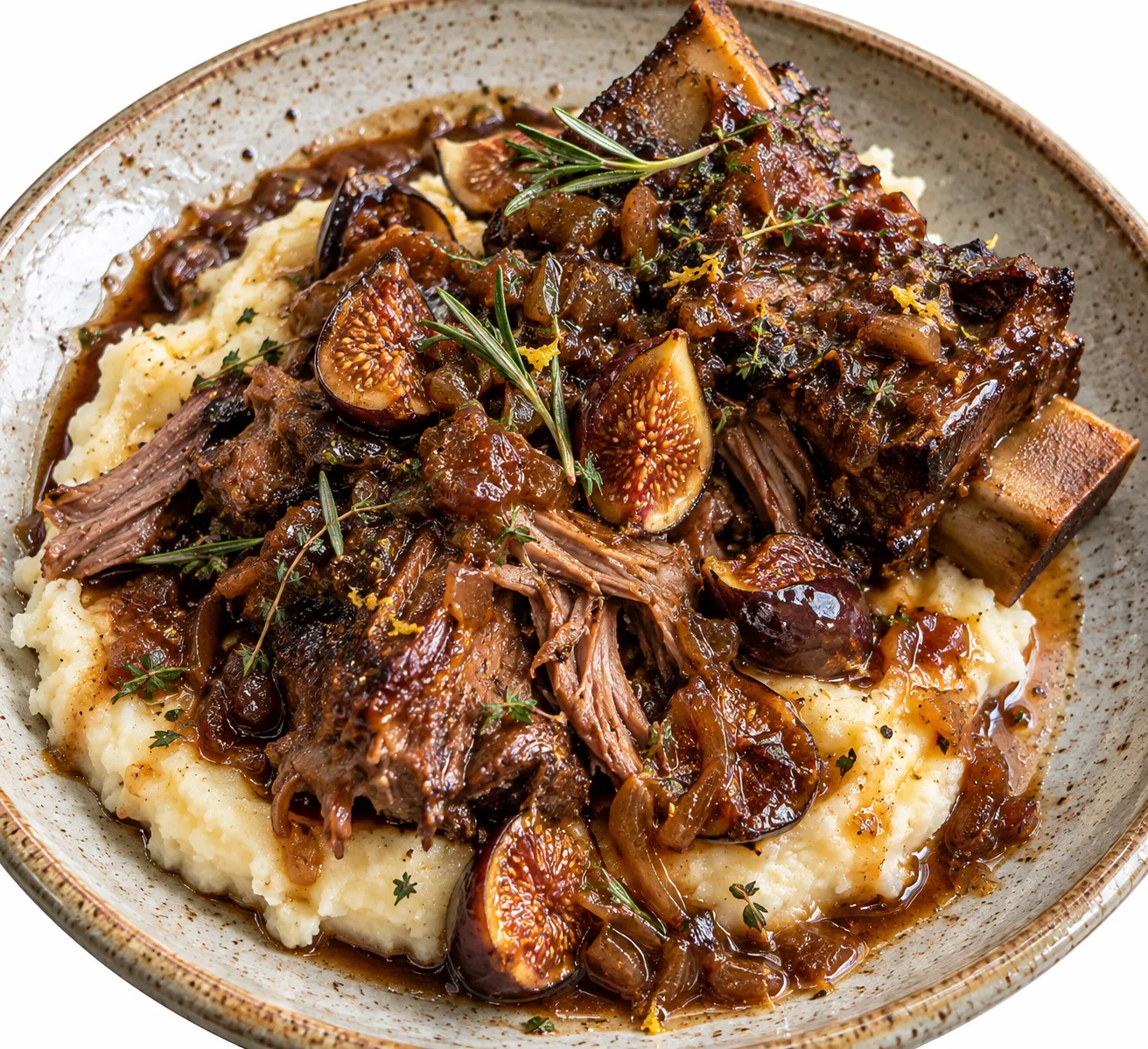
Braised Short Ribs with Figs, Rosemary, and Potato Purée (Oven, Slow Cooker, or Stovetop)
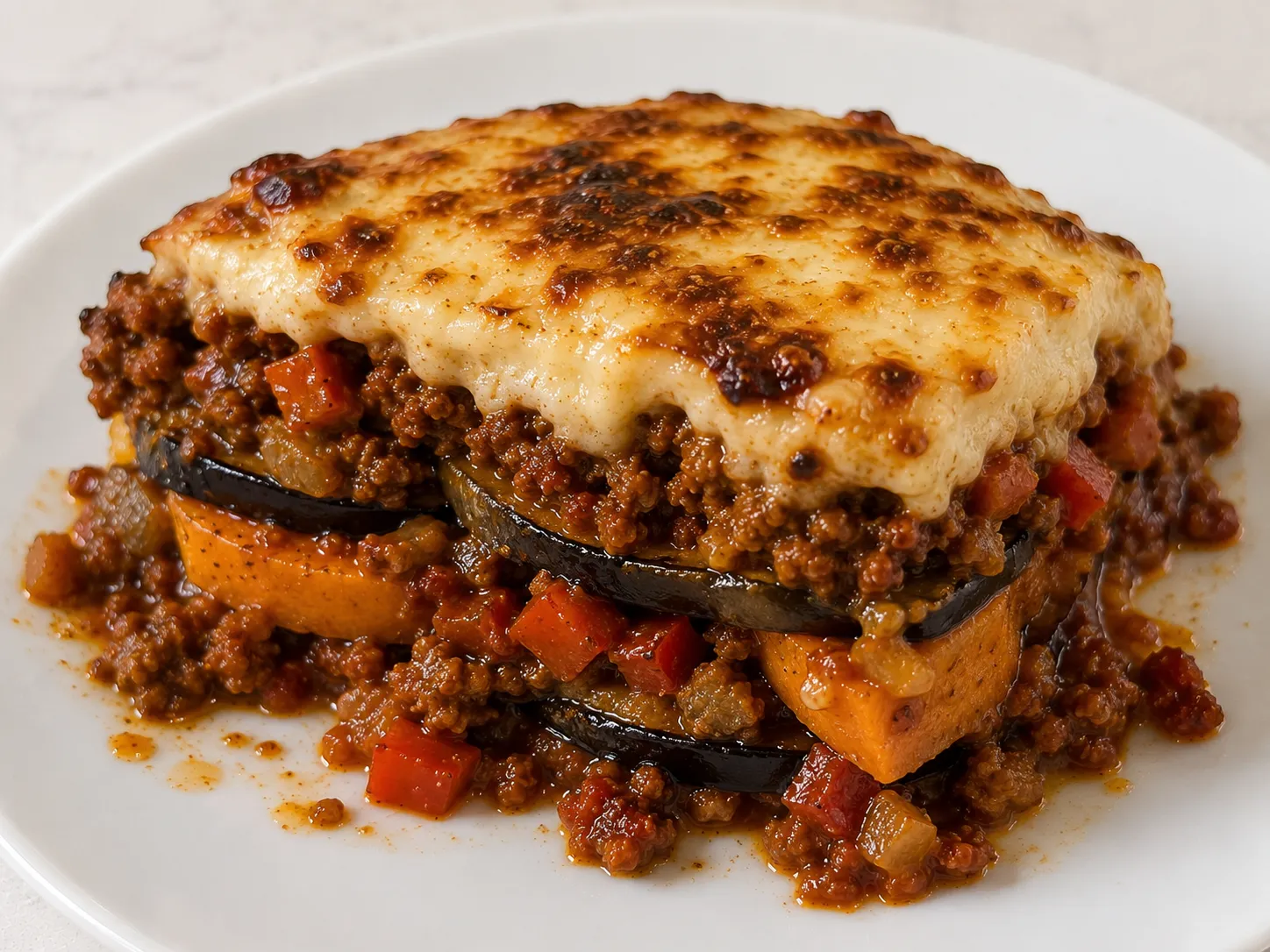
Grain-Free Eggplant Moussaka with Sweet Potato and Béchamel
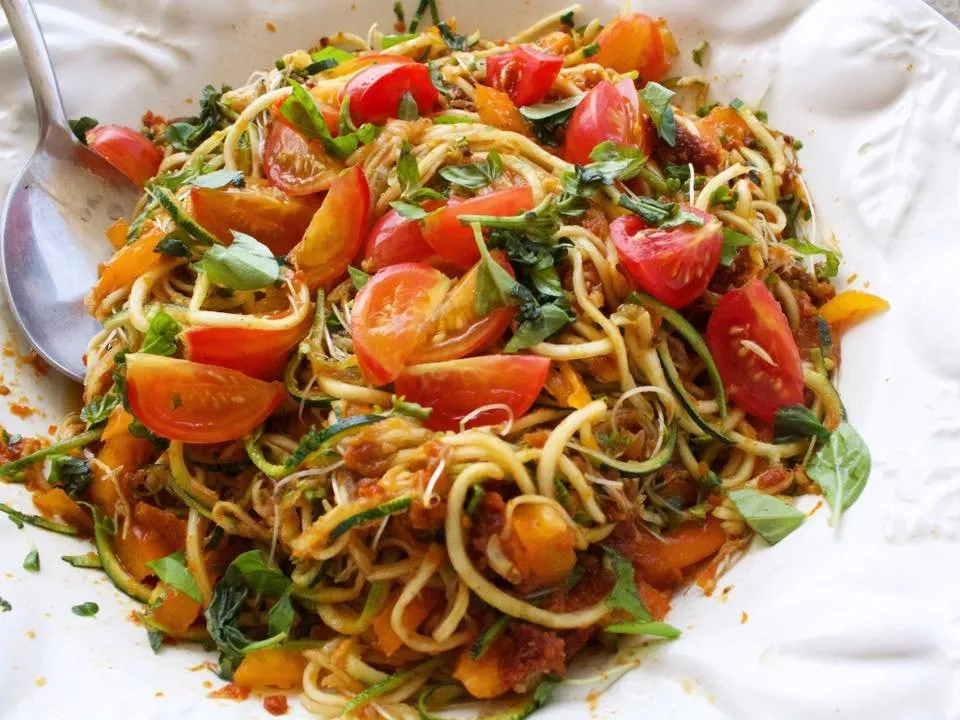
Garden Tomato Basil Sauce with Zucchini Noodles & Grass-Fed Meatballs — Plus: how to prune your tomato plants for maximum harvest
Get new recipes and essays
Seasonal recipes and writing on light, circadian health, and living with nature.
Subscribe on Substack