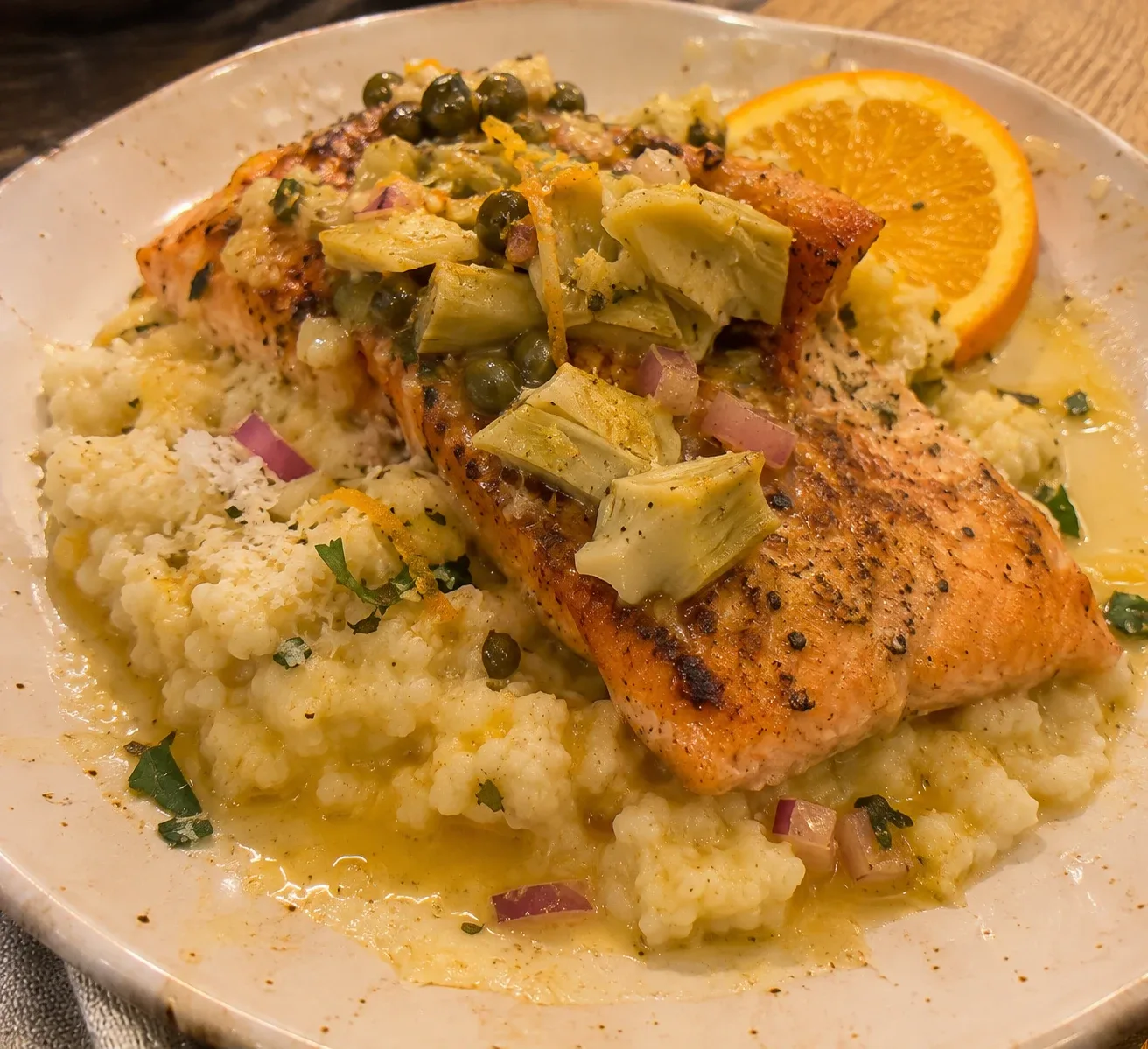
Pan-Seared Wild Salmon with Creamy Cauliflower Risotto, Orange Beurre Blanc, and Artichoke Relish
Crispy-skin wild salmon over a creamy cauliflower “risotto” made with butter, raw cream, and fresh Pecorino Romano, finished with a silky orange butter sauce and a bright artichoke-caper relish. It’s elegant enough for company and simple enough for a weeknight.
Yield: Serves 4 · Active: 50 min · Total: about 1 hr · Season: Best in North America in fall and winter, when oranges, cauliflower, and fennel are at their peak · Best eaten: early evening
Ingredients
For the salmon
- 4 skin-on wild salmon fillets (about 6 oz each, 1–1¼ inches thick)
- 1 tsp unrefined sea salt
- ½ tsp freshly cracked black pepper
- 1 tbsp avocado oil or grass-fed ghee
For the creamy cauliflower risotto
- 1 large head cauliflower (about 2 lb), riced (about 6 cups; see step 4)
- 3 tbsp grass-fed butter, divided
- 1 small shallot, minced
- 1 garlic clove, minced
- ¼ cup dry white wine (optional)
- ½ cup bone broth
- ½ cup raw heavy cream
- ¾ cup finely grated Pecorino Romano (about 1½ oz), plus more for serving
- Zest of ½ lemon
- ¼ tsp freshly cracked black pepper
- Sea salt, to taste (go easy, as Pecorino is salty)
For the orange beurre blanc
- 1 cup fresh orange juice (from 3–4 oranges)
- Zest of 1 orange
- 1 small shallot, minced
- ¼ cup dry white wine
- 1 tbsp orange liqueur (optional)
- 1 tbsp raw heavy cream (optional, helps keep the sauce stable)
- 8 tbsp (1 stick) cold grass-fed butter, cut into ½-inch cubes
- Pinch of sea salt
For the artichoke relish
- 1½ cups artichoke hearts packed in olive oil or water (about one 12-oz jar), drained and chopped
- 2 tbsp capers, rinsed and roughly chopped
- 1 tbsp minced shallot
- ¼ cup chopped fresh flat-leaf parsley
- Zest of 1 lemon and 1 tbsp lemon juice
- 3 tbsp extra virgin olive oil
- Pinch of chile flakes (optional)
- Sea salt and black pepper, to taste
For the shaved fennel and microgreen salad
- 1 medium fennel bulb, fronds reserved
- 2 cups microgreens (pea shoots, radish, or a mix)
- 2 tbsp fresh lemon juice
- 1 tsp Dijon mustard
- 1 tsp raw honey (optional)
- ¼ cup extra virgin olive oil
- Pinch of sea salt and black pepper
Method
Timing at a glance
| When | What to do |
|---|---|
| Up to 2 days ahead | Make the artichoke relish |
| 1 hour before serving | Rice the cauliflower; shave the fennel and make the vinaigrette |
| 35 minutes before | Start the beurre blanc reduction |
| 25 minutes before | Cook the cauliflower risotto up to adding the cream |
| 15 minutes before | Sear the salmon; whisk the butter into the beurre blanc |
| Serve | Finish the risotto with Pecorino, dress the salad, and plate |
Make the artichoke relish
- Mix. Stir together the artichoke hearts, capers, shallot, parsley, lemon zest and juice, olive oil, and chile flakes (if using). Season with salt and pepper. Let it sit at least 15 minutes so the flavors come together.
Prep the salad
- Shave the fennel. Halve and core the fennel bulb and slice it paper-thin on a mandoline or with a sharp knife. Keep it in a bowl of ice water so it stays crisp.
- Make the vinaigrette. Whisk the lemon juice, Dijon, honey (if using), salt, and pepper, then slowly whisk in the olive oil.
Make the creamy cauliflower risotto
- Rice the cauliflower. Cut the cauliflower into florets and pulse in a food processor, in batches, until the pieces are about the size of rice grains. Don’t overfill the bowl or over-pulse, or it turns to mush.
- Soften the aromatics. Melt 2 tbsp butter in a wide skillet over medium heat. Cook the shallot 2 minutes, until soft, then the garlic for 30 seconds.
- Cook the cauliflower. Add the riced cauliflower and a pinch of salt. Cook, stirring, 5–6 minutes, until it’s just starting to turn tender. Add the wine (if using) and let it cook off, about 1 minute. Add the broth and simmer 3–4 minutes, stirring, until mostly absorbed.
- Make it creamy. Pour in the cream and simmer 2–3 minutes, stirring, until it thickens and coats the cauliflower. You want it loose and creamy like risotto, with a little bite. Keep it on the lowest heat until you’re ready to serve.
- Finish with Pecorino. Just before serving, take the pan off the heat and stir in the Pecorino, the remaining 1 tbsp butter, the lemon zest, and pepper. Taste before adding salt. Add a splash of broth if it has tightened.
Make the orange beurre blanc
Beurre blanc (French for “white butter,” said “burr blahnk”) is a warm, silky sauce made by reducing wine and shallot, then whisking in cold butter a little at a time. The cold butter melts slowly into the reduction and turns creamy instead of oily. Cooks call that “mounting” the sauce with butter.
- Reduce. Combine the orange juice, half the zest, the shallot, and wine in a small saucepan. Add the orange liqueur here if you’re using it, so some of the alcohol cooks off. Simmer over medium heat 12–15 minutes, until reduced to about 3 tablespoons and syrupy.
- Add the cream. Stir in the cream (if using) and simmer 30 seconds.
- Mount with butter. Turn the heat to low. Whisk in the cold butter 2 cubes at a time, adding more only when the last cubes have almost melted, until all of it is in and the sauce is glossy and thick enough to coat a spoon. Season with salt and stir in the remaining zest. Strain out the shallot if you’d like it smooth.
- Keep it warm. Hold the sauce off the heat in a warm spot (beside the stove, or in a small bowl set over warm water). It separates if it boils or cools down too much. If it starts to look greasy, whisk in a teaspoon of cold water or a cold cube of butter.
Sear the salmon
- Dry and season. Pat the fillets very dry, especially the skin; dry skin is what makes it crisp. Season both sides with salt and pepper.
- Sear skin-side down. Heat the oil or ghee in a large cast-iron or stainless skillet over medium-high heat until it shimmers. Lay the fillets in skin-side down, pressing each with a spatula for 10 seconds so the skin stays flat. Cook without moving 4–5 minutes, until the skin is deep golden and releases easily and the flesh has turned opaque about two-thirds of the way up the sides.
- Flip and finish. Flip and cook 1–2 minutes more, until the center reads 120–125°F for moist, medium wild salmon (cook to 140°F if you prefer it fully firm). Move to a plate skin-side up so the skin stays crisp.
Serve
- Dress the salad. Drain the fennel and pat it dry. Toss with the microgreens and just enough vinaigrette to coat.
- Plate. Spoon a bed of cauliflower risotto into each shallow bowl and set a salmon fillet on top, skin-side up. Spoon the beurre blanc around (not over) the fish so the skin stays crisp. Top with a spoonful of artichoke relish, add a small pile of salad, and finish with fennel fronds and extra Pecorino.
Storage
Artichoke relish: fridge up to 5 days. Bring to room temperature before serving.
Cauliflower risotto: fridge up to 3 days. Reheat gently with a splash of broth or cream.
Salmon: fridge up to 2 days. It’s best flaked cold into a salad, or warmed gently, covered, at 275°F.
Beurre blanc: best made fresh. Leftovers firm up in the fridge (up to 3 days) and make a lovely butter for vegetables, but they won’t return to a smooth sauce.
Variations
- Wild halibut: Use four 6-oz skinless wild halibut fillets. Sear the presentation side in ghee 4 minutes, until golden, flip, add 2 tbsp butter, and baste (spoon the foaming butter over the fish) for 2–3 minutes, until the center reads 130°F.
- Other wild fish: Cod, black cod (sablefish), or rockfish all work. Thinner fillets need a minute or two less.
- Seared scallops: Sear 12–16 dry-packed sea scallops in ghee 2 minutes per side and serve over the risotto with the beurre blanc.
- Blood orange or Meyer lemon beurre blanc: Swap the orange juice and zest for blood orange in winter, or use ½ cup Meyer lemon juice plus ½ cup water.
- Mushroom risotto: Sauté 8 oz sliced cremini or chanterelles in butter until golden and fold them into the finished risotto.
- Spring version: Stir blanched peas or chopped asparagus into the risotto and swap the microgreens for pea shoots.
Season & Circadian Timing
Oranges, cauliflower, and fennel all hit their stride in fall and winter, so this plate brings sunshine-bright citrus to the darker months. Wild salmon and a butter-rich sauce make a satisfying early-evening dinner, and the cauliflower keeps it light enough to settle well before sleep.
Nourishment Notes
- Wild salmon — an excellent source of the omega-3 fats EPA and DHA and of vitamin D, plus astaxanthin, the natural pigment that gives wild salmon its deep color.
- Cauliflower — a good source of vitamin C and fiber, and a member of the cabbage family with its glucosinolates.
- Pecorino Romano — a hard sheep’s milk cheese that adds protein, calcium, and a big savory flavor, so a little goes a long way.
- Artichoke hearts — a source of fiber, including inulin, a type of fiber that feeds beneficial gut bacteria.
- Fennel — crisp, hydrating, and gently anise-flavored, with fiber and potassium.
Sourcing
- Wild salmon — wild-caught Alaskan. Fresh is in season roughly May through September; frozen-at-sea fillets are excellent the rest of the year.
- Wild halibut (variation) — wild-caught Pacific halibut from Alaska, from a fishmonger you trust
- Pecorino Romano — DOP, made from 100% sheep’s milk; buy a wedge and grate it fresh (pre-grated cheese often has anti-caking agents added)
- Grass-fed butter — organic, cultured butter from 100% grass-fed cows, or raw butter from a local dairy
- Ghee — grass-fed ghee, or homemade from organic grass-fed butter
- Heavy cream — raw from a farmer you know and trust, or organic, grass-fed, low-temperature pasteurized cream (Kalona SuperNatural)
- Avocado oil — organic, cold-pressed, in dark glass
- Extra virgin olive oil — organic, single-estate, harvest-dated, in dark glass
- Bone broth — homemade from pasture-raised bones, or organic and sold frozen (Bonafide Provisions)
- Artichoke hearts — organic, packed in olive oil or water (many “marinated” jars use sunflower or soybean oil, so check the label)
- Capers — packed in salt or brine, with no additives
- Dijon mustard — organic, with no preservatives or sugar (Delouis Fils or Maison Orphée)
- Raw honey — organic, local, and unfiltered
- Wine and orange liqueur — an organic dry white wine you’d happily drink, and an orange liqueur made from real orange peel
- Salt — unrefined sea salt (Baja Gold); flaky sea salt for finishing (Maldon)
- Lemons / limes / oranges — organic (you’re using the zest)
- Fruits, vegetables, and herbs — organic, from a farmers’ market or local farm
You might also like: Cauliflower “Risotto” with Your Choice of Protein — Shrimp and Scallops OR Herb-Roasted Chicken · Orange-Glazed Wild Salmon with Braised Fennel, Roasted Carrots, Wilted Chard, and Toasted Pumpkin Seeds · and Pan-Seared Wild Halibut with Brown Butter Cauliflower Purée · Grilled Asparagus · and Lemon-Basil Oil.
With Love, Light, and Health,
Anna (aka Food Marshall)
Food Marshall Approved. Grain-free, seed-oil-free and refined-sugar-free, made from organic, local and seasonal ingredients. Our standards
More Seafood
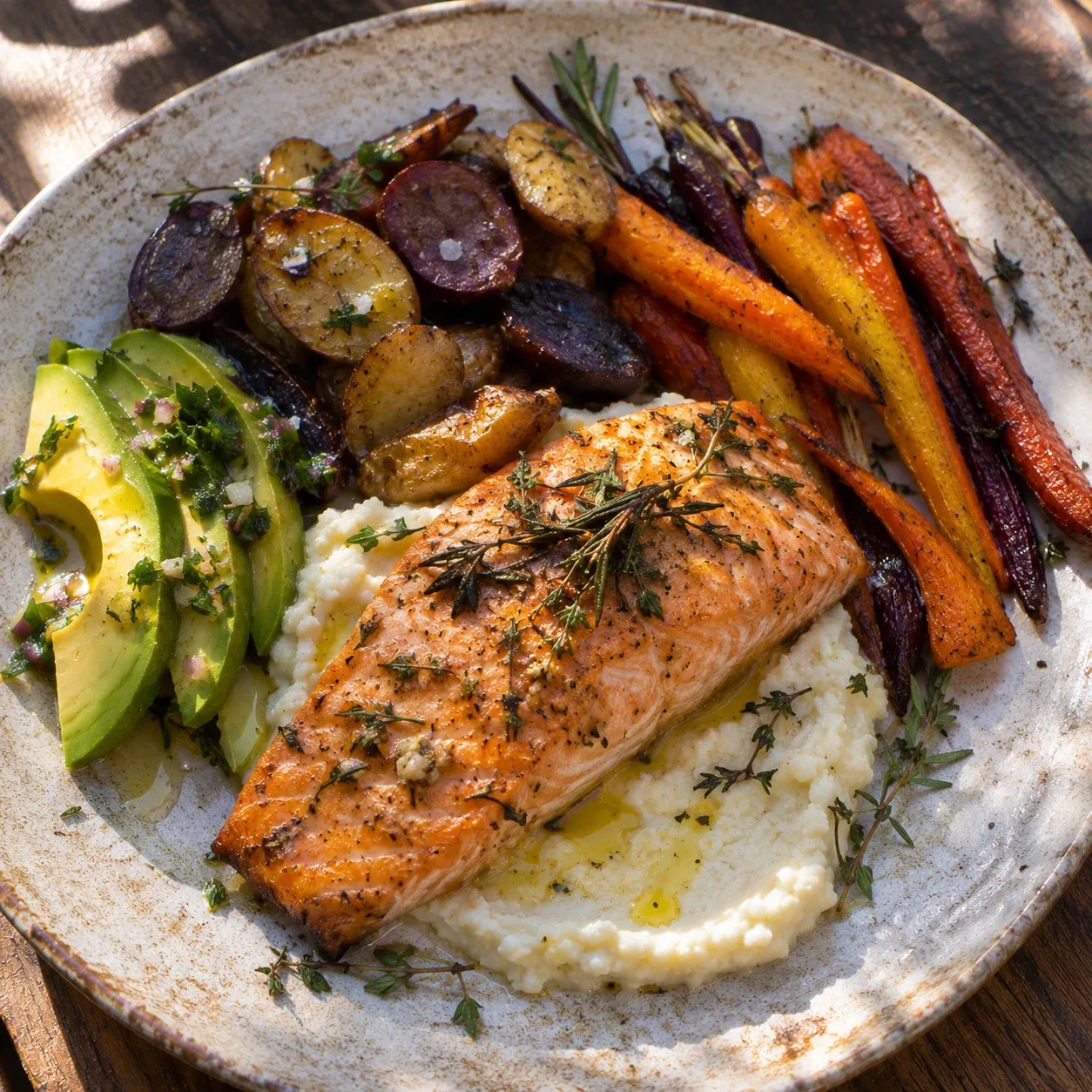
Baked Wild Salmon with Rosemary and Thyme, Whipped Cauliflower Purée, Roasted Rainbow Carrots, Purple and Fingerling Potatoes, and Avocado with Herb Vinaigrette
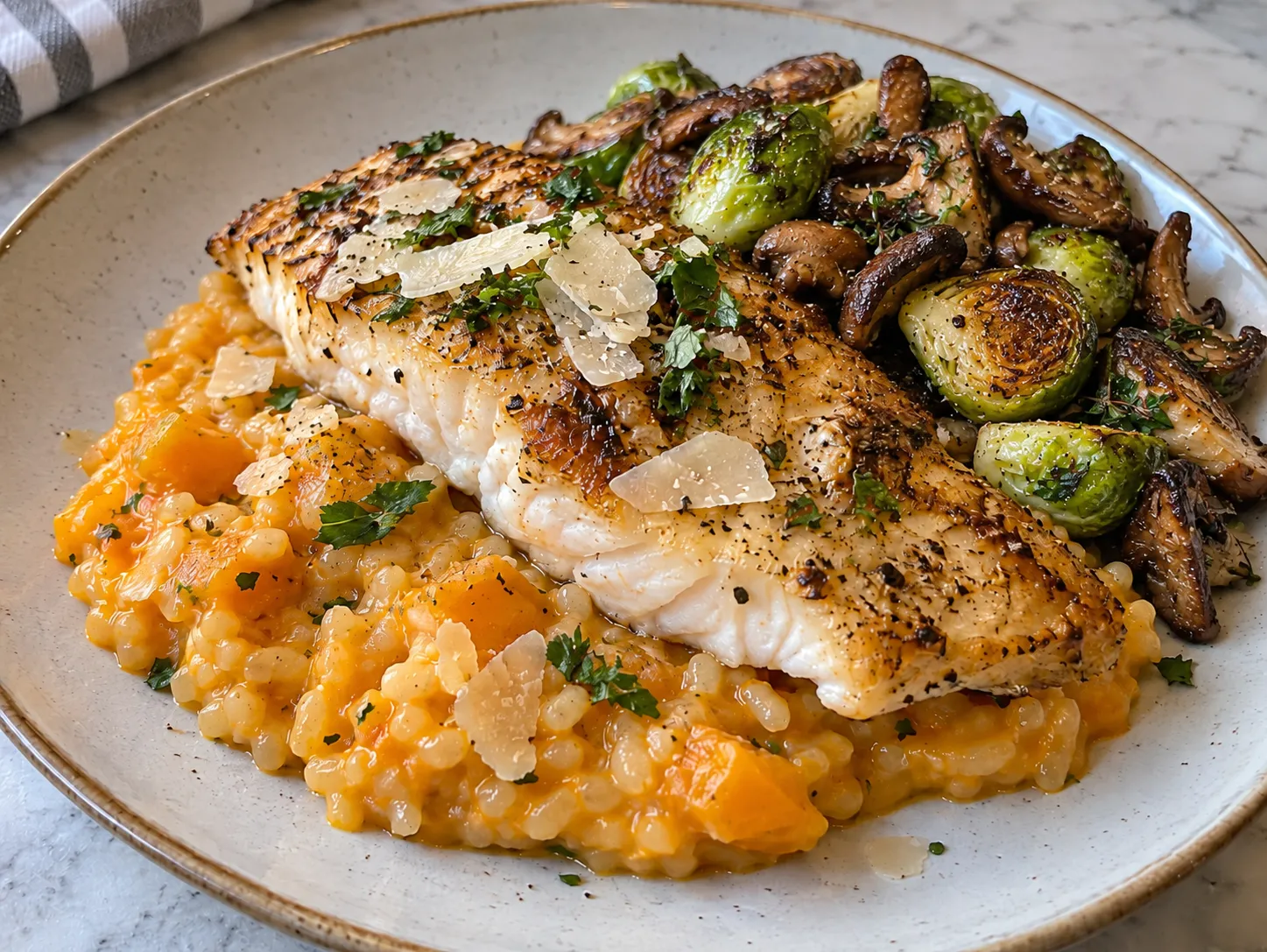
Caesar-Roasted Whole Snapper with Butternut Squash "Risotto", Wild Mushrooms, and Roasted Brussels Sprouts
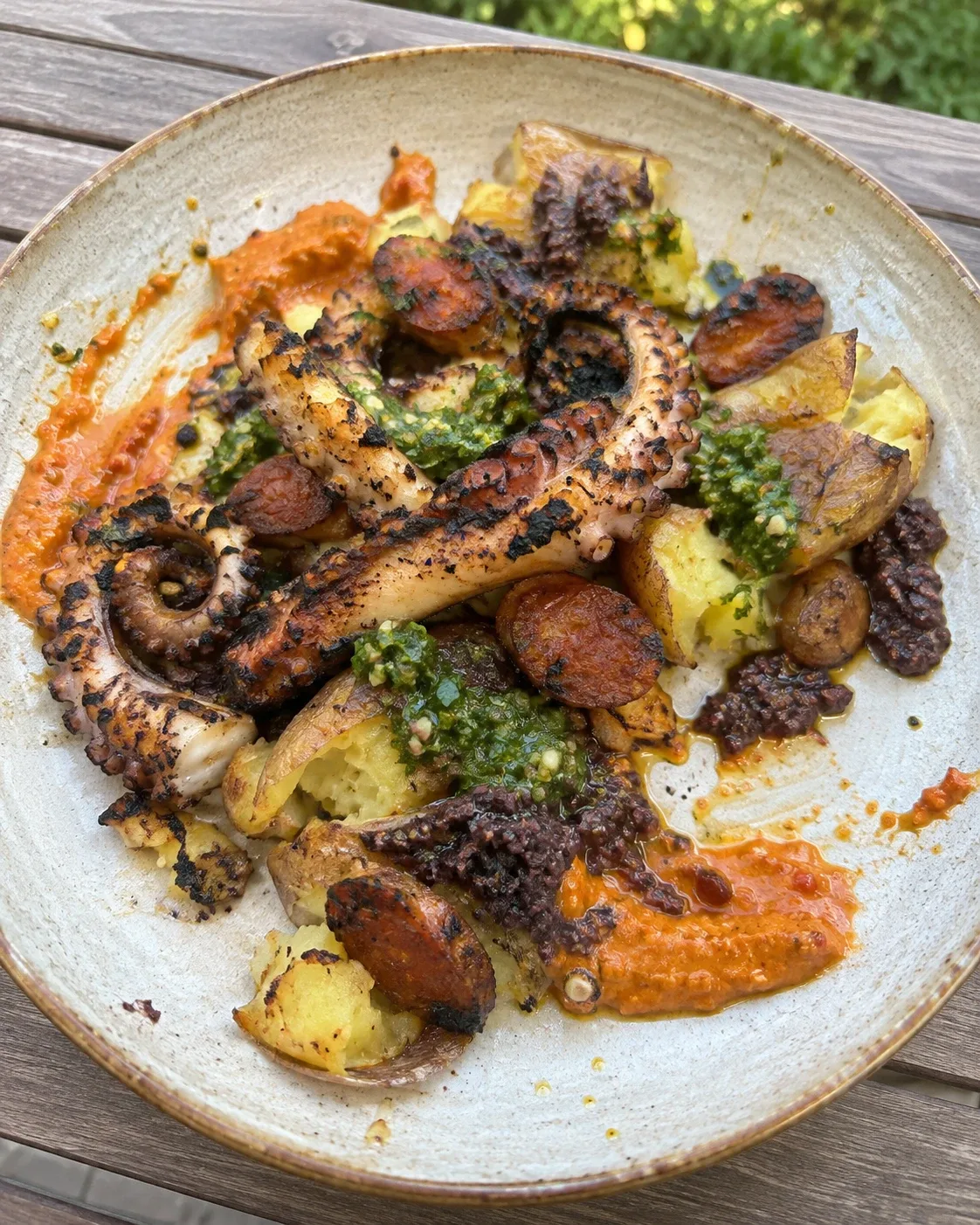
Charred Octopus with Chorizo, Crushed Fingerling Potatoes, Olive Tapenade, Romesco, and Chimichurri
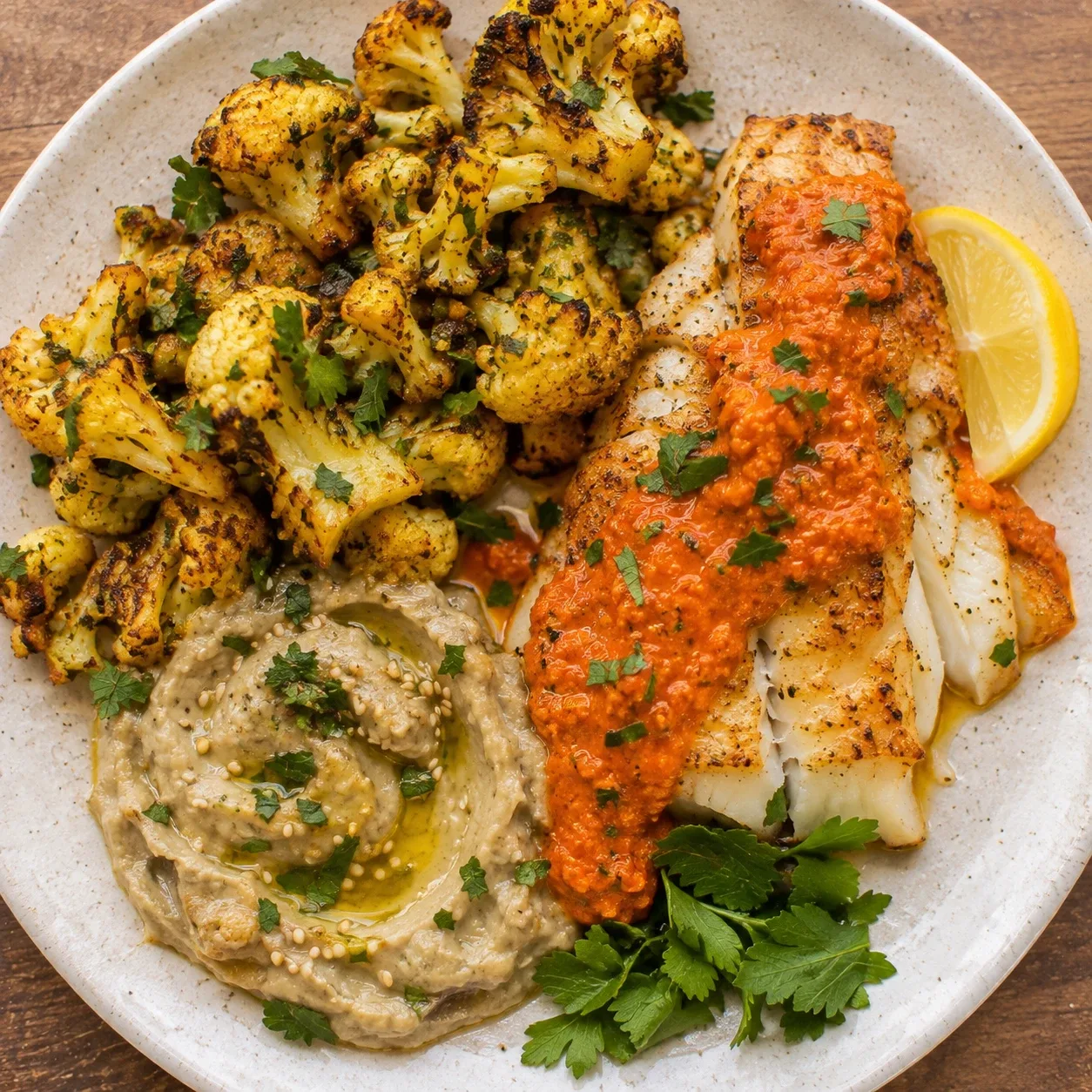
Roasted Chermoula Cauliflower with Baba Ghanoush, Red Pepper Romesco, and Wild Fish
Get new recipes and essays
Seasonal recipes and writing on light, circadian health, and living with nature.
Subscribe on Substack