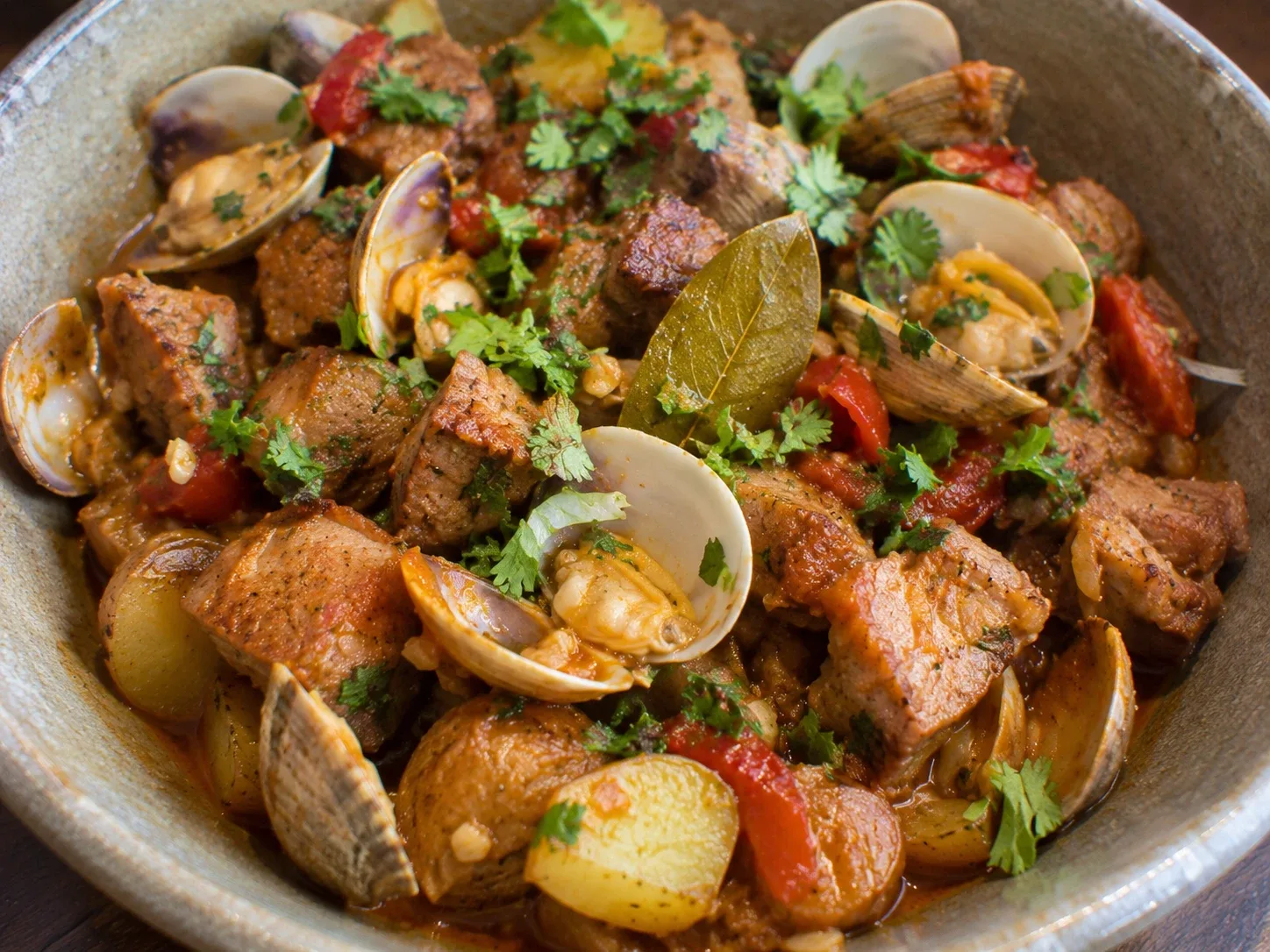
Portuguese Pork and Clams (Carne de Porco à Alentejana)
Pasture-raised pork shoulder marinated overnight in white wine, garlic, red pepper paste, and bay, seared in lard and finished with briny clams, crispy potatoes, and a big handful of cilantro.
Yield: Serves 6 · Active: 45 min · Total: 2 hr, plus 12–24 hr marinating · Season: Best in North America in fall and winter, when cold-water clams are at their sweetest and storage potatoes are plentiful · Best eaten: early evening
Ingredients
For the marinated pork
- 2½ lb boneless pasture-raised pork shoulder, trimmed of thick fat and cut into 1¼-inch cubes
- 1 cup dry white wine
- 3 tbsp massa de pimentão (Portuguese red pepper paste; see below to make your own)
- 6 garlic cloves, minced
- 2 bay leaves
- 1 tsp sweet paprika
- ½ tsp sea salt (massa de pimentão is salty, so go easy)
- ½ tsp freshly ground black pepper
For a quick massa de pimentão (if you can’t find it)
- 1 large red bell pepper, roasted, peeled, and seeded (or ½ cup jarred roasted red peppers, drained)
- 2 tsp sweet paprika
- 1 garlic clove
- 1 tsp sea salt
- 1 tbsp extra virgin olive oil
For the potatoes
- 2 lb Yukon Gold potatoes, peeled and cut into ¾-inch cubes
- 4 tbsp pasture-raised lard, melted
- 1 tsp sea salt
To finish
- 2 tbsp pasture-raised lard
- 2 lb small live clams (littlenecks or Manila), scrubbed
- ½ cup water or chicken bone broth, if needed
- 1 large bunch fresh cilantro, roughly chopped (about 1 cup)
- Lemon wedges
- Pickled vegetables, to serve (optional)
Method
For the marinated pork
- Make the paste (if needed). Blend the roasted pepper, paprika, garlic, salt, and olive oil until smooth. It keeps 1 week in the fridge.
- Marinate. In a glass or ceramic bowl, stir together the wine, massa de pimentão, garlic, bay leaves, paprika, salt, and pepper. Add the pork and turn to coat. Cover and refrigerate 12–24 hours, stirring once or twice. This long soak is traditional: the wine and pepper paste season the pork all the way through.
For the potatoes
- Heat the oven. About an hour before you want to eat, preheat the oven to 425°F.
- Roast. Pat the potato cubes dry, toss with the melted lard and salt on a rimmed sheet pan, and spread them out so they don’t touch. Roast 35–40 minutes, turning once halfway, until deep golden and crisp. (For the classic version, fry them instead: heat ½ inch of lard in a heavy skillet to 350°F and fry in batches for 6–8 minutes, until golden, then drain on a towel and salt.)
For the pork and clams
- Purge the clams. Soak the clams in a bowl of cold, well-salted water for 20–30 minutes so they spit out any sand. Lift them out (leaving the grit behind) and rinse. Discard any with cracked shells or any that stay open when tapped.
- Drain the pork. Lift the pork out of the marinade and pat it dry with a towel. Save the marinade and the bay leaves.
- Sear. Heat the 2 tbsp lard in a large, wide Dutch oven or deep skillet with a lid over medium-high heat. Brown the pork in 2–3 batches, without crowding, 5–6 minutes per batch, until well browned on most sides. Crowding the pan steams the meat instead of browning it.
- Simmer. Return all the pork to the pot and pour in the reserved marinade, scraping up the browned bits. Bring to a simmer, cover, and cook over low heat for 45 minutes to 1 hour, until the pork is tender when pierced with a fork. Add a splash of water or broth if the pan looks dry; you want about ½ cup of saucy liquid in the bottom.
- Add the clams. Raise the heat to medium-high, scatter the clams over the pork, and cover tightly. Cook 5–8 minutes, shaking the pot once or twice, until the clams open. Discard any that stay closed.
- Finish. Fold in the crispy potatoes and most of the cilantro, so the potatoes soak up some of the juices but stay crisp on top. Taste the sauce for salt.
To serve
- Plate. Bring the pot to the table, scatter with the remaining cilantro, and serve with lemon wedges and a small bowl of pickled vegetables on the side, if you like.
Storage
- This is best eaten the day it’s made, while the potatoes are crisp and the clams are tender.
- To get ahead, braise the pork through step 4 up to 2 days ahead and refrigerate. Rewarm gently, then add the clams, potatoes, and cilantro just before serving.
- Leftovers keep up to 2 days in the fridge. Take the clams out of their shells before storing, and reheat gently so they don’t turn rubbery.
Variations
- Pork loin: For a quicker version, use 2 lb pork loin cubes and simmer only 10–15 minutes after searing.
- Cockles or mussels: Small cockles are traditional in Portugal; mussels work too and cook in 4–6 minutes.
- Spicy: Add 1 small minced dried chile or a pinch of piri-piri flakes to the marinade.
- Pickles on the side: Quick-pickled carrots, cauliflower, and onions are a classic Portuguese companion that cuts the richness.
Season & Circadian Timing
This dish comes from the Alentejo, Portugal’s inland pork country, paired with clams from the coast. It’s a cold-weather dish, when clams from cold northern waters are plump and sweet and a pot of wine-braised pork feels just right. It’s rich, so enjoy it in the early evening and give yourself a few hours to digest before bed.
Nourishment Notes
- Pasture-raised pork shoulder — protein, thiamin (vitamin B1), zinc, and selenium. Pork from pastured pigs tends to carry more vitamin D in its fat.
- Clams — one of the richest food sources of vitamin B12 and iron, plus zinc and iodine from the sea.
- Lard — a traditional Portuguese cooking fat that is stable at high heat and gives the potatoes their crisp, golden edges.
- Garlic — chopping or mincing it creates allicin, the compound behind its sharp aroma.
- Cilantro — used generously in southern Portuguese cooking, it adds vitamin K, vitamin C, and a fresh, green lift to the rich sauce.
Sourcing
- Pork — pasture-raised heritage breed, from a local farm (White Oak Pastures)
- Tallow / lard / duck fat — from pasture-raised animals, from a local farm or butcher
- Clams — live and tightly closed, from a trusted fishmonger; farmed clams are a sustainable choice
- Massa de pimentão — Portuguese red pepper paste made with only red peppers and salt, or homemade
- White wine — dry, organic, and low in added sulfites (a Portuguese vinho verde or Alentejo white is perfect)
- Bone broth — homemade from pasture-raised bones, or organic and sold frozen (Bonafide Provisions)
- Potatoes — organic; conventional potatoes are often treated with sprout inhibitors after harvest
- Spices — organic and non-irradiated
- Lemons / limes / oranges — organic
- Salt — unrefined sea salt (Baja Gold); flaky sea salt for finishing (Maldon)
- Fruits, vegetables, and herbs — organic, from a farmers’ market or local farm
You might also like: Alentejo Purslane Soup (Sopa de Beldroegas) with Crispy Cured Pork and Poached Eggs · Paprika-Braised Pork Ribs with Potatoes, Carrots, and Brussels Sprouts · Shrimp and Trout Chowder with Taro and Chayote
With Love, Light, and Health,
Anna (aka Food Marshall)
Food Marshall Approved. Grain-free, seed-oil-free and refined-sugar-free, made from organic, local and seasonal ingredients. Our standards
More Meat

Get new recipes and essays
Seasonal recipes and writing on light, circadian health, and living with nature.
Subscribe on Substack