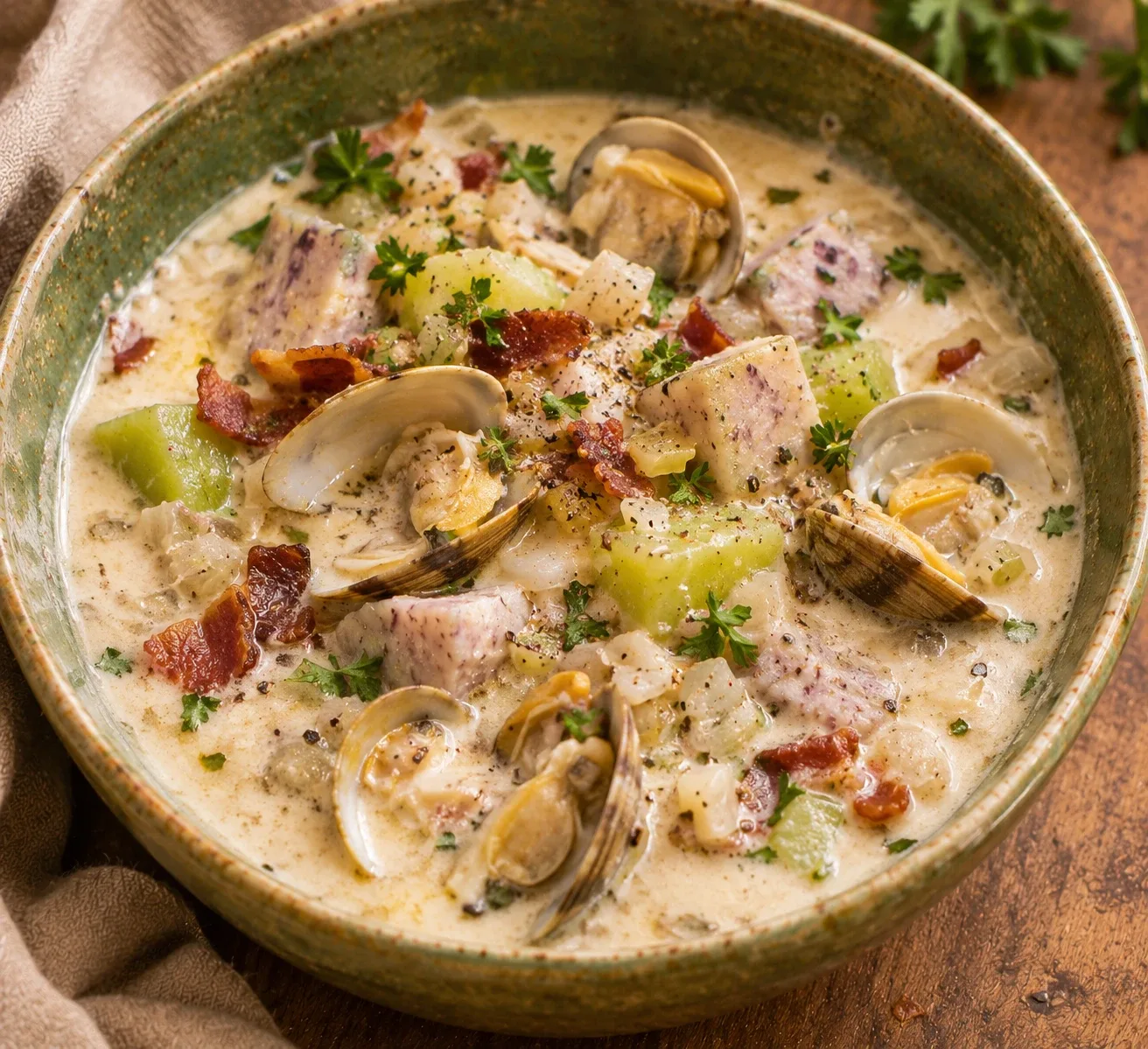
Shrimp and Trout Chowder with Taro and Chayote
A creamy chowder of sweet shrimp and tender trout with raw cream and crispy chicharrones, made with a quick shrimp-shell stock, with taro standing in for potatoes and thickening the pot on its own. No flour needed, plus options for clams, mussels, and tropical white fish.
Yield: Serves 6 · Active: 45 min · Total: 1 hr 15 min (plus about 1 hr for the chicharrones, which you can make ahead) · Season: Year-round in the tropics, where taro, chayote, and fresh seafood are always available · Best eaten: Midday
Ingredients
For the chicharrones (and lard)
- 1 lb skin-on pasture-raised pork belly, cut into ½-inch cubes
- ¼ cup filtered water
- Sea salt
For the seafood and shrimp-shell stock
- 1 lb wild shrimp (16–20 per lb), shell-on
- 1 lb skin-on or skinless trout fillets (rainbow or steelhead)
- 5 cups filtered water
- ½ small onion, a celery top, and 1 bay leaf, for the stock
- 1 cup bottled clam juice or fish stock (optional, for a deeper sea flavor)
For the chowder
- 2 tbsp grass-fed butter
- 1 tbsp lard (saved from the chicharrones)
- 1 large leek (white and light green parts), halved, sliced, and washed well
- 1 small yellow onion, diced
- 2 celery ribs, diced
- 2 garlic cloves, minced
- 1½ lb taro root (about 2 medium), peeled and cut into ½-inch cubes
- 1 medium chayote, peeled, pitted, and cut into ½-inch cubes
- 4 sprigs fresh thyme
- 2 bay leaves
- 1½ cups raw milk
- 1 cup raw heavy cream
- 1 tbsp arrowroot powder, whisked into 2 tbsp cold milk (optional, for a thicker chowder)
- Sea salt and freshly ground white or black pepper, to taste
To finish
- The chicharrones, chopped into tiny cubes
- 2 tbsp fresh flat-leaf parsley or culantro, chopped
- 1 tbsp fresh chives, sliced
- Lime or lemon wedges
- A pat of grass-fed butter (optional)
Method
For the chicharrones (make ahead, if you like)
- Start with water. Put the pork belly cubes and water in a heavy pot or Dutch oven over medium heat. The water keeps the pork from scorching while the fat starts to melt.
- Render slowly. Cook, stirring every 5–10 minutes, as the water evaporates and the fat melts out, 45–60 minutes. The cubes will bubble gently in their own fat, then turn golden and crisp. Keep a lid or splatter screen nearby, since the skin can pop.
- Drain and salt. Lift the chicharrones out with a slotted spoon onto a plate lined with a paper towel and sprinkle with salt while hot. Once cool, chop them into tiny cubes.
- Save the lard. Let the fat cool for a few minutes, then pour it through a fine sieve (lined with cheesecloth for the clearest lard) into a clean glass jar. A pound of pork belly gives you about ½–¾ cup. Use 1 tbsp in this chowder and save the rest.
For the seafood and stock
- Prep the shrimp. Peel and devein the shrimp, saving the shells and tails. Cut the shrimp in half if large, then cover and refrigerate.
- Make a quick shrimp-shell stock. Put the shells in a saucepan with the water, onion, celery top, and bay leaf. Bring to a boil, then simmer 20 minutes. Strain, pressing on the shells. You should have about 4 cups; top up with clam juice, fish stock, or water if needed.
- Prep the trout. Remove the skin and any pin bones (run your fingers along the fillet and pull them out with tweezers). Cut into 1½-inch pieces, then cover and refrigerate.
For the chowder
- Soften the aromatics. Melt the butter and lard in a Dutch oven over medium heat. Add the leek, onion, and celery with a pinch of salt. Cook 8–10 minutes, until soft but not browned. Add the garlic and cook 1 minute.
- Simmer the taro. Add the taro, the 4 cups of stock, the thyme, and the bay leaves. Bring to a boil, then lower to a steady simmer, partly covered, for 10 minutes.
- Add the chayote. Stir in the chayote and simmer 10–12 minutes more, until the taro is completely soft all the way through (taro must be fully cooked) and the chayote is tender.
- Thicken naturally. Discard the thyme stems and bay leaves. Mash about a cup of the taro against the side of the pot and stir it in. The starch thickens the chowder.
- Add the dairy. Lower the heat to low and stir in the milk and cream. Heat gently 5 minutes, until steaming, without letting it boil. For a thicker chowder, stir in the arrowroot slurry and cook 1 minute, just until it thickens.
- Poach the trout. Slip the trout pieces into the chowder and keep it at a bare simmer for 3 minutes. Stir gently so the pieces stay mostly whole.
- Add the shrimp. Add the shrimp and cook 2–3 minutes more, just until pink and opaque. Seafood toughens if it cooks longer.
- Season and serve. Taste before salting, especially if you used clam juice. Season with salt and pepper. Ladle into bowls and top with the chopped chicharrones (add them right before serving so they stay crisp), parsley or culantro, chives, and a pat of butter, if using. Serve with lime or lemon wedges.
Storage
Fridge up to 2 days. Reheat gently over low heat, without boiling, so the cream doesn’t break and the seafood stays tender.
Not ideal for freezing, since the cream and taro turn grainy.
Chicharrones stay crisp in an airtight container at room temperature for 2 days; re-crisp them in a 350°F oven for 5 minutes. Keep the lard in a sealed glass jar in the fridge up to 3 months or the freezer up to a year, and use it for sautéing, roasting vegetables, frying eggs, or making more chicharrones.
Variations
Add or swap the seafood
Keep about 2 lb of seafood in total, and add each kind for just as long as it needs at the end.
- Clams (almejas): Steam 2 lb scrubbed clams separately in 1 cup water until they open, 6–10 minutes. Strain the liquid into the stock, then add the clams (in or out of the shell) in the last minute.
- Mussels (mejillones): Add 1–2 lb scrubbed, debearded mussels straight to the finished chowder, cover, and simmer 4–5 minutes, until they open. Discard any that don’t open.
- Tropical white fish: Use 1 lb firm white fish in 1½-inch cubes instead of (or with) the trout, simmered 3–4 minutes, until it flakes. Good choices in Costa Rica and other tropical coasts:
- Corvina (white sea bass): mild and flaky, the classic Costa Rican choice.
- Dorado (mahi-mahi): firm, sweet, and holds its shape well.
- Pargo (red snapper): delicate and sweet.
- Róbalo (snook) or mero (grouper): meaty, firm fillets that stay in big pieces.
- Tuna (atún): Yellowfin works, but it dries out quickly once cooked through. Cut it into 1-inch cubes and add in the last 1–2 minutes, or sear a whole steak rare, slice it, and lay it on top of each bowl.
Other swaps
- Classic potatoes: For the traditional version, use 1½ lb Yukon gold potatoes in place of the taro. They need only 12–15 minutes to soften.
- No chayote: Use 1 cup diced celery root or 1 cup diced zucchini (added in the last 5 minutes) instead.
- Coconut-lime (tropical): Use 1 can (13.5 oz) full-fat coconut milk in place of the cream, finish with lime juice and chopped culantro, and add a pinch of chile.
- Tangy finish: Swap ½ cup of the cream for crème fraîche, stirred in at the end off the heat.
- Bacon: Use 4 oz diced thick-cut pasture-raised bacon instead. Render it in the pot first, lift it out, and cook the vegetables in its fat; scatter it on top to serve.
- Dairy-light: Use 2 cups raw milk and ½ cup cream for a thinner, brothier chowder.
Season & Circadian Timing
In North America, leeks and chayote come in strong in fall and a creamy chowder suits the cold months. In the tropics, including Costa Rica, taro, chayote, and fresh seafood are available year-round, and rainbow trout is farmed in the cool highland rivers. It’s rich in protein and cream, so it sits best at midday, as a hearty lunch, when digestion is strongest.
Nourishment Notes
- Wild shrimp — Lean protein with selenium, iodine, and vitamin B12, plus astaxanthin, the red-orange pigment that gives them their color.
- Trout — Omega-3 fats (EPA and DHA), vitamin D, and B12.
- Shrimp-shell stock — Gets every bit of flavor from the shrimp, with some minerals from the shells, so nothing goes to waste.
- Raw cream and milk — Fat-soluble vitamins A and D, plus the fat that makes this chowder feel so satisfying.
- Taro — A starchy root with fiber and potassium that gives the chowder its body without flour.
- Chayote — A mild, low-starch squash with vitamin C and folate.
- Leeks — Prebiotic fiber (inulin) and a sweet, gentle onion flavor.
Sourcing
- Shrimp — wild-caught, shell-on, and ideally local; in North America, look for wild American Gulf or Pacific shrimp; in Costa Rica, ask for local Pacific shrimp at the fish market
- Trout — fresh rainbow or steelhead trout from clean, cold-water farms or a local fishmonger (in Costa Rica, from highland farms like those around San Gerardo de Dota)
- White fish and tuna — fresh and line-caught where possible, from a fishmonger or fish market you trust
- Clams and mussels — fresh, bought the day you cook them; they should close tightly when tapped
- Clam juice — bottled, made with just clam broth and salt (Bar Harbor)
- Pork belly — skin-on, from pasture-raised pigs, from a local farm or butcher
- Store-bought chicharrones (shortcut) — made from pasture-raised pork and fried in lard, not seed oils (check the label, since many are fried in vegetable oil)
- In Costa Rica — you can often buy chicharrones from a local butcher, cooked fresh that day in pork fat, with no seed oils
- Grass-fed butter — organic, cultured butter from 100% grass-fed cows, or raw butter from a local dairy
- Raw milk — from a farmer you know and trust (find one at realmilk.com), or organic, grass-fed, low-temperature pasteurized milk (Kalona SuperNatural)
- Heavy cream — raw from a farmer you know and trust, or organic, grass-fed, low-temperature pasteurized cream (Kalona SuperNatural)
- Taro — firm and heavy for its size, with no soft spots, from an Asian, Latin American, or Pacific Islander grocery (wear gloves to peel it, since raw taro can irritate the skin)
- Chayote — firm, glossy, and heavy for its size, from a Latin American or Asian grocery
- Arrowroot — organic
- Salt — unrefined sea salt (Baja Gold); flaky sea salt for finishing (Maldon)
- Fruits, vegetables, and herbs — organic, from a farmers’ market or local farm
You might also like: Creamy Chayote-Ginger Soup with Apple, Cream, and Toasted Pepitas · Salmon, Scallop, Shrimp & Mussel Cioppino over Zucchini Noodles
With Love, Light, and Health,
Anna (aka Food Marshall)
Food Marshall Approved. Grain-free, seed-oil-free and refined-sugar-free, made from organic, local and seasonal ingredients. Our standards
More Soups & Stews
Get new recipes and essays
Seasonal recipes and writing on light, circadian health, and living with nature.
Subscribe on Substack