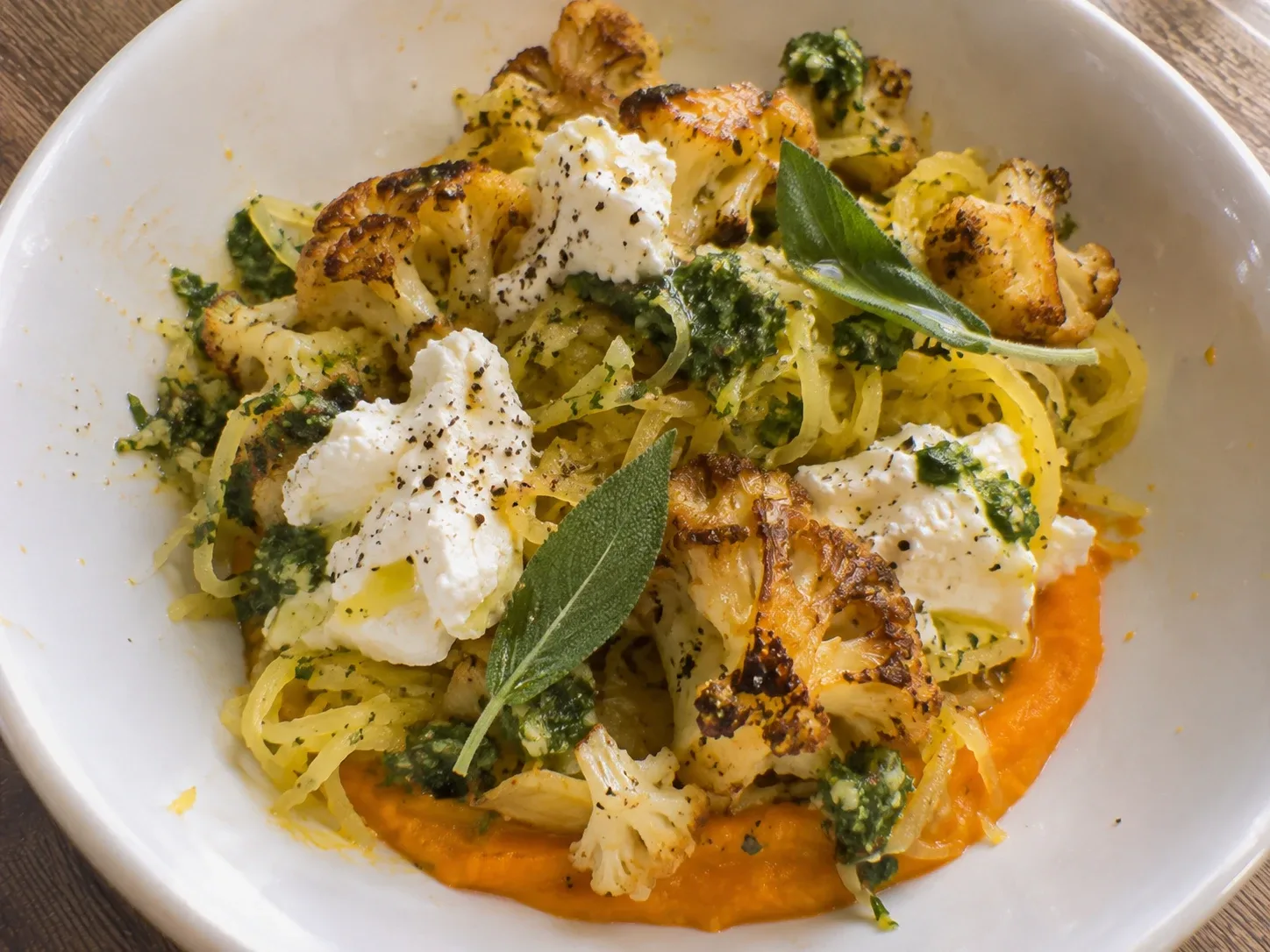
Spaghetti Squash with Sage-Parsley Pesto, Whipped Ricotta, and Roasted Cauliflower
Golden spaghetti squash strands tossed with a rustic sage-parsley pesto, scattered with caramelized cauliflower and dollops of lemony whipped ricotta, with an optional butternut purée base for special dinners.
Yield: Serves 4 as a main, 6 as a side · Active: 30 min · Total: 1 hr (1 hr 15 min with the butternut purée) · Season: Best in North America in fall and winter, when spaghetti squash, cauliflower, and sage are at their peak · Best eaten: early evening
Ingredients
For the spaghetti squash
- 1 medium-large spaghetti squash (3–4 lb)
- 2 tbsp extra virgin olive oil
- Sea salt and freshly ground black pepper
For the roasted cauliflower
- 1 medium head cauliflower (white or purple), cut into florets
- 2 tbsp extra virgin olive oil
- 1 tsp sea salt
- Freshly ground black pepper
For the sage-parsley pesto
- 2 cups packed fresh flat-leaf parsley, leaves and tender stems
- 2 tbsp fresh sage leaves (small, tender ones if you can)
- 2 garlic cloves
- ⅓ cup toasted pine nuts (or walnuts)
- ½ cup finely grated Parmigiano-Reggiano
- ½ cup extra virgin olive oil
- 1 tbsp fresh lemon juice
- ½ tsp sea salt
- Freshly ground black pepper
For the whipped ricotta
- 1½ cups whole-milk ricotta (sheep’s milk or raw-milk if you can find it)
- Zest of ½ lemon
- 1 tbsp extra virgin olive oil
- Pinch of sea salt
For the butternut purée (optional)
- 1 small butternut squash (about 2 lb), peeled, seeded, and cut into 1-inch cubes
- 2 tbsp raw or grass-fed butter
- ½ tsp sea salt
- ¼ tsp freshly grated nutmeg
- 2 tbsp raw milk or cream, as needed
To finish
- ¼ cup toasted pine nuts, walnuts, or pecans
- A few small fresh sage leaves
- Flaky sea salt and freshly ground black pepper
Method
For the spaghetti squash
- Heat the oven. Preheat to 400°F and line two rimmed sheet pans with parchment.
- Halve. Cut the squash in half lengthwise with a large, heavy knife, rocking it through rather than pressing down. If the skin is very hard, roast the whole squash for 10 minutes first to soften it. Scoop out the seeds and stringy pulp.
- Roast. Brush the cut sides with olive oil, season with salt and pepper, and lay cut side down on one sheet pan. Roast 40–45 minutes, until a fork pierces the skin easily.
- Shred. Flip the halves and cool 5 minutes. Scrape a fork across the flesh from side to side to pull it into long strands. Let the strands drain in a colander for 5–10 minutes, since spaghetti squash releases water as it sits, then season with a pinch more salt and pepper.
For the roasted cauliflower
- Roast. Toss the florets with the olive oil, salt, and pepper on the second sheet pan. Roast alongside the squash for its final 25–30 minutes, tossing once, until deep golden at the edges.
For the butternut purée (optional)
- Simmer. Put the cubed squash in a saucepan with about 1 cup water. Cover and cook over medium heat for about 20 minutes, until very tender.
- Purée. Drain, add the butter, salt, and nutmeg, and blend with an immersion blender until silky, adding a splash of milk or cream as needed. Keep warm over low heat.
For the pesto and ricotta
- Make the pesto. Pulse the parsley, sage, garlic, pine nuts, and Parmigiano in a food processor until finely chopped. With the motor running, pour in the olive oil in a thin stream until you have a rough, textured pesto. Stir in the lemon juice, salt, and pepper. Sage is strong, so resist adding more.
- Whip the ricotta. Whisk the ricotta, lemon zest, olive oil, and salt until smooth and slightly loose.
To serve
- Base (optional). If using the purée, spread it across a wide serving platter.
- Toss. Toss the warm squash strands with half the pesto and pile them on the platter.
- Top. Scatter the cauliflower over the squash, dollop the whipped ricotta in several spots, and drizzle the remaining pesto over everything.
- Finish. Sprinkle with toasted nuts, sage leaves, flaky salt, and pepper. Serve right away, or let it rest 5 minutes so the ricotta warms slightly.
Storage
- Leftovers keep up to 3 days in the fridge. Reheat gently in a skillet with a splash of water or olive oil. The pesto version often tastes even better the next day.
- Roast the spaghetti squash up to 2 days ahead and keep it covered in the fridge.
- The pesto keeps 3–4 days in the fridge with plastic pressed onto the surface or a thin layer of olive oil on top. The butternut purée keeps 4 days.
- Cold leftover strands make a quick lunch salad tossed with olive oil and lemon.
Variations
- Add protein: Top with sliced pasture-raised Italian sausage, roast chicken, or seared shrimp.
- Crispy sage: Fry 8 sage leaves in 2 tbsp olive oil over medium heat for 30–45 seconds, until crisp, and scatter on top.
- Walnut pesto: Use toasted walnuts in place of the pine nuts for a deeper, earthier pesto.
- Dairy-light: Skip the Parmigiano in the pesto and serve the ricotta on the side.
Season & Circadian Timing
Spaghetti squash peaks from October through December and stores well through the cold months, right alongside cauliflower and hardy sage. This is the dinner-party version of spaghetti squash, made for a Sunday supper or a small gathering. With ricotta, cheese, and nuts, it’s satisfying enough for an early evening meal while the carbohydrate load stays gentle.
Nourishment Notes
- Spaghetti squash — offers vitamin C, vitamin B6, manganese, and fiber, with about a quarter of the carbohydrates of the same amount of cooked pasta.
- Sage — a classic Italian fall herb, rich in aromatic oils, used for generations with roasted meats, beans, and butter sauces.
- Cauliflower — brings vitamin C, fiber, and the sulfur compounds shared by all cabbage-family vegetables.
- Ricotta and Parmigiano-Reggiano — protein and calcium; long-aged Parmigiano is very low in lactose, and fresh ricotta is mild and gentle.
- Butternut squash — far richer in beta-carotene than spaghetti squash, and the butter in the purée helps you absorb it.
Sourcing
- Ricotta — homemade from raw or grass-fed milk, or whole-milk ricotta from a small producer (sheep’s milk ricotta is lovely)
- Parmigiano-Reggiano — DOP, aged 24 months or more
- Grass-fed butter — organic, cultured butter from 100% grass-fed cows, or raw butter from a local dairy
- Raw milk — from a farmer you know and trust (find one at realmilk.com), or organic, grass-fed, low-temperature pasteurized milk (Kalona SuperNatural)
- Extra virgin olive oil — organic, single-estate, harvest-dated, in dark glass
- Lemons / limes / oranges — organic (you’re using the zest)
- Salt — unrefined sea salt (Baja Gold); flaky sea salt for finishing (Maldon)
- Fruits, vegetables, and herbs — organic, from a farmers’ market or local farm
You might also like: Spaghetti Squash Aglio e Olio with Kale, Broccolini, and Rainbow Carrots · Spaghetti Squash, Eight Ways: Weeknight to Dinner Party · Butternut Squash Soup with Caramelized Pumpkin Seeds and Toasted Coconut
With Love, Light, and Health,
Anna (aka Food Marshall)
Food Marshall Approved. Grain-free, seed-oil-free and refined-sugar-free, made from organic, local and seasonal ingredients. Our standards
More Vegetable Sides & Mains
Get new recipes and essays
Seasonal recipes and writing on light, circadian health, and living with nature.
Subscribe on Substack