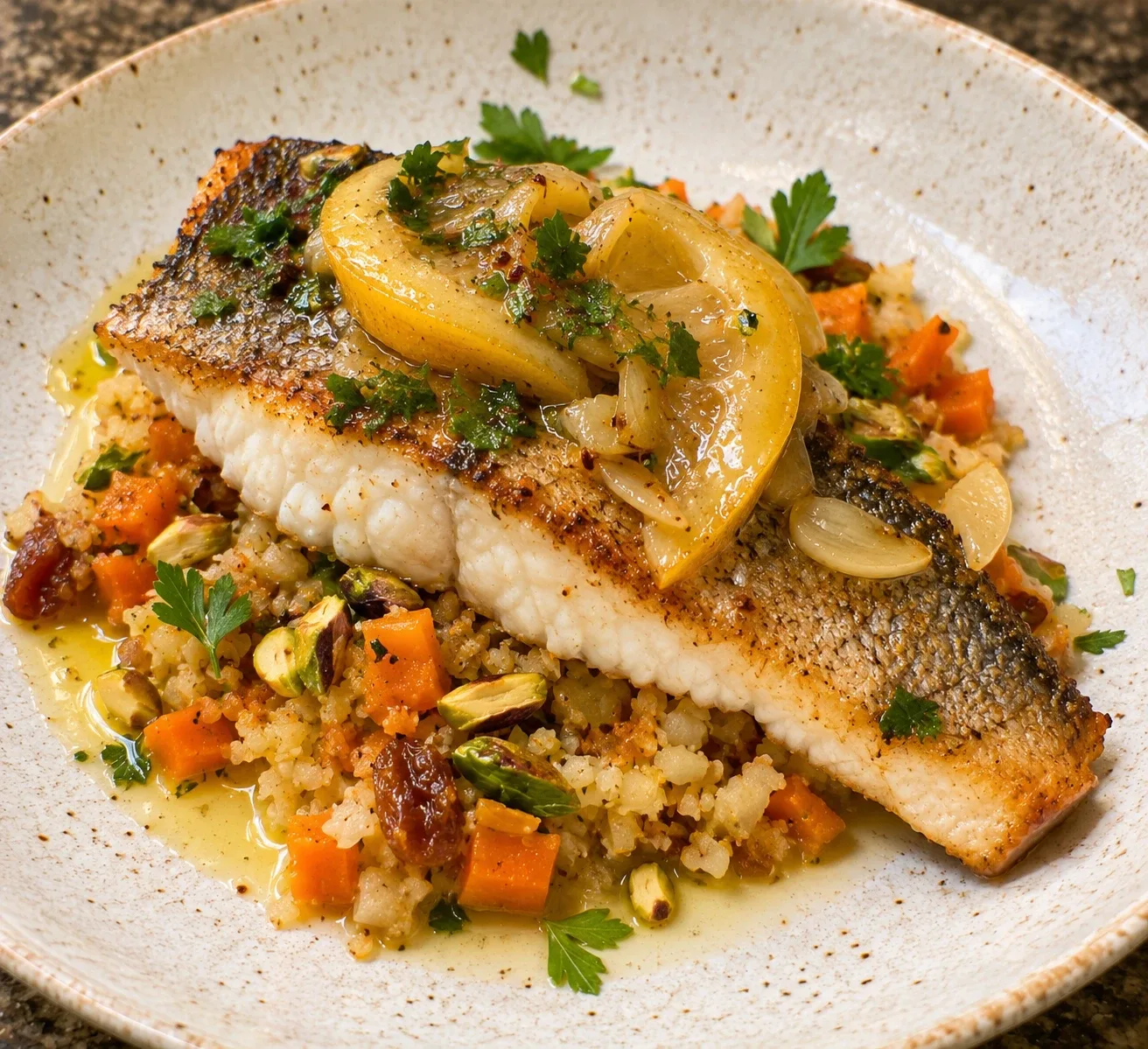
Sea Bass with Lemon Confit and Root Vegetable “Couscous”
Crispy-skinned sea bass spooned with soft, slow-cooked lemons and garlic in olive oil, over a jeweled “couscous” of finely diced roots, pistachios, apricots, and warm spices. It’s bright and cozy at once, made for the cold-weather months.
Yield: Serves 4 · Active: 45 min · Total: 1 hr 30 min · Season: Best in North America in fall and winter, when celery root, parsnips, and citrus are at their peak · Best eaten: early evening
Ingredients
For the lemon confit
- 2 organic lemons (Meyer lemons if you can find them), thinly sliced, seeds removed
- 4 garlic cloves, peeled and lightly smashed
- 3 sprigs fresh thyme
- 1 small sprig fresh rosemary or 1 bay leaf
- ½ tsp sea salt
- About 1 cup extra virgin olive oil, enough to just cover
- Pinch of red pepper flakes (optional)
For the root vegetable “couscous”
- About 1½ lb mixed root vegetables, peeled (for example, 1 large carrot, 1 parsnip, ½ small celery root, 1 golden beet, and 1 small turnip)
- 2 tbsp grass-fed ghee or extra virgin olive oil
- 1 small shallot, finely minced
- 1 tsp ground cumin
- ½ tsp ground Ceylon cinnamon
- ½ tsp ground turmeric
- ¾ tsp sea salt, plus more to taste
- Freshly cracked black pepper
- ⅓ cup shelled pistachios (or blanched almonds), toasted and roughly chopped
- ⅓ cup unsulfured dried apricots, finely chopped (or ⅓ cup pomegranate arils, or some of each)
- ½ cup chopped fresh herbs (parsley, mint, and/or cilantro)
- 1–2 tbsp oil from the lemon confit
- Squeeze of fresh lemon juice
For the sea bass
- 4 skin-on sea bass or branzino fillets (5–6 oz each)
- ¾ tsp sea salt
- 1 tbsp avocado oil or grass-fed ghee
- 1 tbsp grass-fed butter
Method
For the lemon confit
- Blanch the lemons. Drop the lemon slices into a small pot of boiling water for 1 minute, then drain. This softens the bitterness of the pith.
- Layer. In a small saucepan, layer the lemon slices, garlic, thyme, rosemary or bay, salt, and red pepper flakes, if using. Pour in enough olive oil to just cover.
- Cook low and slow. Set over the lowest possible heat so the oil barely shimmers, with only a few tiny bubbles. Cook 45–60 minutes, until the rinds are soft and translucent and the garlic is tender. (Or bake, covered, at 275°F for about 1 hour.) Don’t let it fry or brown. Let it cool slightly in the oil.
For the root vegetable “couscous”
- Cut the roots. Cut the roots into chunks and pulse them in a food processor, in batches, until they’re about the size of couscous. Don’t overfill the bowl or they’ll turn mushy. (Or dice them by hand into ⅛-inch pieces.)
- Bloom the spices. Warm the ghee in your widest skillet over medium heat. Add the shallot and cook 2 minutes, until soft, then stir in the cumin, cinnamon, and turmeric for 30 seconds, until fragrant.
- Sauté. Turn the heat to medium-high, add the roots and salt, and spread them out. Cook 6–8 minutes, stirring only now and then, until tender with a little bite and lightly golden in spots. Work in two batches if your pan is crowded so they sauté instead of steam.
- Toss. Take the pan off the heat and fold in the pistachios, apricots or pomegranate, herbs, confit oil, lemon juice, and a few cracks of black pepper. Taste and adjust the salt. Cover to keep warm.
For the sea bass
- Dry and salt. Pat the fillets very dry, especially the skin. Score the skin with 2–3 shallow cuts so it doesn’t curl, and season both sides with salt.
- Sear skin-side down. Heat the avocado oil in a large stainless steel or cast-iron skillet over medium-high heat until it shimmers. Lay the fillets in skin-side down and press gently with a spatula for 15 seconds so the skin stays flat. Cook 3–4 minutes without moving them, until the skin is crisp and the flesh is opaque about three-quarters of the way up.
- Finish with butter. Flip the fillets, add the butter, and baste for 1 minute, until the fish is just opaque in the center and flakes easily.
- Plate. Spoon the root vegetable “couscous” onto plates, set the sea bass on top skin-side up, and finish with a few slices of lemon confit, a confit garlic clove, and a drizzle of the confit oil.
Storage
Lemon confit: fridge up to 2 weeks in a glass jar, with the lemons covered by the oil. The oil firms up when cold; let it sit at room temperature for a few minutes before using.
Root vegetable “couscous”: fridge up to 4 days. Rewarm in a skillet, or serve at room temperature as a salad.
Sea bass: best right after cooking; leftovers keep 1–2 days in the fridge.
Variations
- Other fish: Use wild halibut, cod, snapper, or a whole branzino roasted at 425°F for 18–20 minutes.
- Roasted “couscous”: Spread the roots and spices over two parchment-lined sheet pans with the ghee and roast at 425°F for 12–15 minutes, stirring once.
- Cauliflower blend: Swap half the roots for riced cauliflower for a lighter, paler couscous.
- Spice swap: Use 1½ tsp ras el hanout in place of the cumin, cinnamon, and turmeric.
- Nut swap: Toasted sliced almonds or pine nuts in place of the pistachios.
- Make-ahead confit: Make a double batch of lemon confit and use it all week over chicken, lamb, roasted vegetables, or eggs, and use the oil in salad dressings.
Season & Circadian Timing
Celery root, parsnips, turnips, and beets are sweetest after the first frosts of fall, and lemons hit their peak in winter, so this plate comes together naturally in the colder months. Lean fish over gently cooked roots makes a warming but light early-evening meal that’s easy to digest before the night winds down.
Nourishment Notes
- Sea bass — lean, high-quality protein that cooks quickly and stays mild and tender.
- Root vegetables — fiber and natural sweetness, plus beta-carotene from the carrots and betalain pigments from the golden beet.
- Turmeric — its curcumin is better absorbed with fat and black pepper, both of which are in the pan here.
- Pistachios — protein, fiber, and the carotenoids lutein and zeaxanthin.
- Extra virgin olive oil — monounsaturated fat and polyphenols, gently cooked here with the lemons and garlic.
Sourcing
- Fish (general) — wild-caught, from a fishmonger you trust; check Seafood Watch for the best choices in your area
- Extra virgin olive oil — organic, single-estate, harvest-dated, in dark glass
- Ghee — grass-fed ghee, or homemade from organic grass-fed butter
- Grass-fed butter — organic, cultured butter from 100% grass-fed cows, or raw butter from a local dairy
- Avocado oil — organic, cold-pressed, and 100% avocado oil, in dark glass
- Lemons / limes / oranges — organic (you’re eating the whole peel)
- Pistachios — organic, California or Sicilian Bronte
- Almonds — organic, sprouted, blanched, and skinless
- Dried apricots — organic and unsulfured, with no added sugar or oil
- Spices — organic and non-irradiated (Ceylon cinnamon from Sri Lanka)
- Salt — unrefined sea salt (Baja Gold); flaky sea salt for finishing (Maldon)
- Fruits, vegetables, and herbs — organic, from a farmers’ market or local farm
You might also like: Cauliflower Couscous with Pistachio Date Crumble · Pan-Seared Sea Bass with Roasted Cauliflower, Silky Tomato Butter, Parmigiano, and Basil · and Farm-to-Table Roasted Root Vegetables with Labneh · Dukkah · and Mint Gremolata.
With Love, Light, and Health,
Anna (aka Food Marshall)
Food Marshall Approved. Grain-free, seed-oil-free and refined-sugar-free, made from organic, local and seasonal ingredients. Our standards
More Seafood
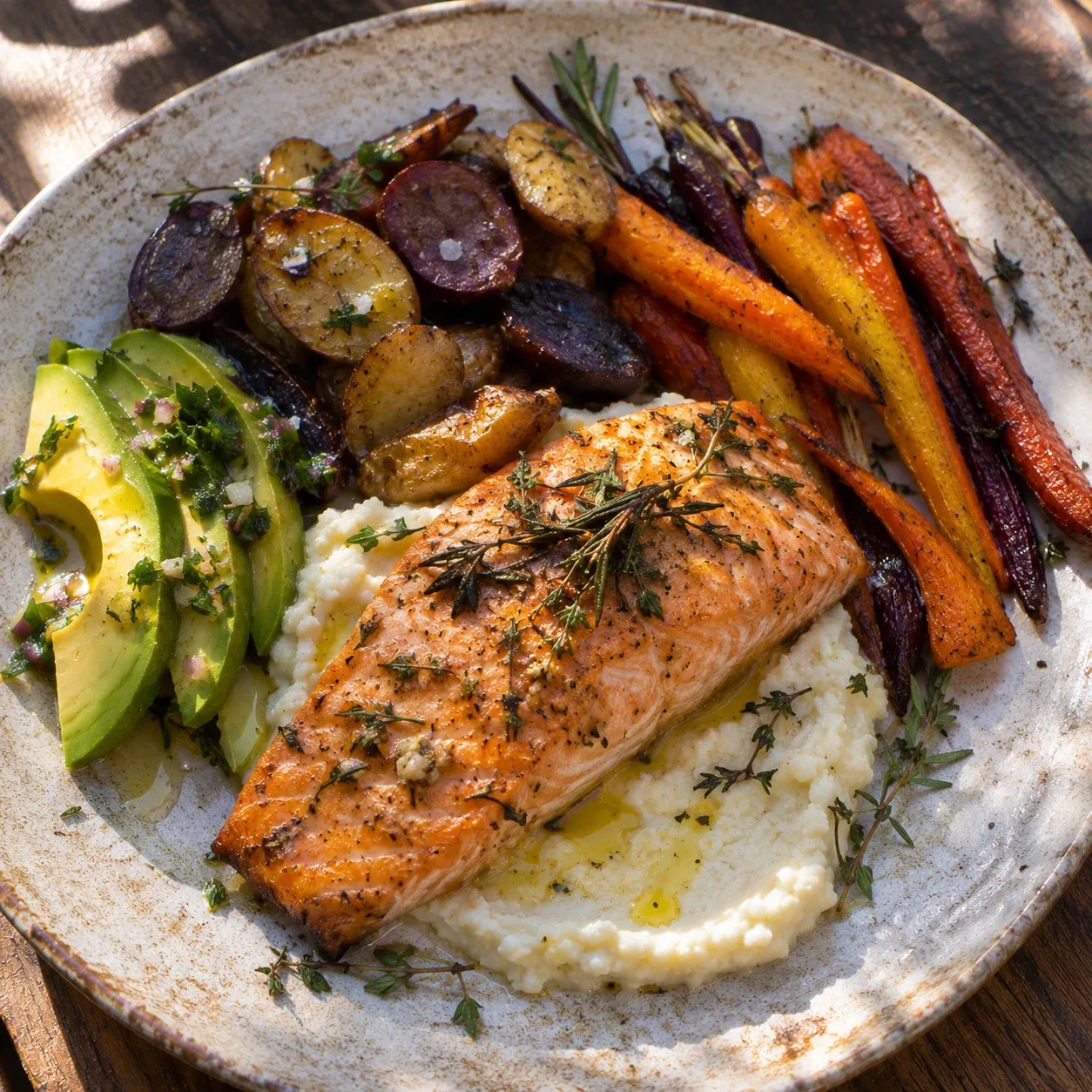
Baked Wild Salmon with Rosemary and Thyme, Whipped Cauliflower Purée, Roasted Rainbow Carrots, Purple and Fingerling Potatoes, and Avocado with Herb Vinaigrette
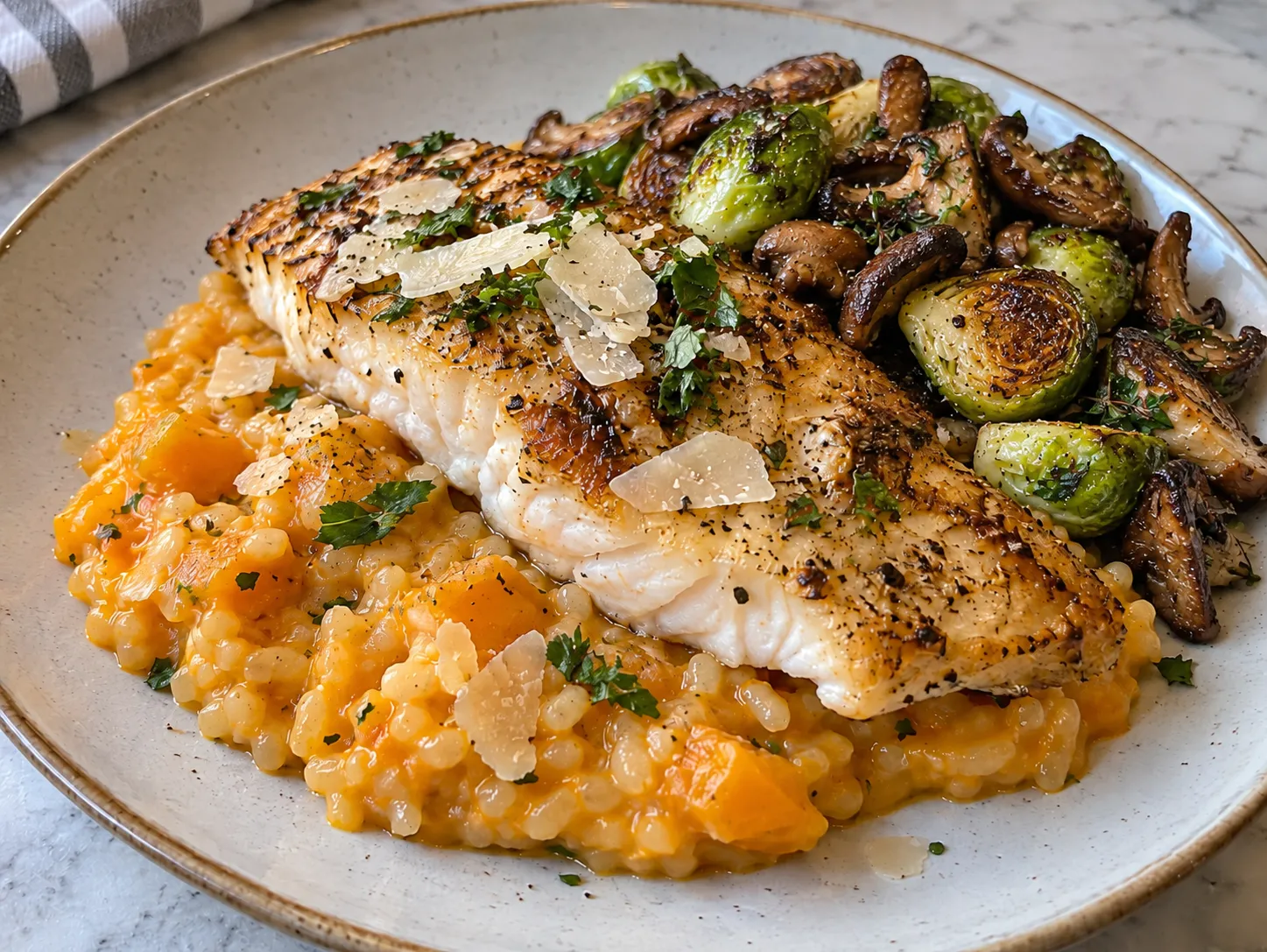
Caesar-Roasted Whole Snapper with Butternut Squash "Risotto", Wild Mushrooms, and Roasted Brussels Sprouts
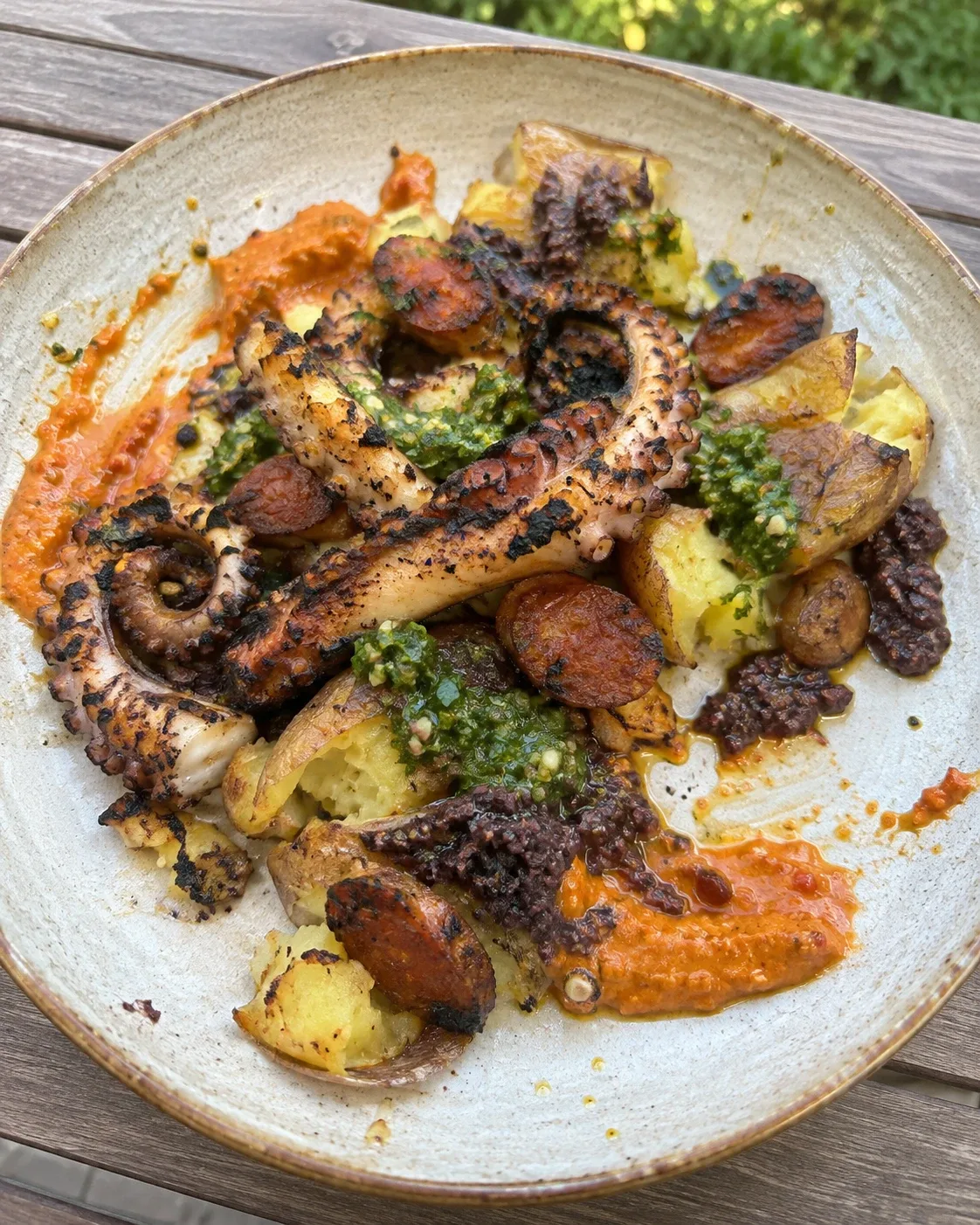
Charred Octopus with Chorizo, Crushed Fingerling Potatoes, Olive Tapenade, Romesco, and Chimichurri
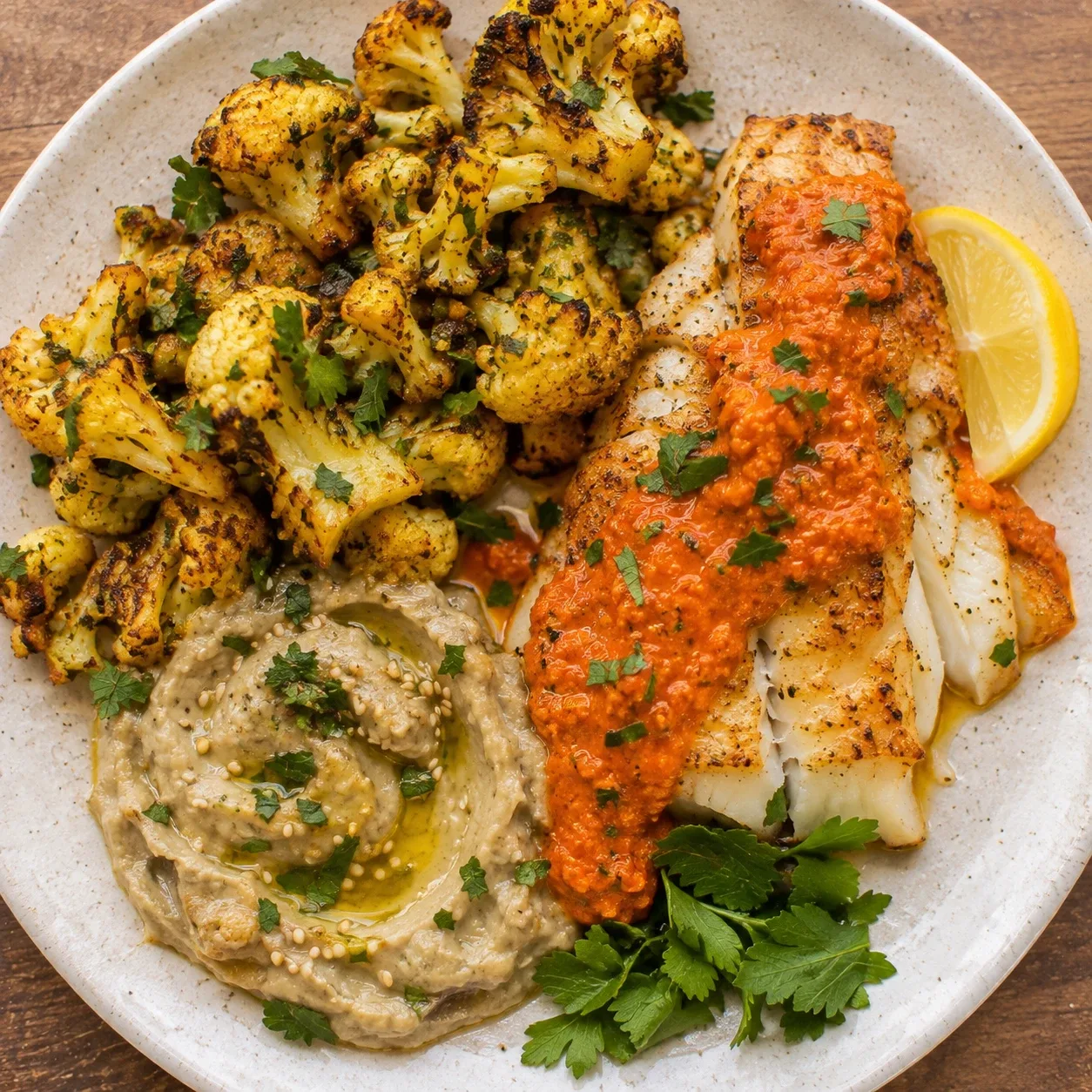
Roasted Chermoula Cauliflower with Baba Ghanoush, Red Pepper Romesco, and Wild Fish
Get new recipes and essays
Seasonal recipes and writing on light, circadian health, and living with nature.
Subscribe on Substack