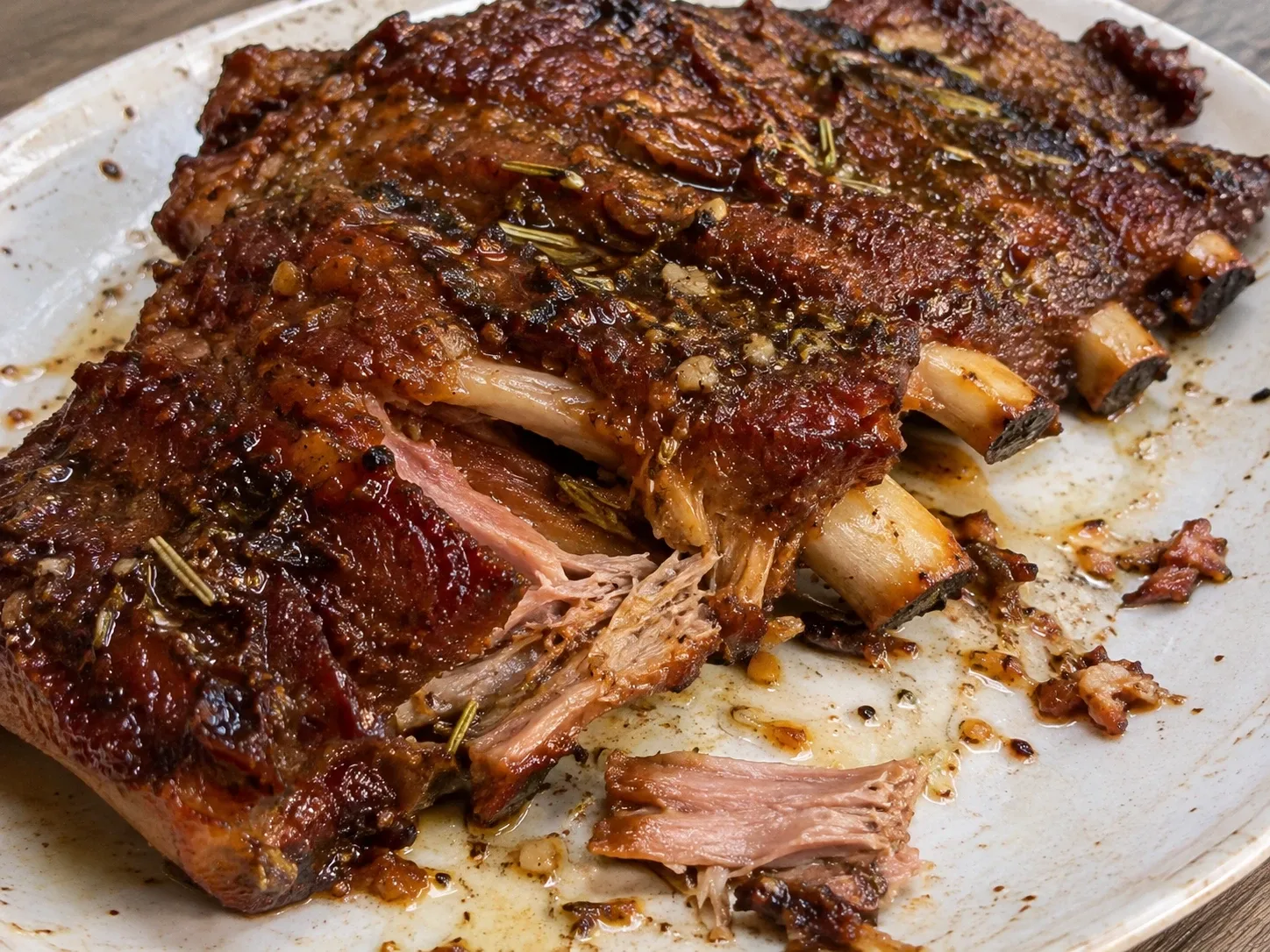
Slow-Roasted Pasture-Raised St. Louis-Style Ribs with Duck Fat, Raw Butter, and Red Wine
Pasture-raised pork ribs marinated in garlic, herbs, raw butter, duck fat, and red wine, then slow-roasted for four hours until they pull from the bone. So tasty they don’t need any sugary processed BBQ sauce.
Yield: Serves 4–6 · Active: 25 min · Total: 4 hr 30 min, plus 4–24 hr marinating · Season: Year-round, in any region · Best eaten: afternoon
Ingredients
For the ribs and marinade
- 2 racks St. Louis-style pasture-raised pork spare ribs (about 2½–3 lb each)
- 2 tbsp French grey sea salt (sel gris), finely crushed
- 2 tsp freshly cracked black pepper
- 8 garlic cloves, minced
- 4 tbsp raw A2 butter, softened
- 3 tbsp duck fat, softened (drippings saved from a roasted whole duck)
- 2 tbsp finely chopped fresh rosemary
- 1 tbsp fresh thyme leaves
- ¾ cup dry red wine
To finish
- Flaky sea salt
- A few rosemary and thyme sprigs
Method
For the ribs and marinade
- Remove the membrane. Flip each rack bone side up. Along the back is a thin, shiny, silvery skin called the membrane, which turns tough and chewy in the oven and keeps the seasoning out. Slide a butter knife under it at one end, over a bone, to lift a corner. Grip the corner with a paper towel and peel it off in one long pull (if it tears, lift another corner and keep going).
- Make the herb butter. In a small bowl, mash together the butter, duck fat, garlic, rosemary, thyme, salt, and pepper into a paste.
- Season. Pat the ribs dry. Rub the herb butter all over both sides of each rack.
- Marinate. Lay the racks meat side up in a large roasting pan or on a rimmed baking sheet (cut each rack in half to fit if needed). Pour the red wine into the pan around the ribs, not over them, so the herb rub stays put. Cover tightly with foil and refrigerate at least 4 hours or overnight.
To slow-roast
- Rest at room temp. Take the ribs out of the fridge 45 minutes before cooking. Heat the oven to 250°F.
- Roast covered. Keeping the foil tight, roast the ribs 3 hours. The foil traps steam from the wine, which keeps the meat moist while the low heat breaks down the connective tissue.
- Roast uncovered. Remove the foil, baste the ribs with the pan juices, and roast 1 hour more, until the meat has pulled back from the ends of the bones by about ¼ inch and a rack bends easily when you lift it from one end with tongs.
- Broil to crisp. Move an oven rack about 6 inches below the broiler and turn the broiler to high. Broil the ribs, meat side up, 3–5 minutes, watching closely, until the tops are sizzling and browned in spots.
For the pan juices
- Reduce. Pour the pan juices into a small saucepan and spoon off some of the fat floating on top, if you like (save it for roasting vegetables). Simmer over medium heat 5–8 minutes, until reduced by about half and slightly syrupy.
- Serve. Rest the ribs 10 minutes, then cut between the bones. Brush or spoon the reduced juices over the top, sprinkle with flaky salt, and scatter with herb sprigs.
Storage
- Ribs keep in the fridge up to 4 days, wrapped tightly. Reheat covered with foil at 300°F for 20–25 minutes with a splash of the pan juices, then broil 2 minutes to re-crisp.
- Cooked ribs freeze well for up to 3 months. Thaw overnight in the fridge before reheating.
- Strain and save the leftover fat in a jar in the fridge for roasting potatoes or root vegetables.
Variations
- No duck fat: Use pasture-raised lard, tallow, or more raw butter in its place.
- Baby back ribs: Use 2 racks baby back ribs and start checking after 2½ hours covered and 30 minutes uncovered; they’re smaller and leaner and finish sooner.
- Smoky: Add 2 tsp smoked paprika to the herb butter.
- Grill finish: Instead of broiling, finish the slow-roasted ribs on a hot grill for 2–3 minutes per side.
Season & Circadian Timing
These ribs work in any season and any kitchen, from a summer cookout to a winter game day, since all they ask for is a pantry, good pork, and a slow oven. Rich in protein and fat, they’re best enjoyed in the afternoon or an early game-day meal, when you have the rest of the day to digest; pair them with a crisp salad or slaw to round out the plate.
Nourishment Notes
- Pasture-raised pork — a rich source of protein, thiamine (vitamin B1), zinc, and selenium.
- Duck fat — a flavorful, heat-stable cooking fat, and about half of it is the same monounsaturated fat found in olive oil.
- Raw butter — carries fat-soluble vitamin A, and butter from grass-fed cows is richer in it than grain-fed.
- Rosemary and thyme — aromatic herbs that bring big flavor, which means no sugary sauce is needed.
- Garlic — adds savory depth along with its own sulfur compounds.
Sourcing
- Pork — pasture-raised heritage breed, from a local farm (White Oak Pastures)
- Raw A2 butter — raw butter from A2/A2 cows, from a local dairy you know and trust (find one at realmilk.com), or organic, cultured butter from 100% grass-fed cows
- Tallow / lard / duck fat — from pasture-raised animals, from a local farm or butcher, or saved from your own Slow-Roasted Whole Pastured Duck with Orange, Herbs, and Shallots
- French grey sea salt (sel gris) — unrefined, hand-harvested from the salt marshes of Brittany, such as Guérande; flaky sea salt for finishing (Maldon)
- Red wine — a dry red you’d happily drink, organic, with no added sugar
- Fruits, vegetables, and herbs — organic, from a farmers’ market or local farm
You might also like: Apple-Butter Dijon Ribs with Roasted Fennel and Parmesan Vegetables, Paprika-Braised Pork Ribs with Potatoes, Carrots, and Brussels Sprouts, Grass-Fed Beef Back Ribs with Sautéed Fennel & Leeks
With Love, Light, and Health,
Anna (aka Food Marshall)
Food Marshall Approved. Grain-free, seed-oil-free and refined-sugar-free, made from organic, local and seasonal ingredients. Our standards
More Meat
Get new recipes and essays
Seasonal recipes and writing on light, circadian health, and living with nature.
Subscribe on Substack