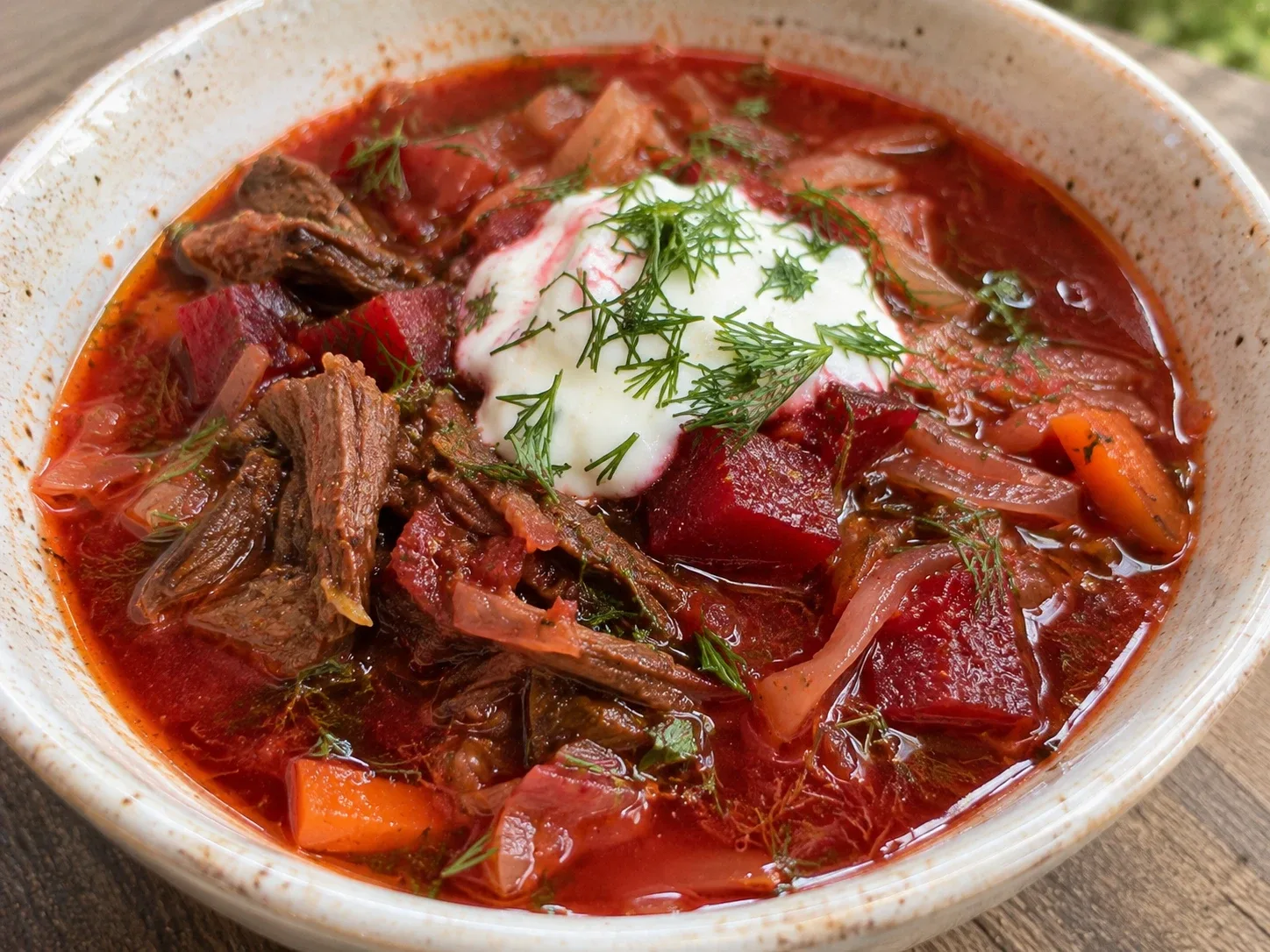
Winter Borscht with Beef Shin, Beets, and Cultured Sour Cream
The Slavic winter pot. A deep ruby soup of slow-simmered beef shin, beets, cabbage, and roots, balanced sweet and sour and finished with cold cultured sour cream and plenty of fresh dill.
Yield: Serves 8 · Active: 45 min · Total: 3 hr 15 min · Season: Best in North America in winter, when beets, cabbage, and parsnips are at their peak · Best eaten: midday
Ingredients
For the beef
- 2 lb bone-in grass-fed beef shin (or bone-in short rib)
- 1 tsp sea salt
- 2 tbsp grass-fed tallow or duck fat
- 8 cups beef bone broth
For the soup
- 1 tbsp grass-fed tallow or duck fat
- 1 large yellow onion, diced
- 3 garlic cloves, minced
- 2 large carrots, diced
- 2 celery stalks, diced
- 1 medium parsnip, diced
- 3 large beets, peeled and cut into thin matchsticks (set aside 1 beet’s worth for finishing)
- 2 tbsp tomato paste
- 1 small head green cabbage, thinly sliced (about 4 cups)
- 2 bay leaves
- 1 tbsp whole black peppercorns
- 2 tbsp raw apple cider vinegar
- 1 tbsp raw honey
- 2 tsp sea salt, plus more to taste
- Freshly cracked black pepper
- Juice of 1 lemon
To finish
- 1 cup cultured sour cream or crème fraîche, cold
- ½ cup chopped fresh dill
- ¼ cup chopped fresh flat-leaf parsley
- The reserved raw beet matchsticks
Method
For the beef
- Sear. Season the beef shin with the salt. Heat the tallow in a heavy Dutch oven over high heat and sear the shin until deeply browned on all sides, about 8 minutes total.
- Simmer. Pour in the broth and bring it to a bare simmer, with just a few lazy bubbles breaking the surface. Cover and cook 2 hours, until the beef is fork-tender.
- Shred. Lift out the beef and let it cool slightly. Pull or chop the meat into bite-size pieces and discard the bones (scoop out any marrow and stir it back into the broth). Keep the broth hot.
For the soup
- Sweat the aromatics. About 40 minutes into the beef’s simmer, melt the tallow in a large soup pot over medium heat. Add the onion and garlic and cook gently 8 minutes, until soft but not browned. (Sweating means cooking slowly so the vegetables soften without color.)
- Add the roots. Add the carrots, celery, parsnip, and two-thirds of the beet matchsticks. Cook 10 minutes, stirring now and then.
- Season the base. Stir in the tomato paste and cook 2 minutes. Add the cabbage, bay leaves, peppercorns, vinegar, and honey and stir until the cabbage starts to wilt.
- Simmer together. Add the shredded beef and the hot broth. Simmer 30 minutes, until the vegetables are tender and the flavors come together.
- Balance. Season with salt, pepper, and the lemon juice. Taste it: it should be savory, a little sour, and just faintly sweet. Add more vinegar or honey a teaspoon at a time if needed.
To serve
- Brighten. Just before serving, stir in the reserved raw beet matchsticks. The fresh beet turns the color from muddy to brilliant ruby.
- Plate. Ladle into warm, deep bowls. Top each with a generous spoonful of cold sour cream, a shower of dill and parsley, and cracked pepper.
Storage
- Borscht keeps up to 5 days in the fridge in covered glass jars, and it tastes even better on day two. Keep the sour cream and herbs separate until serving.
- Freeze up to 3 months (the cabbage softens a bit but the flavor holds). Thaw overnight in the fridge.
- Rewarm gently over medium heat. Add a squeeze of lemon and a few fresh beet matchsticks to wake the color back up.
Variations
- Shortcut: Skip the 2-hour simmer and use 1½ lb shredded leftover pot roast or brisket with good bone broth. Start at the soup steps.
- Ukrainian-style: Add 2 diced potatoes with the carrots and finish with a spoonful of chopped garlic mashed with a little lard.
- Vegetarian: Use a rich mushroom broth, add 8 oz sliced mushrooms, and skip the beef.
- Cold summer borscht: Leave out the beef, chill the soup, and serve with sour cream, cucumber, dill, and a halved hard-boiled egg.
Season & Circadian Timing
Borscht has fed families through centuries of Eastern European winters, and beets are at their best from October through March. It’s warming and satisfying without feeling heavy, so it makes a good midday meal on a cold day. Traditional cooks start the broth with the beef shin, which gives a deeper, more integrated soup.
Nourishment Notes
- Beets — bring betalains, the pigments behind their ruby color, plus natural nitrates, folate, and fiber.
- Cabbage — a winter source of vitamin C, along with glucosinolates, the sulfur compounds found in the cabbage family.
- Beef shin and bone broth — the slow simmer turns the shin’s collagen into gelatin and gives you protein and iron from the meat.
- Cultured sour cream — a cold, tangy finish that brings fat-soluble vitamins and, if unheated, live cultures.
- Dill — bright, grassy, and the classic partner for beets.
Sourcing
- Beef — 100% grass-fed and grass-finished, from a local farm (White Oak Pastures or US Wellness Meats)
- Tallow / duck fat — from pasture-raised animals, from a local farm or butcher
- Bone broth — homemade from pasture-raised bones, or organic and sold frozen (Bonafide Provisions)
- Sour cream / crème fraîche — cultured, organic, from grass-fed cows, or raw cream cultured at home
- Raw apple cider vinegar — organic, with the mother (Bragg)
- Raw honey — organic, local, and unfiltered
- Beets — organic; store them unwashed in the crisper, where they keep a month or more
- Lemons — organic
- Salt — unrefined sea salt (Baja Gold); flaky sea salt for finishing (Maldon)
- Fruits, vegetables, and herbs — organic, from a farmers’ market or local farm
You might also like: Roasted Beet Soup with Whipped Goat Cheese, Toasted Hazelnuts, and Dill · Bison Bone Broth Soup with Root Vegetables and Greens · Ferment Foundations: Lacto-Fermented Carrots and Sauerkraut (Plus Seven Kraut Variations)
With Love, Light, and Health,
Anna (aka Food Marshall)
Food Marshall Approved. Grain-free, seed-oil-free and refined-sugar-free, made from organic, local and seasonal ingredients. Our standards
More Soups & Stews


Get new recipes and essays
Seasonal recipes and writing on light, circadian health, and living with nature.
Subscribe on Substack