Beef Eggplant Rollatini with Raw Ricotta and Slow-Simmered Tomato Sauce
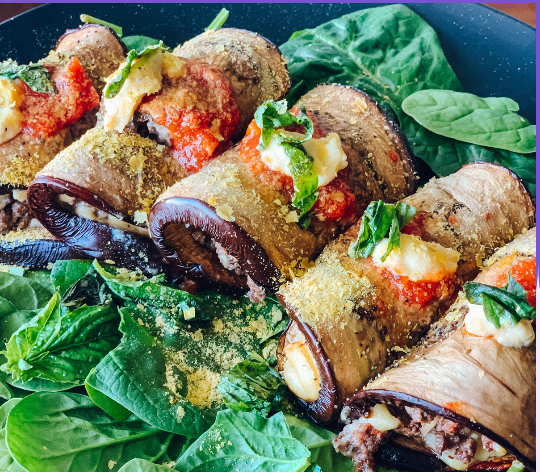
Italian rollatini reimagined — thin eggplant slices replacing pasta tubes, filled with grass-fed beef, raw grass-fed ricotta, and herb-rich tomato sauce
Yield: 4 servings
Active: 30 min · Total: 1 hr 10 min
Summer / early autumn (peak eggplant season)
A note from the kitchen
Eggplant rollatini is a reimagined version of the classic Italian involtini tradition — thin slices of meat or vegetable rolled around a filling, sauced, and baked. Most American versions use cannelloni or manicotti pasta tubes; this version replaces the pasta with eggplant slices that become tender and silky in the bake, absorbing the tomato sauce while holding the beef and ricotta filling intact.
The dish reads as authentic Italian-American comfort food despite landing entirely grain-free. The eggplant carries flavor as well as pasta would; the slow-simmered tomato sauce gets richer when it bakes with the beef and ricotta; and the two filling options (raw dairy ricotta or cashew dairy-free) give readers real flexibility for their kitchen.
Best made at peak eggplant season — late summer through early autumn (August-October), when freshly harvested eggplants are sweet, dense, and free of the bitterness that older or commodity eggplants carry.
Ingredients
Eggplant
2 large eggplants (Italian globe variety, or 3 medium Japanese eggplants for thinner slices)
3 tbsp single-estate extra virgin olive oil
1 tsp sea salt
½ tsp freshly ground black pepper
Beef filling
1 lb grass-fed ground beef (80/20 or 85/15)
2 garlic cloves, minced
½ tsp fennel seeds, lightly crushed
½ tsp dried basil
½ tsp dried oregano
2 tbsp fresh basil, chopped
½ tsp sea salt
freshly ground black pepper, to taste
1 tbsp single-estate extra virgin olive oil (for sautéing)
Raw ricotta filling (primary)
1 cup raw grass-fed cow, sheep, or goat's milk ricotta
2 tbsp grated Parmigiano-Reggiano DOP (24+ months)
¼ cup fresh basil, chopped
1 garlic clove, finely grated
pinch sea salt and freshly ground black pepper
Cashew "ricotta" — dairy-free variation
1 cup raw cashews, soaked at least 4 hours and drained
2 tbsp single-estate extra virgin olive oil
2 tbsp nutritional yeast
1 garlic clove
¼ cup fresh basil leaves
juice of 1 lemon
¼ cup filtered water (more as needed for blending)
½ tsp sea salt
freshly ground black pepper
Tomato sauce
2 cups jarred or homemade tomato sauce (no sugar added, no industrial seed oils)
2 tbsp fresh basil, chopped, for finishing
To serve
bed of fresh spinach, arugula, or wilted bitter greens
additional fresh basil leaves
crushed red pepper flakes
additional Parmigiano-Reggiano DOP for grating
Method
Preheat the oven to 400°F.
Slice the eggplant. Using a sharp knife or mandoline, slice the eggplants lengthwise into ¼-inch slices (you should get 8–10 slices per eggplant). Mandoline produces dramatically more uniform slices, which roll more cleanly and cook evenly.
Roast the eggplant. Lay the slices on a parchment-lined baking sheet (in two batches if needed). Brush both sides with olive oil and season with salt and pepper. Roast 15 minutes until pliable and just beginning to brown at the edges.
Cook the beef filling. While the eggplant roasts, heat 1 tbsp olive oil in a large skillet over medium heat. Add the ground beef and cook 4–5 minutes, breaking it up, until browned.
Add the garlic, crushed fennel seeds, dried basil, and dried oregano. Cook 1 minute, stirring constantly. Add the ground beef and cook 4-5 minutes, breaking it up, until browned. Season with salt and pepper. Cook 2-3 minutes more until any liquid has cooked off.
Stir in the chopped fresh basil. Remove from heat and let cool slightly.
Make the ricotta filling. For raw dairy ricotta: In a medium bowl, stir together the ricotta, grated Parmigiano, fresh basil, grated garlic, salt, and pepper. For cashew "ricotta" variation: In a food processor, combine all cashew ricotta ingredients except the basil. Process 2–3 minutes, scraping down, until completely smooth and ricotta-like in texture. Add water as needed for consistency. Stir in the basil at the end.
Assemble the rollatini. Spread a thin layer of tomato sauce across the bottom of a 9×13 baking dish.
Lay an eggplant slice flat on a work surface. Place 1–2 tbsp of ricotta at one short end of the slice. Top with 2–3 tbsp of beef filling. Carefully roll up from the filled end to enclose, and place seam-side down in the baking dish.
Repeat with the remaining eggplant slices, packing them snugly together in the dish.
Sauce and bake. Spoon the remaining tomato sauce generously over the rollatini. Top with a final scatter of grated Parmigiano if using.
Bake 15–20 minutes, until the sauce is bubbling and the rollatini are heated through.
Serve. Place a generous handful of fresh spinach, arugula, or wilted bitter greens on each plate. Top with 2–3 rollatini per portion. Spoon additional warm tomato sauce over the top. Garnish with fresh basil leaves, a pinch of crushed red pepper, and an additional grating of Parmigiano if using.
Storage: Refrigerator 3 days; the flavor improves overnight. Reheat covered at 325°F until warmed through. Not suitable for freezing — the eggplant texture degrades meaningfully.
Variations
Pork instead of beef: Substitute ground pasture-raised pork or a half-and-half pork-beef blend for a more traditional Italian feel.
Lamb variation: Substitute ground pasture-raised lamb for a Mediterranean variation. Add 1 tsp ground cinnamon and ½ tsp ground allspice to the spice blend for a Greek-leaning flavor profile.
Vegetarian (skip the beef): Replace the beef with 2 cups sautéed wild mushrooms (cremini, shiitake, oyster) chopped fine. The fennel seed and herbs carry the dish.
With added vegetables in the filling: Add ½ cup finely diced sautéed zucchini or spinach to the beef filling for additional vegetable matter.
With pasture-raised sausage: Substitute the ground beef with 1 lb mild or hot Italian sausage (casings removed). The added fennel from the sausage pairs beautifully — reduce the added fennel seeds to a pinch.
With sheep's milk ricotta: Substitute sheep's milk ricotta for a richer, slightly sweeter filling. Bellwether Farms or Vermont Shepherd are excellent commercial options.
Make ahead: The eggplant can be roasted 1 day ahead and refrigerated. The beef filling and ricotta filling can be made 1 day ahead. The fully assembled rollatini can be refrigerated up to 24 hours before baking (add 5-10 minutes to the bake time)
Nourishment Notes
Eggplant rollatini is a reimagined version of the classic Italian involtini tradition — thin slices of meat or vegetable rolled around a filling, sauced, and baked. This version replaces the conventional pasta tubes (cannelloni or manicotti) with eggplant slices. The eggplant carries the dish's tomato-and-herb flavors through the absorption of the cooking liquid, and the dish becomes naturally low-carbohydrate and grain-free without losing its comfort-food character. Optional pre-step (for larger or older eggplants): Salt the sliced eggplant lightly on both sides with sea salt and let drain on a paper towel-lined plate for 20-30 minutes. Pat dry before brushing with olive oil. This draws out bitterness and excess moisture. Skip this step for peak-season fresh eggplant
Eggplant is at peak in late summer and early autumn (August–October) — the moment when freshly harvested fruit carries the brightest flavor and least bitterness. Solanine and nasunin are the two compounds worth knowing: solanine is the alkaloid present in nightshades (tomato, pepper, eggplant) at small but meaningful amounts that some sensitive individuals respond to; nasunin is the deep purple anthocyanin in eggplant skin, studied for protective effects in the brain and cardiovascular system. Salting eggplant before cooking draws out bitter compounds and excess moisture; this step is genuinely worth doing for older or larger eggplants but can be skipped for peak-season fresh fruit.
Grass-fed beef as the protein structure carries the omega-3, CLA, and fat-soluble vitamin profile distinct from commodity grain-finished beef. The fennel seed addition is important — fennel's anise-like flavor carries anethole, the same compound that gives sambuca and pastis their characteristic flavor, traditionally used across Italian and Middle Eastern cuisine for digestive support. Combined with the fresh basil and Italian herbs, this filling reads as authentically Italian-American comfort food despite its real nutritional density.
Raw grass-fed ricotta is nutritionally superior to commercial pasteurized ricotta. Raw dairy preserves the live enzymes (lactase, lipase, phosphatase, alkaline phosphatase) and the bacterial cultures (Lactobacillus, Lactococcus, Streptococcus) that contribute the tangy, complex flavor of traditional fresh cheese. Raw cream additionally carries butyrate (a short-chain fatty acid that supports intestinal health), the Wulzen factor (preserved only in unpasteurized dairy from grass-fed cows), and the full fat-soluble vitamin profile (A, D, E, K2). The cashew "ricotta" variation is high-quality for dairy-free preparations that typically use tofu and other binders/thickeners — soaked cashews blended with nutritional yeast (which contributes B vitamins, protein, and a subtle Parmesan-like flavor), olive oil, lemon, and basil produce a similar filling with a different but equally complex flavor profile.
The slow-simmered tomato sauce is significant. Tomatoes (cooked with fat and slow heat) deliver dramatically more bioavailable lycopene than raw — the carotenoid pigment that gives tomatoes their red color and is the most-studied protective compound in tomatoes for cardiovascular and prostate health. The fat-soluble nature of lycopene means that tomato sauce cooked with olive oil, ground beef, and slowly simmered into the eggplant produces meaningfully more bioavailable lycopene than any raw tomato preparation. Look for tomato sauces with no added sugar, no industrial seed oils (canola, soybean, sunflower), and ideally no citric acid — just tomatoes, salt, herbs, olive oil.
As a circadian and seasonal food, eggplant rollatini is fundamentally a late-summer and early-autumn dish — the moment when peak eggplant overlaps with peak tomato season, before the cold weather pulls the body toward heavier slow-cooked dishes. Italian summer cookery is built around this exact principle: dishes that honor the moment when eggplant, tomato, and basil are all at their peak simultaneously. Best eaten in early evening; the protein-fat-fiber architecture is satisfying without being heavy.
Sourcing
Eggplant from a local farmers' market or your CSA share at peak season — heirloom varieties (Rosa Bianca, Listada de Gandia, Italian Globe, Japanese long) carry significantly more flavor than commodity supermarket eggplant and have less bitterness when properly fresh; backyard eggplant is a productive late-summer crop in most US growing zones.
Grass-fed ground beef from a local rancher at the farmers' market is the gold standard; for shipped options, White Oak Pastures, Force of Nature, or US Wellness Meats meet the standard.
Raw grass-fed ricotta from a local raw-dairy producer or Amish creamery — Amish farms across Pennsylvania, Ohio, Indiana, and Wisconsin produce exceptional raw fresh dairy through cow-shares, roadside stands, and Amish-run grocery markets; the Weston A. Price Foundation's raw-milk finder (realmilk.com) helps locate one near you. For shipped options, Bellwether Farms (small-scale California sheep dairy, the rare commercial-scale producer that meets the standard) ships nationally with quality intact. If raw ricotta is unavailable, make your own from raw milk using the whey-ricotta technique.
Parmigiano-Reggiano DOP, 24+ months aged — look for the rind stamp; specialty Italian importers or local cheese counters carry Parmigiano with traceable origin.
Tomato sauce: look for jarred tomatoes with no added sugar, no industrial seed oils, just tomatoes-salt-herbs-olive oil — Bionaturae is widely available; Jovial Foods packs in glass (no BPA concerns); homemade slow-simmered sauce from peak summer tomatoes is the gold standard. Skip Organico Bello and similar mass-market "premium" brands — many use industrial citric acid and lower-quality oils.
Single-estate extra virgin olive oil — small-producer harvest-dated bottle from a quality importer; never grocery-shelf brands.
Raw cashews for the dairy-free variation: One Degree Organic Foods or Big Tree Farms ship organic raw cashews; avoid bulk-bin supermarket cashews which are often steamed rather than truly raw.
Terrasoul is acceptable for both pink salt and cashews. Nutritional yeast: Sari Foods (small-batch, non-fortified) or Bragg's nutritional yeast.
Garlic from a local farmers' market — heirloom hardneck varieties (Music, German Red, Spanish Roja) carry significantly more flavor than commodity supermarket garlic.
Fresh basil from a windowsill pot grown at home or a farmers' market herb vendor.
Fennel seeds and dried Italian herbs from a small specialty importer like Burlap & Barrel, Diaspora Co., or Spicewalla.
Fresh spinach, arugula, or bitter greens from a local farmers' market or your CSA share at peak season.
Crushed red pepper: small-batch Calabrian or Sicilian dried chiles from a specialty Italian importer; Burlap & Barrel's red pepper flakes are exceptionally good.