Raspberry Muffins
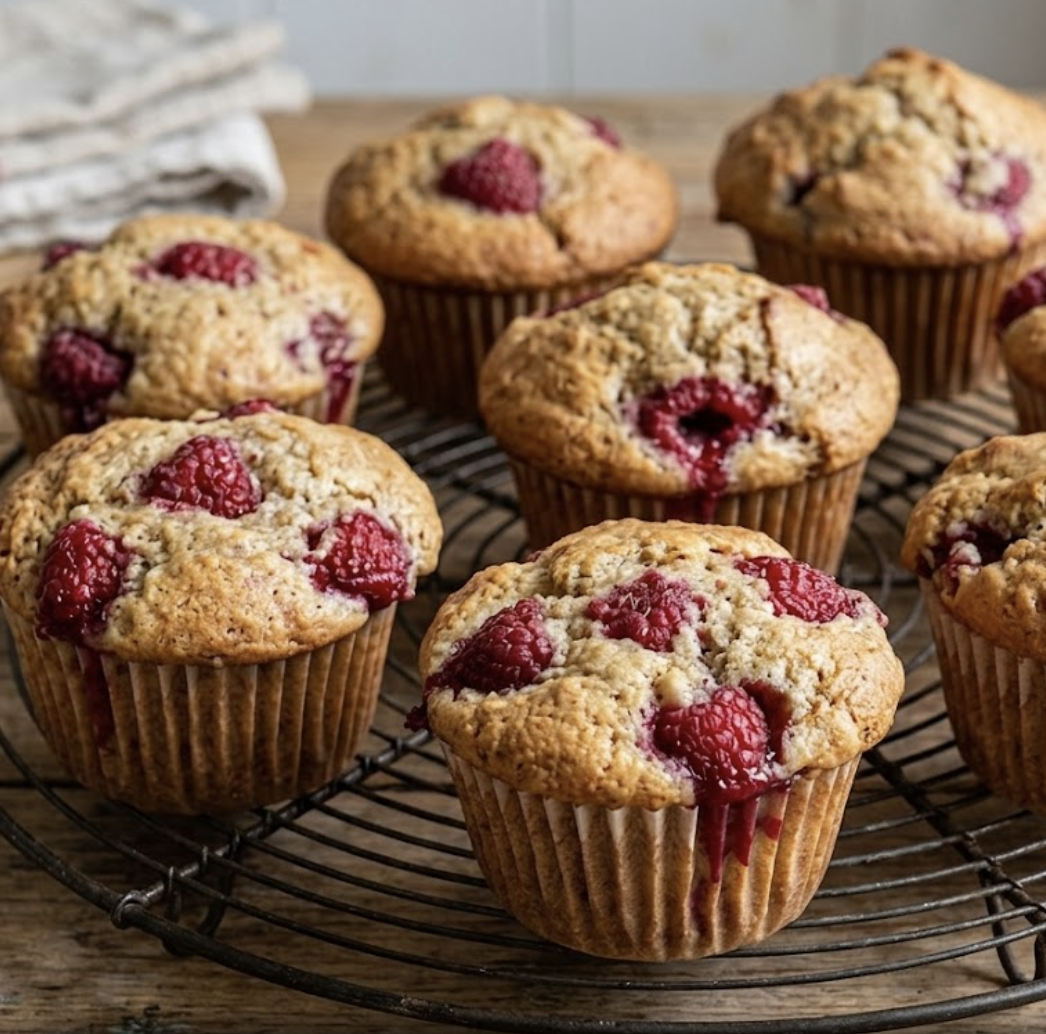
Coconut Flour Raspberry Muffins
Lightly sweetened coconut flour muffins studded with fresh raspberries — grain-free, naturally egg-rich
Makes 18 muffins · 15 min active · 40 min total · year-round (peak raspberry season summer) · breakfast or tea
Ingredients
6 large pasture-raised eggs, room temperature
½ cup grass-fed butter, melted (or coconut oil for dairy-free)
½ cup raw honey
1 tbsp pure vanilla extract
½ tsp sea salt
½ tsp baking soda
½ cup plus 3 tbsp coconut flour
12 oz fresh organic raspberries (or thawed frozen, drained)
Method
Preheat the oven to 350°F (175°C). Line 18 muffin cups with paper liners (you'll need two muffin tins, or bake in batches).
Combine the wet ingredients. In a large bowl, whisk together the eggs, melted butter (or coconut oil), honey, and vanilla until smooth.
Combine the dry ingredients. In a separate bowl (or in a stand mixer), combine the salt, baking soda, and coconut flour.
Combine wet and dry. Add the wet ingredients to the dry mixture and mix well until smooth, allowing for the coconut flour to absorb the moisture and the batter to thicken without clumps. Let stand 2 minutes.
Fold in the raspberries. Add the raspberries and gently fold to incorporate, leaving as many berries whole as possible.
Fill the muffin cups. Spoon the batter into the prepared liners, filling each about ¾ full.
Bake 20 minutes, or until a toothpick inserted into the center comes out clean (a few raspberry juice marks are fine — those aren't undercooked batter).
Cool in the pan 10 minutes, then transfer to a wire rack to cool completely.
Storage: Room temperature 2 days, sealed. Refrigerator up to 5 days. Freezer up to 2 months.
Nourishment Notes
The egg-to-coconut-flour ratio in this recipe (6 eggs to slightly over ½ cup flour) is what makes the structure work. Coconut flour absorbs roughly 4–5 times its weight in liquid, which means recipes call for substantially more eggs and liquid than equivalent wheat-flour or almond-flour preparations. The result is a substantially more protein-dense, lower-carbohydrate, higher-fat muffin than conventional baking produces — closer to a French quatre-quarts (literally "four-quarters," equal weights of butter, sugar, eggs, and flour) than to a typical American breakfast muffin.
Raspberries are at peak flavor in late spring through early summer (May–July in most US growing regions), but quality frozen raspberries are available year-round and produce nearly identical results in baking. The structural advantage of frozen raspberries is that they hold their shape better during folding (they're firm and don't burst easily), although fresh raspberries produce slightly more juice that distributes through the batter. Both work — fresh is better when in season; frozen is the year-round option.
The use of pasture-raised eggs is structurally meaningful for this recipe in particular. Six eggs is a substantial portion of any baked good, and the difference between commodity eggs and pasture-raised eggs becomes pronounced in egg-forward preparations. Pasture-raised eggs (Vital Farms, Alexandre Family Farm, local farmers' market) typically have deeper-orange yolks (more carotenoids, vitamin A, and omega-3 fatty acids), substantially higher vitamin D content (from the hens' sun exposure), and a richer, fuller flavor than commodity eggs. The taste difference in a 6-egg preparation is unmistakable.
The choice of grass-fed butter vs. coconut oil changes the muffin's flavor profile slightly. Grass-fed butter brings rich, slightly sweet dairy notes with substantial omega-3 and conjugated linoleic acid (CLA) content; coconut oil brings tropical, slightly sweet notes and is naturally dairy-free. Both work structurally — the choice depends on dietary preference and the desired flavor character.