Tikka Masala over Cilantro Coconut Cauliflower Rice
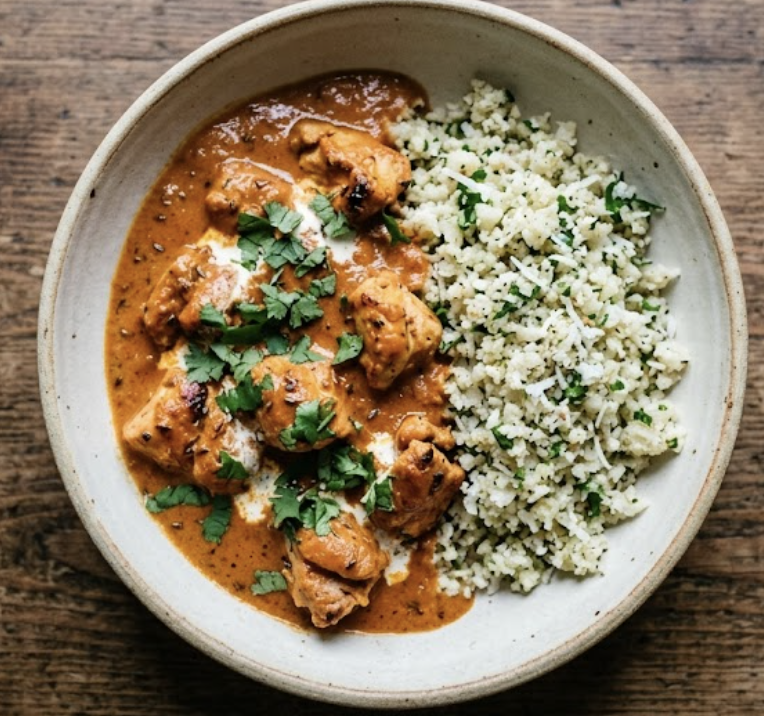
Yogurt-marinated chicken broiled until charred, then folded into a silky tomato-spice-cream sauce, served over a fragrant cilantro-coconut cauliflower rice. Naturally grain-free, refined-sugar-free, and built around real fats and pasture-raised protein.
Yield: 6 servings
Active: 35 min · Total: 1 hr 30 min (plus marinating)
A note from the kitchen
Tikka masala is the British-Indian dish that almost every Indian restaurant in the West serves — and for good reason. The yogurt-spice marinade gently denatures the surface of the chicken (lactic acid breaks down proteins much like a brine does), the broiler chars the edges in a workable approximation of the tandoor oven, and the tomato-cream-spice sauce wraps the whole thing in something rich and warming. Done well, it's one of the most satisfying weeknight dinners in the kitchen.
The two technique moves that elevate this above standard home tikka masala are the overnight marinade (yogurt + spices working into the meat for 8+ hours produces a noticeably more tender, flavorful result than 30 minutes) and the blend-and-return on the sauce (smoothing the cooked tomatoes, onions, and spices into a silky velouté texture is what restaurant tikka masala does that home versions usually skip).
The cilantro coconut cauliflower rice is the grain-free base that does the recipe a real favor. Plain cauliflower rice can feel like a substitute; this version — cooked with sautéed onion, garlic, coconut, fresh cilantro, and a touch of turmeric — pulls cleanly from South Indian coastal cooking (Kerala, Tamil Nadu, Goa), where coconut and cilantro pair in countless chutneys and rice dishes. It earns its place under the chicken rather than apologizing for not being basmati.
Ingredients
For the chicken tikka marinade
2½ lb boneless, skinless pasture-raised chicken thighs (preferred for tikka — stays juicier than breasts), cut into 2-inch pieces
1 cup plain whole-milk grass-fed yogurt (sheep, goat, cow, or full-fat coconut yogurt)
2 garlic cloves, minced
1 tbsp fresh ginger, grated
1½ tsp ground cumin
1½ tsp ground coriander
¼ tsp ground cardamom
¼ tsp cayenne pepper
¼ tsp ground turmeric
1½ tsp sea salt
½ tsp freshly cracked black pepper
For the masala sauce
2 tbsp ghee or grass-fed butter
1 large yellow onion, finely chopped
2 garlic cloves, minced
1 tsp fresh ginger, minced
1½ tbsp garam masala
1½ tsp pure chili powder (or paprika for a milder version)
½ tsp cayenne pepper
1 (28-oz) can fire-roasted tomatoes, finely chopped, juices reserved
1 cup grass-fed heavy cream (or full-fat coconut cream)
Sea salt and freshly cracked black pepper, to taste
For the cilantro coconut cauliflower rice
2 medium heads cauliflower, riced (about 8 cups)
1 medium yellow onion, finely chopped
4 garlic cloves, minced
1 cup unsweetened shredded coconut
1 bunch fresh cilantro, finely chopped (reserve a small handful for garnish)
2 tbsp ghee or grass-fed butter
½ tsp ground turmeric
Sea salt, to taste
To finish
¼ cup fresh cilantro, chopped
Fresh lime wedges, for serving
A drizzle of full-fat coconut cream or grass-fed heavy cream, optional
A pinch of garam masala for finishing, optional
Method
Marinate the chicken
Make the marinade. In a large bowl, whisk together the yogurt, minced garlic, grated ginger, cumin, coriander, cardamom, cayenne, turmeric, sea salt, and pepper.
Add the chicken. Make a few shallow slashes in each piece of chicken (this helps the marinade penetrate). Add to the marinade and turn to coat thoroughly. Cover and refrigerate at least 30 minutes, ideally overnight (8+ hours).
Broil the chicken
Preheat the broiler. Position an oven rack 8 inches from the broiler element. Line a baking sheet with foil and place a metal cooling rack on top (this lets the heat circulate and the marinade char rather than steam).
Arrange and broil. Remove the chicken from the marinade, scraping off excess. Arrange the pieces on the cooling rack with space between them. Broil 5-7 minutes per side until charred at the edges but not burned. The chicken should be just cooked through. Set aside.
Make the masala sauce
Sweat the onion. Heat the ghee in a large enameled cast iron Dutch oven over medium heat. Add the chopped onion and cook 8 minutes, stirring occasionally, until tender and golden.
Add the aromatics. Add the minced garlic and ginger. Cook 1 minute, until fragrant.
Bloom the spices. Add the garam masala, chili powder, and cayenne. Stir 1 minute — the spices will become aromatic as they bloom in the fat.
Add the tomatoes. Add the fire-roasted tomatoes with their juices. Cover partially and simmer over medium heat, stirring occasionally, for 20 minutes until the sauce has thickened and turned a deep brick-red color.
Blend the sauce. Transfer the sauce to a blender and blend until completely smooth (or use an immersion blender in the pot). Return to the pot. This is the technique that produces restaurant-quality silky texture.
Cream and simmer. Stir in the heavy cream. Cook over low heat 10 minutes, stirring occasionally, until the sauce is creamy and integrated.
Add the chicken. Stir in the broiled chicken pieces. Simmer gently 10 minutes, until heated through and the sauce is thick and bubbling. Taste and adjust salt.
Make the cilantro coconut cauliflower rice
Rice the cauliflower. If not pre-riced, pulse cauliflower florets in a food processor in batches until they resemble coarse rice grains. Don't over-process or you'll make purée.
Sauté the onion. Heat the ghee in a large skillet over medium heat. Add the chopped onion and cook 8 minutes until tender and golden.
Add the garlic and spice. Add the minced garlic and turmeric. Cook 1 minute.
Cook the cauliflower. Add the riced cauliflower. Cook 5 minutes, stirring occasionally, until tender but still with some texture (don't cook it to mush).
Finish with coconut and cilantro. Stir in the shredded coconut and chopped cilantro. Cook 2 minutes more. Season generously with sea salt.
Plate and serve
Build the bowls. Pile the cilantro coconut cauliflower rice into wide bowls. Spoon the tikka masala generously over the top.
Finish. Garnish each bowl with chopped cilantro, a small drizzle of coconut cream (optional, for extra richness), and a pinch of garam masala. Serve with fresh lime wedges alongside.
Variations
Tandoori-style (no sauce): Skip the masala sauce entirely. After broiling, serve the spiced charred chicken directly over the cilantro coconut cauliflower rice with extra fresh cilantro, lime wedges, and a small bowl of plain yogurt or coconut yogurt for dipping. This is the traditional Punjabi village preparation — chicken stands alone, spices and char carry all the flavor. Add an extra teaspoon of smoked paprika to the marinade for the tandoori character.
Butter chicken (murgh makhani) style: Reduce the tomatoes by half. Increase the butter or ghee in the sauce to 4 tbsp. Add an extra ½ cup of cream. Skip the cayenne for a milder, more buttery profile. The result is closer to traditional Punjabi butter chicken.
With shrimp or prawns: Substitute with 2 lb peeled wild shrimp. Reduce broiling time to 2-3 minutes per side. The shrimp cook quickly — don't overcook.
With wild fish: Substitute with 1½ lb wild cod, halibut, or salmon (skin off, cut into 2-inch pieces). Broil 4-5 minutes per side. The fish is delicate — don't stir vigorously when folding into the sauce.
Spicier version: Add 2 thinly sliced green chilies (Thai or serrano) to the sauce with the garlic and ginger. Increase cayenne to 1 tsp. Finish with a drizzle of homemade chili oil.
With added vegetables: Add 1 cup frozen peas or 2 cups spinach to the sauce in the final 5 minutes of simmering. Adds color and additional plant matter.
Make ahead: The marinade can be made 24 hours ahead. The masala sauce can be made up to 3 days ahead and refrigerated — the flavors deepen overnight. Combine with freshly broiled chicken just before serving for best texture.
Pre-broiling shortcut (pan-sear instead): If you don't want to use the broiler, heat 2 tbsp ghee in a cast iron skillet over high heat and sear the marinated chicken pieces 3 minutes per side until charred and cooked through.
More authentically Indian rice base: Substitute the cauliflower rice with basmati rice cooked with the same coconut, cilantro, onion, garlic, and turmeric treatment. Note: not grain-free.
Pairs Well With
A homemade lassi— 1 cup yogurt + ½ cup water (or just 1 cup kefir) + 1 tsp rose water + a pinch of cardamom + a small drizzle of honey, blended
Sparkling water with mint and lime.
A small board of fresh sliced cucumbers, raita (yogurt + cucumber + mint + cumin)
A small bowl of fresh chutney (cilantro-mint-lime) alongside.
For dessert, fresh ripe mango with whipped cardamom cream.
Sourcing
Pasture-raised chicken thighs. Look for chicken raised outdoors with access to grass and insects. Reliable sources: White Oak Pastures, Wild Pastures, Crowd Cow, Polyface Farm (locally), or local farms via Eatwild.com. Bone-in thighs work too — just cook 2-3 minutes longer per side and remove the bones before adding to the sauce. Thighs stay juicier than breasts and are traditionally what's used in tikka masala.
Plain whole-milk yogurt (grass-fed). Look for traditionally fermented yogurt with live cultures. Sheep and goat yogurts are richer and more digestible than cow yogurt for many people. Reliable brands: Bellwether Farms (sheep), Redwood Hill Farm (goat), Maple Hill (grass-fed cow), or for dairy-free: Coyo (Australian coconut yogurt, gold standard), CocoYo, or Cocojune.
Garam masala. Look for freshly ground garam masala or freshly blended whole spices (cinnamon, cardamom, cloves, cumin, coriander, peppercorns, nutmeg, bay). Reliable brands: Diaspora Co. (single-origin, recently harvested — the structural anchor for serious Indian spice quality), Burlap & Barrel, Spicewalla, or grind your own from whole spices.
Whole Indian spices (cumin, coriander, cardamom, turmeric, cayenne). Look for freshly harvested, single-origin spices. Diaspora Co. is the benchmark — their single-origin pragati turmeric, aranya pepper, baraka cumin, and other spices are recently harvested. Burlap & Barrel and Spicewalla are also excellent. The brightness of fresh Indian spices is meaningfully different from grocery-store generic.
Fire-roasted tomatoes. Look for single-ingredient canned tomatoes (just tomatoes + sea salt, no calcium chloride or citric acid additives). Muir Glen Organic Fire-Roasted, Bionaturae, or San Marzano DOP varieties. Fire-roasted produces a deeper, slightly smoky flavor that works beautifully in tikka masala.
Grass-fed heavy cream. From cows on pasture year-round when possible. Organic Valley Pasture Cream, Straus Family Creamery, Maple Hill, or local artisan dairies.
Full-fat coconut cream (dairy-free alternative). Single-ingredient — just coconut, no gums (guar gum, xanthan gum). Native Forest Simple (BPA-free cans, no gums) is the cleanest option. Aroy-D (cardboard packaging, no gums) is also excellent.
Ghee. Pure grass-fed ghee with no additives. 4th & Heart, Ancient Organics, Pure Indian Foods, or homemade from grass-fed butter (clarify 1 lb butter over low heat 20 minutes, strain through cheesecloth, store in a glass jar). Ghee is shelf-stable at room temperature.
Cauliflower. Look for firm, white, dense heads with no brown spots. Pre-riced organic cauliflower works in a pinch (look for single-ingredient frozen riced cauliflower) but freshly riced has noticeably better texture.
Unsweetened shredded coconut. Single-ingredient — just coconut. Let's Do Organic, Bob's Red Mill, or Anthony's Organic. Look for finely shredded (not flake) for the rice integration.
Fresh cilantro, ginger, garlic, limes. From a windowsill pot, farmers' market, or organic produce section. Fresh herbs and aromatics are doing real work in this recipe — don't substitute with dried.
Sea salt. Baja Gold mineral sea salt for cooking, fleur de sel for finishing.
Storage
Tikka masala (chicken in sauce): Refrigerated up to 3 days, sealed. The flavor improves overnight as the spices integrate. Reheat gently over low heat, stirring occasionally, with a small splash of cream or coconut cream to refresh the consistency.
Tikka masala (frozen): Up to 3 months in a sealed glass container. Thaw overnight in the refrigerator before reheating.
Cilantro coconut cauliflower rice: Refrigerated up to 3 days, sealed. Reheat in a skillet over medium heat to restore texture. Doesn't freeze as well as the sauce — the cauliflower releases water and becomes mushy.
Marinated chicken (uncooked): Refrigerate up to 48 hours in the marinade. The yogurt's lactic acid continues working — longer marinations produce more tender results.
Masala sauce alone (made ahead): Refrigerated up to 3 days, sealed. Make the sauce ahead and combine with freshly broiled chicken at serving time for the best texture.
Why This Dish
This is a respectful adaptation of one of the most-beloved Indian-restaurant dishes — built with traditional fats, pasture-raised protein, and a grain-free base that holds its own.
Pasture-raised chicken thighs — complete protein and nutrient-dense fat. Chicken thighs deliver about 25 grams of complete protein per 3.5-oz serving, plus B vitamins (especially B6 and niacin), zinc, selenium, and iron. Pasture-raised chickens deliver more vitamin D, omega-3 fatty acids, and a fundamentally different fat profile than conventional confinement-raised chickens. Thighs stay juicier than breasts due to their higher intramuscular fat — and the fat is where the fat-soluble vitamins concentrate.
Yogurt marinade — lactic acid and probiotic enzymes. The lactic acid in yogurt gently denatures surface proteins, tenderizing the chicken (similar chemistry to a brine). Yogurt also adds live probiotic cultures (Lactobacillus, Bifidobacterium) that survive briefly in cooking and contribute to the rich, slightly tangy character. Sheep and goat yogurts are more easily digested than cow yogurt for many people.
Indian spices — anti-inflammatory plant medicine. The garam masala blend (typically cinnamon, cardamom, cloves, cumin, coriander, peppercorns, nutmeg, bay) delivers an exceptional array of bioactive compounds: turmeric's curcumin (anti-inflammatory, supports liver detoxification pathways), cumin's thymoquinone (digestive support), coriander's linalool (carminative, anti-spasmodic), cardamom's terpinene (carminative), cloves' eugenol (one of the most antimicrobial compounds known in plant medicine), and black pepper's piperine (which enhances absorption of curcumin by up to 2000% — this is why traditional Indian cooking always pairs turmeric with black pepper).
Tomatoes — lycopene and vitamin C. Cooked tomatoes deliver lycopene (the carotenoid associated with vascular and prostate health) in a more bioavailable form than raw tomatoes — cooking breaks down cell walls and concentrates the compound. Lycopene is fat-soluble, so the cream and ghee in the sauce dramatically increase its absorption.
Grass-fed heavy cream and ghee — fat-soluble vitamin delivery. Real cream and ghee from grass-fed cows deliver vitamins A, D, K2, beta-carotene, and conjugated linoleic acid (CLA). The fat in the sauce is essential not just for flavor but for actually delivering the fat-soluble vitamins (turmeric's curcumin, tomato's lycopene, the carotenoids) into the body for absorption.
Cauliflower and coconut rice — cruciferous compounds and medium-chain fats. Cauliflower delivers sulforaphane, vitamin C, fiber, and the cruciferous family compounds with documented anti-inflammatory effects. Coconut delivers medium-chain triglycerides (MCTs), lauric acid (antimicrobial), and traditional fats that have been central to South Indian cooking for thousands of years. The coconut + cilantro + turmeric flavor profile pulls from authentic Kerala and Tamil Nadu cooking — not just a substitute base for basmati rice.
Cilantro — heavy metal binding and detoxification support. Cilantro carries documented compounds with emerging research support for binding heavy metals (mercury, lead, aluminum) and supporting the body's natural detoxification pathways. Used fresh and abundantly in this recipe.
— Anna aka Food Marshall