Chocolate Avocado Mousse
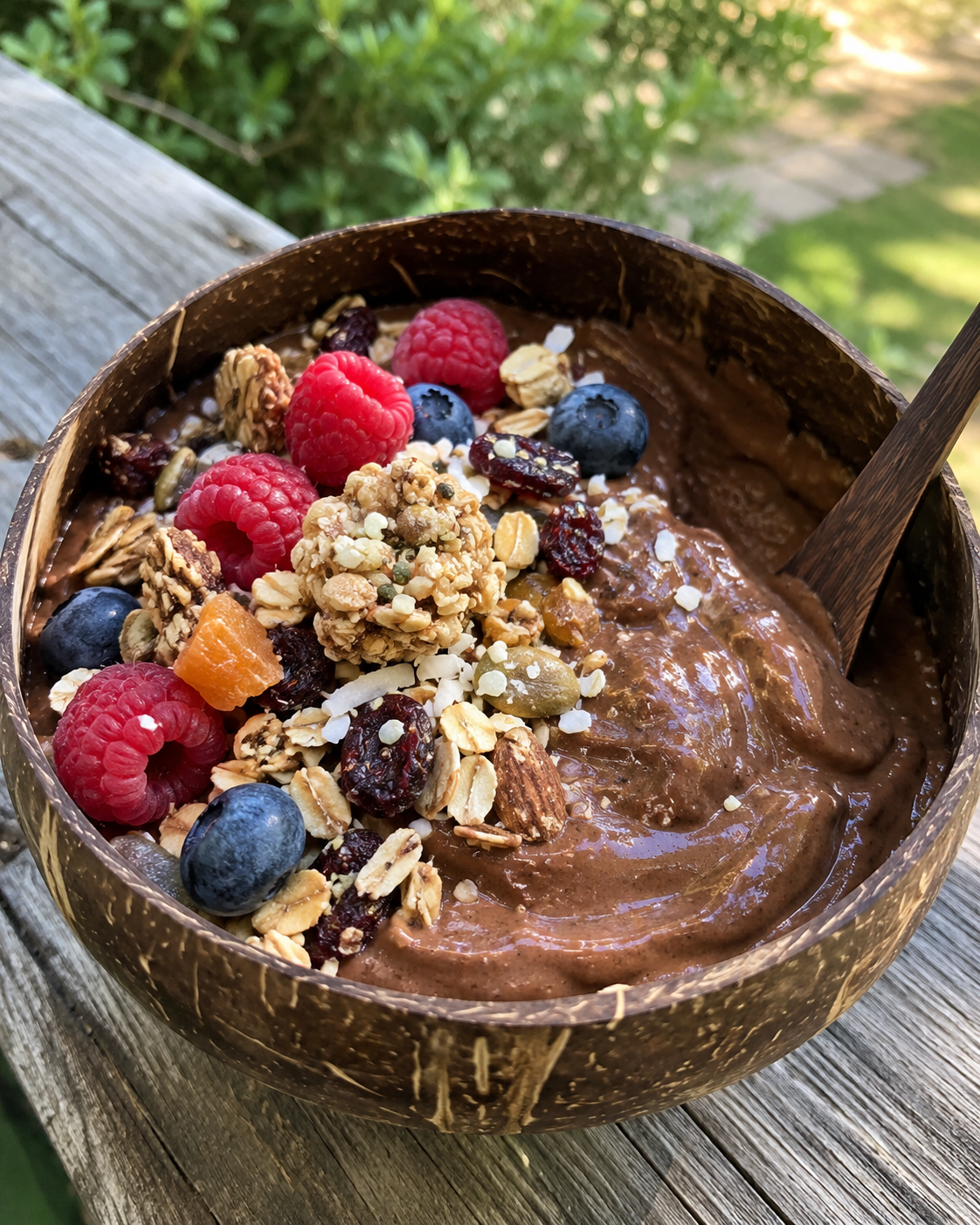
A five-minute chocolate pudding with no detectable avocado flavor: silky, rich, and naturally sweetened, with topping ideas for every season.
Yield: Serves 4 · Active: 5 min · Total: 35 min · Year-round (avocados grow in warm climates; in North America, California avocados are in season roughly spring through fall) · Best eaten: early afternoon
Ingredients
2 ripe avocados
½ cup raw cacao powder
⅓ cup maple syrup or raw honey
¼ cup full-fat coconut milk (or grass-fed cream)
2 tbsp coconut oil, melted
1–2 tsp pure vanilla extract
¼ tsp Baja Gold sea salt
Optional: 2 tbsp espresso, 1 tsp ground Ceylon cinnamon, or a little orange zest
Garnish
½ cup whipped raw cream (or whipped coconut cream)
Fresh berries
Cacao nibs
Chopped pistachios
Flaky sea salt
Fresh mint leaves
Method
Blend all the mousse ingredients in a high-speed blender or food processor for 1–2 minutes, scraping down the sides as needed, until completely silky and glossy.
Check the texture. It should be thick and pudding-like. Add 1–2 tbsp more coconut milk if it's too thick, or 1 tbsp more cacao if it's too thin.
Taste and adjust: more sweetener for a sweeter mousse, more cacao for deeper chocolate, or a pinch more salt to make the flavors pop.
Chill. Divide it among four small glasses or ramekins, press a piece of parchment directly onto the surface of each one so it doesn't oxidize, and refrigerate at least 30 minutes, until the flavors meld and the mousse firms.
Top with whipped cream, berries, cacao nibs, pistachios, flaky salt, and mint, or any of the toppings below.
Topping Ideas by Season
Spring: sliced strawberries, rose petals, and a dollop of whipped raw cream
Summer: fresh raspberries or cherries, toasted coconut, and mint
Fall: sliced pears, toasted pecans, and a drizzle of dulce de leche
Winter: orange segments and zest, pomegranate arils, and crushed pistachios
Any time: cacao nibs, flaky salt, a spoonful of almond butter, or bee pollen
Flavor Variations
Mint chocolate: add 2–3 drops food-grade peppermint oil, and top with fresh mint and cacao nibs.
Mexican chocolate: add 1 tsp Ceylon cinnamon and a pinch of cayenne, and top with toasted pepitas.
Chocolate orange: add the zest of 1 orange and 1 tbsp fresh orange juice, and top with orange segments.
Mocha: add 2 tbsp cooled espresso (best enjoyed earlier in the day).
Raspberry swirl: swirl a spoonful of mashed fresh raspberries through each glass before chilling.
Pairs Well With
A handful of my Food Marshall Granola scattered over the top adds a crunchy contrast to the silky mousse. Some favorite pairings:
Cacao Crunch with Cherries and Hazelnuts, for a double-chocolate treat
Pistachio Rose, with the classic mousse, finished with rose petals and chopped pistachios
Raspberry Honey Oat, with the raspberry swirl variation
Sunshine Granola, with the chocolate orange variation, since its citrus zest and berries are lovely with chocolate
Maple Pecan Pumpkin Spice, in fall, with the Mexican chocolate variation
Big Cluster Vanilla Maple, broken into big pieces, for a crunchy chocolate parfait
Make it a parfait: Layer the mousse with granola, whipped cream, and fresh berries in a glass, for a beautiful dessert or a special-occasion breakfast.
Storage
Refrigerated, covered, up to 3 days, with parchment pressed onto the surface, so it stays dark and glossy. Add the granola just before serving, so it stays crunchy.
A note on honey: The raw honey stays raw, since it's never heated. Honey shouldn't be given to babies under 12 months.
Nourishment Notes
Avocado as a sweet dessert is older than it looks. It appears in Brazil's creme de abacate, Vietnam's avocado shake (sinh tố bơ), and the avocado shakes of Indonesia and the Philippines, long before raw-food culture discovered it in the 2000s. Its mild, neutral richness is what makes it work: where butter or cream would assert themselves, avocado disappears under the cacao and lets the chocolate carry all the flavor.
Raw cacao is cacao that has been fermented, then dried and ground without high-heat roasting, which helps preserve more of its flavanols. The Mesoamerican drinking-chocolate tradition used roasted cacao, taken bitter, with chili and corn, rather than sweet with milk. Here, maple syrup softens raw cacao's bitterness, while its flavanols, magnesium, and theobromine stay intact.
The optional espresso is worth a circadian note: caffeine's effects linger for hours, and it can disrupt sleep even when taken 6 hours before bed, even if you don't feel wired. Cacao contains theobromine and a little caffeine of its own, too, so this mousse is best as a late-morning or after-lunch treat rather than an after-dinner one.
Avocado — monounsaturated fats, potassium, folate, fiber, and vitamin E.
Raw cacao — magnesium, iron, flavanols, and theobromine.
Coconut oil and coconut milk — lauric acid and medium-chain fats.
Maple syrup and raw honey — unrefined sweeteners with trace minerals.
For your cycle: Cacao's magnesium makes this a comforting treat in the luteal phase, when many women crave chocolate, and avocado's healthy fats and fiber help keep blood sugar steadier than a typical pudding would.
Sourcing
Avocados — organic and ripe (they should yield gently to pressure), ideally California-grown in season
Raw cacao powder and cacao nibs — organic, single-origin, and ideally tested for heavy metals
Coconut milk and cream — organic and full-fat, made with just coconut and water, with no guar gum (Native Forest Simple comes in BPA-free cans)
Raw cream — from a farmer you know and trust, or organic, grass-fed cream
Coconut oil — organic, virgin, and unrefined
Maple syrup and raw honey — organic Grade A dark maple syrup; organic, local, unfiltered raw honey
Vanilla — organic pure vanilla extract
Toppings — organic, seasonal fruit; organic pistachios, pecans, and pepitas; food-grade rose petals and peppermint oil
Salt — Baja Gold sea salt; Maldon for finishing
— Anna aka Food Marshall