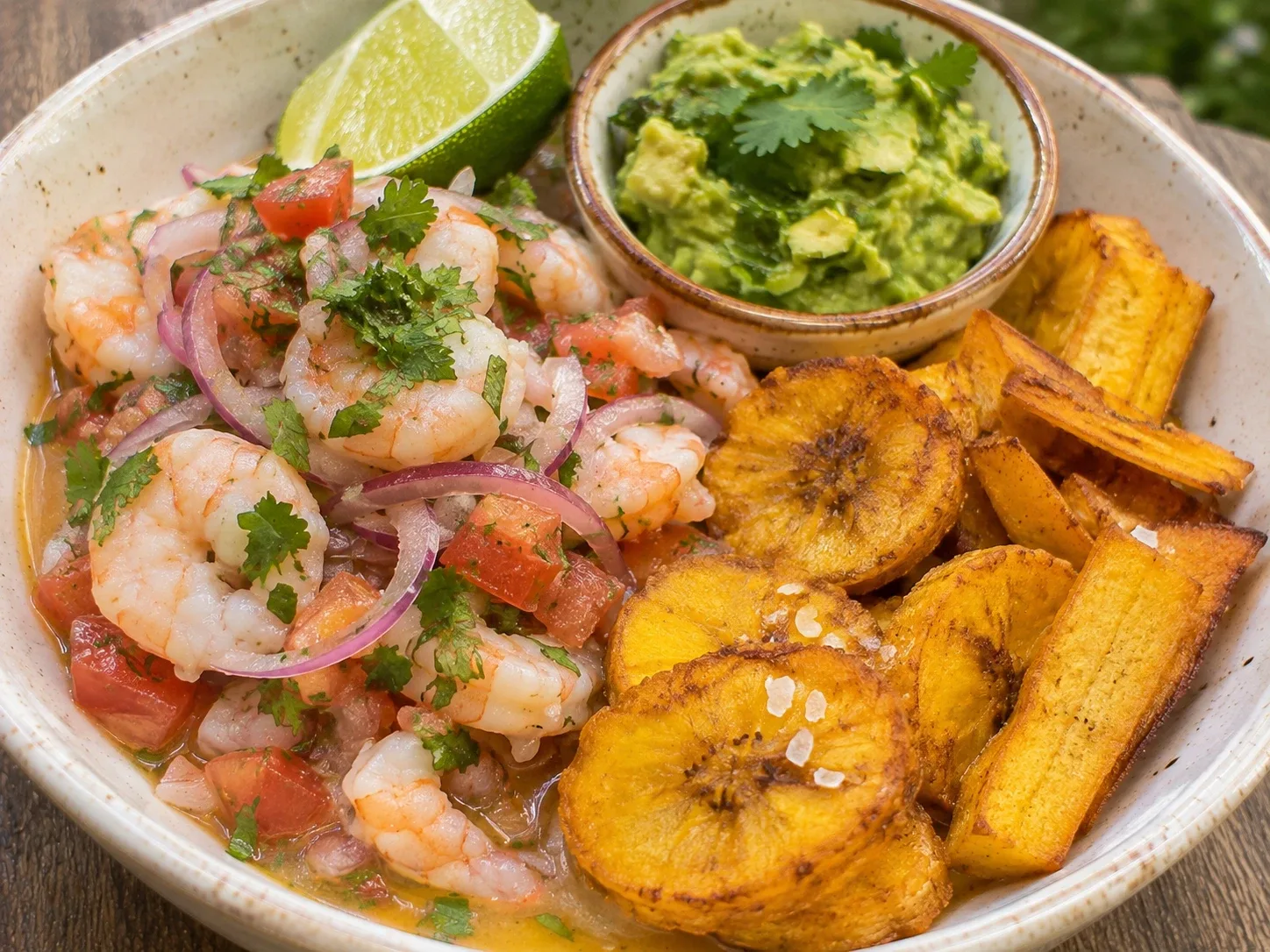
Ecuadorian Shrimp Ceviche with Plantain Chips and Guacamole
Tender wild shrimp chilled in a bright lime, orange, and fresh tomato marinade with red onion and cilantro, served Ecuadorian style with crisp homemade plantain chips and a bowl of guacamole.
Yield: Serves 6 · Active: 45 min · Total: 2 hr 45 min (including 1–2 hr chilling) · Season: Best in North America in summer, when tomatoes and peppers are at their peak · Best eaten: midday
Ingredients
For the shrimp
- 2 lb large wild shrimp, shell on
- 1 can (13.5 oz) full-fat coconut milk, or 4 cups water
- 1 tsp sea salt
For the ceviche
- 2 red onions, very thinly sliced
- 1 tbsp sea salt, for soaking the onions
- 4 ripe tomatoes, 3 thinly sliced or diced, 1 left whole for the tomato base
- 1 red or green bell pepper, finely diced (optional)
- 1 cup fresh lime juice (from 10–12 limes)
- Juice of 1 orange
- ½ cup shrimp cooking liquid, cooled
- 1 bunch cilantro, very finely chopped
- 2 tbsp extra virgin olive oil
- Sea salt and black pepper, to taste
For the plantain chips
- 3 green plantains
- About 1½ cups coconut oil, lard, or tallow, for frying
- Sea salt
For the guacamole
- 3 ripe avocados
- Juice of 1 lime
- ¼ cup finely diced red onion
- ¼ cup chopped cilantro
- ½ tsp sea salt
To serve
- Ají (Ecuadorian hot sauce) or your favorite sugar-free hot sauce
- Lime wedges
Method
For the shrimp
- Poach. Bring the coconut milk (or water) and salt to a gentle simmer in a wide pot. Add the shrimp in their shells and cook 2–3 minutes, stirring once, until pink and just firm. Poaching means cooking gently in liquid that’s barely bubbling.
- Cool and peel. Lift the shrimp out onto a sheet pan to cool. Save the cooking liquid and let it cool. Peel and devein the shrimp, and keep the shells.
For the ceviche
- Soak the onions. Cover the sliced onions with cold water and stir in 1 tbsp salt. Soak 10 minutes, then rinse well and drain. This tames their bite and keeps them crisp.
- Make the tomato base. Blend the whole tomato with the reserved shrimp shells and ½ cup of the cooking liquid until smooth. Strain through a fine sieve, pressing hard, and discard the solids. This gives the ceviche its classic rosy color and deep shrimp flavor without ketchup.
- Combine. In a large glass bowl, stir together the tomato base, lime juice, orange juice, olive oil, onions, sliced tomatoes, bell pepper, and half the cilantro. Add the shrimp and season with salt and pepper.
- Chill. Cover and refrigerate 1–2 hours so the flavors come together. Stir in the remaining cilantro just before serving.
For the plantain chips
- Slice. Cut the ends off each plantain, score the skin lengthwise, and peel it off. Slice the plantains very thinly (about ⅛ inch) on a mandoline, in rounds or long diagonal strips.
- Fry. Heat 1 inch of coconut oil in a heavy skillet to 350°F. Fry the slices in batches, without crowding, for 2–3 minutes, turning once, until golden and crisp. Drain on a rack and salt right away.
For the guacamole
- Mash. Mash the avocados with the lime juice and salt, leaving some chunks. Fold in the onion and cilantro.
To serve
- Serve. Spoon the ceviche and plenty of its juice into bowls or glasses. Serve with plantain chips, guacamole, lime wedges, and hot sauce at the table.
Storage
- The ceviche is best the day it’s made and keeps 1 day in the fridge.
- Plantain chips stay crisp 2 days in an airtight container at room temperature.
- Guacamole keeps 1 day in the fridge with parchment pressed onto the surface.
Variations
- Patacones: Instead of thin chips, cut the plantains into 1½-inch chunks, fry 3 minutes, smash flat, and fry again until crisp.
- Water-poached: Poach the shrimp in salted water with a bay leaf and a few peppercorns for a lighter flavor.
- Fish ceviche: Use 2 lb very fresh wild white fish, cut into ½-inch cubes, and let it “cook” in the lime juice in the fridge for 30–45 minutes, until opaque.
- Spicy: Add 1 minced seeded jalapeño or ají pepper to the marinade.
- Toasted corn: In Ecuador it’s often served with toasted corn. If you tolerate corn, add a small bowl as an optional side.
Season & Circadian Timing
Ceviche is a warm-weather dish, cool and juicy when tomatoes are ripe and the day is hot. It’s made to be eaten at midday, when a bright, citrusy plate feels refreshing and the plantain chips give you some steady carbohydrates for the afternoon.
Nourishment Notes
- Wild shrimp — lean protein with selenium, iodine, and vitamin B12.
- Limes and orange — vitamin C, and plenty of bright flavor without any added sugar.
- Tomatoes — vitamin C and lycopene, which your body absorbs better with a little fat like the olive oil and avocado.
- Green plantains — starchy and filling, with resistant starch, a kind of fiber that feeds healthy gut bacteria.
- Avocado — monounsaturated fat, potassium, and fiber.
Sourcing
- Shrimp — wild-caught, from the Gulf of Mexico or the Pacific, with no added sulfites or phosphates
- Coconut milk — organic, full-fat, with no gums, in a BPA-free can (Native Forest)
- Plantains — firm and fully green, from a Latin market or grocery store
- Coconut oil — organic, unrefined virgin coconut oil (or refined organic for a neutral taste)
- Extra virgin olive oil — organic, single-estate, harvest-dated, in dark glass
- Lemons / limes / oranges — organic (you’re using the zest)
- Salt — unrefined sea salt (Baja Gold); flaky sea salt for finishing (Maldon)
- Fruits, vegetables, and herbs — organic, from a farmers’ market or local farm
You might also like: Patacones with Tropical Guacamole · Tuna Ceviche: Japanese-Latin Fusion · Wild Fish and Shrimp Tacos Four Ways: Spiced Shrimp, Baja Fish, Herb-Marinated Monkfish, and Crispy Cod with Mango-Pineapple Salsa
With Love, Light, and Health,
Anna (aka Food Marshall)
Food Marshall Approved. Grain-free, seed-oil-free and refined-sugar-free, made from organic, local and seasonal ingredients. Our standards
More Seafood
Get new recipes and essays
Seasonal recipes and writing on light, circadian health, and living with nature.
Subscribe on Substack