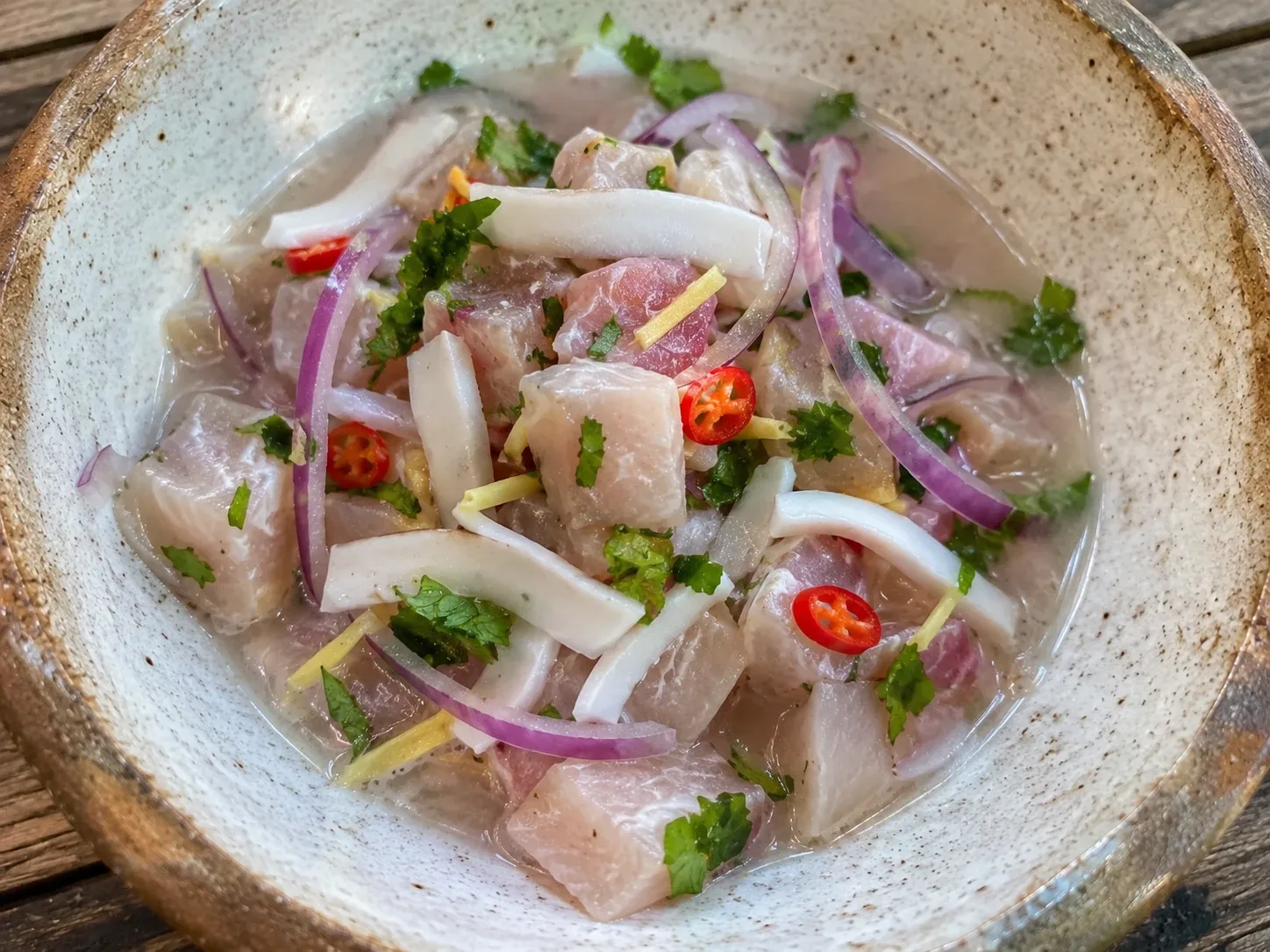
Kinilaw na Isda: Filipino Raw Fish with Coconut Vinegar, Ginger, and Young Coconut
The Philippines’ ancient raw fish dish. Cubes of fresh wild tuna are flash-cured in coconut vinegar and lime, then tossed with ginger, chili, shallot, and tender young coconut, with an optional egg yolk to stir through.
Yield: Serves 2 as a main, 4 as a starter · Active: 20 min · Total: 25 min · Season: Best in North America in summer, when wild tuna, mahi-mahi, and fresh chilies are at their peak · Best eaten: midday
Ingredients
For the kinilaw
- ½ lb sashimi-grade wild tuna, ono, or mahi-mahi, skin and bloodline removed
- ⅓ cup coconut vinegar (or cane vinegar, called suka, from a Filipino grocer; not distilled white vinegar)
- Juice of 1 calamansi or 1 small lime
- 1 tbsp finely minced or julienned fresh ginger
- 1 shallot, very thinly sliced
- 1 small red chili (Thai bird or Fresno), seeded and finely minced, to taste
- ½ cup thinly sliced fresh young coconut meat (or ¼ cup unsweetened coconut cream)
- 2 tbsp scallions, thinly sliced on an angle
- Sea salt and freshly cracked black pepper
To finish
- 2 pasture-raised egg yolks, at room temperature (optional, traditional in the Visayas)
- A handful of fresh cilantro leaves
- Calamansi or lime wedges
Method
For the kinilaw
- Chill the bowls. Put two (or four) shallow serving bowls in the fridge or freezer so they are cold when you plate.
- Cut the fish. Pat the fish very dry with paper towels. Cut it into ½-inch cubes with a sharp knife, using long, clean strokes. Put the cubes in a shallow glass or ceramic bowl. Avoid metal, which can react with the vinegar and taste tinny.
- Flash-cure. Pour the coconut vinegar and calamansi or lime juice over the fish and fold gently. Let it sit for 4 minutes only. This is a quick cure, not a long ceviche. The acid firms the outside of each cube while the center stays tender. The fish should still look translucent, with just the edges turning white.
- Drain. Tip the bowl and pour off most of the curing liquid, saving 2 tablespoons.
- Season. Fold in the ginger, shallot, chili, young coconut, scallions, the saved curing liquid, and a good pinch each of salt and pepper. Taste and add more salt or chili if you like.
To serve
- Plate. Divide the kinilaw among the chilled bowls. If using the egg yolks, make a small well in the center of each portion and slip in a yolk.
- Finish. Scatter cilantro over the top and serve right away, with lime wedges at the table. Each person breaks the yolk and folds it through the fish, where it turns into a quick, silky sauce.
Storage
- Kinilaw is best eaten within 15 minutes of mixing. After that the acid keeps working and the fish turns firm and opaque.
- If you have leftovers, refrigerate them in a covered glass container and eat them the same day.
- You can slice the shallot, chili, ginger, scallions, and coconut up to 4 hours ahead and keep them covered in the fridge.
Variations
- Coconut milk kinilaw: Stir 3 tbsp coconut cream into the fish with the aromatics for a richer, Mindanao-style bowl.
- Cucumber and tomato: Add ½ cup diced cucumber and a few halved cherry tomatoes for crunch and juice.
- Other fish: Snapper, wahoo, or wild yellowtail all work well. Use whatever was landed that morning.
- Shrimp kinilaw: Use very fresh wild shrimp, peeled and halved lengthwise, and cure them for 8–10 minutes until just pink at the edges.
- Lettuce cups: Spoon the kinilaw into butter lettuce leaves for a light lunch you can eat with your hands.
Season & Circadian Timing
This is a hot-weather dish. It needs no stove and tastes best in the middle of a bright summer day. A raw fish lunch like this is light but rich in protein and good fats, so it keeps you going through the afternoon without weighing you down.
Nourishment Notes
- Wild tuna and other wild fish — eaten raw, the fish keeps its DHA and other omega-3 fats in their freshest, unheated form, along with protein, selenium, and vitamin D.
- Coconut vinegar — a traditional fermented vinegar made from coconut sap, with a soft, rounded flavor quite different from cane or rice vinegar.
- Young coconut — brings medium-chain fats, which the body burns readily for energy, plus a gentle sweetness.
- Ginger — warming and aromatic, and long used to help settle digestion.
- Pasture-raised egg yolk — adds choline, vitamin A, and vitamin D, and turns the bowl silky.
Sourcing
- Wild fish — sashimi-grade, from a trusted fishmonger the morning you make it. Ask what came in that day, and have them remove the skin and trim the dark bloodline. Flat-frozen wild tuna from a reputable online source is a good option if you live inland (Wild Planet or Catalina Offshore)
- Coconut vinegar — from a Filipino grocer; worth the hunt for its flavor
- Young coconut — fresh Thai young coconuts from an Asian market, or frozen young coconut meat
- Eggs — organic and pasture-raised, from a local farm (Alexandre Family Farm)
- Lemons / limes — organic (you’re using the juice and wedges)
- Salt — unrefined sea salt (Baja Gold); flaky sea salt for finishing (Maldon)
- Fruits, vegetables, and herbs — organic, from a farmers’ market or local farm
You might also like: Tuna Ceviche: Japanese-Latin Fusion · Seared Tuna with Avocado, Cucumber, Radish, Ginger-Lime Dressing, and Homemade Gomasio · Coastal Sushi Rolls with Wild Fish, Colorful Vegetables, and Tropical Fruit
With Love, Light, and Health,
Anna (aka Food Marshall)
Food Marshall Approved. Grain-free, seed-oil-free and refined-sugar-free, made from organic, local and seasonal ingredients. Our standards
More Seafood
Get new recipes and essays
Seasonal recipes and writing on light, circadian health, and living with nature.
Subscribe on Substack