Sautéed Wild Shrimp with Shaved Fennel Slaw
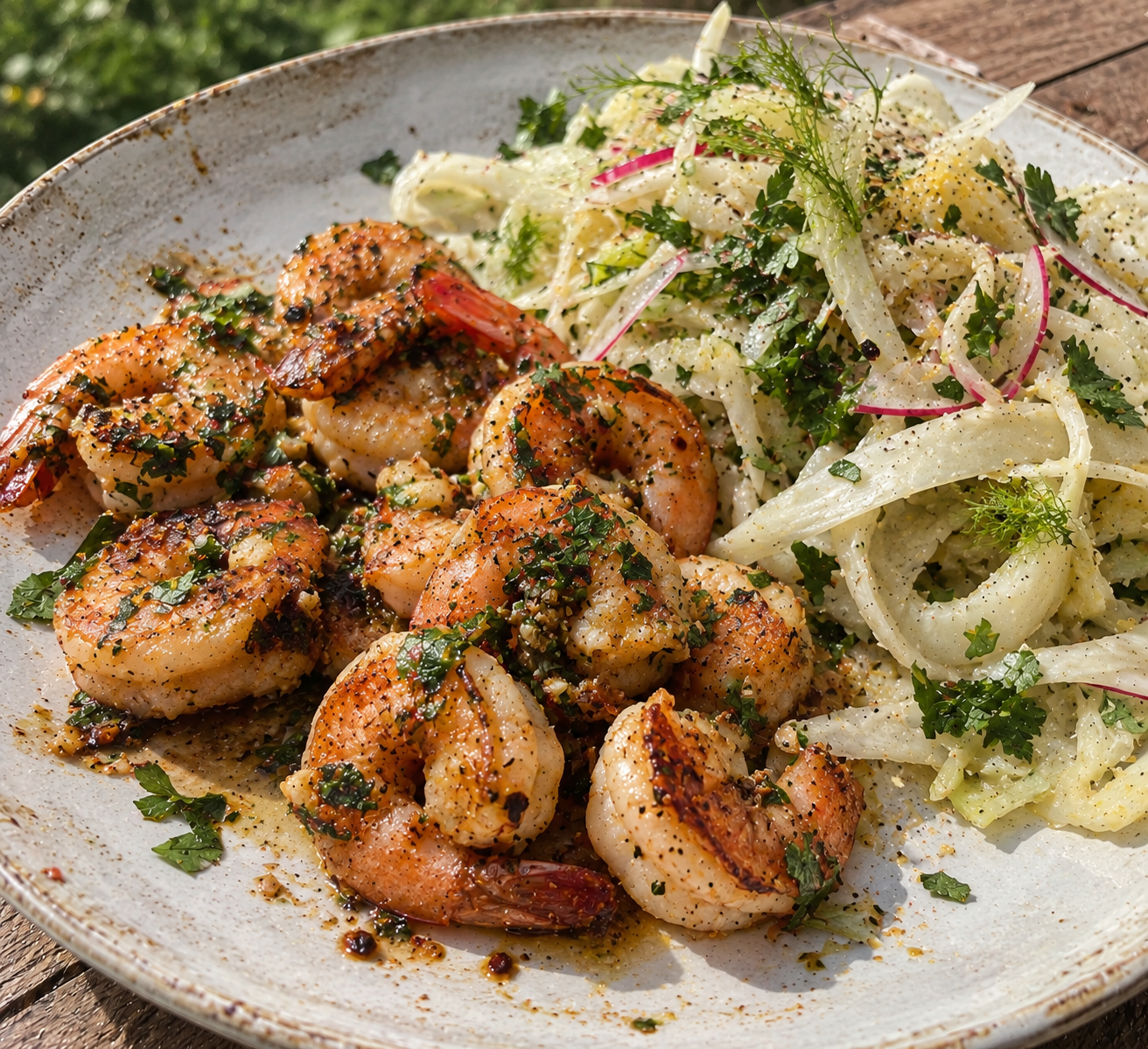
The fastest Italian-Mediterranean dinner: wild shrimp seared in garlic butter, then tossed warm into a raw fennel slaw marinated in lemon, Dijon, and olive oil.
Yield: Serves 6–8 · Active: 20 min · Total: 50 min, including marinating the fennel · Fall through spring, when fennel bulbs are sweetest in Mediterranean gardens; lovely year-round · Cuisine: Italian-Mediterranean · Best eaten: midday or early evening
Ingredients
Shrimp
3 lbs wild-caught shrimp, peeled and deveined
4 tbsp grass-fed butter
4 garlic cloves, minced
½ tsp Baja Gold sea salt and ¼ tsp black pepper
Fennel slaw (marinate at least 30 minutes ahead)
2 fennel bulbs, cored and very thinly shaved (a mandoline is ideal)
2 shallots, very thinly sliced
1 cup fresh flat-leaf parsley, roughly chopped
Zest of 1 lemon
3 tbsp fresh lemon juice
1 tsp Dijon mustard
⅓ cup extra virgin olive oil
Baja Gold sea salt and black pepper
A note on the shrimp: Wild U.S. Gulf shrimp are the gold standard, and wild Argentine red shrimp are another excellent option. Avoid farmed shrimp from Thailand, Vietnam, or India unless the source is verified.
Method
Marinate the slaw (at least 30 minutes ahead). Whisk the lemon zest, lemon juice, Dijon, salt, and pepper in a large bowl, then whisk in the olive oil until emulsified. Toss with the fennel, shallots, and parsley, and let it marinate at least 30 minutes, until the fennel is slightly softened but still crisp.
Start the shrimp. Melt the butter in a large skillet over medium-high heat. Add the garlic, and cook 30 seconds, until fragrant (don’t let it brown).
Cook the shrimp. Add the shrimp in a single layer, working in batches so the pan isn’t crowded. Season with salt and pepper, and cook 1½–2 minutes per side, until pink and just opaque. They should curl into a loose “C”; a tight “O” means they’re overcooked.
Toss and serve. Toss the hot shrimp right into the slaw, and serve. The warmth of the shrimp gently softens the fennel and helps the dressing soak into everything.
Serve It With
A simple green salad, warm sourdough (if you eat grains), or one of my autumn salads, for a heartier plate. If you drink, a crisp white wine, like Vermentino, Pinot Grigio, or Albariño, is a lovely match; otherwise, sparkling water with a lemon slice.
Storage
Best eaten the day it’s made. Leftovers keep 1 day in the fridge, though the fennel softens and the shrimp lose some texture. Cold leftovers are lovely tossed into a salad with extra greens and a squeeze of lemon.
The slaw alone (without the shrimp) keeps 2 days in the fridge, and is even better the next day.
For a crowd: The recipe scales easily. For 12 or more, cook the shrimp in batches, and toss everything together in a large serving bowl just before serving.
Nourishment Notes
Wild shrimp — astaxanthin, the pink-orange carotenoid that gives shrimp their color, which comes from the algae and krill they eat. Astaxanthin is a potent fat-soluble antioxidant, studied for supporting the mitochondria and protecting the skin and eyes from UV-related oxidative stress (it reaches the retina, where it may help protect the eyes). Shrimp also bring copper, zinc, selenium, iodine, and B12, plus about 20 grams of protein in 4 ounces, for only about 100 calories. Farmed tropical shrimp are a very different food: often raised in crowded ponds with antibiotics, colored by astaxanthin added to their feed, and frequently treated with sodium tripolyphosphate, so they hold extra water. Choosing wild-caught makes a real difference.
Fennel — fiber, vitamin C, potassium, manganese, and folate. Its sweet, licorice-like flavor comes from anethole (the same compound in star anise), which is studied for easing digestion. Fennel has been used to soothe the stomach across the Mediterranean and South Asia for millennia.
Parsley — vitamins K and C, plus apigenin, a flavonoid studied for its gentle calming effects.
Raw shallots — quercetin and prebiotic fiber.
Extra virgin olive oil — oleocanthal and other polyphenols, which also help you absorb fat-soluble nutrients.
Grass-fed butter — butyrate and vitamins A, D, E, and K2, which develop in milk from cows grazing green pasture.
Lemon — vitamin C, which helps your body absorb the shrimp’s iron.
Dijon mustard — glucosinolates from the mustard seed, plus a pleasant bite that’s long been used in French and Italian cooking to brighten rich dishes.
As a circadian food, this is light, bright eating for midday or early evening. It’s especially lovely in warm weather, though the fennel is at its sweetest from fall through spring.
For your cycle: Light and mineral-rich, with zinc, selenium, and iodine for your thyroid, this dish suits the follicular and ovulatory phases, when your body enjoys fresh, crisp foods.
Sourcing
Shrimp — wild-caught U.S. Gulf shrimp or wild Argentine red shrimp, with no added sodium tripolyphosphate (labeled “chemical-free”), from a trusted fishmonger or Wild Alaskan Company
Grass-fed butter — organic, cultured butter from 100% grass-fed cows
Fennel, shallots, parsley, garlic, and lemons — organic, from a farmers’ market
Dijon mustard — organic, like Delouis Fils or Maison Orphée
Extra virgin olive oil — organic, single-estate, harvest-dated, in dark glass
Salt — Baja Gold sea salt
— Anna aka Food Marshall