Seared Tuna with Avocado, Cucumber, Radish, Ginger-Lime Dressing, and Homemade Gomasio
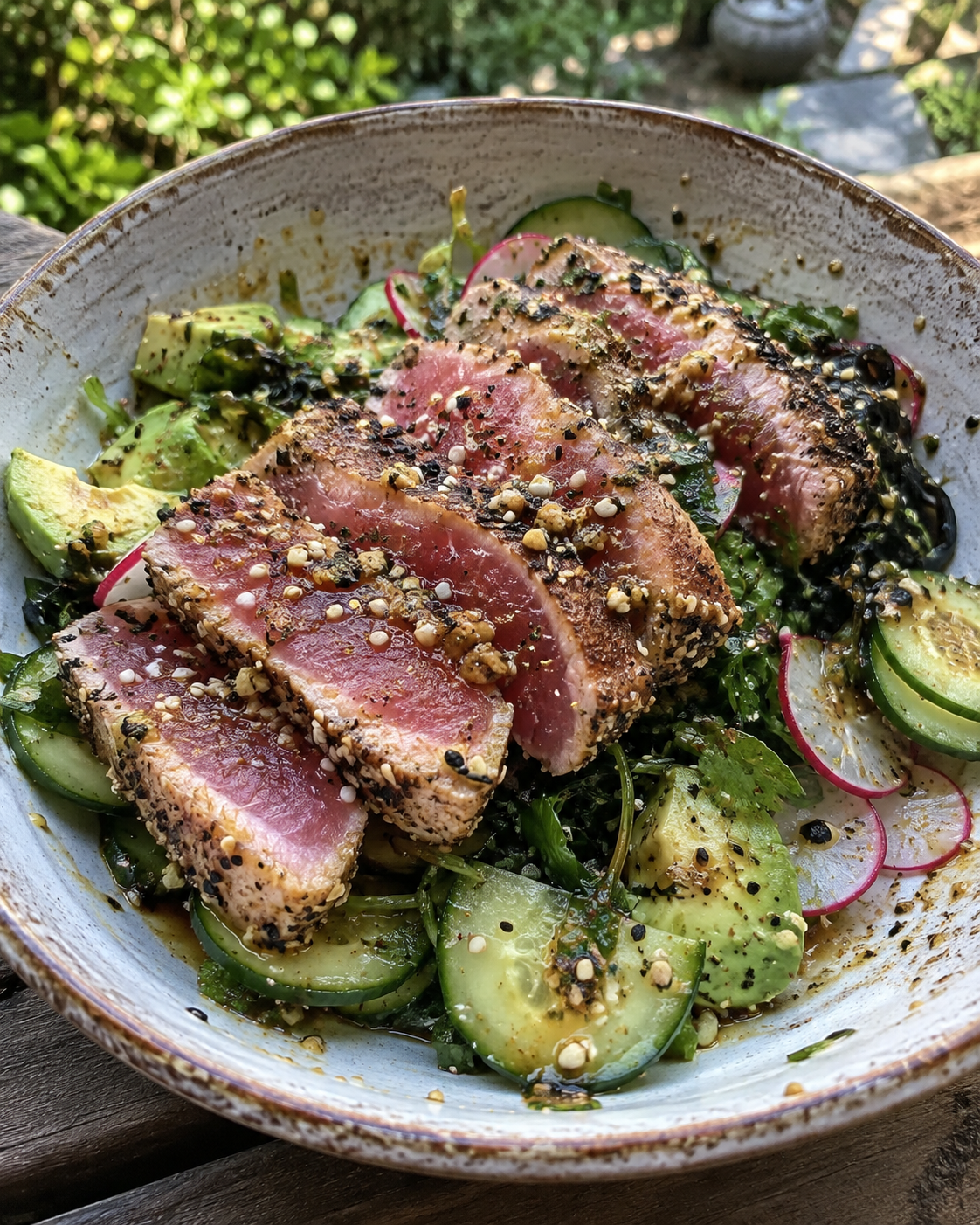
Wild tuna seared for just seconds per side so it's crusted outside and rosy within, sliced over cool cucumber, creamy avocado, crisp radishes, and a quick ginger-lime seaweed salad, then drizzled with a zingy ginger-lime dressing and showered with homemade gomasio (toasted sesame salt). Fresh, light, ready in 20 minutes, and completely soy-free, thanks to coconut aminos.
Yield: Serves 2 · Active: 20 min · Total: 20 min · Year-round (U.S. albacore is caught off the Pacific Coast in summer and fall, and frozen-at-sea is excellent all year) · Best eaten: midday
Ingredients
Homemade gomasio (makes about ½ cup)
½ cup unhulled sesame seeds (white, black, or a mix)
1 tsp Baja Gold sea salt
Ginger-lime dressing
2 tbsp fresh lime juice
1 tbsp coconut aminos (it keeps this soy-free, in place of soy sauce or tamari)
1 tbsp fresh ginger, finely grated
1 tsp raw apple cider vinegar
1 tsp toasted sesame oil
2 tbsp extra virgin olive oil
1 tsp raw honey (optional)
Pinch of Baja Gold sea salt
Quick seaweed salad
2 tbsp dried wakame or ¼ cup dried arame
1 tbsp of the ginger-lime dressing
1 tsp toasted sesame seeds (or a pinch of the gomasio)
1 thinly sliced scallion
Tuna
2 wild tuna steaks (about 6 oz each, 1 inch thick)
½ tsp Baja Gold sea salt
1 tbsp avocado oil or ghee
Bowl
1 English cucumber, thinly sliced or cut into ribbons
1 ripe avocado, sliced
4–5 radishes, thinly sliced
2 scallions, thinly sliced
A handful of fresh cilantro or microgreens
Optional: a handful of baby greens or shredded cabbage as a base
Method
Make the gomasio. Toast the sesame seeds in a dry skillet over medium heat, stirring constantly, 3–5 minutes, until golden and starting to pop. Grind them with the salt in a mortar and pestle (or pulse briefly in a spice grinder) until about half the seeds are crushed. Let cool.
Make the dressing. Whisk everything together.
Make the seaweed salad. Soak the dried wakame or arame in a bowl of cool water for 5–10 minutes, until tender. (Wakame expands about ten times, so a little goes a long way.) Drain, squeeze out the excess water, and chop any large pieces of wakame. Toss with 1 tbsp of the dressing, the sesame seeds, and the scallion.
Sear the tuna. Pat it completely dry and season with salt. Heat the oil in a cast iron skillet over high heat until just smoking. Sear the tuna 30–60 seconds per side (and briefly on the edges) for a rare, rosy center, or 1½–2 minutes per side for medium. Let it rest 2 minutes, then slice thinly against the grain.
Build the bowls. Arrange the cucumber, avocado, radishes, seaweed salad, and greens (if using) in shallow bowls, fan the sliced tuna on top, drizzle with the ginger-lime dressing, and finish with scallions, cilantro, and a generous sprinkle of gomasio.
Know your fishmonger: "Sushi-grade" isn't a regulated term, so buy your tuna from a fishmonger you trust and let them know you'll be serving it rare. If you're pregnant, sear the tuna through to medium-well, and favor albacore or skipjack, which are lower in mercury than larger tunas like bigeye.
Storage: Seared tuna is best eaten right away (leftovers keep up to 1 day refrigerated, cooked through). The seaweed salad keeps up to 2 days refrigerated. Gomasio keeps in a jar up to 1 month; the dressing, up to 1 week.
Nourishment Notes: Wild tuna brings lean complete protein, selenium (one of the richest food sources), B12, niacin, and omega-3s. Wakame and arame bring iodine for healthy thyroid function, plus calcium, magnesium, and fiber. Wakame also contains fucoxanthin, a brown seaweed pigment being studied for its antioxidant effects. Seaweed is rich in iodine, so a small serving like this is plenty. Avocado offers monounsaturated fats, potassium, and folate. Cucumber is hydrating and brings vitamin K. Radishes add vitamin C and glucosinolates. Ginger brings gingerols, traditionally used to support digestion. Sesame seeds offer calcium, magnesium, copper, and sesame lignans.
For your cycle: Tuna's selenium and the seaweed's iodine support thyroid health, and sesame's lignans and minerals are traditionally associated with the luteal phase in seed cycling.
Sourcing
Tuna — pole-and-line or troll-caught U.S. albacore or skipjack (Seafood Watch Best Choices), or troll- or pole-caught yellowfin, from a trusted fishmonger or Vital Choice. Skip bluefin, which is overfished
Wakame or arame — organic and tested for heavy metals, such as Maine Coast Sea Vegetables' alaria (often called Atlantic wakame) or Eden Foods' wakame and arame. Skip hijiki, a similar-looking seaweed known to be high in inorganic arsenic
Sesame seeds — organic and unhulled
Coconut aminos — organic, like Coconut Secret (soy-free)
Toasted sesame oil — organic, cold-pressed, in glass
Cucumber, avocado, radishes, scallions, ginger, cilantro, and limes — organic
Raw apple cider vinegar — organic, with the mother (Bragg)
Raw honey (optional) — organic, local, and unfiltered
Avocado oil — organic, cold-pressed, and verified pure (many avocado oils are diluted or oxidized), or grass-fed ghee
Extra virgin olive oil — organic, single-estate, harvest-dated, in dark glass
Baja Gold sea salt
— Anna aka Food Marshall