Slow-Braised Rabbit (Conejo) with Mediterranean Vegetables, Pan Drippings, and Romesco
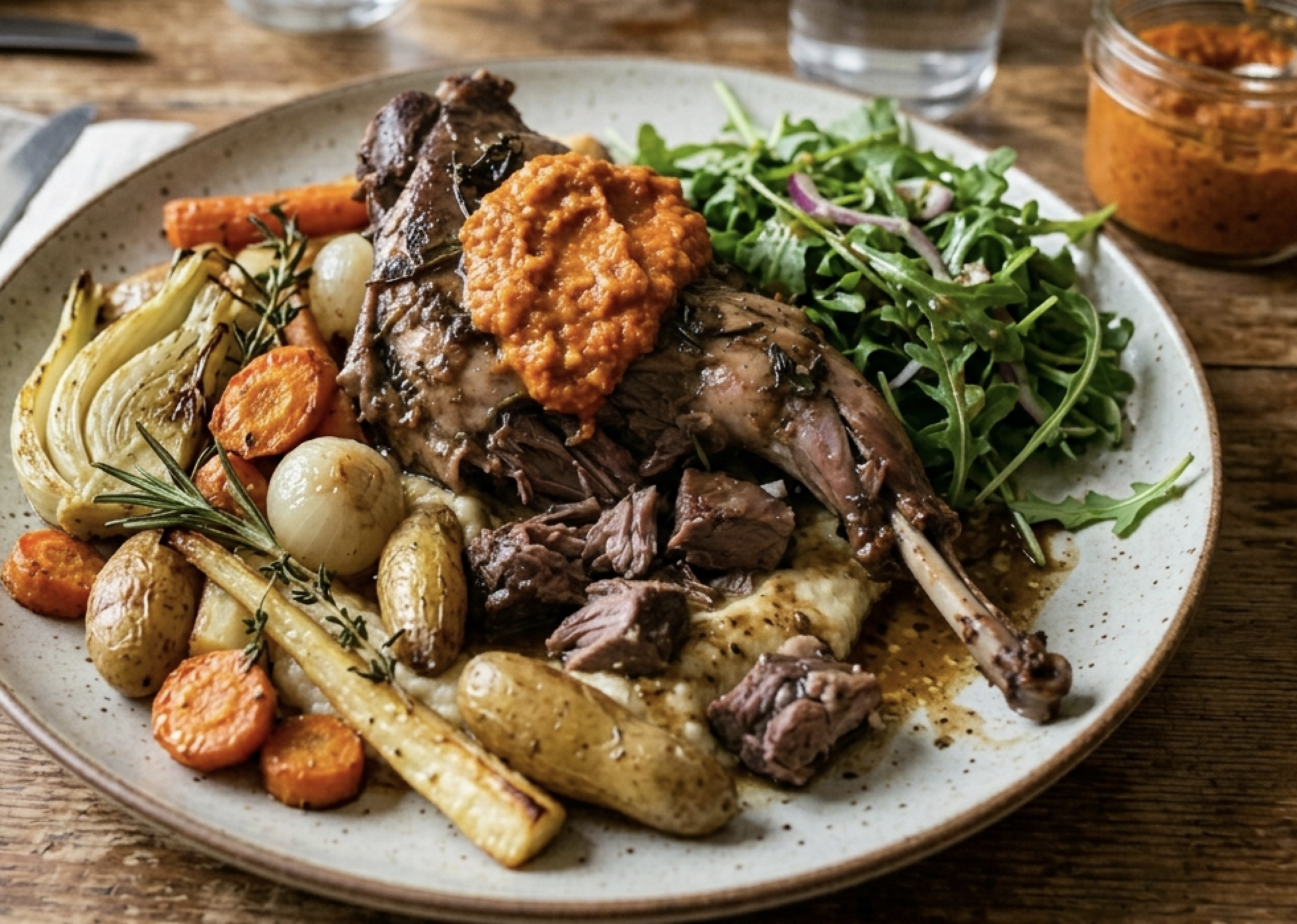
Whole pasture-raised or wild rabbit, slowly braised with white wine, garlic, herbs, and bone broth until the meat falls from the bone — served with roasted Mediterranean vegetables, a rich pan-drippings sauce, and a side of traditional Catalan romesco.
Yield: 4 servings · Active: 40 min
Total: 2 hr 45 min
Year-round (peak autumn–winter)
A note from the kitchen
Rabbit is one of the most underused proteins in modern American cooking. Rabbit is lean, mild, and nutritionally extraordinary — higher in protein per gram than nearly any other land animal, with a delicate flavor that takes beautifully to slow braising with aromatics, wild herbs, and rich pan drippings.
This recipe leans into the Mediterranean tradition — building the rabbit on a bed of caramelized onions, garlic, fresh herbs, and tomatoes, then slow-braising in white wine and bone broth until the meat is silky and falling from the bone. The pan drippings reduce into one of the most flavorful natural sauces in any kitchen. A side of Catalan romesco — roasted red pepper, almond, and garlic — adds the bright acidity and richness that makes the plate genuinely complete.
Ingredients
For the rabbit
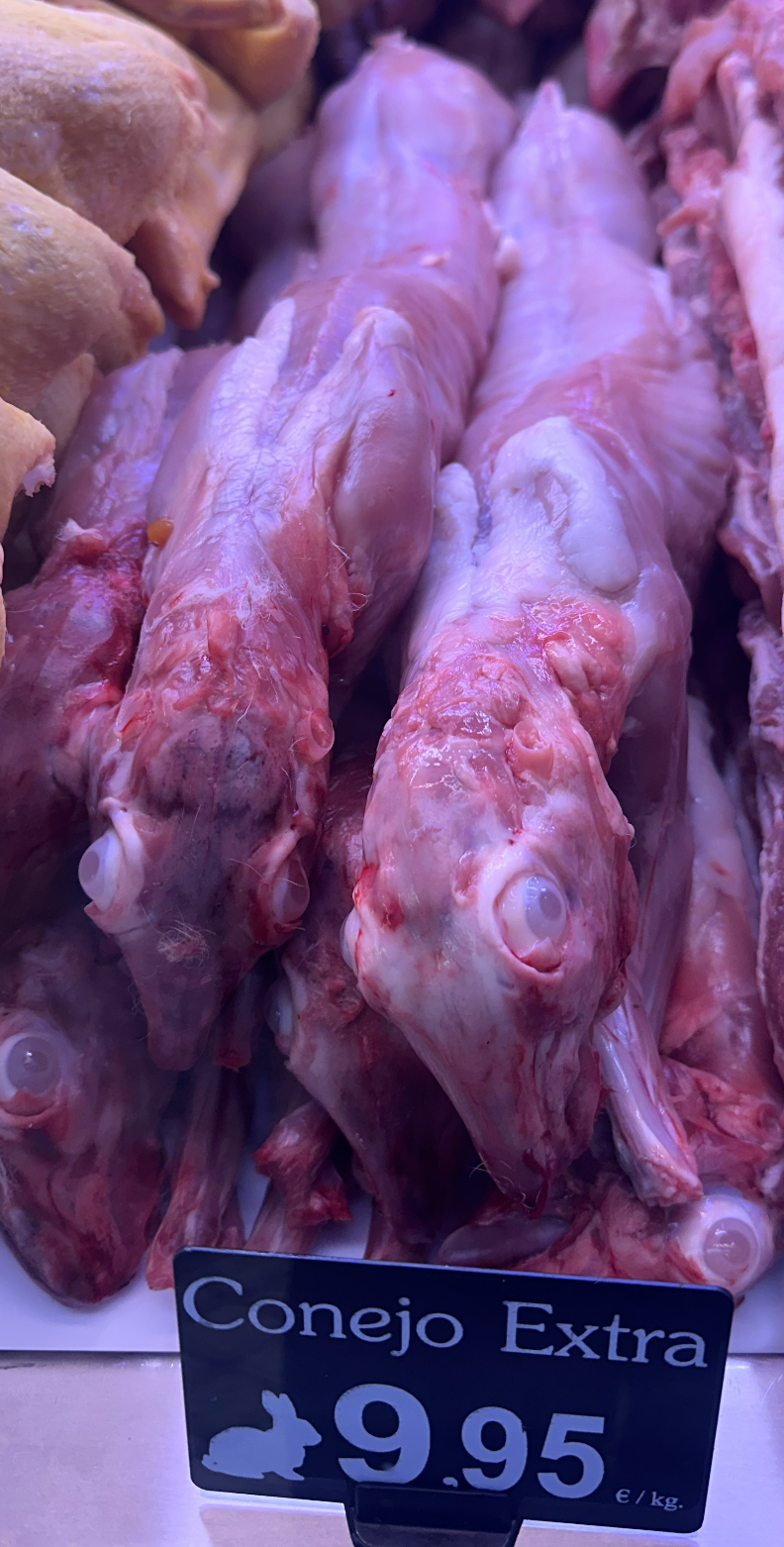
1 whole rabbit (2.5–3.5 lb), pasture-raised or wild, cut into 6–8 pieces (ask your butcher to do this — the standard cut is 2 front legs, 2 hind legs, 2 saddle/loin pieces, and the ribcage)
1 tbsp sea salt
Freshly cracked black pepper
3 tbsp grass-fed tallow, lard, or high-quality extra-virgin olive oil
2 medium yellow onions, finely chopped
1 large leek, white and pale-green parts only, halved, rinsed, and sliced into half-moons
6 cloves garlic, smashed
2 tbsp tomato paste
1 cup peeled, chopped fresh tomatoes (or 1 cup canned crushed tomatoes — San Marzano if available)
1 cup dry white wine (Albariño, Verdejo, or other Spanish white) — see alcohol-free variation below
4 sprigs fresh thyme
3 sprigs fresh rosemary
2 sprigs fresh oregano (or 1 tsp dried)
2 bay leaves
1 tsp sweet smoked paprika
1 strip lemon peel (no white pith)
3 cups bone broth (preferably homemade)
For the Mediterranean roasted vegetables
1 medium fennel bulb, cut into thick wedges
2 medium carrots, cut into 2-inch sections
1 cup pearl onions or small shallots, peeled
2 medium parsnips, cut into 2-inch sections
1 cup small fingerling potatoes, halved (optional)
1 head garlic, top sliced off to expose cloves
3 tbsp high-quality extra-virgin olive oil
Sea salt and freshly cracked black pepper
2 sprigs fresh rosemary
3 sprigs fresh thyme
For the romesco sauce (side sauce)
4 jarred or roasted red bell peppers (or piquillo peppers), drained
½ cup raw almonds (Marcona if available), lightly toasted
1 medium ripe tomato, halved and seeded
3 cloves garlic, peeled
2 tbsp aged sherry vinegar (or substitute raw apple cider vinegar or juice from ½ lemon
½ cup high-quality extra-virgin olive oil
1 tsp sweet smoked paprika
Pinch of cayenne (optional)
Sea salt to taste
For serving
Fresh chopped flat-leaf parsley
Lemon wedges
Flaky sea salt
Optional: a few drops of high-quality olive oil for finishing
Method
Season the rabbit. Pat the rabbit pieces completely dry with paper towels — dry meat is essential for a clean sear. Season generously on all sides with sea salt and black pepper. Let rest at room temperature for 15 minutes.
Sear the rabbit. Heat 2 tbsp of the tallow in a large heavy Dutch oven over medium-high heat. Working in batches (don't crowd the pan), sear the rabbit pieces on all sides until deeply golden brown — about 3–4 minutes per side. Transfer to a plate.
Build the braising base. Reduce heat to medium. Add the remaining 1 tbsp tallow to the pan. Add the chopped onions, leek, and a pinch of sea salt. Cook 12–15 minutes, stirring occasionally, until softened and just beginning to caramelize.
Add aromatics. Add the smashed garlic and cook 1 minute more. Add the tomato paste and stir to coat. Cook 2 minutes, until the paste deepens to a brick-red color.
Deglaze. Pour in the white wine and scrape up any browned bits from the bottom of the pan. Let the wine reduce by half — about 3–4 minutes.
Build the braise. Add the chopped tomatoes, thyme, rosemary, oregano, bay leaves, smoked paprika, and lemon peel. Stir to combine.
Add the rabbit and broth. Return the seared rabbit to the pot, nestling the pieces into the vegetable base. Pour in enough bone broth to nearly cover the meat (about 3 cups). The rabbit should be about three-quarters submerged.
Slow-braise. Bring to a gentle simmer. Cover and reduce heat to low (or transfer to a 325°F oven). Cook 1½–2 hours, until the meat is falling off the bone and the broth has reduced and thickened.
Roast the vegetables. About 45 minutes before the rabbit is done braising, preheat the oven to 425°F. Toss the fennel, carrots, pearl onions, parsnips, and optional fingerling potatoes with the olive oil, sea salt, and pepper on a sheet pan. Nestle the halved garlic head and herb sprigs among the vegetables. Roast 35–40 minutes, turning once, until deeply caramelized and tender. They should finish roasting just as the rabbit is ready to plate.
Make the romesco. While everything cooks: combine the roasted peppers, almonds, tomato, garlic, sherry vinegar, smoked paprika, optional cayenne, and a pinch of sea salt in a food processor. Pulse to a coarse paste. With the motor running, slowly drizzle in the olive oil until the sauce comes together into a thick, spoonable consistency. Taste and adjust salt and vinegar. Set aside.
Finish the pan drippings. When the rabbit is done, transfer the rabbit pieces to a platter. Strain the braising liquid through a fine-mesh strainer into a saucepan (reserve the vegetables — they're delicious served alongside). Bring the strained liquid to a brisk simmer and reduce by about a third, until it coats the back of a spoon. Taste and adjust salt. This is your pan-drippings sauce.
Plate. Arrange the rabbit pieces on a large warm platter alongside the roasted vegetables. Spoon the pan-drippings sauce generously over the rabbit. Scatter with chopped parsley. Serve with the romesco in a small bowl alongside, lemon wedges, and a final pinch of flaky sea salt.
Variations
Alcohol-free version: Substitute the white wine with 1 cup chicken bone broth + 2 tbsp aged sherry vinegar or apple cider vinegar (for the acidity that wine normally provides). The braise will be slightly less complex but still excellent.
With olives and capers: Add ½ cup pitted Castelvetrano or Niçoise olives and 2 tbsp capers in the last 30 minutes of braising. Adds beautiful brininess.
With dried fruit: Add ½ cup pitted prunes or dried apricots in the last 45 minutes of braising for a Moroccan-leaning sweet-savory version.
With chestnuts: Add 1 cup peeled cooked chestnuts in the last 30 minutes of braising for an autumn-forward variation.
With mushrooms: Add 8 oz quartered cremini, shiitake, or wild mushrooms when you add the garlic and tomato paste (in the 'Add aromatics' step) for added umami depth.
Game variation: Substitute the rabbit with hare (liebre), pheasant, or guinea fowl. Cook times will vary slightly — hare needs an extra 30–45 minutes; pheasant and guinea fowl are slightly faster.
Pairs Well With
A simple bitter greens salad (escarole, frisée, or arugula) with sherry vinaigrette to cut the richness. Roasted heirloom winter squash or sweet potato purée for additional grounding starch, or creamy mashed cauliflower or polenta-style mashed parsnips. Roasted Brussels sprouts with anchovy brown butter or sautéed wild mushrooms with thyme and onions for additional umami depth. Sautéed bok choy with garlic and olive oil for a brighter, greener complement.
Sourcing
Rabbit. Pasture-raised rabbit from a small farm is the gold standard. U.S. sources include D'Artagnan (frozen, ships nationwide), Heritage Farm, and local pastured-meat farms via Eatwild.com. Local farmers' markets in many regions sell whole rabbit directly. Wild rabbit (cottontail or hare) from a trusted hunter is even better — leaner, more nutrient-dense, and more flavorful. The meat should be pale pink with no off odor; ask your butcher to section it for you to save prep time.
Bone broth. Homemade chicken or rabbit bone broth is the gold standard. If purchasing, look for Bonafide Provisions, Kettle & Fire, or Brodo — single-ingredient (bones, water, vegetables, herbs) with no fillers or "natural flavoring."
Sweet smoked paprika. Spanish-style oak-smoked paprika is the traditional choice. La Chinata and La Dalia are the benchmark brands. Look for 'Pimentón de La Vera' on the label for the most authentic smoke profile.
Roasted red peppers (for romesco). Jarred whole roasted piquillo peppers from Navarra, Spain are the gold standard. The ingredient list should be: peppers, water, salt. Nothing else.
Marcona almonds. Pre-fried in olive oil and salted, these are the traditional almond for romesco. From Spanish specialty importers, like Mitica. Raw blanched almonds work as a substitute.
Aged sherry vinegar. From the Jerez region of Spain, aged in oak barrels minimum 6 months. Look for "aged" or "reserva" on the label.
Dry Spanish white wine. Albariño from Rías Baixas, Verdejo from Rueda, or Godello from Valdeorras all work beautifully and reinforce the regional character. Avoid sweet or heavily-oaked wines.
Grass-fed tallow or lard. Fatworks, Epic, and US Wellness Meats are reliable brands.
High-quality extra-virgin olive oil. Single-estate (one farm, one variety, one harvest), harvest-dated within the last 12 months, in a dark glass bottle. Should smell fresh, green, slightly peppery — never musty or rancid.
Fresh thyme, rosemary, and oregano. From a windowsill pot or farmers' market for best flavor. Dried herbs work in a pinch but lose significant aromatic complexity.
Sea salt. Baja Gold mineral sea salt for cooking, fleur de sel for finishing.
Storage
Braised rabbit: Keeps in the refrigerator, submerged in its braising liquid, for up to 4 days. The flavor improves on day 2 as everything integrates. Reheat gently on the stovetop — never microwave, as it toughens the lean meat.
Pan-drippings sauce: Refrigerator up to 5 days. The fat will solidify on top — reheat gently and whisk to recombine.
Roasted vegetables: Refrigerator up to 3 days. Reheat in a 350°F oven for 10 minutes to restore crispness.
Romesco sauce: Refrigerator up to 1 week, covered tightly. The flavor deepens after 24 hours. The sauce is excellent on grilled fish, vegetables, eggs, and meats — make extra and use it across the week.
Why This Dish
Rabbit is one of the most extraordinary structural proteins available — and one of the most criminally underused in modern American cooking. Here is what's actually in a 3.5-oz serving of rabbit meat:
Complete protein at the highest density of any meat. Rabbit delivers approximately 33 grams of complete protein per 3.5-oz serving — higher per gram than beef, chicken, lamb, or pork. All essential amino acids in optimal ratios, with minimal connective tissue and an exceptionally favorable protein-to-fat ratio.
Lean, clean fat profile. Rabbit is one of the leanest meats available — about 4 grams of fat per 3.5-oz serving (compared to 15g+ for beef). The fat is structurally clean (low in saturated fat, higher in MUFA), making rabbit a meat that delivers high-quality protein without the saturated fat load of red meat. For people sensitive to higher-fat meats, rabbit is genuinely accessible.
B12, niacin, and B-complex vitamins. Rabbit delivers about 7 micrograms of B12 per 3.5-oz serving (over 290% of the recommended daily intake) plus exceptionally high levels of niacin (B3), pyridoxine (B6), and pantothenic acid (B5). These nutrients support nervous system function, red blood cell production, methylation, and energy metabolism.
Selenium, phosphorus, and zinc. Rabbit is one of the densest food sources of selenium — about 38 micrograms per 3.5-oz serving (nearly 70% of the recommended daily intake). Plus 230 mg of phosphorus (essential for bone health and ATP production) and 2 mg of bioavailable zinc (immune function, wound healing, hormone production).
Iron in a highly bioavailable form. Rabbit delivers heme iron (the most bioavailable form), supporting red blood cell production and oxygen transport. The combination of iron, B12, and B6 makes rabbit particularly nourishing for postpartum women, anemic individuals, and anyone recovering from illness or surgery.
Choline and CoQ10. Rabbit delivers concentrated choline (essential for brain health, liver function, and methylation) and CoQ10 (mitochondrial energy production and cardiovascular health). These are nutrients that modern diets are chronically short on.
Wild game advantages. Wild rabbit (cottontail) and hare deliver an even more nutrient-dense profile than farm-raised rabbit — higher in omega-3 fatty acids (from a wild forage diet), higher in vitamin E (from grass and wild plants), and genuinely cleaner from a contamination standpoint. Wild rabbit also delivers compounds from wild forage plants — emerging research suggests this can include trace polyphenols and minerals not present in conventionally-fed animals.
The structural advantage of small game. Like small fish, small game animals (rabbit, hare, quail) live short lives, eat clean wild forage, and don't accumulate the heavy-metal burden that larger game (deer, elk, wild boar) can carry. Eating small game regularly is one of the cleanest ways to consume animal protein — particularly when the meat comes from wild or pasture-raised sources rather than industrial cage-raised systems.
Why traditional Mediterranean and Iberian cultures center rabbit. From the Spanish paella valenciana (which traditionally contains rabbit, not seafood) to French lapin à la moutarde to Italian coniglio alla cacciatora, rabbit has anchored European peasant cooking for centuries — because it's high-protein, lean, accessible (rabbits multiply quickly), and well-suited to slow braising. The current American resistance to rabbit is genuinely a cultural blind spot, not a nutritional one.
A note on the romesco sauce
Romesco is a wonderful companion to grilled and braised meats, vegetables, and seafood. Originally developed by fishermen in Tarragona (Catalonia) as a sauce for grilled fish, it has expanded into one of the great Mediterranean condiments. The combination of roasted red pepper (vitamin C, lycopene), almonds (vitamin E, magnesium, MUFA fats), garlic (allicin, sulfur compounds), tomato (lycopene), and smoked paprika (capsaicin, polyphenols) delivers a nutritionally complete sauce that genuinely improves any plate it touches. Make a double batch — it keeps for a week and elevates everything from a soft-boiled egg to a roasted vegetable plate to grilled fish.
— Anna aka Food Marshall