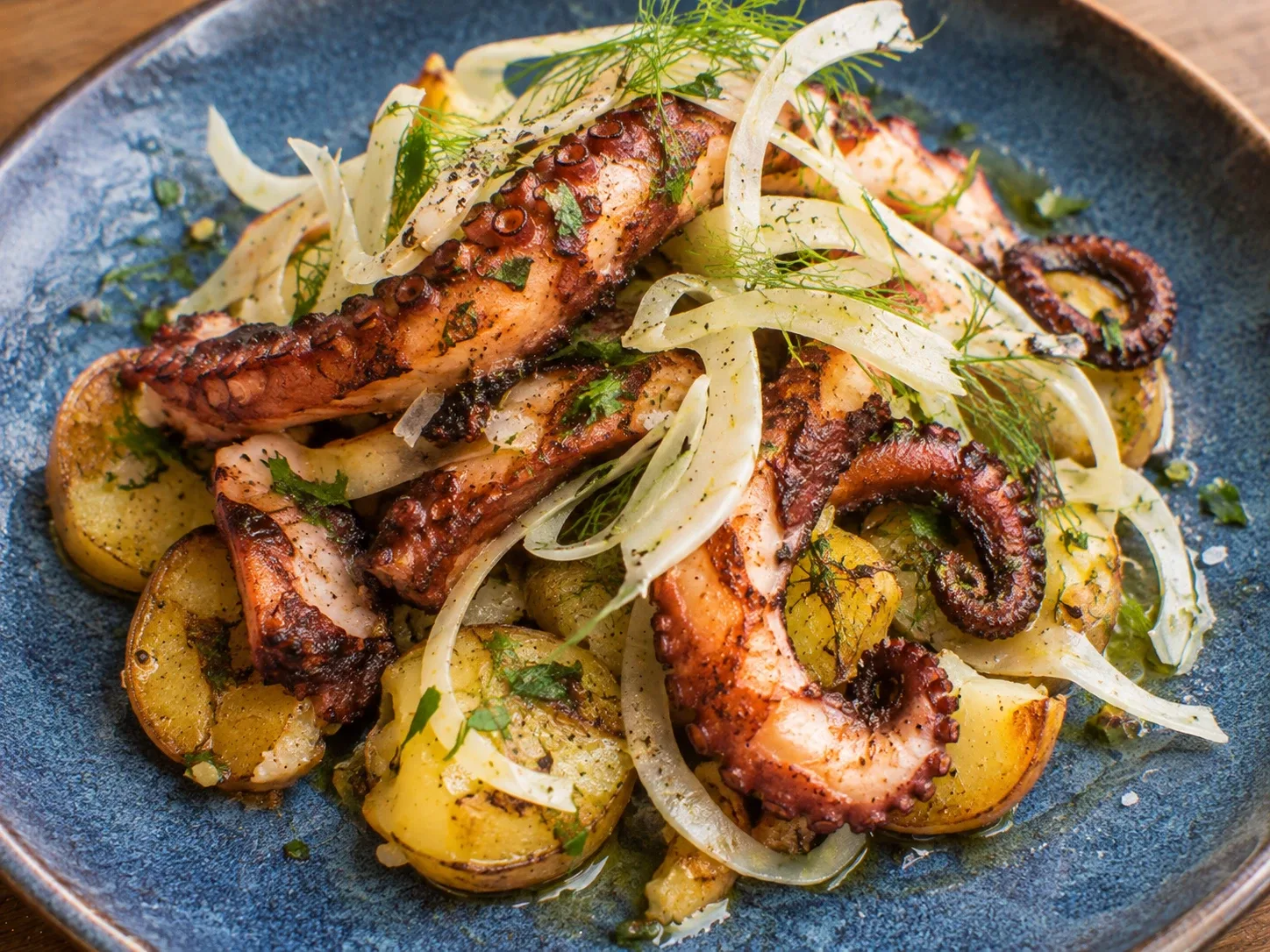
Three Mediterranean Octopus Recipes
Octopus Library: Three Mediterranean Treatments
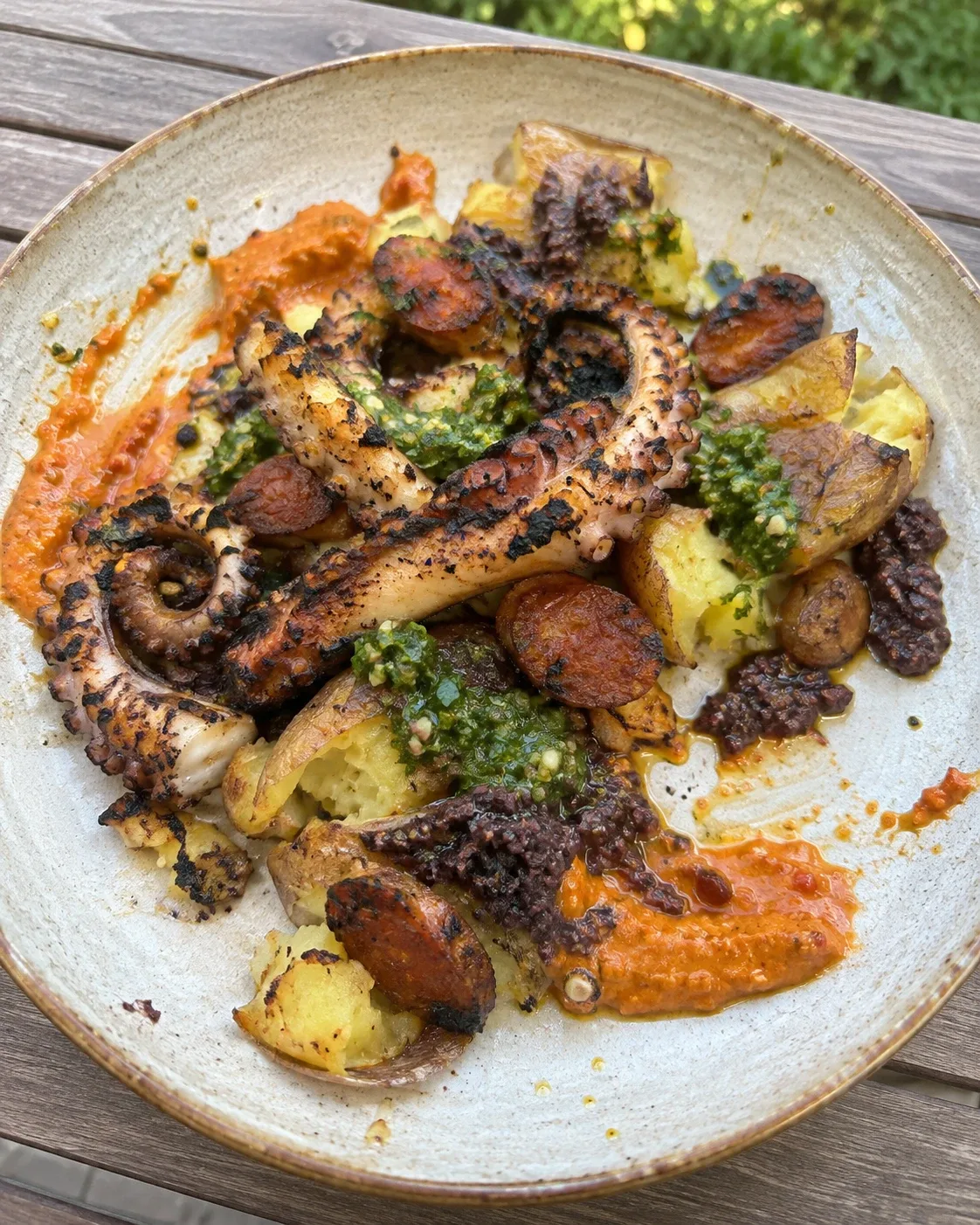
One foolproof way to cook tender octopus, then three ways to serve it: Sicilian-style pickled over potatoes, a bright ceviche with cucumber and chiles, and a charred octopus salad with shaved fennel. All three are even better made a day ahead.
Yield: Serves 4 per treatment · Active: 20–30 min per treatment · Total: About 1 hr 15 min for the octopus, plus 30 min to overnight marinating · Season: Best in the Mediterranean in summer, when cucumbers, chiles, and fresh herbs are at their peak · Best eaten: Midday
Ingredients
Master Octopus (“Scare” Method)
Makes about 1½ lb cooked octopus, enough for one treatment with a little extra. Cook two if you’re making more than one.
- 1 whole octopus (about 2½ lb; Spanish, Greek, or Pacific), cleaned, or 4 large precooked octopus tentacles
- 1 large onion, peeled and quartered
- 1 large carrot, halved
- 2 bay leaves
- 1 tsp black peppercorns
- Sea salt
Treatment 1 · Pickled Octopus with Potatoes, Parsley, and Lemon
- 1 lb cooked octopus (from the master method)
- 3 medium Yukon gold potatoes
- Sea salt
For the marinade
- ½ cup cold-pressed extra virgin olive oil
- ¼ cup white wine vinegar
- Juice of 1 lemon
- 2 garlic cloves, thinly sliced
- ½ cup fresh flat-leaf parsley, finely chopped, plus more to serve
- ½ tsp red pepper flakes (optional)
- Sea salt and freshly cracked black pepper
Treatment 2 · Octopus Ceviche with Cucumber and Chiles
- 1 lb cooked octopus (from the master method), diced
- 1 large English cucumber, finely diced
- ½ small red onion, finely diced
- 1 Fresno chile, finely diced (seeds removed for less heat)
- 1 small serrano pepper, finely minced
- ¼ cup fresh cilantro, finely chopped
- ⅓ cup fresh lemon juice (or lime juice)
- ¼ cup cold-pressed extra virgin olive oil
- 1 tsp sea salt
- Freshly cracked black pepper
To garnish
- Sliced avocado
- Cassava chips
- Lime wedges
Method
Master Octopus (“Scare” Method)
- Build the pot. Bring a large pot of water to a boil with the onion, carrot, bay leaves, peppercorns, and a generous pinch of salt.
- “Scare” the octopus. Holding it by the head, dip the octopus into the boiling water for 5 seconds, then lift it out. Repeat 3 times; the tentacles will curl. On the fourth dip, leave it in.
- Simmer. Lower the heat and simmer 45–60 minutes, until the tip of a knife slides easily into the thickest tentacle.
- Cool. Let it cool in the cooking liquid, then drain and pat dry. Frozen, pre-cleaned octopus works beautifully here (freezing helps tenderize it), and precooked tentacles from a good Italian or Greek market are a great shortcut; just skip to your treatment.
Treatment 1 · Pickled Octopus with Potatoes, Parsley, and Lemon
- Cook the potatoes. Simmer the potatoes in salted water 20–25 minutes, until fork-tender. Cool, peel, and slice into rounds.
- Make the marinade. Whisk the olive oil, vinegar, lemon juice, garlic, parsley, red pepper flakes, salt, and pepper.
- Marinate. Slice the octopus into bite-size pieces and toss with the marinade in a glass bowl. Refrigerate at least 2 hours, ideally overnight.
- Serve. Arrange the potatoes on a platter and top with the octopus. Drizzle with extra marinade and scatter with more parsley. Serve cold or at room temperature.
Treatment 2 · Octopus Ceviche with Cucumber and Chiles
- Combine. In a glass or stainless steel bowl, combine the octopus, cucumber, red onion, Fresno chile, serrano, and cilantro.
- Dress. Pour over the lemon juice and olive oil, add the salt and pepper, and toss gently.
- Chill. Refrigerate at least 30 minutes (up to 2 hours) so the flavors meld. Taste and adjust the salt and acid.
- Serve. Spoon into small glass bowls, top with avocado, and serve chilled with cassava chips and lime wedges.
Treatment 3 · Mediterranean Octopus Salad with Shaved Fennel
Cook your octopus with the master method above, then char it and toss it warm with shaved fennel, red onion, parsley, and a sherry vinegar dressing. The full recipe is here: Mediterranean Octopus Salad with Shaved Fennel.
Storage
- Cooked octopus keeps 3 days in the fridge and is lovely folded into eggs or grain-free flatbread the next day.
- Pickled octopus keeps 4 days in the fridge.
- Ceviche is best within 4 hours.
Season & Circadian Timing
These are warm-weather dishes, built for a Mediterranean summer when cucumbers, chiles, and herbs are at their best, and the ceviche especially is light, cool, and refreshing. Serve them as a light lunch or starter in the middle of the day, when lean protein and bright citrus feel just right.
Nourishment Notes
- Octopus — Lean, complete protein with vitamin B12, selenium, copper, and iron, plus plenty of taurine.
- Cooked and cooled potatoes — Potassium, vitamin C, and B6. Cooling cooked potatoes forms resistant starch, which feeds your gut bacteria.
- Lemon and lime — Vitamin C, which helps you absorb the iron in the meal.
- Extra virgin olive oil — Monounsaturated oleic acid plus polyphenols such as oleocanthal.
- Avocado — Potassium, folate, and monounsaturated fat.
Sourcing
- Octopus — wild-caught, frozen and pre-cleaned (or precooked tentacles), from a fishmonger you trust; check Seafood Watch for the best choices in your area
- Extra virgin olive oil — organic, single-estate, harvest-dated, in dark glass
- White wine vinegar — organic, naturally fermented
- Cassava chips — organic, cooked in avocado, coconut, or olive oil (no seed oils)
- Spices — organic and non-irradiated
- Salt — unrefined sea salt (Baja Gold); flaky sea salt for finishing (Maldon)
- Lemons / limes — organic
- Fruits, vegetables, and herbs — organic, from a farmers’ market or local farm
With Love, Light, and Health,
Anna (aka Food Marshall)
Food Marshall Approved. Grain-free, seed-oil-free and refined-sugar-free, made from organic, local and seasonal ingredients. Our standards
More Seafood
Get new recipes and essays
Seasonal recipes and writing on light, circadian health, and living with nature.
Subscribe on Substack