Veggie Sushi Roll with Cauliflower Rice and Tahini-Ginger Dipping Sauce
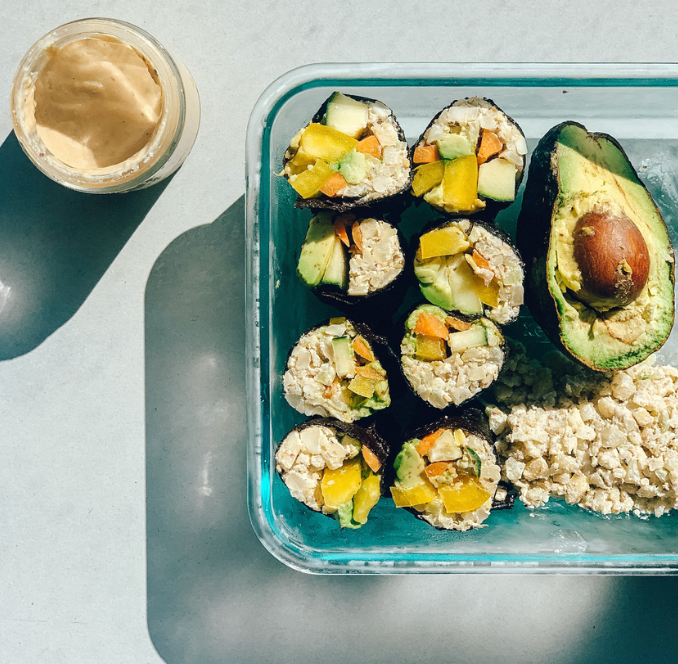
Veggie Sushi Roll with Cauliflower Rice and Tahini-Ginger Dipping Sauce
Grain-free sushi rolls with cauliflower rice replacing white rice — wrapped in raw nori with cucumber, carrot, bell pepper, avocado, and shiitake, served with a silky tahini-ginger-coconut aminos sauce
Makes 4–5 rolls (16–20 pieces)
30 min active · 35 min total
Spring / Summer / Year-Round (peak summer for vegetables)
Midday or early evening
Cuisine: Reimagined Japanese
Ingredients
Sushi rolls
4–5 sheets nori seaweed (un-toasted, raw — Eden Foods or Maine Coast Sea Vegetables)
1 cucumber, julienned
1 medium carrot, julienned
1 bell pepper, julienned
1 ripe avocado, sliced into thin strips
½ cup shiitake mushrooms, marinated in coconut aminos 15 min
1 cup fresh sprouts (sunflower sprouts, pea shoots, or microgreens)
Cauliflower rice
1 cup cauliflower rice, lightly steamed or pulsed raw
1 tbsp raw stone-ground tahini
2 tbsp coconut aminos
1 tbsp coconut vinegar (or rice vinegar, ume plum vinegar)
1 tbsp fresh ginger, grated
1 tbsp toasted sesame seeds (white, black, or mixed)
Tahini-ginger dipping sauce
¼ cup coconut aminos
2–3 tbsp raw stone-ground tahini
1 tbsp fresh ginger root, grated
1–2 tbsp coconut vinegar
juice of 1 lemon
filtered water as needed for consistency
Method
Cauliflower rice. Steam cauliflower rice 3–4 minutes (or use raw for fully-raw version). Transfer to a bowl. Stir in tahini, coconut aminos, coconut vinegar, grated ginger, and sesame seeds. Set aside.
Dipping sauce. Whisk together all sauce ingredients until smooth. Add water 1 tbsp at a time for desired consistency. Set aside.
Assemble rolls. Place a sheet of nori (shiny side down) on a bamboo mat or flat cutting board. Spread cauliflower rice across half the sheet (closest to you), leaving 1 inch at the end farther from you.
Layer julienned vegetables, avocado strips, marinated shiitake, and sprouts in a tidy line across the rice.
Using the bamboo mat (or your hands), tightly roll from the rice end, tucking the filling and sealing with a small dab of water at the far end.
Slice each roll into 4–6 pieces with a sharp wet knife.
Repeat with remaining nori sheets and filling.
Serve immediately with tahini-ginger sauce.
ENHANCEMENT SUGGESTIONS — make this irresistible
Cauliflower rice with vinegar — proper Japanese seasoning. Instead of just coconut vinegar, season cauliflower rice with a structured sushi-zu (sushi vinegar): 2 tbsp coconut vinegar + 1 tbsp coconut sugar + ½ tsp sea salt + 1 tsp toasted sesame oil. Heat briefly to dissolve, mix into rice while warm. The structural authenticity step.
Fresh wasabi or wasabi root. Grate fresh wasabi root (available at high-end sushi suppliers or some Asian groceries) directly onto each piece. Dramatic flavor difference from tube wasabi.
Pickled ginger (gari). Quick-pickle thinly sliced young ginger in coconut vinegar + a pinch of pink salt + small amount of beetroot powder for pink color. Authentic palate cleanser between bites.
Smoked salmon or sashimi-grade tuna. Add a piece of smoked salmon or thinly sliced sashimi-grade tuna into the roll. Transforms from "veggie" to a complete meal — and the wild-caught salmon adds protein and omega-3s.
Mango-avocado Hawaiian-style filling. Replace bell pepper with thin slices of mango. Tropical-Hawaiian flavor profile that's restaurant-caliber.
Spicy tahini sauce variant. Add 1 tsp sriracha (or homemade chili paste) and 1 tbsp toasted sesame oil to the tahini sauce. Spicy "spicy-mayo" style without the industrial mayo.
Toasted sesame oil drizzle on rice. Add 1 tsp toasted sesame oil to the cauliflower rice mixture. Adds the structural Asian-toasted-oil note that distinguishes restaurant from home-cooked sushi.
Toast the nori briefly over a flame. Pass each nori sheet over a low flame 2 seconds per side until just fragrant — restaurant trick that intensifies the flavor.
Inside-out roll (uramaki) format. Cover the bamboo mat with plastic wrap, place nori on top, spread rice across the entire nori, flip nori-up, add fillings, and roll. Rice-on-outside, sesame-coated. Restaurant presentation that's surprisingly easy.
Cucumber spirals as wrapper alternative. Use thin strips of cucumber in place of nori for half the rolls — adds visual variety and texture contrast on the platter.
Sourcing: Raw nori seaweed: Eden Foods or Maine Coast Sea Vegetables (raw, unprocessed nori — nutritionally and structurally superior to roasted commodity sushi nori). Cauliflower from local farmers' market or CSA share. Cucumber, carrots, bell pepper, avocado — local farmers' market at peak. Shiitake mushrooms: Far West Fungi (small CA growers) or local mushroom forager / farmers' market mycology vendor. Raw stone-ground tahini: Soom (Israeli small-batch, single-origin Ethiopian sesame) or Seed + Mill (Brooklyn small-batch). Coconut aminos: Coconut Secret. Coconut vinegar: Coconut Secret or Big Tree Farms. Fresh ginger from local Asian market or Hawaiian-grown organic ginger from Real Goods Ginger. Toasted sesame oil: Eden Foods or Kadoya (Japanese small-batch). Sesame seeds: small specialty importer like Burlap & Barrel or Kevala (genuinely high-quality). Lemons from local farmers' market. Sprouts from local farmers' market or grown at home (sprouting at home is one of the easiest fresh-greens projects). For enhancement: sashimi-grade fish from a specialty Japanese fishmonger or Catalina Offshore Products.