Rainbow Mineral Salad with Wakame and Tahini Dressing
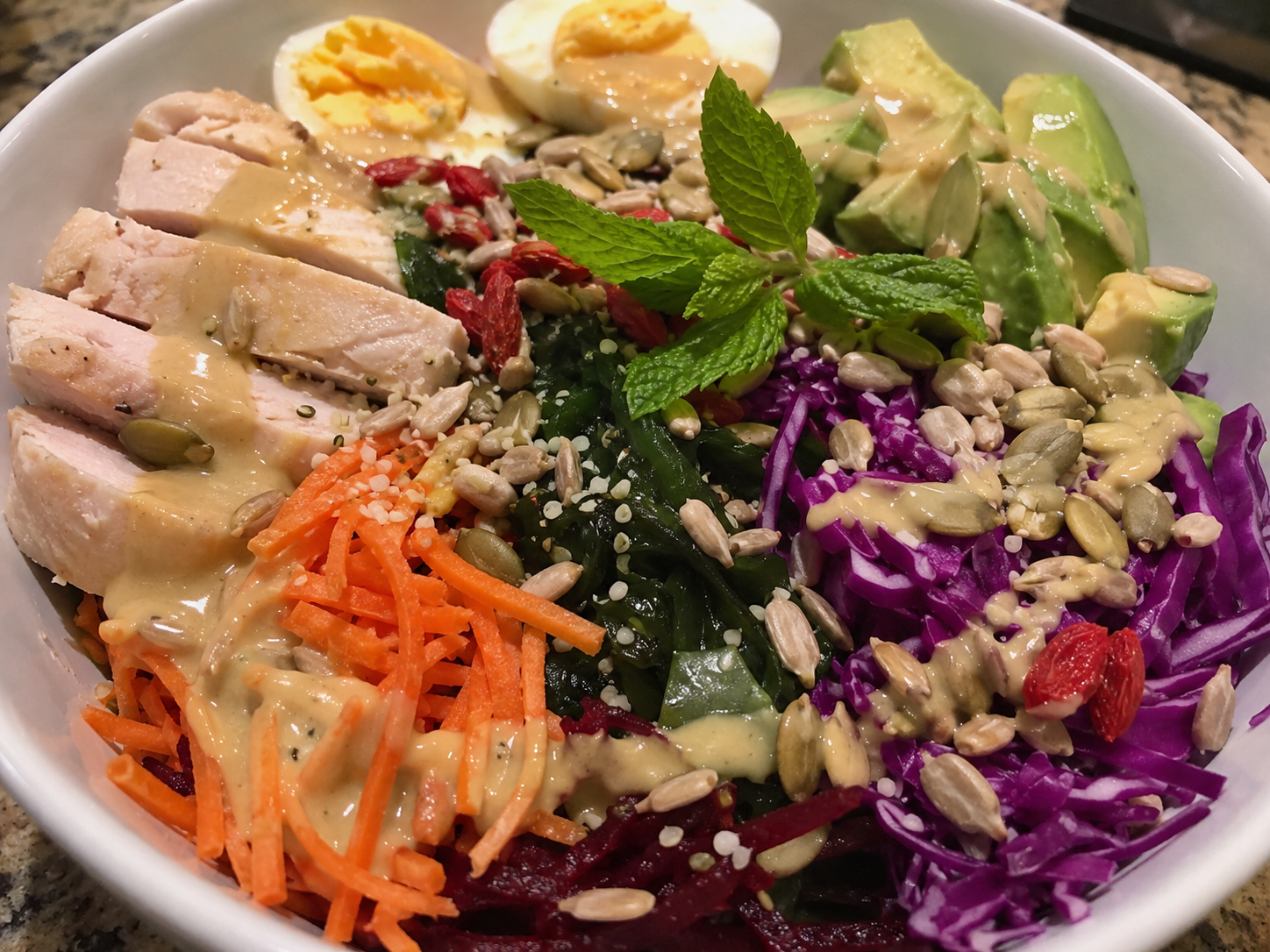
A mineral-restoring bowl built on sea vegetables, raw root crops, and seeds.
Yield: Serves 2
Active: 25 min · Total: 40 min
Ingredients
Salad
1 cup dried wakame seaweed
½ head purple cabbage, thinly chopped
2 medium beets, peeled and shredded
2 large carrots, peeled and shredded
1 apple, finely chopped (optional)
½ cup unsweetened goji berries or raisins (optional)
¼ cup hemp seeds
¼ cup raw (and preferably sprouted) sunflower seeds
¼ cup raw (and preferably sprouted) pumpkin seeds
1 handful fresh mint, finely chopped
1 ripe avocado, sliced
Protein suggestions: pasture-raised hard-boiled eggs, filets of oven baked wild-caught salmon, pan-seared chicken breasts, or gently steamed wild-caught shrimp
Wakame Marinade
2 tbsp coconut aminos
2 tbsp toasted sesame oil
1 tbsp fresh ginger, grated and minced
Sea salt and black pepper
Tahini Dressing
⅓ cup raw tahini (or 1 cup raw cashews, soaked 30 minutes and drained)
¼ cup extra virgin olive oil
2 tbsp raw apple cider vinegar
Juice of 1 lemon
1 garlic clove, minced
⅓ cup filtered water (to thin)
Sea salt, to taste
Golden Tahini Variation: ½ tsp turmeric powder
Green Tahini Variation: ¼ cup fresh cilantro
Method
1. Soak the wakame. In a small bowl, cover the dried wakame with cool filtered water and soak for 30 minutes. Strain, rinse, and gently squeeze out excess water.
2. Marinate the seaweed. In a small bowl, toss the soaked wakame with the coconut aminos, grated ginger, toasted sesame oil, sea salt, and black pepper. Let marinate for 10 minutes while you prep the vegetables. 3. Shred the root vegetables. In a food processor, pulse the peeled beet chunks for 5–10 seconds until shredded into tiny bits — don't over-process or you'll have a purée. Transfer to a large bowl. Repeat with the carrots.
4. Chop the cabbage. Finely slice the purple cabbage into ribbons or shreds. Add to the bowl with the beets and carrots.
5. Assemble the salad. Add the marinated wakame, optional chopped apple, optional goji berries or raisins, hemp seeds, sunflower seeds, pumpkin seeds, and fresh mint to the bowl. Toss thoroughly to combine. Season with sea salt and black pepper to taste.
6. Make the dressing. In a high-speed blender, combine the tahini (or soaked cashews), olive oil, apple cider vinegar, lemon juice, minced garlic, filtered water, and sea salt. Blend until completely smooth and pourable. Add a little more water if needed to reach drizzling consistency. (For the Golden variation, add ½ tsp turmeric powder. For the Green variation, add ¼ cup fresh cilantro.) 7. Plate and serve. Divide the salad among plates or wide shallow bowls. Drizzle generously with dressing. Top with sliced avocado and your protein of choice. Serve with lemon or lime wedges alongside.
Nourishment Notes: Why this salad
Wakame is a brown sea vegetable that delivers significant iodine — the trace mineral most modern diets fall short on, and a critical cofactor for thyroid hormone production — alongside calcium, magnesium, and the unique sulfated polysaccharides of marine algae studied for their anti-inflammatory effects. Sea vegetables have been a continuous part of Japanese, Korean, Irish, and coastal Mediterranean cooking for thousands of years; the iodine concentration in wakame is essentially impossible to replicate from land plants. A modern diet built around grain and grain-fed animal foods runs chronically low in iodine, and a regular practice of seaweed eating restores what those traditional cultures took for granted.
Beets contain betalains — pigments that support the body's nitric oxide production, vascular function, and phase-two liver detoxification — alongside folate, manganese, and dietary nitrates that the body converts to nitric oxide for vasodilation. Purple cabbage delivers anthocyanins and cruciferous glucosinolates, which the heat-sensitive enzyme myrosinase converts to sulforaphane during chewing — preserved here by the raw preparation. Hemp seeds contribute complete plant protein with all essential amino acids and a balanced omega-3 to omega-6 ratio; sunflower seeds add vitamin E, magnesium, and selenium. Tahini, made from ground sesame seeds, delivers calcium, magnesium, copper, and the lignans sesamin and sesamolin. Pasture-raised hard-boiled eggs, when used, layer in fat-soluble vitamins, choline, and complete protein. Avocado's monounsaturated fat ensures absorption of all the fat-soluble carotenoids in the bowl.
As a circadian food, this salad lands cleanly at midday — when raw vegetable digestion is most efficient and the body's metabolic capacity is at its peak. The combination of iodine, raw greens, root vegetable polyphenols, and seed-based fats makes it particularly supportive after travel, illness, or hormonal shifts — the kind of meal that quietly restores what gets depleted by modern life. Eaten too late in the evening, raw vegetables and the dense fiber load digest less cleanly; midday or early afternoon is the proper window.
Sourcing
Wakame seaweed. Eden Foods (organic, Japanese-sourced), Maine Coast Sea Vegetables (sustainably harvested Atlantic wakame), or Japanese/Korean grocery markets. Look for "wakame" specifically — not "seaweed mix." Dried wakame keeps in a sealed jar for 1 year.
Beets. Look for firm beets with smooth skin and (ideally) the leafy tops still attached — fresh greens signal recently-harvested beets. Save the greens to sauté separately. From a farmers' market or organic produce section.
Carrots. Rainbow carrots (purple, yellow, white, orange) add beautiful color to the salad. From a farmers' market or organic produce section.
Purple cabbage. Should be firm and tightly compact. From a farmers' market or organic produce section.
Apple. In season (autumn through winter), look for crisp heritage varieties — Honeycrisp, Pink Lady, or Granny Smith for tartness. The apple is genuinely optional — skip it if not in peak season.
Hemp seeds. Single-ingredient hemp hearts (raw, hulled). Manitoba Harvest, Nutiva, or Anthony's Goods.
Raw sprouted sunflower seeds and pumpkin seeds. Look for sprouted varieties (Go Raw, Living Intentions, One Degree Organic Foods) which are more bioavailable and digestible than non-sprouted. If unavailable, raw unsprouted is fine.
Raw tahini. Single-ingredient stone-ground tahini from sesame seeds. Soom, Seed + Mill, or Whole Foods 365. Should be smooth, runny, and slightly bitter — never pasty or off-tasting.
Goji berries or raisins (optional). Look for organic, unsweetened. Goji berries deliver carotenoids and trace minerals; Sun-dried raisins (without added sugar or oil) work as a substitute.
Coconut aminos. Coconut Secret raw coconut aminos. Soy-free, lower-sodium alternative to soy sauce.
Toasted sesame oil. A small amount goes a long way — this is a finishing oil, not a cooking oil. Look for pure toasted sesame oil from a quality brand (Kadoya, Eden Foods organic, or specialty Asian grocer).
Raw apple cider vinegar. With the mother — Bragg's is the benchmark. The probiotic culture signals the vinegar is alive and unpasteurized.
Extra-virgin olive oil. Single-estate (one farm, one variety, one harvest), harvest-dated within the last 12 months, in a dark glass bottle.
Fresh ginger and garlic. From a farmers' market or organic produce section. Should be firm with no soft spots.
Fresh mint and cilantro. From a windowsill pot or farmers' market for the freshest flavor.
Avocado. Should yield slightly to gentle pressure but not be mushy. Hass avocados are the most reliable; Fuerte or Bacon varieties work too.
Sea salt. Baja Gold mineral sea salt or any unrefined mineral-rich sea salt.
Variations
Spicier version: Add a thinly sliced jalapeño or 1 tsp gochugaru (Korean chili flakes) to the wakame marinade for a kick.
With crispy chickpeas or roasted nuts: Top with ½ cup oven-roasted chickpeas tossed in olive oil and sea salt, or ⅓ cup toasted slivered almonds for extra crunch.
With ginger-pickled radishes: Add ½ cup thinly sliced radishes quick-pickled in rice vinegar with grated ginger and a pinch of salt for a bright crunchy element.
With nori strips: Garnish each bowl with strips of toasted nori for additional iodine and visual drama.
With kimchi or sauerkraut: Add 2 tbsp homemade or quality kimchi to each bowl for additional probiotic depth.
Massaged kale base: Massage 2 cups dinosaur kale with extra virgin olive oil and salt) for a heartier green base.
Without sesame (for sensitivities): Substitute the tahini with raw cashew butter or sunflower seed butter. Skip the toasted sesame oil and use additional olive oil in the marinade.
As a wrap or roll: Wrap the salad mixture in large butter lettuce leaves or nori sheets for handheld snacks.
Storage
Assembled salad: Best eaten within 1 day of assembly — the vegetables continue to weep moisture and the seaweed softens. The texture is freshest within the first 4 hours.
Prepped components (separate): Refrigerated up to 2 days, sealed. Combine just before serving.
Tahini dressing: Refrigerated up to 5 days in a sealed glass jar. Whisk before using — the oil and tahini may separate.
Marinated wakame: Refrigerated up to 3 days, sealed.
Pairs Well With
A small cup of bone broth or miso soup alongside for warming complement to the raw vegetables.