Butternut Squash Soup with Caramelized Pumpkin Seeds and Toasted Coconut
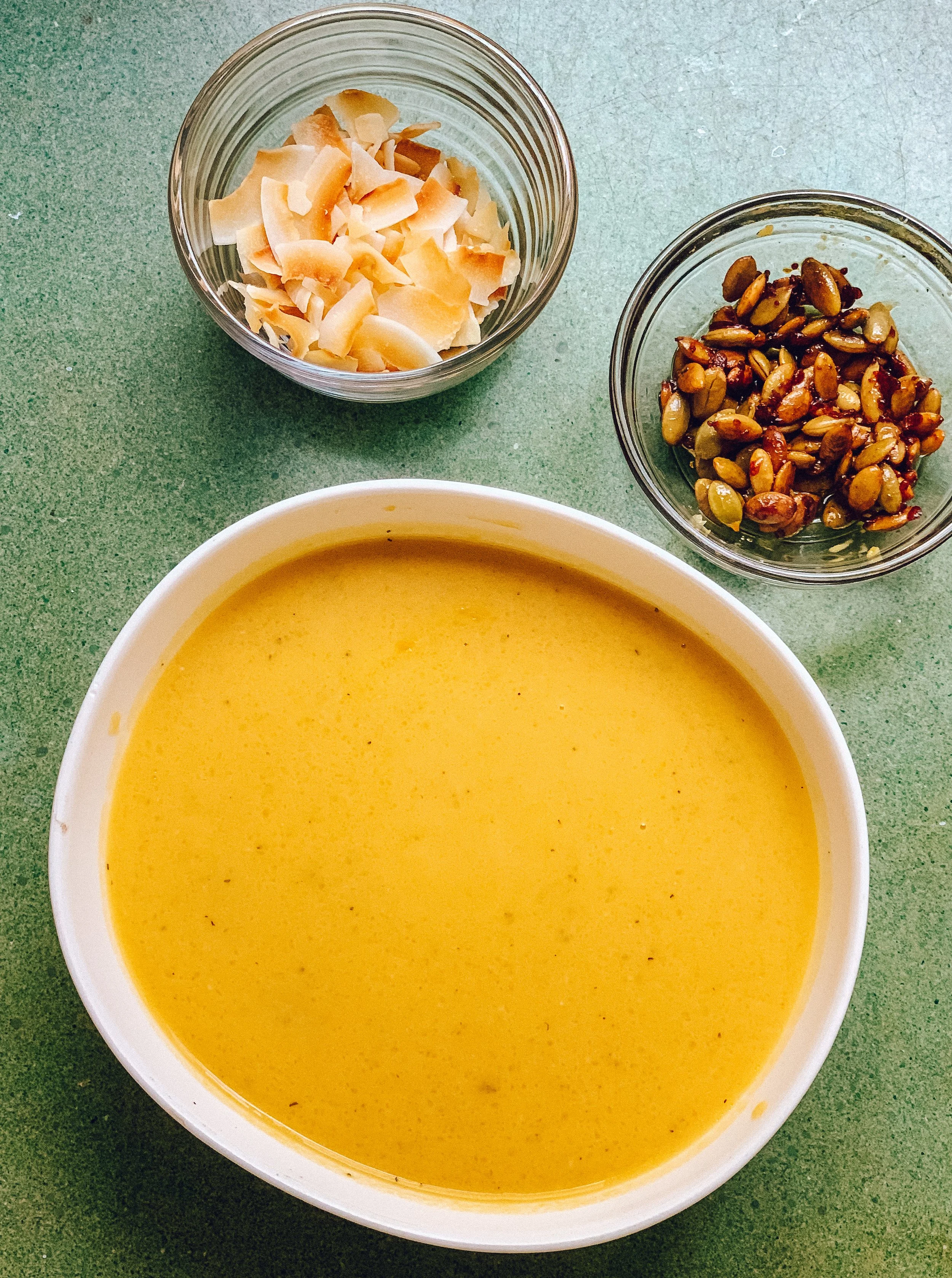
A silky soup of roasted butternut squash, thyme, and cream, topped with sweet-salty caramelized pumpkin seeds, toasted coconut, and a swirl of cream.
Yield: Serves 6 · Active: 35 min · Total: 1 hour · September through January, when butternut squash is harvested and stored from farms across New England, the Midwest, and California · Cuisine: American, French country · Best eaten: as a fall or winter starter, or a hearty lunch
It’s a wonderful make-ahead soup that’s even better the next day, so make it Saturday for Sunday lunch, or double it for a week of lunches. It’s also a lovely first course for Thanksgiving.
Why roast the squash? Roasting caramelizes the squash and builds a deeper, richer flavor than simmering raw cubes in broth. If you’re short on time, simmering works, but the roasted version is worth the extra 25 minutes.
Planning the whole feast? See my Thanksgiving Centerpiece Turkey with Mushroom Gravy and Spiced Cranberry Sauce.
Ingredients
Soup
1 large butternut squash (about 3 lbs), peeled, seeded, and cubed
2 tbsp extra virgin olive oil, for roasting
2 tbsp grass-fed butter or extra virgin olive oil
1 large yellow onion, chopped
2 garlic cloves, minced
4 cups chicken bone broth
1 cup grass-fed heavy cream, cultured buttermilk, or coconut cream
1 tbsp fresh thyme leaves
1 tsp Baja Gold sea salt, plus more to taste, and black pepper
Optional: ¼ tsp freshly grated nutmeg and ½ tsp Ceylon cinnamon
Caramelized pumpkin seeds
½ cup pumpkin seeds (pepitas)
1 tbsp coconut oil or grass-fed butter
1 tbsp maple syrup (or coconut sugar)
¼ tsp Baja Gold sea salt
Optional: a pinch of cinnamon
Toasted coconut chips
½ cup unsweetened coconut chips (large flakes)
Garnish
Fresh thyme sprigs, a drizzle of cream, and black pepper
Swaps:
Squash: Kabocha is the sweetest, red kuri tastes like chestnuts, and sugar pumpkin is the most classically “pumpkin.”
Dairy-free: Use olive oil and coconut cream.
Broth: Use a rich vegetable broth instead of chicken broth, if you prefer.
Method
Roast the squash. Heat the oven to 400°F. Toss the cubed squash with the olive oil, salt, and pepper, and roast in a single layer for 25–30 minutes, until tender and caramelized at the edges. (Or halve the squash, roast it cut-side down for 45 minutes, and scoop out the flesh.)
Soften the aromatics. Melt the butter in a large pot over medium heat. Add the onion, and cook 5–7 minutes, until soft. Add the garlic, and cook 1 minute.
Simmer. Add the roasted squash and broth, and bring to a simmer for 5 minutes. (Short on time? Add raw cubed squash instead, and simmer 20 minutes, until completely tender.)
Blend. Blend with an immersion blender (or in batches in a regular blender) until completely silky.
Finish off the heat. Take the pot off the heat. Stir in the cream or buttermilk, thyme, and the nutmeg and cinnamon (if using). Taste, and add more salt and pepper. Stirring the cream in off the heat keeps it from curdling, and it keeps buttermilk’s live cultures intact.
Caramelize the pumpkin seeds. Melt the coconut oil in a small skillet over medium heat. Add the pumpkin seeds, and toast 3 minutes, stirring, until they start to puff and pop. Add the maple syrup, salt, and cinnamon (if using), and toss constantly for 1–2 minutes, until glossy and lightly caramelized. Spread them on parchment to cool and crisp.
Toast the coconut. Toast the coconut chips in a dry skillet over medium-low heat for 3–4 minutes, stirring constantly, until golden. Watch closely, since they burn quickly.
Serve. Ladle the soup into bowls, and top with the pumpkin seeds, coconut chips, fresh thyme, a drizzle of cream, and black pepper.
Storage
Soup: refrigerated up to 5 days, or frozen up to 3 months (freeze it before adding the cream or buttermilk, if you can, and stir it in when you reheat). Reheat gently, without boiling.
Caramelized pumpkin seeds: airtight at room temperature, up to 1 week. They’re delicious on salads, yogurt, and roasted vegetables, too.
Toasted coconut chips: airtight, up to 2 weeks.
For a crowd: For 12 or more, double the recipe.
Nourishment Notes
Butternut squash — one of the richest sources of beta-carotene, plus potassium, vitamin C, manganese, and steady, warming carbohydrates. Your body turns beta-carotene into vitamin A, and how efficiently it does so varies from person to person, thanks to genetic differences in the converting enzyme (BCMO1). Cooking the squash and eating it with fat, like the butter, cream, and coconut here, helps you absorb much more of it.
Cream or buttermilk — grass-fed cream brings butyrate and vitamins A, D, E, and K2. Traditional buttermilk is the tangy liquid left after churning butter, while most buttermilk sold today is cultured milk; both bring calcium and live cultures, as long as they aren’t boiled.
Coconut cream and chips — lauric acid and fiber, plus a toasty sweetness.
Pumpkin seeds — zinc (a quarter cup has about 20% of your daily zinc, a mineral many people run low on), plus magnesium, manganese, iron, tryptophan, and plant protein.
Chicken bone broth — glycine, proline, and gelatin, which support the gut lining.
Fresh thyme — thymol, the same naturally antimicrobial compound used in some mouthwashes, traditionally used to support breathing and digestion.
Cinnamon and nutmeg — warming spices with polyphenols, paired with squash in European, Middle Eastern, and Indian cooking alike.
As a seasonal food, this is fall and winter comfort at its best: warm, silky, and grounding, with steady carbohydrates, healthy fats, and plenty of carotenoids for the darker months. Enjoy it as a starter, or as a satisfying lunch with grain-free crackers or bread.
For your cycle: Warm, steadying, and rich in zinc and magnesium from the pumpkin seeds, this soup is especially comforting in the luteal phase and during your period.
Sourcing
Butternut squash, onion, garlic, and thyme — organic, from a farmers’ market
Bone broth — homemade (see my Broths 101), or Bonafide Provisions or Kettle & Fire
Grass-fed butter and heavy cream — organic, from 100% grass-fed cows, like Organic Valley Grassmilk
Buttermilk (optional) — cultured, from a local dairy, or Kalona SuperNatural (find raw options through realmilk.com)
Coconut cream — organic and full-fat, with no gums, like Native Forest Simple
Pumpkin seeds — organic, ideally sprouted, from a source like Go Raw or Living Intentions
Coconut chips — organic, unsweetened, and sulfite-free
Maple syrup — organic Grade A dark
Spices — organic and non-irradiated Ceylon cinnamon and whole nutmeg
Extra virgin olive oil — organic, single-estate, harvest-dated, in dark glass
Salt — Baja Gold sea salt
— Anna aka Food Marshall