CHICKEN LIVER PATÉ
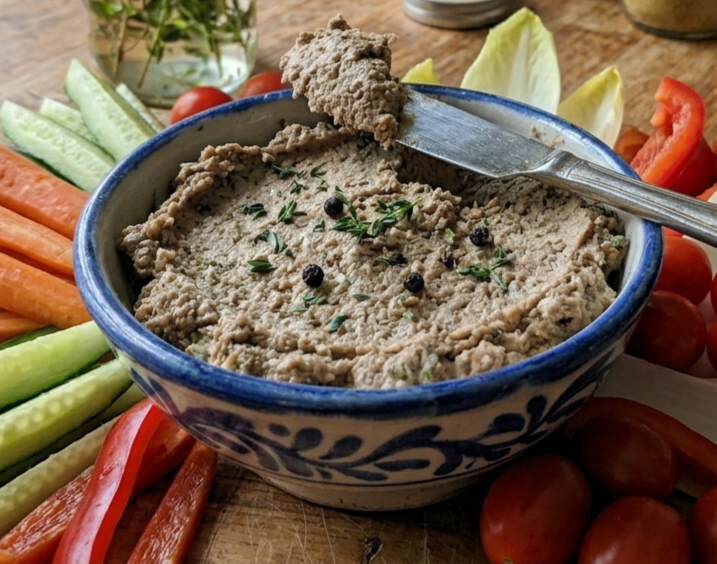
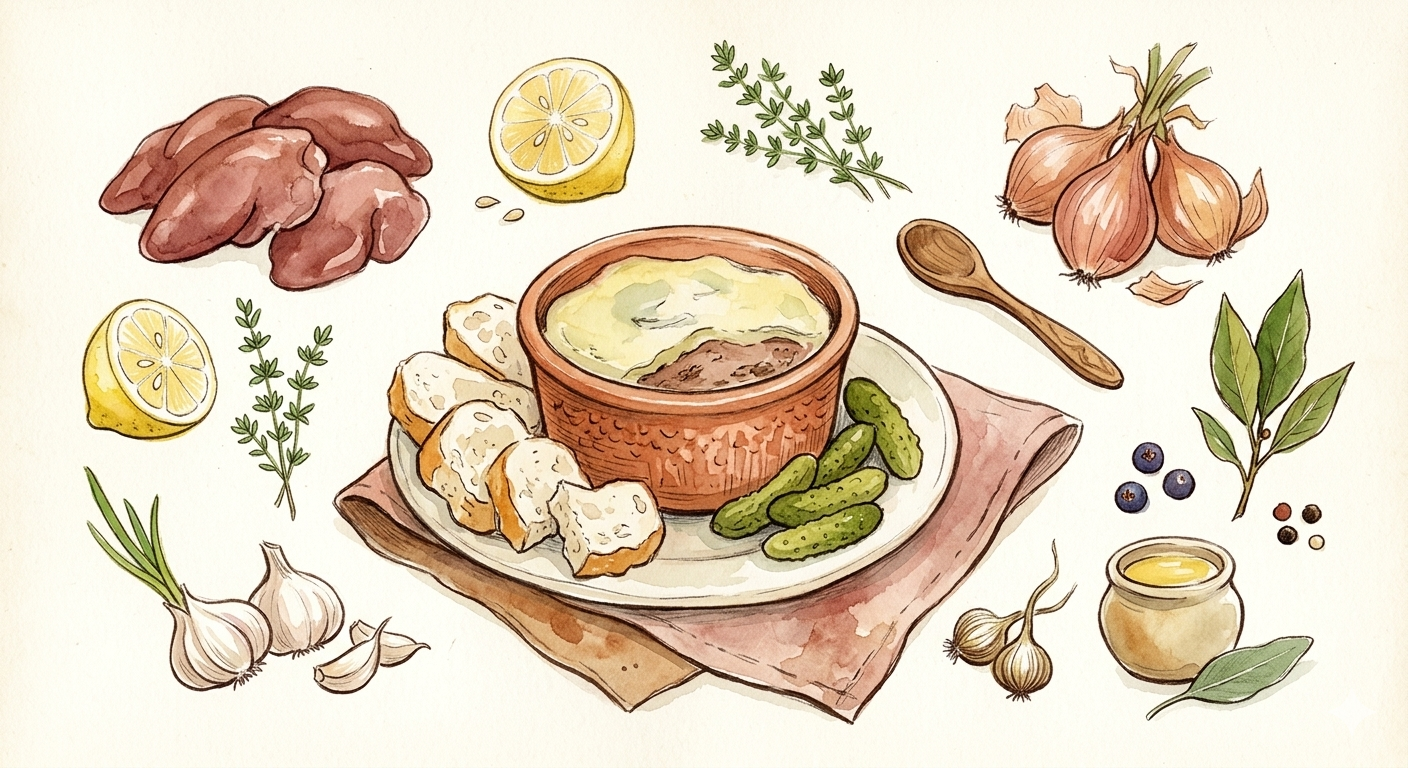
A French country classic for the dark months — three herb directions, one definitive method.
Season: Autumn · Winter
Cuisine: French · Heritage
Yield: 8–12 as an appetizer
Active: 25 min · Total: 6 hr 30 min (incl. 2 hr soak + 4 hr set)
Best eaten: late afternoon, or as a starter before dinner
INGREDIENTS
Base
1 lb pasture-raised chicken livers, rinsed
1 cup whole raw milk or cream, for soaking (or lemon juice if dairy-free)
4 tbsp grass-fed butter, divided
1 medium yellow onion, finely chopped (or 2 shallots)
2 garlic cloves, minced
½ cup mushrooms, finely chopped (optional — adds depth)
2 tbsp dry white wine, vermouth, cognac, or port
4 oz softened grass-fed butter, for finishing
2 tsp Dijon mustard
1 tbsp fresh lemon juice
Sea salt and black pepper, to taste
Choose a flavor direction
Classic French herb (year-round): 1 tbsp fresh thyme leaves, ½ tsp dried rosemary, ¼ tsp dried dill
Thanksgiving / autumn: ½ apple, peeled and sliced; 1 tsp each fresh sage, thyme, and rosemary
Savory peppercorn: 2 tbsp green or black peppercorns, divided; 1 bay leaf; 1 tbsp fresh thyme
To serve
Endive leaves, grain-free crackers, or cucumber rounds
Diced red bell pepper and capers, for garnish
Optional: ½ cup unsweetened seasonal berries
METHOD
Soak the livers in milk, cream, or lemon juice in the refrigerator for 2 hours. This mellows the iron-forward flavor and softens any metallic notes. Drain well.
Sauté the aromatics: melt 2 tbsp butter in a large skillet over medium-high heat. Add the onion (or shallot) and cook 3–4 minutes until soft and translucent. Add garlic and cook 30 seconds until fragrant. Add mushrooms if using and cook 5 minutes until browned.
Cook the livers: add the drained livers, your chosen herbs, and 1 tbsp peppercorns (if using the peppercorn direction). Cook 5–7 minutes, stirring occasionally, until browned outside but still slightly pink inside. If using apple, add it now.
Deglaze with the wine and let it bubble until almost evaporated. Discard the bay leaf if used.
Cool slightly, then transfer everything to a food processor. Add the softened butter, Dijon, lemon juice, salt, and pepper. Process until completely smooth and creamy. Taste and adjust seasoning.
Set: transfer to a crock or terrine, smooth the top, and refrigerate at least 4 hours — ideally overnight — until firm.
Serve on endive leaves, grain-free crackers, or cucumber rounds, garnished with diced red bell pepper, capers, and fresh herbs. Seasonal berries optional on the side.
NOURISHMENT NOTES
Chicken liver is one of the most nutrient-dense foods on earth. A single serving delivers more vitamin A (as preformed retinol), B12, folate, copper, iron, and choline than nearly any vegetable on the table, and in the bioavailable forms the body can use directly. Pasture-raised liver carries higher levels of these fat-soluble vitamins than conventional liver because the bird's exposure to sunlight and green forage builds those compounds into the organ during its life — what the chicken eats and how it lives is concentrated in the liver more than in any other cut.
Grass-fed butter contributes butyrate and vitamin K2, the form that directs calcium into bone rather than soft tissue. The soaking step — in raw milk, cream, or lemon juice — mellows the iron-forward flavor through gentle enzymatic action and makes the paté approachable for new liver-eaters. Cognac, port, or vermouth used to deglaze leaves behind concentrated polyphenols once the alcohol cooks off, deepening the savory backbone of the dish.
As a seasonal food, paté belongs to the cold months. Traditional cuisines from French country kitchens to Eastern European villages have served liver paté through autumn and winter for centuries — exactly when the body most needs the densest concentration of fat-soluble vitamins to weather low-light months. Late afternoon and early evening are the windows when fat-soluble nutrient absorption peaks alongside the day's metabolic shift toward rest. The dish is especially supportive during the luteal phase, postpartum recovery, or any period of low iron or B12 — the kind of nutritional terrain pre-industrial cultures addressed instinctively, before the labels existed.
Storage: refrigerate up to 5 days, with the surface pressed flat against parchment or sealed under a thin layer of clarified butter to prevent oxidation. Flavors deepen overnight and are best from day two onward. Freezes well up to 2 months.