LOMITO CARPACCIO & Steak TARTARE
LOMITO CARPACCIO & TARTARE — THE RAW PREPARATIONS
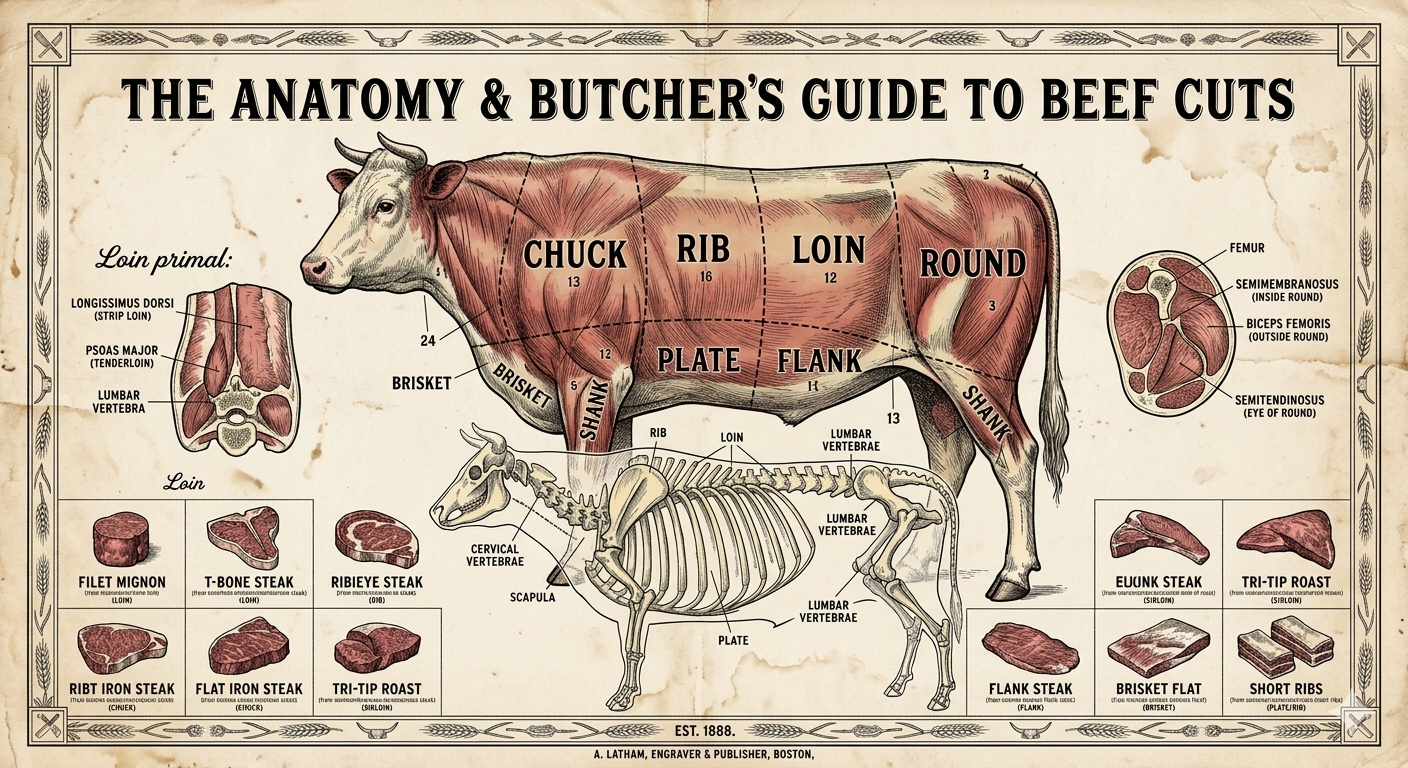
Lomito is the Costa Rican word for tenderloin. The cut's minimal connective tissue makes it ideal for raw preparations — but raw beef requires very fresh, pasture-raised, traceable sourcing.
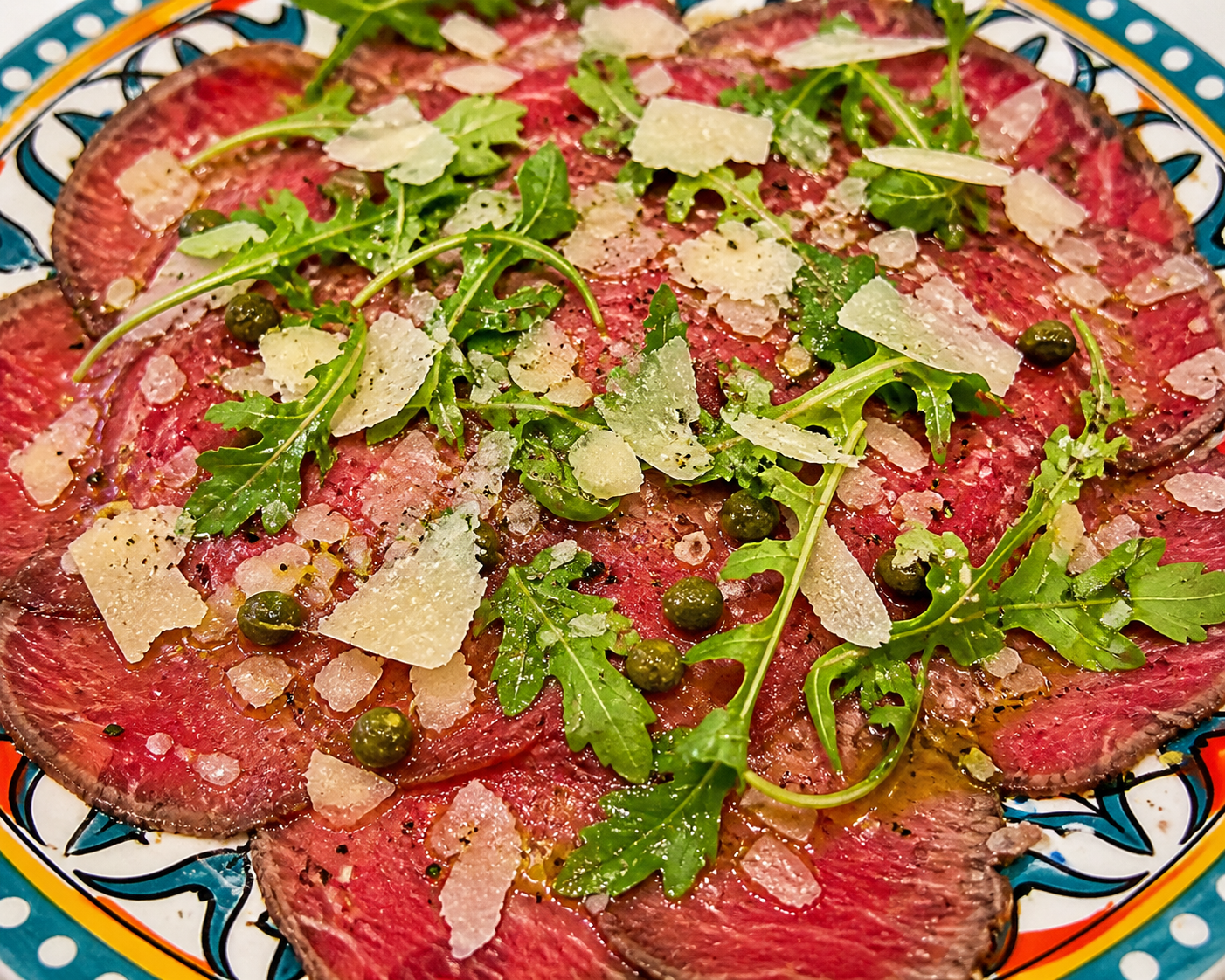
Carpaccio (paper-thin)
12 oz grass-fed tenderloin, very fresh
3 tbsp extra virgin olive oil
Juice and zest of 1 sour mandarin (or 1 lime)
¼ cup shaved Parmigiano-Reggiano or aged Manchego
Fresh parsley, basil, or microgreens
Flaky sea salt, freshly cracked black pepper
Method: freeze tenderloin 30 minutes for clean slicing. Slice paper-thin against the grain. Pound between parchment if needed. Arrange on a chilled plate. Drizzle with olive oil and mandarin juice. Top with zest, shaved cheese, fresh herbs, salt, and pepper. Serve immediately.
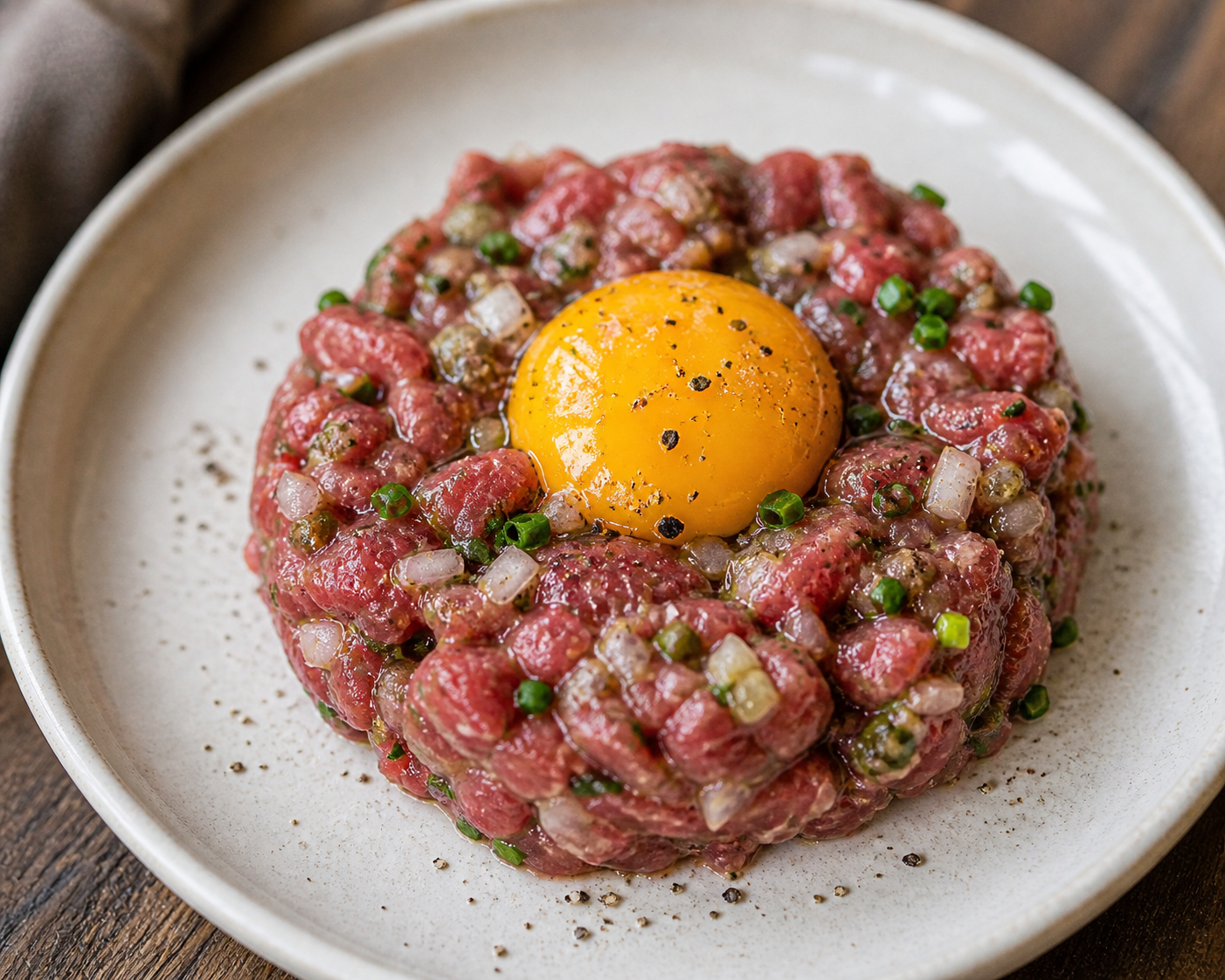
Tartare (knife-cut, with egg yolk)
1 lb grass-fed tenderloin, very finely diced
1 small shallot, finely minced
2 tbsp fresh herbs (parsley, chives, tarragon), finely chopped
1 tbsp Dijon mustard
1 tbsp capers, finely chopped
1 tbsp extra virgin olive oil
4 pasture-raised egg yolks (one per portion)
Sea salt, cracked black pepper
Method: combine tenderloin, shallot, herbs, Dijon, capers, olive oil, salt, and pepper in a chilled bowl. Mix gently. Divide among 4 chilled plates, forming each portion into a mound. Make a well in the center and place a fresh egg yolk in each. Guests mix the yolk into the tartare at the table.
NOURISHMENT NOTES
Beef from pasture is one of the most nutrient-dense foods on the planet, and the difference between grain-finished and grass-finished is structural, not marginal. Grass-finished beef carries roughly two to four times the omega-3 fatty acids, significantly more conjugated linoleic acid, and meaningfully more vitamin K2 — the fat-soluble vitamin that directs calcium into bones and teeth and away from arteries. Heme iron from beef is the most bioavailable form of iron in the human diet, bound inside its porphyrin ring the way chlorophyll binds magnesium, and absorbed at four to six times the rate of plant iron. Tenderloin (lomito, filet mignon) delivers this profile in its leanest, most refined form; ribeye and strip carry more fat-soluble vitamins through their marbling. Bone marrow — historically prized across virtually every traditional culture as a foundational nourishing food — delivers stem cells, glycoproteins, conjugated linoleic acid, B vitamins, and the fat-soluble vitamins concentrated in bone fat.
Each compound butter brings its own functional layer. Black garlic, slowly fermented over 20–40 days, converts harsh allicin into S-allyl cysteine and a cascade of dark Maillard polyphenols — the antioxidant load is higher than raw garlic, the digestive load far lower, and the flavor reorganized from sulfur-sharp to balsamic-sweet. Chimichurri delivers vitamin K, vitamin C, apigenin, and chlorophyll from the fresh herbs; allicin from raw garlic; oleocanthal from olive oil; and the polyphenols of red wine vinegar. Black peppercorns — freshly crushed rather than pre-ground — deliver piperine, which significantly enhances absorption of certain B vitamins and fat-soluble compounds in the meal. Cognac, reduced briefly, leaves behind the polyphenols of long oak aging while most of the alcohol evaporates. Pastured butter brings butyrate, vitamin K2 (specifically MK-4, which animals synthesize from K1 in green grass), and conjugated linoleic acid. Lemon zest carries d-limonene, the dominant terpene in citrus peel, which supports phase-two liver detoxification and pairs naturally with the fat-soluble compounds it sits beside.
As a seasonal food, steak with compound butter lands hardest in cooler months when the body wants saturated fat and dense protein. Pair with a sharp green or a citrus-dressed salad — bitter and acidic notes pull the richness back into balance and support digestion of the fat. Circadian timing matters more than people realize: heavy protein and saturated fat raise core body temperature and stimulate digestion for several hours, and eaten too close to sleep, they push back the body's natural cooling and melatonin curve. A 5–7 p.m. dinner lands well; a 9 p.m. steak does not. Eaten earlier, the body has time to do the metabolic work in daylight, when it is best equipped to handle the load.
Sourcing: for beef, the gold standard is a local rancher you can call by name. Failing that, look for grass-fed and grass-finished (not just grass-fed, which can mean grain-finished), with USDA organic or Animal Welfare Approved certification. White Oak Pastures, Force of Nature, US Wellness Meats ship nationwide. Black garlic is increasingly available at specialty grocers; Korean and Japanese markets often carry the best at the lowest price.
Storage: compound butters keep refrigerated up to 1 week or frozen up to 3 months — slice while frozen straight onto a hot steak. Bone marrow butter is best used within 3 days. Raw preparations (carpaccio, tartare) are not for storage; serve immediately from very fresh meat.