Spring Chicken Salad Platter with Pickled Beet Deviled Eggs
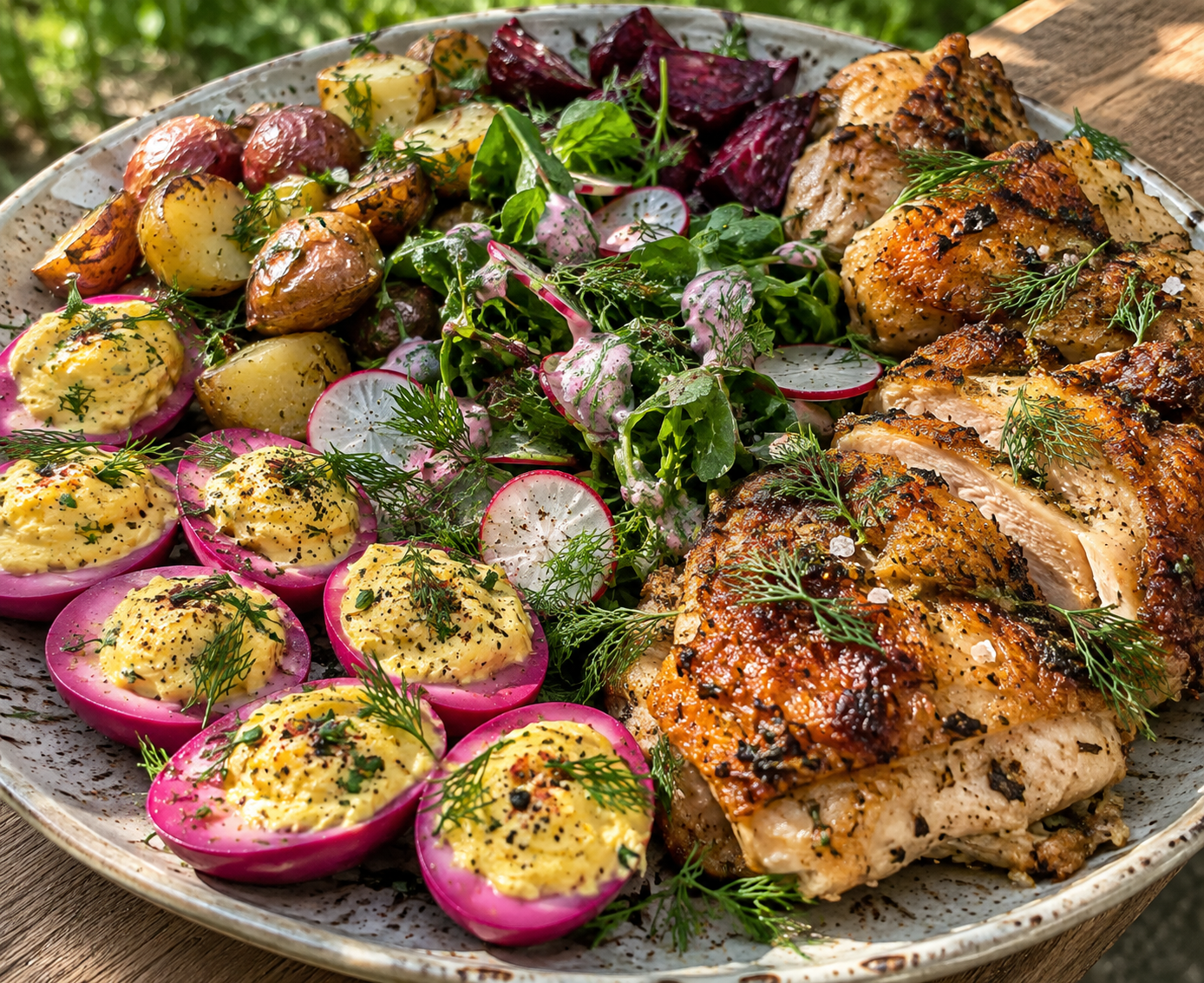
Crispy-skinned chicken, magenta deviled eggs, warm new potatoes, radishes and tender greens with a pink dill-horseradish dressing.
[hero image: platter with crispy chicken pieces, halved magenta-ringed deviled eggs, beets, radishes, greens and fresh herbs scattered]
Yield: serves 4–6 · Active: 1 hr 15 min · Total: 2 days (mostly hands-off pickling) · Season: spring. Butter lettuce, watercress, radishes and snap peas peak March–May in California and May–June in the Northeast and Midwest; beets are at their best in spring and fall. · Cuisine: farm-to-table · Best eaten: midday or early evening
This is the platter I make when spring produce starts showing up at the market. Hard-boiled eggs soak in a sweet-sour beet brine for two days until the whites turn brilliant magenta, then they get deviled with dill, horseradish and mustard. Crispy-skinned chicken, warm new potatoes, the pickled beets, shaved radishes, cucumber and avocado all go over butter lettuce and watercress. A drizzle of pink dill-horseradish dressing, made with homemade mayo and a splash of the beet brine, ties it all together.
Make the eggs two days ahead. On the day, it’s mostly chopping and plating. For more on homemade mayo, see The Mayo That Doesn’t Betray You.
Ingredients
Pickled beets and eggs (make 2 days ahead)
3 medium beets (about 1 lb), peeled and cut into ½-inch pieces
6 large pasture-raised eggs
1½ cups raw apple cider vinegar
½–¾ cup raw honey (to taste)
2 tsp Baja Gold sea salt
½ red onion, thinly sliced
Olive oil mayo (makes about 2 cups)
4 pasture-raised egg yolks, at room temperature
1 tbsp Dijon mustard (Delouis Fils or Maison Orphée)
1 tbsp fresh lemon juice
2 tsp champagne vinegar
1 tsp Baja Gold sea salt
1 cup mild extra virgin olive oil + 1 cup avocado oil (or 2 cups mild EVOO, whisked by hand)
Deviled-egg filling
The 6 pickled egg yolks
2 tbsp olive oil mayo (from above)
2 tsp raw fermented mustard
1 tsp fresh lemon juice
1 tsp dill pickle, finely chopped
1 tsp freshly grated horseradish (or prepared)
1 tsp raw honey
1 tbsp fresh dill, chopped
Pinch Baja Gold sea salt and black pepper
Pink dill-horseradish dressing
½ cup olive oil mayo (from above)
2 tbsp beet brine (from the jar)
1 tbsp fresh lemon juice
1 tbsp fresh dill, chopped
1–2 tsp freshly grated horseradish
1–2 tbsp water, to thin
Pinch Baja Gold sea salt and black pepper
Crispy chicken
4 bone-in, skin-on pasture-raised chicken thighs
2 skin-on pasture-raised chicken breasts (bone-in or boneless)
2 tbsp duck fat or grass-fed ghee
Baja Gold sea salt and black pepper
Warm new potatoes
1½ lb small new potatoes
1 tbsp extra virgin olive oil
1 tbsp fresh chives, chopped
Baja Gold sea salt
Salad
1 large head butter lettuce, leaves separated
1 bunch watercress (or arugula), thick stems trimmed
6 radishes, thinly shaved
1 English cucumber, sliced
1 cup sugar snap peas, halved, or blanched asparagus (optional)
1 avocado, sliced
2 tbsp capers or a handful of cornichons
¼ cup toasted pumpkin seeds
Fresh dill, tarragon and chives, to garnish
Microgreens (optional)
Method
Two days ahead: pickle the beets and eggs
Cook the beets. Put the beets in a saucepan with 3 cups of water, bring to a boil and simmer 25–30 minutes, until tender. Drain, saving 1½ cups of the cooking liquid.
Hard-boil the eggs. Lower the eggs into boiling water and cook 10–11 minutes, then move them to an ice bath for 5 minutes. Peel.
Make the brine. Let the beet liquid cool until just warm, then stir in the vinegar, honey and salt until dissolved.
Jar it. Pack the eggs, beets and red onion into a large glass jar and pour the brine over, making sure everything is submerged. Refrigerate 24–48 hours. The whites turn magenta, and the beets and onions pickle too.
The day of
5. Make the mayo. In a tall jar or bowl, combine the egg yolks, Dijon, lemon juice, vinegar and salt. Using an immersion blender (or whisking by hand), add the oil in a very thin stream until thick and glossy. If you’re using all olive oil, whisk by hand, since blending EVOO hard can make it taste bitter. It keeps 1 week refrigerated.
6. Make the dressing. Whisk the mayo, beet brine, lemon juice, dill, horseradish and seasoning, adding water until it’s pourable. It will be pink.
7. Cook the potatoes. Put the potatoes in salted cold water, bring to a boil and simmer 12–15 minutes, until tender. Drain, halve and toss while warm with the olive oil, chives, salt and a spoonful of the dressing.
8. Cook the chicken. Heat the oven to 400°F. Pat the chicken dry and season generously. Heat the duck fat in a large cast-iron skillet over medium heat. Lay the pieces skin-side down and cook undisturbed 8–10 minutes, until the skin is deep golden and crisp. Flip and move the skillet to the oven. Roast until the breasts reach 165°F (10–15 minutes) and the thighs 175°F (20–25 minutes), pulling each as it’s done. Rest 5 minutes, then slice.
9. Devil the eggs. Lift the eggs, beets and onions out of the brine (save some brine for the dressing). Halve the eggs lengthwise and pop the yolks into a bowl. Mash with all the filling ingredients until smooth, then spoon or pipe back into the whites. Top each with a small piece of pickled beet and a sprig of dill.
Assemble
10. Spread the butter lettuce and watercress across a large platter. Arrange the sliced chicken, warm potatoes, pickled beets and onions, radishes, cucumber, snap peas and avocado in sections. Nestle in the deviled eggs. Scatter capers, pumpkin seeds, herbs and microgreens over everything. Drizzle with some of the dressing and serve the rest alongside.
Storage: Pickled eggs and beets keep 1 week refrigerated in the brine. The mayo and dressing keep 1 week. Store the components separately: the chicken keeps 3 days, the deviled eggs 2 days and the potatoes 3 days. The crispy chicken is best eaten the day it’s cooked.
Raw egg note: the mayo is made with raw yolks. For pregnancy or young children, use pasteurized eggs. Honey note: the honey goes into a warm brine, not a hot one, so it stays mostly raw. Honey isn’t safe for babies under 12 months.
Nourishment Notes
Pasture-raised eggs bring complete protein, choline and the fat-soluble vitamins A, D, E and K2. Between the deviled eggs and the yolk mayo, this platter has plenty.
Beets bring folate, manganese, potassium and dietary nitrates, which the body turns into nitric oxide to support healthy blood flow. Their betalain pigments are what turn the eggs pink. Raw apple cider vinegar adds tang and acetic acid.
Pasture-raised chicken brings protein, B vitamins and selenium. The thighs add more iron and zinc, and the crispy skin brings collagen.
Watercress is one of the most nutrient-dense greens there is, rich in vitamin K, vitamin C and the peppery glucosinolates of the mustard family. Radishes come from the same family and add crunch and vitamin C. Butter lettuce, cucumber and snap peas bring hydration, folate and fiber, and avocado adds potassium and healthy fats.
New potatoes add potassium, vitamin C and B6. Eaten warm-to-cool, they bring some resistant starch too. Pumpkin seeds add magnesium and zinc.
Homemade olive oil mayo swaps the seed oils in commercial mayo for extra virgin olive oil and avocado oil, both stable monounsaturated fats. Horseradish and mustard bring their own sinus-clearing sulfur compounds, and raw fermented mustard adds live cultures, since it’s never heated.
For your cycle: in the follicular phase, this fresh, protein-rich spring plate fits rising energy, and the beets’ folate and the eggs’ choline are great building blocks. During menstruation, the thighs’ iron, plus vitamin C from the watercress and radishes, help replenish.
Sourcing
Eggs: pasture-raised, from a local farm or Pete & Gerry’s
Chicken: pasture-raised, from a local farm
Beets, radishes, lettuce, watercress, snap peas and herbs: a farmers’ market in spring, organic where possible
Raw apple cider vinegar: unfiltered, “with the mother”
Honey: local raw honey
Extra virgin olive oil: a mild, buttery single-estate EVOO, from a small producer
Avocado oil: cold-pressed
Dijon mustard: Delouis Fils or Maison Orphée
Fermented mustard: raw and unpasteurized, from a local fermenter or the refrigerated section
Horseradish: a fresh root, grated, or a refrigerated prepared horseradish with simple ingredients
Duck fat or ghee: pasture-raised duck fat, or grass-fed ghee
Sea salt: Baja Gold
— Anna aka Food Marshall