Pan-Seared Wild Salmon with Ponzu-Dressed Salad and Sesame Ginger Cucumber
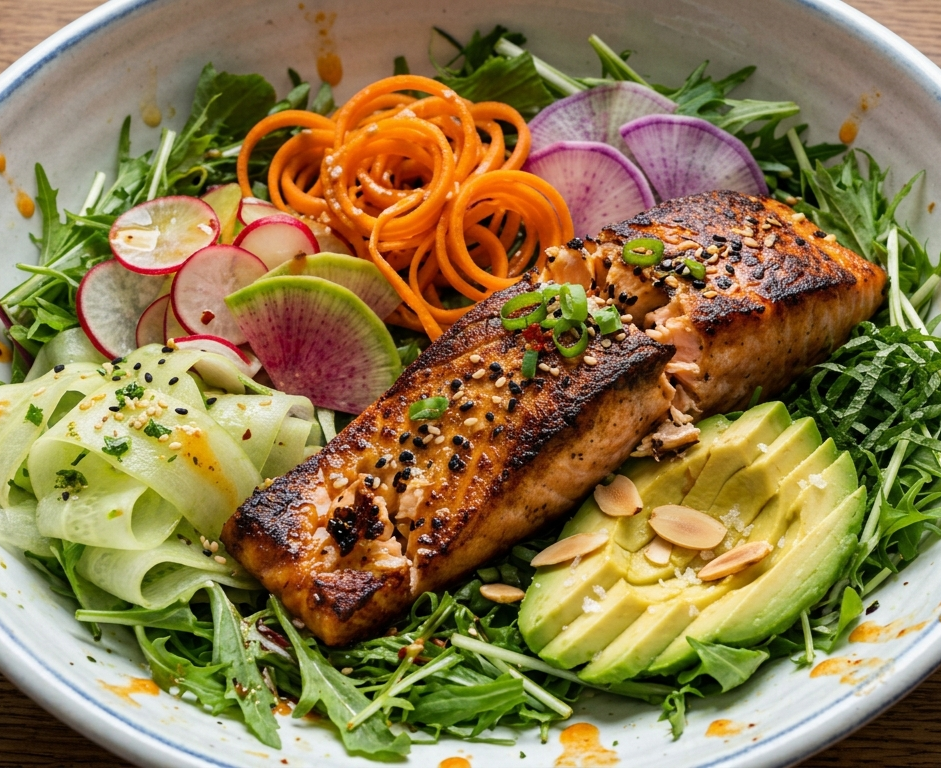
Yield: 4 servings · Active: 25 min · Total: 35 min · Year-round (peak wild salmon April-September) · Best eaten: early evening
Complete Menu
Pan-Seared Wild Salmon with Ponzu-Style Dressing
Crisp Mixed Greens Salad with Shaved Vegetables
Sesame Ginger Cucumber Ribbons (replacing noodles)
Optional accompaniments: extra ponzu at the table, toasted sesame seeds, sliced avocado, pickled ginger, nori strips.
Recipe 1 — Pan-Seared Wild Salmon
Yield: 4 servings · Active: 15 min · Total: 20 min
Ingredients
4 wild-caught salmon fillets (about 6 oz each, skin on) — sockeye, king, or coho
2 tbsp extra virgin olive oil
1 tsp sea salt
½ tsp freshly cracked black pepper
Zest of ½ lemon
1 tbsp grass-fed butter (for finishing)
Method
Pat the salmon dry. With paper towels. Season both sides with salt, pepper, and lemon zest.
Heat the pan. Heat 2 tbsp olive oil in a heavy stainless steel or cast iron skillet over medium-high heat until shimmering.
Sear skin-side down. Place the salmon skin-side down in the hot pan. Press gently with a spatula for the first 30 seconds so the skin stays flat against the pan. Cook 4-5 minutes without moving until the skin is deeply crispy and golden.
Flip and finish. Flip the salmon. Add 1 tbsp butter to the pan. Cook 2-3 more minutes on the second side, basting occasionally with the melted butter. Internal temperature should read 125°F for medium (the salmon will continue cooking slightly during resting).
Rest. Transfer to a warm plate. Rest 3-4 minutes before serving.
Recipe 2 — Ponzu-Style Dressing (Grain-Free, Soy-Free)
Traditional ponzu contains soy sauce and often gluten. This grain-free version uses coconut aminos for the umami base.
Yield: about ½ cup
Ingredients
⅓ cup coconut aminos
3 tbsp fresh lemon juice
2 tbsp fresh lime juice
2 tbsp raw rice vinegar (unseasoned)
1 tbsp fresh yuzu juice (optional — if you can find it; substitute with additional lemon+lime)
1 tsp toasted sesame oil
1 tsp fresh ginger, finely grated
Zest of ½ lemon
Pinch of dried bonito flakes (optional, for traditional umami depth — skip if strict vegan or if you don't have)
Method
Whisk. Combine all ingredients in a small jar. Whisk or shake until combined.
Steep briefly. Let sit 10-15 minutes at room temperature so the flavors meld.
Store. Refrigerated up to 2 weeks in a sealed jar. Excellent for future salmon, tuna sashimi, poke bowls, or over any raw or lightly cooked seafood.
Recipe 3 — Crisp Mixed Greens Salad with Shaved Vegetables
Yield: 4 servings · Active: 10 min · Total: 15 min
Ingredients
Base
4-5 cups mixed baby greens (arugula, baby spinach, mizuna, or a spring mix)
1 small daikon radish, thinly shaved (mandoline)
2 medium watermelon or French breakfast radishes, thinly sliced
1 medium carrot, thinly julienned or ribboned with a peeler
3 scallions, thinly sliced
½ cup fresh cilantro leaves
¼ cup fresh mint leaves, torn
Optional additions
1 medium avocado, sliced
2 tbsp toasted white or black sesame seeds
1 sheet nori, cut into thin strips
2 tbsp pickled ginger (single-ingredient, no artificial colorings)
Dressing — from Recipe 2 (ponzu-style)
Method
Prep the vegetables. Shave, slice, and julienne all vegetables. Combine in a large salad bowl.
Add greens and herbs. Add the mixed greens, cilantro, and mint. Toss gently.
Dress. Just before serving, drizzle with ⅓ of the ponzu dressing. Toss lightly. Reserve remaining dressing for the salmon.
Add finishing garnishes. Top with avocado slices, toasted sesame seeds, nori strips, and pickled ginger if using.
Recipe 4 — Sesame Ginger Cucumber Ribbons
Yield: 4 servings · Active: 10 min · Total: 15 min
Ingredients
2 medium English cucumbers, ribboned with a peeler (creates long thin strips — the noodle-substitute)
1 tbsp fresh ginger, finely grated
2 tbsp coconut aminos
1 tbsp raw rice vinegar
1 tbsp toasted sesame oil
1 tbsp fresh lime juice
1 tsp raw honey (optional)
1 tbsp toasted sesame seeds
2 scallions, thinly sliced
Pinch of red pepper flakes (optional)
Pinch of sea salt
Method
Ribbon the cucumbers. Using a Y-peeler, peel long thin ribbons from the cucumbers, rotating as you go. Stop when you reach the seeded center (save for salad the next day).
Season briefly. In a bowl, toss the cucumber ribbons with a pinch of salt. Let sit 5 minutes.
Make the dressing. In a small bowl, whisk together grated ginger, coconut aminos, rice vinegar, sesame oil, lime juice, and optional honey.
Dress and finish. Pour the dressing over the cucumber ribbons. Toss gently. Top with toasted sesame seeds, sliced scallions, and optional chili flakes.
Plating the Complete Meal
Build in shallow bowls: a bed of the dressed mixed greens on one side; a nest of sesame ginger cucumber ribbons on the other side; place the pan-seared salmon fillet across the center. Drizzle additional ponzu dressing over the salmon. Garnish everything with sesame seeds, cilantro, and pickled ginger. Serve immediately while the salmon is warm.
Sourcing
Wild-caught Alaskan salmon — sockeye, king (chinook), or coho. Look for wild-caught, not farmed. Peak season April-September. Sources: local fishmongers, quality grocery stores, or shipped options that clearly label wild-caught with fishery of origin. Frozen wild salmon (frozen at sea) is often more accessible and equally nutritious as fresh
Fresh baby greens — organic mixed spring mix, arugula, mizuna, baby spinach. Farmers' market or specialty produce
Daikon and radishes — firm, crisp, unwrinkled. From a farmers' market or Asian grocer
English cucumbers — thin-skinned, seedless (or use Persian cucumbers)
Fresh ginger — organic, plump, firm rhizomes
Fresh cilantro, mint, scallions — windowsill pot or farmers' market
Fresh lemons and limes — organic when using zest. Yuzu (Japanese citrus) is exceptional if you can find it at an Asian grocer
Coconut aminos — single-ingredient (fermented coconut sap and sea salt), no soy, no additives
Raw rice vinegar — unseasoned, single-ingredient, no added sugar or MSG
Toasted sesame oil — cold-pressed, single-ingredient, in a dark glass bottle
Toasted sesame seeds — organic, single-ingredient. Or toast raw seeds yourself in a dry skillet 3-4 minutes
Nori sheets — single-ingredient (just seaweed), no additives
Pickled ginger — single-ingredient (just ginger, vinegar, salt), no artificial coloring (avoid the pink food-dye versions)
Dried bonito flakes (optional) — traditional Japanese ingredient, single-ingredient, from an Asian grocer
Avocado — Hass, ripe but firm
Grass-fed butter — for finishing the salmon
Single-estate extra virgin olive oil — Portuguese or Italian for cooking
Baja Gold sea salt for cooking; flaky finishing salt for garnishing
Whole spices (organic, non-irradiated, single-origin) for chili flakes and any spice you use
Storage
Cooked salmon: Refrigerated up to 2 days, sealed. Best eaten fresh — reheating dries it out. Excellent cold flaked over greens for lunch
Ponzu dressing: Refrigerated up to 2 weeks in a sealed jar. Improves after 24 hours
Cucumber ribbons: Best eaten within a few hours of dressing. Undressed cucumber ribbons keep 1 day refrigerated between paper towels
Mixed greens salad (undressed): Refrigerated up to 2 days in a sealed container with a paper towel to absorb moisture
Pickled ginger and nori: Refrigerated pickled ginger keeps 2+ months; nori keeps sealed in a dry place indefinitely
Support for the Female Infradian Rhythm
This meal is beautifully suited to the follicular and ovulatory phases of the female cycle (Days 6-17), when energy is rising and bright, mineral-rich foods are welcome. Wild salmon delivers exceptional omega-3 fatty acids (EPA and DHA — essential for cell membrane health, brain function, and reducing inflammation), astaxanthin (the pink-orange carotenoid pigment with documented antioxidant effects on skin, eyes, and cellular protection), vitamin D, and complete protein. Omega-3s are particularly important for female hormonal balance and menstrual pain reduction. Cruciferous mizuna and arugula deliver sulforaphane for estrogen metabolism. Ginger is one of the best-studied natural anti-inflammatories for menstrual cramping. Coconut aminos deliver umami without soy inflammation. Fresh herbs (cilantro, mint) support liver detoxification. During heavier menstrual bleeding days, warmer grounding meals may feel more restorative; from Day 3 onward this bright coastal meal becomes appealing again.
Nourishment Notes
Wild-caught salmon — omega-3 fatty acids, astaxanthin, vitamin D, and complete protein. Wild salmon delivers exceptional omega-3 fatty acids (EPA and DHA), astaxanthin (the pink-orange carotenoid pigment that gives wild salmon its color, with documented antioxidant effects on skin, eyes, and cellular membrane protection), vitamin D (particularly high in king and sockeye), B12, selenium, and complete protein. The fatty acid profile of wild salmon is meaningfully different from farmed salmon — wild-caught delivers a fundamentally different omega-3 to omega-6 ratio, and astaxanthin from natural krill and shrimp food sources rather than the synthetic canthaxanthin added to farmed feed.
Fresh cruciferous greens (mizuna, arugula, baby spinach) — sulforaphane, folate, and vitamin K. Mizuna and arugula are cruciferous vegetables delivering sulforaphane (supporting estrogen metabolism through liver Phase 2 detoxification), vitamin K (essential for blood clotting and calcium metabolism), folate, and chlorophyll.
Daikon and radish — sulforaphane and enzymatic support. Daikon delivers glucosinolates (converted to sulforaphane during digestion), vitamin C, and traditional East Asian digestive support. Raw daikon is prized in Japanese cuisine for its enzymes that support fat and protein digestion.
Cucumber — silica, hydration, and traditional cooling. Cucumbers deliver silica (supporting collagen synthesis, hair, skin, and nails), water content, and cooling properties valued across East Asian traditional food frameworks.
Fresh ginger — gingerols, shogaols, and anti-inflammatory support. Ginger is one of the best-studied natural anti-inflammatories for menstrual pain, with some studies showing effects comparable to over-the-counter NSAIDs for dysmenorrhea. Fresh raw ginger delivers the highest concentration of gingerols; heating or drying converts them to shogaols (which have their own bioactive properties).
Toasted sesame seeds and oil — lignans, calcium, and magnesium. Sesame delivers lignans (sesamin and sesamolin) that support hormone balance, particularly for female estrogen metabolism. Sesame is also one of the highest plant sources of calcium and magnesium.
Coconut aminos — subtle umami with lower glycemic impact than soy sauce. Fermented coconut sap and sea salt — no soy (which is inflammatory for many), no gluten, no additives.
Fresh cilantro and mint — chlorophyll, heavy metal binding, and digestive support. Cilantro binds mercury and heavy metals; mint delivers menthol (antimicrobial and digestive support).
Nori (optional) — iodine, iron, and complete protein. Nori is one of the richest food sources of iodine, along with minerals (iron, magnesium, calcium) and complete plant protein.
Pickled ginger — additional gingerols with fermentation benefits. Traditional pickled ginger (just ginger, vinegar, salt) delivers gingerols plus the live cultures and organic acids from fermentation.
Astaxanthin — from wild salmon and shrimp. This antioxidant is 6000 times more potent than vitamin C and 800 times stronger than CoQ10 in cellular protection studies. It's particularly concentrated in wild-caught cold-water fish that eat krill and small shrimp. Astaxanthin supports skin resilience under sun exposure, eye health, and mitochondrial function.
— Anna aka Food Marshall