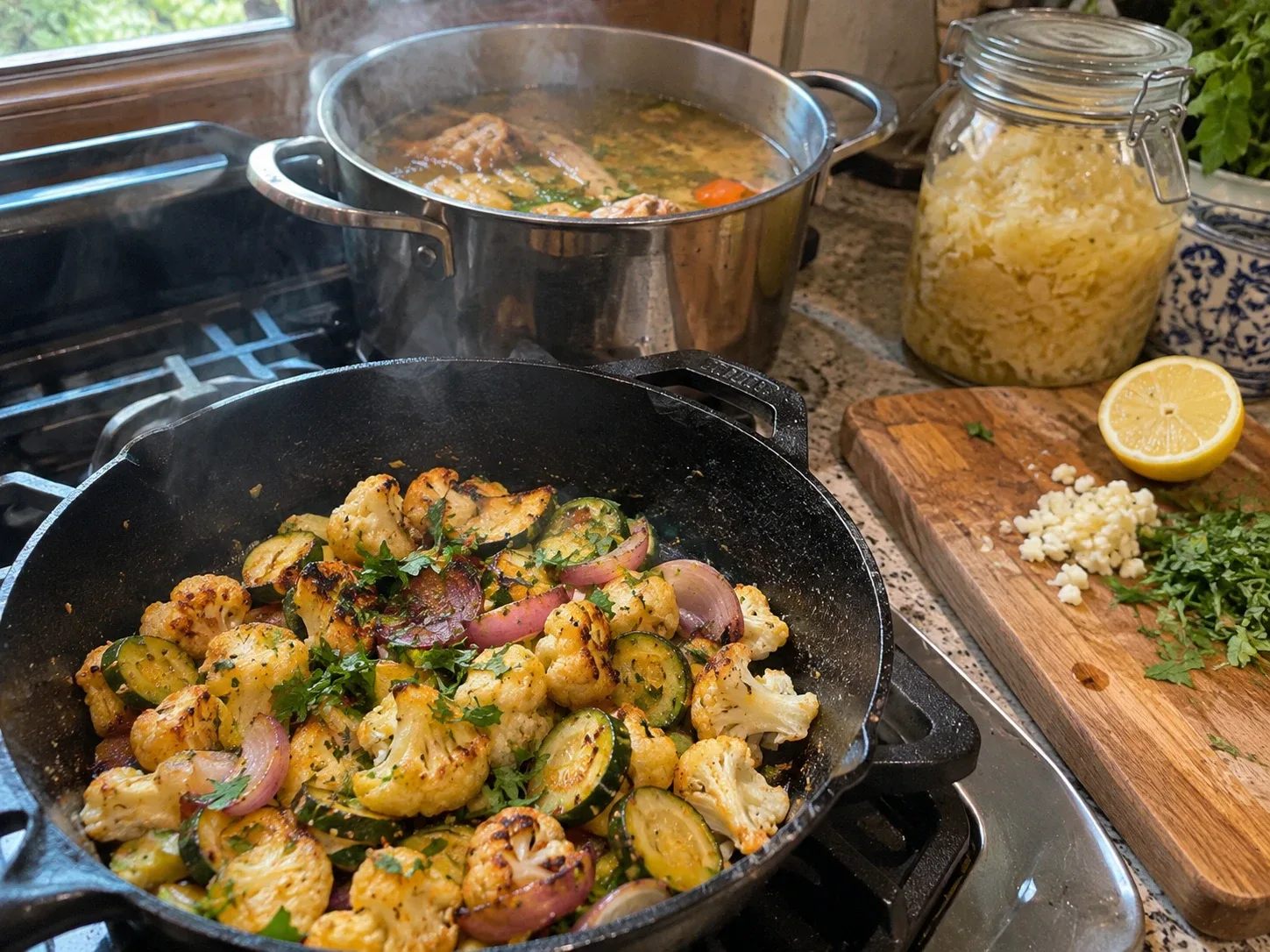
Cooking for Nutrient Optimization
The fat in your pan, the heat under your steak, the season on your plate, and the hour you sit down to eat all decide how much nourishment actually reaches you.
TL;DR
- Start with well-raised food. Pasture-raised meat, eggs, and dairy, and seasonal produce, carry more nutrients before you even cook.
- Cook in traditional fats like butter, ghee, tallow, and olive oil, and skip industrial seed oils.
- Cook meat low and slow, and avoid charring it.
- Pair vegetables with fat so your body absorbs their vitamins E and K and the carotenoids your body turns into vitamin A.
- Soak nuts and seeds, eat ferments, and simmer bone broth for easier digestion and more minerals.
- Use cast iron, stainless steel, or enameled pans, not nonstick.
- Eat with the seasons and with the sun, with bigger meals earlier in the day.
- Put sunlight to work in your kitchen. Sun your mushrooms and brew your tea in the sun.
Do you know how to cook for nutrient optimization? You can enhance your health simply by understanding the basics of cooking and food preparation. If we are making salad dressings with heaps of toxic, inflammatory industrial seed oils, overcooking our meats, or using ingredients that are not in season or local to our environment, then we are blocking our capacity to heal.
It happens so easily. You buy beautiful grass-fed beef, then sear it black in a scratched nonstick pan slicked with canola oil. You eat a giant bowl of raw kale with fat-free dressing and still feel depleted. The ingredients were right, and the kitchen choices undid half the work.
We all need someone in our life who knows the basics of cooking healthy, nourishing, healing meals, whether that is yourself, your partner, your mother, your grandmother, your sister, your brother, your friend, or your neighbor. Below are the health-supportive practices I lean on in my own kitchen and in every meal I make as Food Marshall.
Start With Food That Was Raised Right
Every practice here works best on real food with clean ingredients, like grass-fed and pasture-raised meats, wild-caught fish, pasture-raised eggs, raw dairy, and organic produce grown close to home. Nose-to-tail eating (using the whole animal, including the fat, skin, bones, and organ meats like liver and heart) gives you nutrients that lean muscle meat alone can’t. If you want help reading the labels, I walk through meat in We Are What Our Meat Eats: How to Read Meat Labels and Source the Best and eggs in Why Pastured Eggs Are Worth It (and How to Read the Carton). For organ meats in the kitchen, start with my Chicken Liver Pâté or Offal — Five Traditional Preparations for Brain, Sweetbreads, Heart & Liver.
Choose Fats That Can Stand Up to the Heat
Traditional fats are the ones people have cooked with for thousands of years, including butter, ghee (butter with the milk solids cooked off), tallow (rendered beef fat), lard (rendered pork fat), duck fat, olive oil, avocado oil, and coconut oil. They come from animals, fruits, and nuts that give up their fat easily.
Industrial seed oils are different. Canola, corn, cottonseed, grapeseed, soybean, rice bran, sunflower, and safflower oils are typically pressed, then extracted with the solvent hexane, then refined, bleached with clay, and deodorized with high-heat steam so the finished oil tastes of nothing (Penn State Extension, 2025). That last step tells you something. An oil has to be stripped of its own smell before anyone wants to eat it.
These oils are newcomers to the human plate. For most of history, plant oils came only from foods that give up their oil easily, like olives, coconuts, palm fruit, flax, and sesame. Cottonseed oil, a leftover from the cotton industry, came first. In 1911, Procter & Gamble, a soap and candle company, hardened cottonseed oil into a white shortening called Crisco and sold it as all vegetable and easier to digest than lard. It billed Crisco as a scientific discovery, sent free samples to grocers, and pitched it to Jewish cooks as kosher (Weston A. Price Foundation, 2017; NPR, 2012; Marketplace, 2007). A century of marketing taught us to fear the fats our great-grandmothers cooked with and trust the ones a soap company invented.
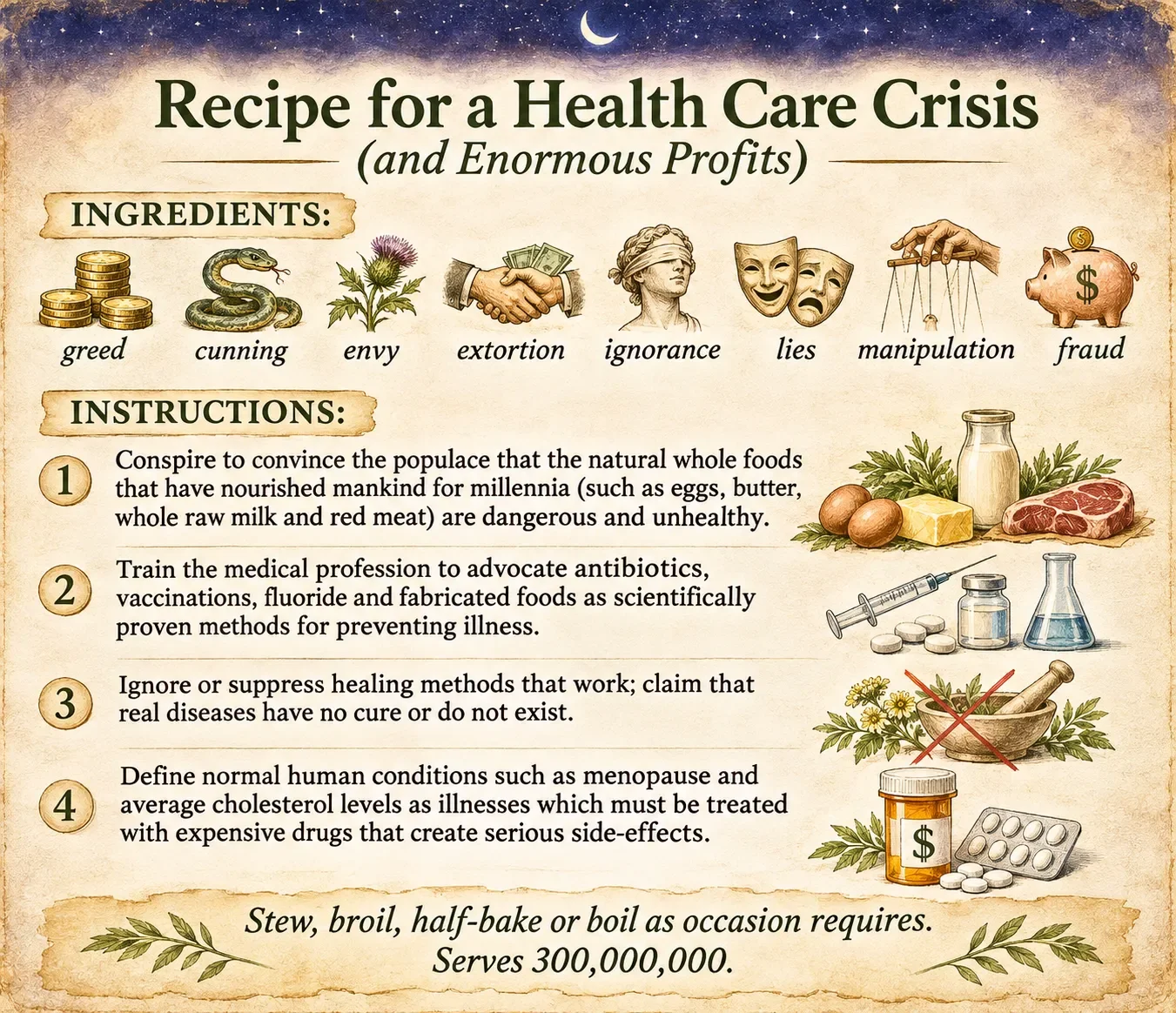
Shortening and margarine get their texture from partial hydrogenation, a process that pumps liquid oil full of hydrogen gas over a metal catalyst until it turns solid. The process creates trans fats. The FDA ruled in 2015 that partially hydrogenated oils are no longer “generally recognized as safe” and gave manufacturers until June 18, 2018 to remove them from most foods (FDA, 2018). A label can still read “0 grams trans fat” when a serving holds up to half a gram, so read the ingredient list, not the number (Food Safety News, 2015). The Weston A. Price Foundation points out that replacements like interesterified fats (oils chemically reshuffled to act solid) arrived with no clinical trials on how the body handles them (Weston A. Price Foundation, 2017).
Seed oils are rich in linoleic acid, an omega-6 fat. Omega-6 and omega-3 are both polyunsaturated fats, meaning their chemical chains have several “kinks” that make them liquid and fragile. Fragile fats oxidize, or react with oxygen, more easily under heat and light. Dr. Chris Knobbe, an ophthalmologist and founder of the Ancestral Health Foundation, argues that our modern flood of linoleic acid from vegetable oils is a leading driver of chronic disease (Low Carb USA, 2024). Professor Martin Grootveld’s lab at De Montfort University heated common fats and found that sunflower and corn oils produced aldehydes (toxic breakdown compounds) at levels about 20 times higher than the World Health Organization recommends, while olive oil, butter, and goose fat produced far fewer (De Montfort University, 2015). An Australian team heated ten oils for hours and found extra virgin olive oil produced the fewest harmful polar compounds (breakdown products that build up as oil degrades), with coconut oil close behind and canola, grapeseed, and rice bran oils among the worst. An oil’s smoke point turned out to be a poor predictor of how it held up (de Alzaa et al., 2018).
The American Heart Association disagrees with seed oil critics and supports omega-6 fats as part of a healthy diet (American Heart Association, 2024). I stand with the ancestral cooks on this one, and my kitchen is seed-oil-free.
| Fats | How I use them | |
|---|---|---|
| Best | Grass-fed butter and ghee, tallow, lard, duck fat (all from pasture-raised animals) | Searing, roasting, sautéing, frying |
| Best | Extra virgin olive oil | Dressings, finishing, gentle to medium-heat cooking |
| Good | Avocado oil, unrefined coconut oil, unrefined red palm oil (sustainably sourced), cold-pressed sesame oil (in small amounts) | High-heat roasting, Asian and tropical dishes |
| Avoid | Canola, corn, cottonseed, grapeseed, soybean, rice bran, sunflower, safflower, “vegetable oil,” margarine and spreads | Nowhere (check bottled dressings, mayonnaise, nut butters, non-dairy creamers, whipped toppings, chips, cookies, cake frosting, dips, fast food, and restaurant fryers, where they hide) |
Avocado oil belongs on that list only when it’s the real thing. When UC Davis food scientists tested 22 avocado oils sold in the U.S., 82 percent were rancid before their expiration date or cut with other oils, and three bottles labeled pure or extra virgin were close to 100 percent soybean oil (UC Davis, 2020). Buy from a source you trust, and store it away from heat and light.
Restaurants used to fry in tallow too. McDonald’s cooked its fries in a blend that was 93 percent beef tallow until 1990, when a campaign against saturated fat pushed the chain to drop it. The replacement was partially hydrogenated vegetable shortening, loaded with the trans fats the FDA would later rule unsafe (CSPI, 2002). The “heart-healthy” swap traded a stable traditional fat for one of the most harmful fats ever sold.
Salad dressings are where most people get caught. A two-minute vinaigrette of extra virgin olive oil, lemon or raw apple cider vinegar, Dijon, and unrefined salt replaces a bottle of soybean oil and gums. You’ll find one on my Broccolini and Pistachio Salad with Lemon-Dijon Vinaigrette and another on my Garlic-Vinaigrette Lamb Chops + Market Vegetables.
Let Meat Cook Low, Slow, and Juicy
Overcooking costs you twice. Dry meat is less delicious, and very high heat creates compounds you don’t want. Heterocyclic amines (HCAs) form when the proteins, sugars, and creatine in muscle meat react at high temperatures, especially above 300°F, and with long cooking times. Polycyclic aromatic hydrocarbons (PAHs) form when fat and juices drip onto flames or hot coals and the smoke rises back onto the meat. Well-done, grilled, and barbecued meats carry the highest levels. In lab animals, both cause DNA changes linked to cancer, though at doses far beyond what people eat, and human studies have not confirmed a definitive link (National Cancer Institute, n.d.).
You don’t have to give up a good sear. A few habits keep meat tender and the char in check.
- Braise, stew, and slow-roast tough, collagen-rich cuts like shanks, shoulder, short ribs, and brisket. Gentle, wet heat melts their connective tissue into gelatin. My Fall-Off-the-Bone Oxtail and Osso Buco, Slow-Cooked Lamb Shanks with Leafy Greens, Mirepoix, and Herbs, and Grass-Fed Pot Roast all cook this way.
- Sear briefly, then finish gently over lower heat or in the oven.
- Marinate or rub meat with herbs before it hits the heat. Kansas State food scientists found that marinating steaks with herbs and spices cut the HCAs that form during cooking, and rosemary extract on beef patties lowered HCAs by up to 92 percent (Puangsombat & Smith, 2010; Food Safety Consortium, 2007). Rosemary, thyme, garlic, and a splash of acid do the job, as in my Cilantro-Lime Grilled Chicken with Charred Summer Vegetables and Herb Vinaigrette.
- Keep meat off direct flames on the grill, flip it often, and trim off any blackened bits.
- Use a thermometer. The USDA’s safe minimum internal temperatures are 145°F for whole cuts of beef, pork, veal, and lamb, followed by a 3-minute rest; 160°F for ground meats; 165°F for all poultry; and 145°F for fish (USDA Food Safety and Inspection Service, n.d.). A thermometer lets you hit those numbers without sailing past them into shoe leather.
- Rest your meat a few minutes before slicing so the juices settle back into the muscle instead of onto the cutting board.
- Cook with the fat, skin, and bone on. They baste the meat from within.
Give Every Vegetable a Partner in Fat
Vitamins A, D, E, and K are fat-soluble, which means your body absorbs them along with fat. The same goes for carotenoids, the orange, red, and yellow plant pigments (like beta-carotene in carrots and lycopene in tomatoes) that your body uses to make vitamin A and to protect your cells. Researchers at Iowa State fed young adults salads of spinach, romaine, tomatoes, and carrots with dressings containing no fat, a little fat, or more fat. With fat-free dressing, the volunteers absorbed essentially no beta-carotene, and the full-fat dressing delivered significantly more lycopene, alpha-carotene, and beta-carotene than the reduced-fat one (Brown et al., 2004).
Cooking changes the picture too. Cornell researchers heated tomatoes for 2 to 30 minutes and found their lycopene rose by more than half to nearly triple, while vitamin C fell 10 to 29 percent (Dewanto et al., 2002). Neither raw nor cooked wins every time. Cooking also breaks down some of the compounds plants use to defend themselves. Spinach, chard, and beet greens are high in oxalates, which bind calcium and can contribute to kidney stones. In one study, boiling cut soluble oxalates by 30 to 87 percent, with spinach losing the most, while steaming removed only 5 to 53 percent (Chai & Liebman, 2005). Boil high-oxalate greens briefly, pour off the water, and finish them in butter. I lightly steam or roast vegetables that hold up to heat, toss them in butter, ghee, or olive oil, and keep tender greens, herbs, and fruit raw. My Roasted Brassicas: A Foundation Guide and Velvet Vegetable Purées: A Foundation are built on exactly this pairing. For more on which nutrients travel together, read Nutrients Need Partners: The Ancestral Art of Food Pairing.
Garlic needs a minute before the heat. Chopping or crushing it starts an enzyme reaction that builds its protective sulfur compounds, and heat shuts that enzyme down. Penn State researchers found that heating garlic right away wiped out its anti-cancer activity in lab animals, while crushing it and letting it stand for 10 minutes kept much of that activity intact (Song & Milner, 2001). Chop your garlic first, then prep the rest of the dish.
Broccoli, kale, cabbage, and their cousins carry a compound called glucoraphanin, which turns into sulforaphane, a powerful protective compound, only with help from an enzyme called myrosinase. Cooking destroys that enzyme. In a University of Reading study, people who ate cooked broccoli with a sprinkle of powdered brown mustard seed absorbed over four times more sulforaphane than people who ate cooked broccoli alone (Okunade et al., 2018). Mustard seed carries a sturdier version of the enzyme. A pinch of ground mustard or a spoonful of real mustard over your roasted brassicas brings it back.
Wake Up Your Nuts and Seeds
Phytic acid (also called phytate) is the storage form of phosphorus in seeds, nuts, grains, and legumes. It binds minerals like iron and zinc in your gut and can carry them out of the body before you absorb them. Sally Fallon’s Nourishing Traditions, the Weston A. Price Foundation’s classic cookbook, teaches a method called “crispy nuts,” soaking raw nuts in salted filtered water for at least 7 hours, then drying them slowly in a low oven or dehydrator until crisp (Fallon & Enig, 2001; Kitchen Stewardship, n.d.). Soaking and sprouting are traditional practices across many food cultures.
The lab hasn’t caught up with the tradition. A 2020 University of Otago study soaked almonds, hazelnuts, peanuts, and walnuts and found phytate barely moved (shifting anywhere from 12 percent lower to 10 percent higher), while mineral levels in the nuts dropped (Kumari et al., 2020). I keep soaking and slow-drying my nuts the traditional way, and you can weigh that research for yourself.
Let Microbes Do Some of the Cooking
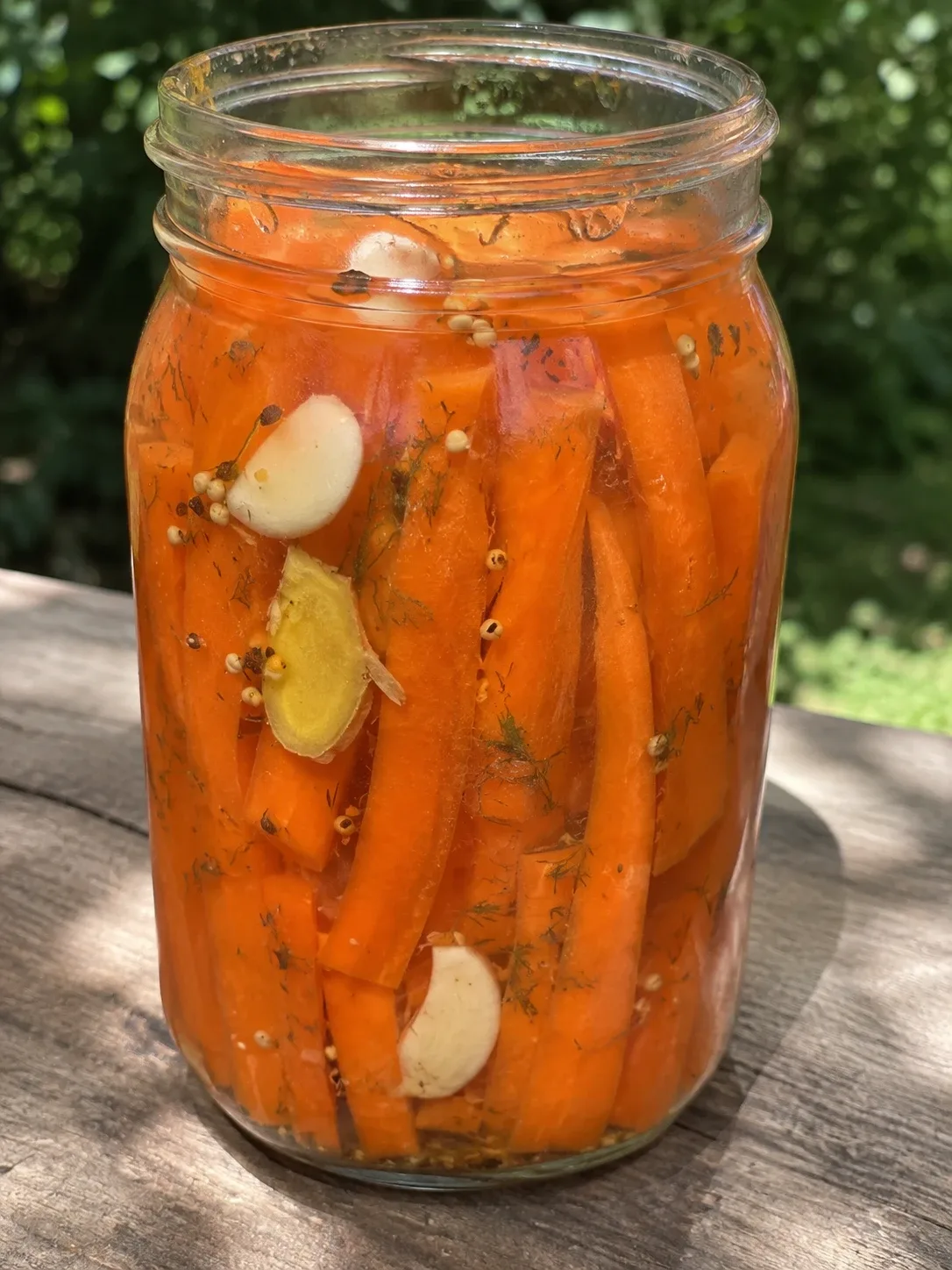
In lacto-fermentation, one of the oldest ways to make food more nourishing, lactic acid bacteria that live naturally on vegetables (and in milk) eat the sugars and turn them into tangy lactic acid, which preserves the food and gives you living microbes along with it. A spoonful of raw sauerkraut beside a fatty roast is an old-world pairing for a reason. I cover the method, the science, and my fermented carrots in Fermented Foods 101: Make Your Own Probiotic Vegetables, and the basic recipes live in Ferment Foundations: Lacto-Fermented Carrots and Sauerkraut and Raw Milk Kefir: A Living Daily Ferment.
Simmer the Bones Into Gold
Bones, joints, skin, and feet are full of collagen, the protein that holds connective tissue together. Simmer them for hours and the collagen breaks down into gelatin, which is why a good broth wobbles like jelly once it’s chilled. Gelatin carries the amino acids glycine and proline, building blocks your body uses for its own connective tissue. My full method is in Broths 101 — A Foundation, and you can bring gelatin into treats with my Homemade Gummies and Little Pots.
Homemade matters here. Researchers in Australia found the collagen building blocks in bone broth vary widely from recipe to recipe, and store-bought broths came in lower than broths made from scratch, with café-made broths carrying the most (Alcock et al., 2019). Make your own, use plenty of joints and feet, and look for that jiggle.
Cook With the Seasons and Your Place
Eating with the seasons means cooking what grows near you right now. Being a locavore means sourcing your food from as close to home as you can. Produce picked ripe and eaten soon after harvest hasn’t spent a week on a truck losing nutrients. Vitamin C is especially fragile; in studies gathered in one University of California, Davis, review, spinach lost up to 75 percent of its vitamin C after a week in the refrigerator, and green beans lost 77 percent (Rickman et al., 2007).
Seasonal food also matches what your body needs as the light changes, from tender greens in spring and juicy fruit in summer to roots, squash, and slow braises in fall and winter. A farmers market, a CSA (community-supported agriculture, where you buy a share of a local farm’s harvest), or your own garden keeps you on that rhythm.
A few of my favorites to cook through the year:
- Spring: Spring Wild Vegetable Frittata and Beef Short Ribs with Spring Vegetables
- Summer: Cilantro-Lime Grilled Chicken with Charred Summer Vegetables and Herb Vinaigrette and Herbal Sun Teas
- Fall: Grass-Fed Pot Roast and Chicken Liver Pâté
- Winter: Slow-Cooked Lamb Shanks with Leafy Greens, Mirepoix, and Herbs and Broccolini and Pistachio Salad with Lemon-Dijon Vinaigrette
Or see what’s in season now.
Put the Sun to Work in Your Kitchen
Mushrooms make vitamin D the same way your skin does. They carry ergosterol, a cousin of cholesterol that sunlight’s UV rays turn into vitamin D. An Australian review found that setting mushrooms in the sun before eating raised their vitamin D nearly eightfold. Turning them gills up added about 30 percent more, slicing them first added up to 60 percent more, and the vitamin D held for up to eight days in the refrigerator (Hort Innovation, 2020). Lay sliced mushrooms gills up in direct midday sun for 15 minutes or more, then cook as usual. Set them outdoors, because window glass blocks the UV they need. This is light becoming food, and I go deeper into that idea in Light Is a Nutrient.
Sun tea works on the same idea. Instead of boiling water on the stove, you let the sun brew it. Dried hibiscus, lemongrass, and mint steep in a glass jar of filtered water while it sits in direct light for four to six hours, and the water warms slowly as it takes on the color and flavor of the herbs. To me, it’s like capturing sun photons in a jar. Glass blocks most UVB, but visible and near-infrared light pass through, and those are the wavelengths the water collects as it warms. Gerald Pollack, a bioengineer at the University of Washington, has shown in his lab that infrared light builds a more ordered, structured layer of water along surfaces, a phase of water he calls “exclusion zone” water (Pollack, 2013). Each glass carries the hours of sunlight that brewed it.
Brew with dried herbs, keep the jar clean, strain, refrigerate, and drink within two to three days. My full method, with more blends and a sparkling version, is in Herbal Sun Teas (Plus How to Make Them Sparkling).
Eat With the Sun
Your body runs on a circadian rhythm, an internal 24-hour clock set mostly by light, and your digestion keeps time with it. In my framework, the biggest meals belong earlier in the day, and dinner finishes before dark, with a long overnight rest for your gut.
Research supports eating earlier. In a 12-week Tel Aviv University study, women with overweight and metabolic syndrome (a cluster of high blood sugar, high blood pressure, and extra belly fat) eating the same 1,400 calories a day lost more than twice as much weight when the biggest meal came at breakfast instead of dinner, with better blood sugar, insulin, and triglyceride numbers (Jakubowicz et al., 2013). A Spanish study of 845 adults gave volunteers the same sugar drink four hours before bedtime and again one hour before. Late in the evening, their melatonin (the sleep hormone) ran about 3.5 times higher, and their bodies handled the sugar worse (Garaulet et al., 2022). Melatonin tells your body it’s night, and night is not the time to process a big meal.
Let Your Pans Feed You, Not Leach Into You
Your cookware touches every meal, so it matters what it lets into your food.
| Cookware | Why I like it (or don’t) |
|---|---|
| Cast iron | Lasts generations, sears beautifully, and most foods cooked in iron pick up extra iron, especially acidic, moist foods cooked longer (Brittin & Nossaman, 1986) |
| Carbon steel | Lighter cousin of cast iron; seasons and cares for the same way |
| Enameled cast iron | Glass-coated, so it’s safe for long-simmered tomato sauces, wine braises, and broths |
| Stainless steel | A durable, nonreactive workhorse for sautés, sauces, and stockpots |
| Avoid: nonstick (PTFE/“Teflon”) and other PFAS coatings | Overheated coatings release fumes, and scratched pans shed the coating into food |
| Avoid: uncoated aluminum | Reacts with tomato sauce, vinegar, citrus, and long simmers, leaving a metallic taste; anodized or stainless-clad aluminum doesn’t (America’s Test Kitchen, n.d.) |
PFAS (per- and polyfluoroalkyl substances) are the “forever chemicals” family that includes PTFE, the slick coating on most nonstick pans. PFOA, a PFAS once used to make them, was phased out by U.S. manufacturers in 2015, but PTFE itself is still a PFAS. An empty nonstick pan on high heat can climb past the point where the coating starts breaking down, and the fumes can cause flu-like “polymer fume fever” in people and kill pet birds (Live Science, n.d.). Minnesota banned the sale of cookware with intentionally added PFAS in 2025, and Colorado and Maine followed in January 2026. Connecticut began requiring PFAS labels on cookware in July 2026, with a full ban set for 2028 (Morgan Lewis, 2026; SGS, 2024). California’s legislature passed a similar ban, which Governor Newsom vetoed in October 2025, citing the cost of cookware (The New Lede, 2025). I’d rather not wait for my own state to decide for me.
What holds your food matters as much as what cooks it. University of Nebraska engineers microwaved plastic baby food containers and found some released more than 2 billion nanoplastics and 4 million microplastics per square centimeter of container (Hussain et al., 2023). Store and reheat in glass, stainless steel, or ceramic, and never heat food in plastic.
Your cutting board sheds too. A 2023 study estimated a person could take in up to about 50 grams of microplastics a year from chopping on plastic boards, and polypropylene shed more than polyethylene (Yadav et al., 2023). Wood boards shed bits too, but those are wood fibers, not plastic. Choose a solid hardwood board and oil it with tallow or beeswax.
Salt Like the Sea Intended
I cook with unrefined salt (Redmond Real Salt or Selina Naturally Celtic Sea Salt). It’s salt as it comes from the sea or ancient seabeds, carrying trace minerals (and, in grey sea salts, a little natural moisture) and none of the anti-caking agents added to most table salt. The trace minerals come in small amounts, so I choose unrefined salt mostly for its flavor and for what it leaves out. Most unrefined salts aren’t iodized, so make sure iodine comes in from seafood, seaweed, eggs, and dairy.
Put Raw Dairy First
When dairy is on the menu, I reach for raw first, whether that’s raw milk, raw cream, raw butter, raw cheese, or kefir made from raw milk. Raw milk hasn’t been heated, so its living bacteria and enzymes are still intact, and to me it is the most alive dairy you can bring into your kitchen. I buy from small pasture-based farms that test their milk and their herds. When raw isn’t available, organic grass-fed dairy comes next, ideally from A2/A2 cows (which make only the A2 form of the milk protein beta-casein), goats, or sheep.
Find Your Kitchen Person
None of this asks you to cook like a chef. It asks you to cook like your great-grandmother, with real fats, gentle heat, the whole animal, the season outside your door, and supper before dark. If you aren’t the cook in your family, find the person who is, or become that person for someone else.
That is the work I do as Food Marshall. I put the effort into nutrient-dense, delicious meals, an invaluable, sought-after healing tool, especially when paired with other health-promoting lifestyle strategies like morning sunlight, movement, and deep sleep. How you cook is part of how you heal.
With Love, Light, and Health,
Anna (aka Food Marshall)
Resources
- Alcock, R. D., Shaw, G. C., & Burke, L. M. (2019). Bone broth unlikely to provide reliable concentrations of collagen precursors compared with supplemental sources of collagen used in collagen research. International Journal of Sport Nutrition and Exercise Metabolism, 29(3), 265–272. https://pubmed.ncbi.nlm.nih.gov/29893587/
- America’s Test Kitchen. (n.d.). Is aluminum cookware safe? https://www.americastestkitchen.com/how_tos/6390-is-aluminum-cookware-safe
- American Heart Association. (2024, August 20). There’s no reason to avoid seed oils and plenty of reasons to eat them. https://www.heart.org/en/news/2024/08/20/theres-no-reason-to-avoid-seed-oils-and-plenty-of-reasons-to-eat-them
- Brittin, H. C., & Nossaman, C. E. (1986). Iron content of food cooked in iron utensils. Journal of the American Dietetic Association, 86(7), 897–901. https://agris.fao.org/search/en/records/65df458f63b8185d9cabe2cb
- Brown, M. J., Ferruzzi, M. G., et al. (2004). Carotenoid bioavailability is higher from salads ingested with full-fat than with fat-reduced salad dressings. American Journal of Clinical Nutrition, 80(2), 396–403. https://doi.org/10.1093/ajcn/80.2.396
- Center for Science in the Public Interest. (2002, September 3). CSPI congratulates McDonald’s for oil change. https://www.cspinet.org/new/200209031.html
- Chai, W., & Liebman, M. (2005). Effect of different cooking methods on vegetable oxalate content. Journal of Agricultural and Food Chemistry, 53(8), 3027–3030. https://pubmed.ncbi.nlm.nih.gov/15826055/
- de Alzaa, F., Guillaume, C., & Ravetti, L. (2018). Evaluation of chemical and physical changes in different commercial oils during heating. Acta Scientific Nutritional Health, 2(6), 2–11. Summary: https://oliveoiltimes.com/world/extra-virgin-olive-oil-safest-most-stable-for-cooking/63179
- De Montfort University. (2015). DMU research on “healthiest” cooking oils revealed on BBC’s Trust Me, I’m a Doctor. https://www.dmu.ac.uk/about-dmu/news/2015/july/dmu-research-on-healthiest-cooking-oils-revealed-on-bbcs-trust-me,-im-a-doctor.aspx
- Dewanto, V., Wu, X., Adom, K. K., & Liu, R. H. (2002). Thermal processing enhances the nutritional value of tomatoes by increasing total antioxidant activity. Journal of Agricultural and Food Chemistry, 50(10), 3010–3014. https://doi.org/10.1021/jf0115589
- Fallon, S., & Enig, M. G. (2001). Nourishing traditions (2nd ed.). NewTrends Publishing.
- Food and Drug Administration. (2018). Final determination regarding partially hydrogenated oils (removing trans fat). https://www.fda.gov/food/food-additives-petitions/final-determination-regarding-partially-hydrogenated-oils-removing-trans-fat
- Food Safety Consortium. (2007). Marinades reduce carcinogens in grilled steaks. ScienceDaily. https://www.sciencedaily.com/releases/2007/06/070627124111.htm
- Food Safety News. (2015, June). FDA finalizes decision to ban trans fat. https://www.foodsafetynews.com/2015/06/fda-finalizes-decision-to-ban-trans-fat/
- Garaulet, M., Lopez-Minguez, J., Dashti, H. S., et al. (2022). Interplay of dinner timing and MTNR1B type 2 diabetes risk variant on glucose tolerance and insulin secretion: A randomized crossover trial. Diabetes Care, 45(3), 512–519. https://pmc.ncbi.nlm.nih.gov/articles/PMC8918262/
- Hort Innovation. (2020). Researchers say tan your mushrooms, not your skin. https://www.horticulture.com.au/hort-innovation/news-events/researchers-say-tan-your-mushrooms-not-your-skin
- Hussain, K. A., et al. (2023). Assessing the release of microplastics and nanoplastics from plastic containers and reusable food pouches: Implications for human health. Environmental Science & Technology. https://news.unl.edu/newsrooms/today/article/nebraska-study-finds-billions-of-nanoplastics-released-when-microwaving
- Jakubowicz, D., Barnea, M., Wainstein, J., & Froy, O. (2013). High caloric intake at breakfast vs. dinner differentially influences weight loss of overweight and obese women. Obesity, 21(12), 2504–2512. https://doi.org/10.1002/oby.20460
- Kitchen Stewardship. (n.d.). How to make crispy nuts to reduce phytic acid (method from Nourishing Traditions). https://www.kitchenstewardship.com/how-to-make-crispy-nuts-to-reduce-phytic-acid/
- Kumari, S., et al. (2020). Does “activating” nuts affect nutrient bioavailability? Food Chemistry, 319, 126529. https://pubmed.ncbi.nlm.nih.gov/32199146/
- Live Science. (n.d.). Are nonstick pans safe? https://www.livescience.com/are-nonstick-pans-toxic.html
- Low Carb USA. (2024). Dr. Chris Knobbe to address how seed oils drive chronic diseases. https://www.lowcarbusa.org/dr-chris-knobbe-to-address-how-seed-oils-drive-chronic-diseases/
- Marketplace. (2007, December 25). Crisco: A marketing revolution. https://www.marketplace.org/story/2007/12/25/crisco-marketing-revolution-2
- Morgan Lewis. (2026, January). State regulation of PFAS in consumer products continues to gain momentum in 2026. https://www.morganlewis.com/pubs/2026/01/state-regulation-of-pfas-in-consumer-products-continues-to-gain-momentum-in-2026
- National Cancer Institute. (n.d.). Chemicals in meat cooked at high temperatures and cancer risk. https://www.cancer.gov/about-cancer/causes-prevention/risk/diet/cooked-meats-fact-sheet
- NPR. (2012, January 9). The forgotten, fascinating saga of Crisco. https://www.npr.org/sections/thesalt/2012/01/09/144918710/the-forgotten-fascinating-saga-of-crisco
- Okunade, O., Niranjan, K., Ghawi, S. K., Kuhnle, G., & Methven, L. (2018). Supplementation of the diet by exogenous myrosinase via mustard seeds to increase the bioavailability of sulforaphane in healthy human subjects after the consumption of cooked broccoli. Molecular Nutrition & Food Research, 62(18), e1700980. https://pubmed.ncbi.nlm.nih.gov/29806738/
- Penn State Extension. (2025). Processing edible oils. https://extension.psu.edu/processing-edible-oils
- Pollack, G. H. (2013). The fourth phase of water: Beyond solid, liquid, and vapor. Ebner & Sons.
- Puangsombat, K., & Smith, J. S. (2010). Inhibition of heterocyclic amine formation in beef patties by ethanolic extracts of rosemary. Journal of Food Science. https://www.foodnavigator.com/Article/2010/01/12/Rosemary-may-stop-carcinogen-formation-in-cooked-beef
- Rickman, J. C., Barrett, D. M., & Bruhn, C. M. (2007). Nutritional comparison of fresh, frozen and canned fruits and vegetables. Part 1. Journal of the Science of Food and Agriculture, 87, 930–944. https://ucanr.edu/sites/default/files/2010-06/19187.pdf
- SGS. (2024, June). Connecticut, USA, regulates PFAS in certain consumer goods. https://sgs.com/news/2024/06/safeguards-9124-connecticut-usa-regulates-pfas-in-certain-consumer-goods
- Song, K., & Milner, J. A. (2001). The influence of heating on the anticancer properties of garlic. Journal of Nutrition, 131(3), 1054S–1057S. https://pubmed.ncbi.nlm.nih.gov/11238815/
- The New Lede. (2025, October). Governor vetoes California bill to ban PFAS in cookware. https://www.thenewlede.org/2025/10/governor-vetoes-california-bill-to-ban-pfas-in-cookware/
- UC Davis. (2020). Study finds 82 percent of avocado oil rancid or mixed with other oils. https://www.ucdavis.edu/food/news/study-finds-82-percent-avocado-oil-rancid-or-mixed-other-oils
- USDA Food Safety and Inspection Service. (n.d.). Safe minimum internal temperature chart. https://www.fsis.usda.gov/food-safety/safe-food-handling-and-preparation/food-safety-basics/safe-temperature-chart
- Weston A. Price Foundation. (2017). The dangers of industrial fats & oils [Brochure]. https://www.westonaprice.org/know-your-fats/
- Yadav, H., et al. (2023). Cutting boards: An overlooked source of microplastics in human food? Environmental Science & Technology, 57(22), 8225–8235. https://pubmed.ncbi.nlm.nih.gov/37220346/
More Articles & Other Posts



Get new recipes and essays
Seasonal recipes and writing on light, circadian health, and living with nature.
Subscribe on Substack