Pistachio-Crusted Rack of Lamb with Cauliflower Purée & Mint Pesto
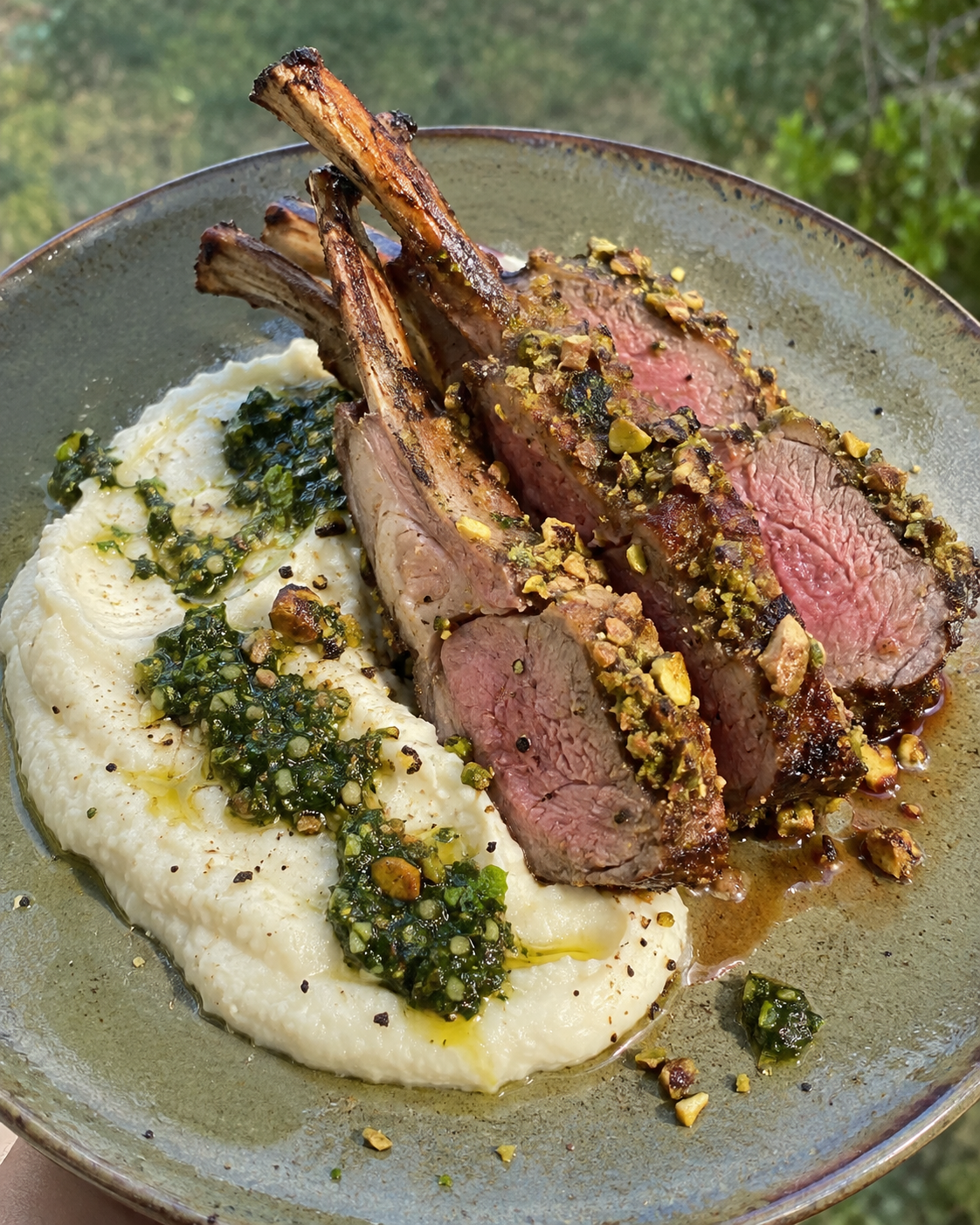
The spring showpiece: a French rack with Middle Eastern flavors. Plus a quick weeknight version.
Showpiece: serves 6 (2 racks) · Active: 40 min · Total: 1 hr 15 min
Weeknight version: serves 4 (1 rack) · Active: 20 min · Total: 1 hr (includes marinating)
Season: lamb is traditional in spring (Easter, Nowruz and the first warm-weather gatherings), with mint and parsley at their best through spring and summer. Fresh pomegranates are in season October–January in California, so in spring lean on pomegranate molasses and frozen arils, or make this in fall and winter with fresh fruit. · Cuisine: French · Middle Eastern · Best eaten: late afternoon or early evening
Short on time? Skip to the weeknight version at the end.
More lamb: Herb Dijon Rack of Lamb with Zucchini Pasta, Pomegranate-Glazed Lamb Chops and Rack of Lamb with Asian Herb Chimichurri.
Ingredients
Lamb
2 racks of lamb, Frenched, about 1½–2 lb each (6–8 ribs per rack), pasture-raised and grass-finished
1½ tsp Baja Gold sea salt
¾ tsp freshly ground black pepper
2 tbsp grass-fed ghee or avocado oil, for searing
Dijon-pomegranate glaze
3 tbsp Dijon mustard (Delouis Fils or Maison Orphée), whole-grain if you have it
2 tbsp pomegranate molasses, no sugar added (such as Al Wadi, or homemade)
1 tbsp raw honey
2 cloves garlic, finely grated
1 tsp fresh thyme leaves
Pinch Baja Gold sea salt
Pistachio-herb crust
1 cup raw shelled pistachios, finely chopped (chunky, not powdered)
⅓ cup fresh flat-leaf parsley, finely chopped
3 tbsp fresh mint, finely chopped
1 tbsp fresh thyme leaves
Zest of 1 organic lemon
½ tsp ground coriander
½ tsp ground Ceylon cinnamon
½ tsp Baja Gold sea salt
3 tbsp grass-fed butter (very soft) or melted grass-fed ghee
Cauliflower purée
1 large head cauliflower (about 2 lb), broken into small florets
3 tbsp grass-fed butter (raw if you have it)
3 cloves garlic, sliced
¼ cup grass-fed cream (raw or A2/A2 if you have it)
½ tsp Baja Gold sea salt, plus more to taste
Pinch white pepper and freshly grated nutmeg (optional)
Dairy-free: use 3 tbsp extra virgin olive oil and ¼ cup full-fat coconut cream.
Mint pesto
1 packed cup fresh mint leaves
½ packed cup fresh flat-leaf parsley
⅓ cup raw shelled pistachios
2 small cloves garlic
Zest and juice of 1 organic lemon
½ cup extra virgin olive oil
⅓ cup finely grated Parmigiano-Reggiano (optional; for dairy-free, skip it and add a pinch more salt)
½ tsp Baja Gold sea salt
To plate: ½ cup pomegranate arils (fresh in season, or frozen and thawed), torn fresh mint, 2 tbsp chopped pistachios, an optional drizzle of pomegranate molasses and flaky salt
Method
Start with the parts that hold (purée, pesto, glaze and crust) and finish with the lamb, which can’t wait once it’s out of the oven.
Temper the lamb. Take the racks out of the fridge 45 minutes before cooking and pat them dry. Room-temperature lamb sears evenly and cooks through without overcooking the outside.
Preheat the oven to 400°F, with a rack in the center.
Make the cauliflower purée. Steam the florets 12–15 minutes, until a knife slides through easily. Meanwhile, warm the butter in a small saucepan over low heat and cook the garlic gently for 2 minutes, without browning. Blend the cauliflower, garlic butter, cream, salt and nutmeg in a high-speed blender or food processor for 2–3 minutes, until completely silky. Taste; cauliflower takes more salt than you’d expect. Cover and keep warm in a low oven or over a pot of simmering water. If it stiffens, whisk in a splash of cream or hot water.
Make the mint pesto. Pulse the mint, parsley, pistachios, garlic, lemon zest and salt until finely chopped. With the motor running, stream in the olive oil and lemon juice, stopping while it still has a little texture. Pulse in the Parmigiano. Press parchment onto the surface so it stays green.
Make the glaze. Whisk the Dijon, pomegranate molasses, honey, garlic, thyme and salt until smooth.
Mix the crust. In a bowl, combine the pistachios, parsley, mint, thyme, lemon zest, coriander, cinnamon and salt. Work in the soft butter with your fingertips until it holds together loosely when pressed.
Sear the lamb. Season the racks all over with salt and pepper. Heat a large cast-iron skillet over medium-high heat and add the ghee. When it shimmers, sear the racks fat-side down, undisturbed, for 3–4 minutes, until the fat is deep brown and rendering. Flip and sear the meat side 2 minutes, then briefly sear each end. Move them to a rimmed sheet pan, fat-side up.
Glaze and crust. Brush the glaze generously over the tops and sides (not the bottoms). While it’s still tacky, press the pistachio-herb mixture firmly onto the glazed surface in a thick, even coat. Be generous.
Roast 15–18 minutes, until a thermometer in the thickest part (not touching bone) reads 130°F for medium-rare. The crust will brown and smell toasty. Lamb goes from perfect to overdone quickly, so start checking early.
Rest a full 10 minutes, loosely tented with foil. Don’t skip it: the temperature climbs to about 135°F and the juices settle back into the meat.
Plate. Swoosh a wide smear of cauliflower purée across each plate or a platter with the back of a spoon. Slice the racks between the bones into single chops and arrange them over the purée, bones angled up. Spoon small pools of mint pesto around the chops, leaving room for the colors to show. Scatter pomegranate arils, torn mint and chopped pistachios over everything, add a thin drizzle of pomegranate molasses if you like, and finish the meat with flaky salt. Serve right away.
Storage and make-ahead: Make the pesto and glaze up to 2–3 days ahead, and the crust mixture the morning of. The lamb must be cooked and served the same day; allow about 2 hours from fridge to plate. Leftover lamb keeps 2 days. Sliced cold over spring greens with leftover pesto, it makes a gorgeous lunch. The purée reheats well with a splash of cream. For 12 guests, plan on 3 racks; for 20, plan on 5 racks and roast in two batches or two ovens.
Doneness note: 130–135°F is medium-rare. The USDA recommends 145°F for lamb, so cook to 145°F for pregnancy and young children. Honey note: the honey in the glaze isn’t raw once it’s roasted. Honey isn’t safe for babies under 12 months.
Weeknight Version · Dijon-Herb Lamb with Pistachio-Sesame Crumble
One rack, one sheet pan, no purée. Serve it with whatever vegetables you’re roasting.
Lamb and herb-Dijon paste
1 rack of grass-fed lamb (about 8 chops), Frenched
Baja Gold sea salt and black pepper
1 tbsp each fresh rosemary, thyme and parsley, minced
Zest of 1 organic lemon
2–3 cloves garlic, minced
2 tbsp Dijon mustard (Delouis Fils or Maison Orphée)
¼ cup extra virgin olive oil
Pistachio-sesame crumble
1 cup raw shelled pistachios
2 tbsp sesame seeds
2–3 tbsp extra virgin olive oil
1 pasture-raised egg yolk
1 tbsp Dijon mustard
1 tbsp raw honey or pure maple syrup
Green herb sauce
½ cup each fresh parsley and mint, plus ¼ cup fresh cilantro
Juice of 1 lemon
½ cup extra virgin olive oil
2 tbsp red wine vinegar
Baja Gold sea salt and black pepper
Nut-free: use sunflower and pumpkin seeds in the crumble, with a little less honey.
Marinate. Season the lamb with salt and pepper. Pulse the herbs, lemon zest, garlic, Dijon and olive oil into a coarse paste and brush it all over the meat. Let it sit 30 minutes at room temperature.
Make the crumble. Pulse all the crumble ingredients until coarse but holding together.
Crust and roast. Heat the oven to 425°F. Set the lamb fat-side up on a parchment-lined sheet pan, press the crumble firmly over the top and roast 18–22 minutes, until it reads 130°F in the thickest part. If the crust needs more color, broil 1–2 minutes, watching closely.
Make the sauce. Blend all the herb sauce ingredients until smooth.
Rest and slice. Rest 10 minutes, then slice into chops. Serve with the herb sauce and roasted vegetables: caramelized onions, Brussels sprouts, broccoli, cauliflower or root vegetables.
Storage: The herb sauce keeps 4 days and is great on eggs, fish and vegetables all week.
Nourishment Notes
Pasture-raised, grass-finished lamb is one of the most nutrient-dense meats there is, with heme iron, zinc, B12, selenium, taurine, carnitine and CLA. “Grass-finished” is the label to look for. “Grass-fed” can mean grain for the final weeks, which changes the fat. Grass-finished lamb carries more omega-3s and fat-soluble vitamins (A, D, E and K2) and tastes cleaner and brighter.
Pomegranate has been part of Persian, Jewish, Greek and Turkish cooking for thousands of years and is native to the region stretching from Iran to northern India. Pomegranate molasses is simply the juice cooked down into a tart-sweet syrup. Pomegranates are rich in polyphenols like ellagic acid and punicalagins, which are studied for anti-inflammatory and heart-health benefits. In Persian tradition, pomegranate is a food of renewal.
Pistachios bring vitamin B6, copper, potassium and magnesium, along with lutein and zeaxanthin (the same carotenoids found in egg yolks and leafy greens, which concentrate in the eyes) and even a little melatonin. Their protein, fat and fiber slow down the sweetness in the glaze. Raw pistachios keep their bright green color and fresh flavor.
Fresh herbs show up in nearly every component, so use more than feels reasonable. Parsley is a traditional spring green, rich in vitamin K1 and folate. Mint supports digestion and cools the warmth of the lamb and spices. Rosemary and thyme bring carnosic acid and thymol, antioxidants that may help protect the meat’s fats during high-heat cooking.
Cauliflower brings vitamin C, folate, fiber and glucosinolates, the sulfur compounds of the broccoli family. Puréed with butter and cream, it’s silky without competing with the lamb the way mashed potatoes would.
Grass-fed butter and cream bring vitamin A, vitamin D, vitamin K2 (which helps direct calcium to bones) and butyrate, a short-chain fat that feeds the cells lining the gut. Extra virgin olive oil in the pesto stays unheated, so its delicate polyphenols stay intact. Sesame seeds in the weeknight crumble add calcium, copper and lignans.
When to eat it: this is celebration food, best started in the late afternoon or early evening so a rich, protein-dense meal has time to digest before bed. Lamb lightened with mint, pomegranate and green herbs over cauliflower gives the body clean protein, minerals and good fats without the heaviness of a winter braise.
For your cycle: lamb is one of the best foods for the menstrual phase. Its heme iron, zinc and B12 help replenish what you lose, and the vitamin C from lemon, herbs and pomegranate helps you absorb the iron. In the luteal phase, the pistachios’ magnesium and B6 plus the steady protein help with cravings and mood.
Sourcing
Lamb: pasture-raised and grass-finished, from a local farm, or US Wellness Meats or White Oak Pastures. Ask your butcher to French the racks.
Pomegranate molasses: no sugar added, like Al Wadi, or homemade
Pomegranates: fresh October–January, or frozen arils out of season
Dijon mustard: Delouis Fils or Maison Orphée
Pistachios: raw, shelled and unsalted, California-grown
Butter, cream and ghee: grass-fed (raw from realmilk.com or a local farm if you like) and grass-fed ghee
Parmigiano-Reggiano: DOP-stamped, aged 24+ months
Herbs and cauliflower: a farmers’ market. Mint is easy to grow in a pot (it spreads!).
Extra virgin olive oil: single-estate, from a small producer
Honey: local raw honey
Sea salt: Baja Gold
— Anna aka Food Marshall