Dover Sole Meunière with Lemon, Capers, and Brown Butter
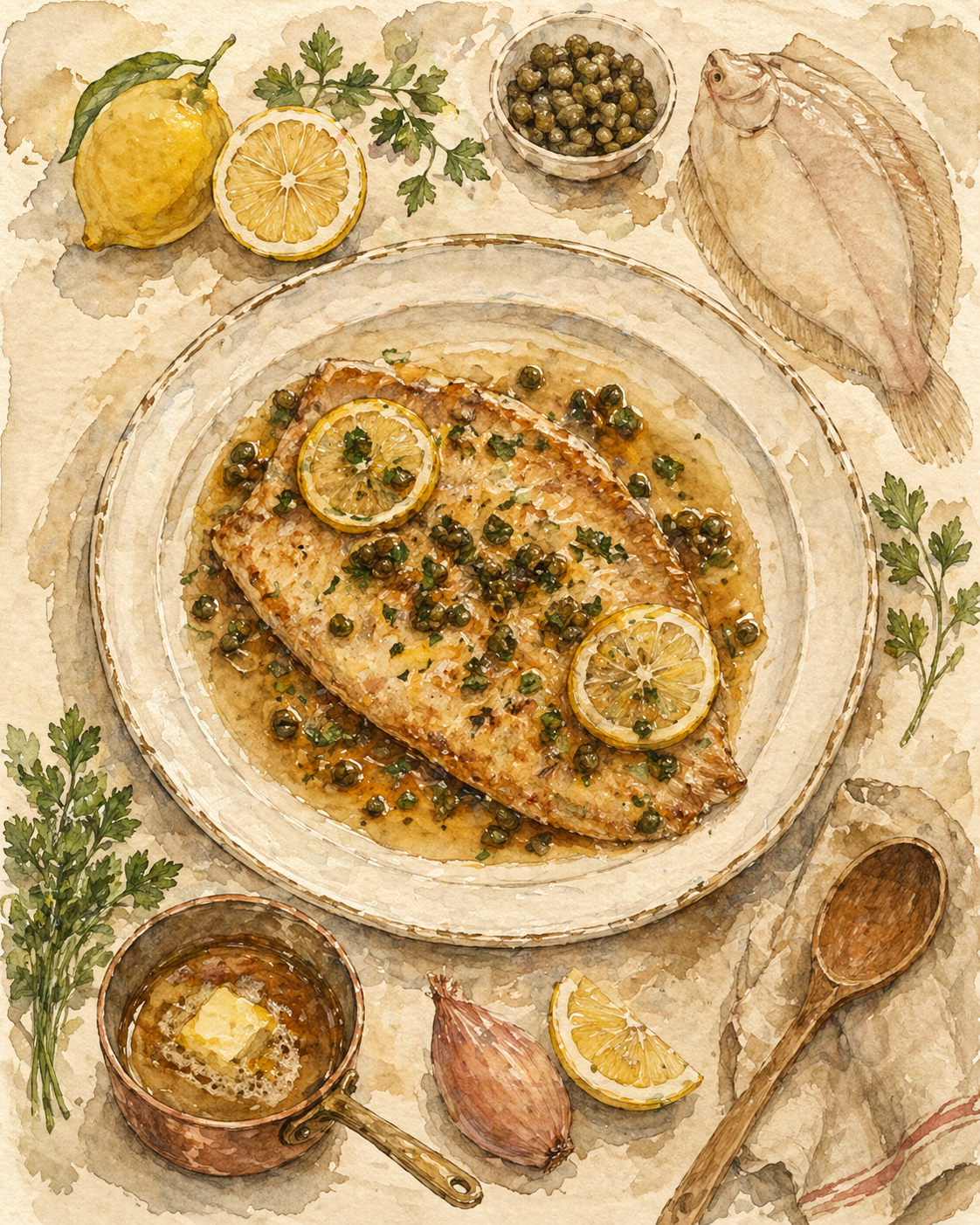
Dover Sole Meunière with Lemon, Capers, and Brown Butter
The classical French preparation — delicate flatfish dredged in flour, pan-fried in butter, finished with lemon, capers, and parsley
Serves 2 · 15 min active · 25 min total · year-round · early evening
Ingredients
Sole
2 whole Dover sole (about 1 lb each), gutted and cleaned (or 4 fillets, about 6 oz each)
½ cup cassava flour or almond flour
1 tsp sea salt
½ tsp freshly ground black pepper
4 tbsp grass-fed butter, divided
2 tbsp avocado oil
Brown butter sauce
6 tbsp grass-fed butter (additional)
3 tbsp fresh lemon juice (juice of 1 large lemon)
2 tbsp capers, drained and rinsed
¼ cup fresh flat-leaf parsley, finely chopped
1 tsp fresh oregano leaves (or ½ tsp dried)
pinch sea salt and freshly ground black pepper
To serve
lemon wedges
additional fresh parsley sprigs
Method
Prep the sole. Pat the fish very dry with paper towels (essential for proper browning). Season both sides with salt and pepper.
Place the cassava (or almond) flour on a wide plate. Dredge each piece of sole in the flour, shaking off excess. The fish should have a thin even coating.
Cook the sole. Heat 2 tbsp butter and 2 tbsp avocado oil in a large heavy skillet over medium-high heat. The pan should be very hot — when the butter is foaming and just beginning to brown.
Add the sole. For whole fish: place darker-skin-side down first. For fillets: skin-side down first.
Cook 3–4 minutes without moving — the bottom should be deeply golden.
Carefully flip with two spatulas (sole is delicate). Cook another 2–3 minutes, until the fish is just cooked through and flakes easily.
Transfer to warmed plates. Tent loosely with foil.
Make the brown butter sauce. Wipe the pan clean with a paper towel.
Return the pan to medium-high heat. Add 6 tbsp butter.
Cook the butter, swirling the pan frequently, 3–4 minutes, until it foams, then turns golden brown, then smells deeply nutty. Watch carefully — brown butter can become burnt butter quickly.
Add the lemon juice (it will sizzle and bubble dramatically). Add the capers, parsley, and oregano. Swirl to combine.
Season with a pinch of salt and pepper.
Serve. Spoon the brown butter sauce generously over the sole. Garnish with additional parsley and lemon wedges.
Serve immediately.
Nourishment Notes
Dover sole is one of the great flatfish of European waters — particularly the English Channel and the North Sea — and has been served in classical French and English cookery for at least 200 years as the centerpiece of poisson preparations. The flesh is delicate, white, and slightly sweet, with a clean briny minerality that doesn't carry the strong fishiness of oilier varieties. Authentic Dover sole (Solea solea) is increasingly hard to source in the United States — most "sole" sold in American fishmongers is actually flounder, a structurally similar but flatter-flavored fish. The high price of true Dover sole reflects both the limited fishery and the careful flat-fish handling required.
Meunière (literally "miller's wife" in French) is one of the foundational preparations of classical French cuisine bourgeoise — flour-dredged fish cooked in butter, served with lemon, butter, and parsley. The technique was popularized by Auguste Escoffier in the 1890s and has remained largely unchanged across formal French cookery. The structural elements are: dry fish for crisping, light flour dredge for browning, hot butter-and-oil for searing, brown butter for the sauce. Each element is non-negotiable for the proper meunière result.
Brown butter (beurre noisette, literally "hazelnut butter") is the structural finish that defines this dish. As butter heats past its melting point, the milk solids settle to the bottom and turn brown, developing complex nutty flavor compounds — particularly guaiacol and 4-vinylguaiacol, the same compounds that give roasted nuts their signature aroma. The technique requires constant attention: butter goes from melted, to foaming, to golden, to nutty-brown, to burnt within a minute. Pulling it from the heat at the right moment is the critical skill of French sauce-making.
The acid-from-lemon-juice + salt-from-capers combination is what balances the rich butter sauce and prevents it from reading as heavy. Lemon's acid cuts through the fat; capers' brine adds salt and slight pickled depth that mirrors the older French preparation of sole bonne femme (with mushrooms) and modern adaptations of sole grenobloise (with lemon and capers, the version closest to this preparation). Either parsley or oregano can lead the herb component; using both together produces a more complex green note.
Storage: Best eaten same day. Sauce alone keeps refrigerated 3 days but the herbs lose their brightness.