Fresh Figs from the Tree: With Homemade Ricotta and Bee Pollen, Plus Seven More Ways to Enjoy Them
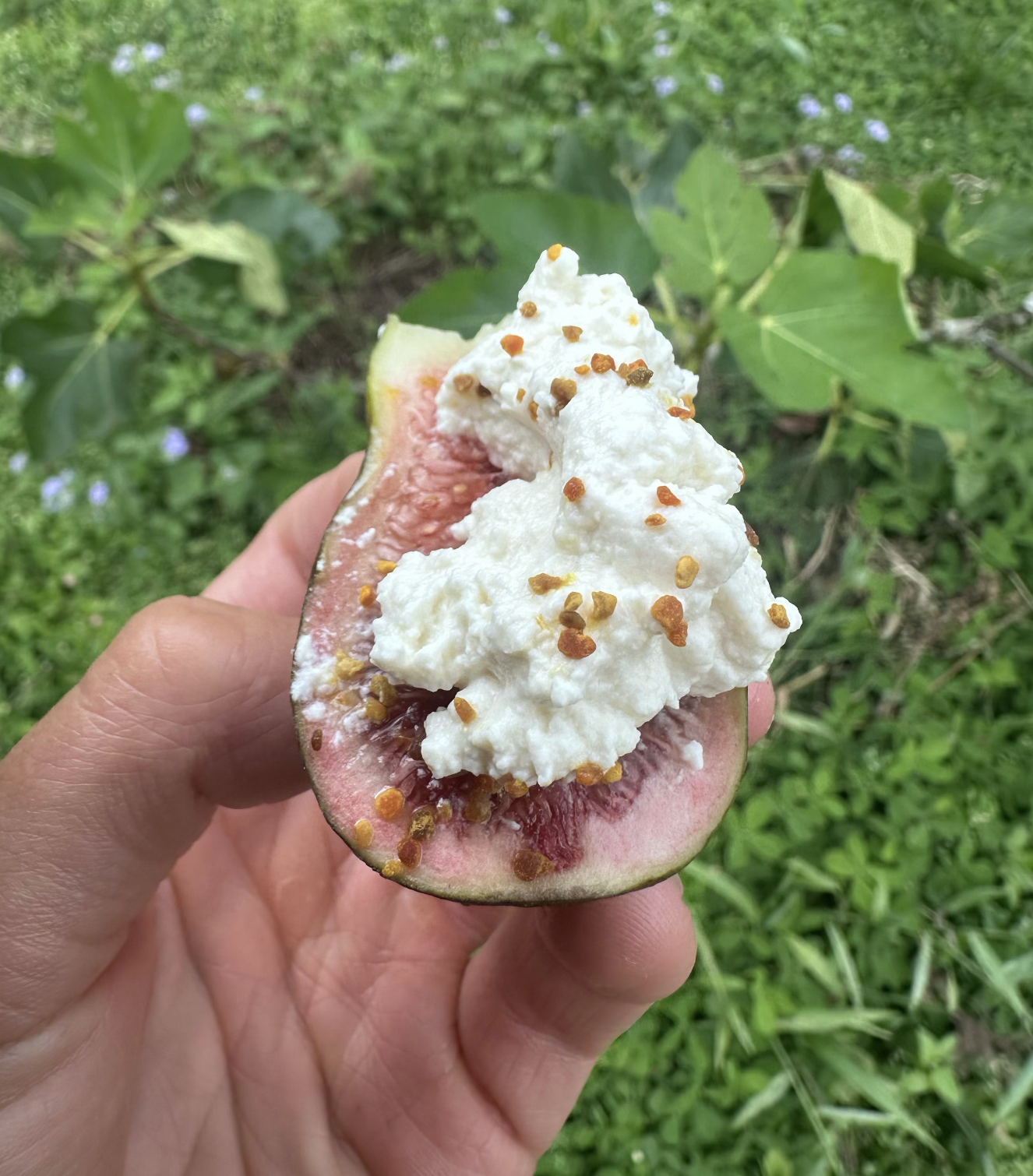
Sun-warm figs, split open and piled with fresh homemade ricotta, golden bee pollen, and a drizzle of honey. The simplest summer treat, plus seven more ways to enjoy fresh figs, from savory prosciutto bites to roasted figs with thyme.
Yield: Serves 4 · Active: 5 min · Total: 5 min · June through October: the first “breba” crop arrives in early summer, and the main crop ripens from August into fall in California, Texas, the Mediterranean, and backyards in USDA zones 7 and warmer · Cuisine: Mediterranean, farm-to-table · Best eaten: morning or afternoon
The fig in this photo came straight off the tree you can see in the background. I picked it, still warm from the sun, split it open, and topped it with ricotta I’d made that very same day, from milk I’d just gotten from milking the mama Jersey cow. Then a scatter of golden bee pollen, and that was it. It’s hard to describe how good something tastes when you know exactly where every part of it came from.
You don’t need a fig tree and a cow to make this (though if you have them, lucky you). Ripe figs from the farmers’ market and good fresh ricotta, homemade or from a local creamery, are all it takes. Below is my favorite way, plus seven more ideas for when the figs are coming in faster than you can eat them.
Want to make your own ricotta? See the three methods in my Spaghetti Squash, Eight Ways and the bonus whey ricotta in my Homemade Raw Mozzarella with Garden Caprese + Bonus Ricotta from the Whey — No whey!
The Classic: Figs with Ricotta, Bee Pollen, and Honey
8 ripe fresh figs (Black Mission, Brown Turkey, Adriatic, or Kadota)
1 cup fresh ricotta, homemade or from a local creamery
4 tsp raw bee pollen
Optional: a drizzle of raw honey
Optional: a tiny pinch of flaky salt
Halve the figs lengthwise.
Top with ricotta. Spoon a generous dollop onto each cut side. Leave it rustic and peaked, rather than smoothing it.
Finish. Scatter the bee pollen over the ricotta, then add a thread of honey and a few flakes of salt, if you like, for a sweet-salty, floral bite.
A note on bee pollen: It can cause reactions in people with pollen allergies or bee sting allergies, so start with just a few granules if you haven’t tried it before.
Seven More Ways to Enjoy Fresh Figs
1. Pistachio-Honey Ricotta Figs. Make the classic, then scatter with chopped pistachios (Sicilian Bronte pistachios are a treat) and a few torn leaves of fresh thyme or lemon balm.
2. Prosciutto-Wrapped Figs. Wrap each fig half (with or without a little goat cheese tucked inside) in a strip of prosciutto. Serve as is, or roast at 400°F for 8–10 minutes, until the prosciutto crisps. Figs and prosciutto are a classic Italian pairing.
3. Caramelized Figs. Set halved figs cut-side down in a hot, dry cast iron skillet (or one with a little butter) for 1–2 minutes, until the cut sides caramelize. Serve warm over yogurt or ricotta, with a drizzle of honey or aged balsamic.
4. Roasted Figs with Thyme and Honey. Arrange halved figs cut-side up in a baking dish, drizzle with honey and olive oil, scatter with fresh thyme, and roast at 400°F for 12–15 minutes, until soft and jammy. Spoon over ice cream, yogurt, or a cheese board.
5. Fig, Burrata, and Basil Plate. Tear open a ball of burrata on a platter, surround it with quartered figs, and finish with torn basil, a drizzle of good olive oil, flaky salt, and black pepper.
6. Fig and Arugula Salad. Toss arugula with quartered figs, crumbled goat cheese, toasted walnuts, and a simple balsamic or lemon vinaigrette. (For a bigger version, see my Seasonal Mixed Greens with Lemon-Dijon Vinaigrette.)
7. Fig Breakfast Bowl or Quick Compote. Slice figs over yogurt or kefir with granola and a drizzle of honey. Or simmer 6 halved figs with 2 tbsp orange juice and 1 tsp honey for 4–5 minutes, until syrupy, and spoon it over parfaits, pancakes, or chia pudding. (See my Chia Parfaits and Yogurt and Berry Parfaits.)
More fig recipes: my Fresh Fig Tart and Fig Cheesecake and Fig and Goat Cheese Pastries.
Storage
Fresh figs are delicate and best eaten within a day or two of picking. Keep them in a single layer in the fridge, and bring them to room temperature before eating for the best flavor.
Fresh ricotta: refrigerated up to 5–7 days.
Assemble just before serving.
A note on honey: Raw honey stays raw when drizzled, but not once it’s roasted or simmered. Honey shouldn’t be given to babies under 12 months.
Nourishment Notes
Fresh figs — fiber, potassium, magnesium, calcium, and polyphenols, with a honeyed sweetness. Figs are one of the oldest cultivated fruits, grown around the Mediterranean and Middle East for thousands of years.
Homemade ricotta — protein, calcium, and vitamins A and K2, especially from grass-fed milk. Milk from Jersey cows is especially rich in butterfat and protein, which makes ricotta extra creamy.
Bee pollen — B vitamins, protein, and flavonoids, with a gentle floral sweetness. Pollen from local bees reflects the flowers growing near you.
Raw honey — enzymes, trace minerals, and antioxidants.
Pistachios and walnuts — lutein, B6, and copper from pistachios, and omega-3 ALA from walnuts.
Prosciutto — protein, B vitamins, and a salty contrast to the sweet fruit.
As a circadian food, figs are best enjoyed in the morning or afternoon, in daylight. The ricotta’s protein and fat balance the fruit’s natural sugars, for steadier energy.
For your cycle: Figs bring magnesium and calcium, and ricotta adds protein, so this is a lovely snack in the luteal phase, when your body craves something sweet.
Sourcing
Figs — fresh and in season, from your own tree, a pick-your-own farm, or a farmers’ market; heirloom varieties have much more flavor than supermarket figs
Ricotta — homemade from fresh, grass-fed milk, or from a local creamery or Bellwether Farms, with no gums or stabilizers
Bee pollen — raw and local, from a beekeeper you trust, or Stakich (keep it in the fridge or freezer)
Raw honey — organic, local, and unfiltered
Pistachios and walnuts — organic
Prosciutto — Prosciutto di Parma or San Daniele, made with just pork and salt
Burrata and goat cheese — from a local creamery
Flaky salt — Maldon or Jacobsen
— Anna aka Food Marshall