Garden Tomato Basil Sauce with Zucchini Noodles & Grass-Fed Meatballs — Plus: how to prune your tomato plants for maximum harvest
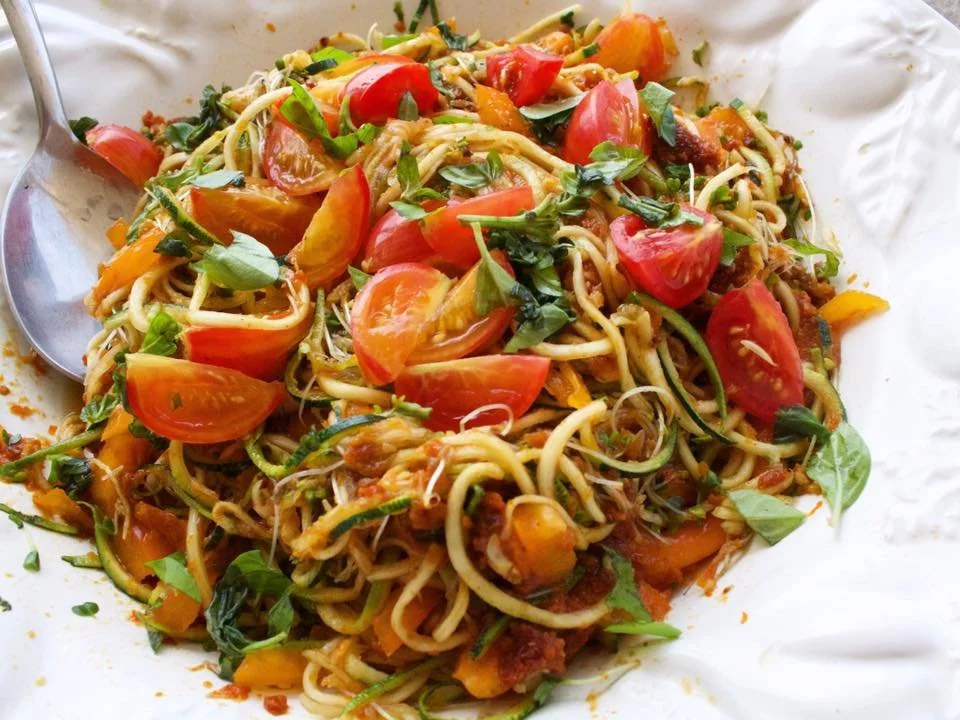
Garden Tomato Basil Sauce with Zucchini Noodles & Grass-Fed Meatballs
Plus: how to prune your tomato plants for maximum harvest
Fresh garden tomato basil sauce served over warm zucchini noodles (or spaghetti squash "boats") with melted raw mozzarella, freshly grated Parmesan, and grass-fed meatballs. The kind of dinner that comes together in under 30 minutes when your garden is peaking — and the kind of meal that proves real ingredients don't need refined pasta or processed sauces to be deeply satisfying.
Yield: 4 servings · Active: 30 min · Total: 45 min · Late summer through early autumn (peak: July–September)
A note from the kitchen
This is what dinner looks like when your tomato plants are heavy with fruit and the basil is going wild. A simple, fresh, no-cook tomato sauce (or barely-cooked, depending on your preference) with garden basil, raw garlic, fresh Parmesan, and pulled-apart mozzarella that melts beautifully when it hits the warm zucchini noodles or spaghetti squash boats. Real Italian-inspired cooking doesn't require a long-simmered sauce — at the height of tomato season, the tomatoes are sweet enough and the basil is fragrant enough that minimal manipulation is the right approach. The format is grain-free, gluten-free, and refined-sugar-free without sacrificing any of the deep satisfaction of a classic Italian dinner.
The pasta substitute is your choice — spiralized zucchini noodles (raw or briefly warmed in a skillet with olive oil) or roasted spaghetti squash served in the squash halves as "boats." Both work beautifully. Warming the zucchini noodles is the key step — the warm noodles melt the mozzarella on contact, the way real pasta does. Cold zucchini noodles are refreshing, but may leave the cheese clumpy and don't deliver the same comforting result.
The meatballs are made from grass-finished ancestral-blend ground meat — beef, bison, elk, venison, or lamb. Force of Nature's ancestral blends (with organ meats blended in) are a beautiful option if you can find them at your local grocery. The added organ meats contribute mineral density and nutritional depth without changing the flavor profile. Otherwise, any grass-finished ground meat from a small local rancher you trust works beautifully. The structural addition of an egg yolk and Parmesan keeps the meatballs tender and richly seasoned without needing breadcrumbs.
Ingredients
For the fresh garden tomato basil sauce:
2–3 cups fresh garden tomatoes (heirloom or vine-ripened), quartered, halved, or roughly chopped depending on size; leave some chunky, smash some others for sauce texture
1 large handful (about ¼ cup) fresh basil, finely chopped or torn (plus extra small leaves for garnish)
2 cloves raw garlic, chopped (ensure central vein removed) (or pan-seared until golden in olive oil for a milder, more aromatic version)
¼ cup high-quality extra-virgin olive oil (single-estate, harvest-dated within 12 months)
1 tsp sea salt (Baja Gold mineral salt or equivalent)
½ tsp freshly cracked black pepper
Optional: 1 tsp aged balsamic vinegar or sherry vinegar (for brightness)
Optional: pinch red pepper flakes for heat
For the cheese topping:
½ cup fresh Parmesan or Parmigiano-Reggiano DOP, freshly grated (use generously — be confident with the cheese)
8 oz fresh mozzarella, torn or sliced into bite-sized pieces (raw if available — see companion homemade raw mozzarella recipe for ambitious cooks)
For the grass-fed meatballs:
1 lb grass-finished ground meat (beef, bison, elk, venison, lamb, or ancestral blend with organ meats)
1 large pasture-raised egg yolk
½ cup fresh Parmesan or Parmigiano-Reggiano DOP, freshly grated
¼ cup fresh flat-leaf parsley, finely chopped
1–2 cloves garlic, minced (or 1 small shallot, finely chopped)
1 tsp dried Italian herb blend (thyme, oregano, and sage)
½ tsp sea salt
¼ tsp freshly cracked black pepper
2 tbsp extra-virgin olive oil (for cooking)
For the pasta base (choose one):
Option A — Zucchini noodles: 4 medium zucchini, spiralized into noodles; 2 tbsp extra-virgin olive oil for warming
Option B — Spaghetti squash boats: 2 medium spaghetti squash, halved lengthwise, seeds scooped out
For finishing:
Fresh whole basil leaves
Drizzle of high-quality olive oil
Flaky sea salt (fleur de sel)
Optional: cracked black pepper
Method
Prepare the spaghetti squash (if using). Preheat the oven to 400°F. Halve the squash lengthwise and scoop out the seeds. Brush the cut sides with olive oil, season with sea salt and pepper, and place cut-side down on a parchment-lined baking sheet. Roast 35–40 minutes, until the flesh is tender and easily forked into strands. Keep warm.
Make the fresh tomato sauce. While the squash roasts (or as your first step if using zucchini noodles), combine the chopped tomatoes, basil, garlic, olive oil, sea salt, black pepper, and optional balsamic vinegar and red pepper flakes in a large bowl. Toss gently to integrate. Let sit at room temperature 15–20 minutes — this is structurally important. The tomatoes will release their juices and the flavors will integrate into a fresh, light sauce. Taste and adjust seasoning.
Form and cook the meatballs. In a medium bowl, gently combine the ground meat, egg yolk, Parmesan, parsley, garlic, Italian herb blend, sea salt, and black pepper. Mix with your hands just until combined — don't overwork (overworking produces tough meatballs). Form into 16–20 small meatballs (about 1½ inches each).
Heat 2 tbsp olive oil in a large cast-iron or stainless steel skillet over medium-high heat. Add the meatballs in a single layer (work in batches if needed — don't crowd the pan). Sear 2–3 minutes per side, turning carefully with tongs, until deeply golden brown on all sides and just cooked through (internal temperature about 160°F for beef/bison/elk; 165°F for poultry). Total cooking time about 8–10 minutes.
Prepare the zucchini noodles (if using). While the meatballs finish, heat 2 tbsp olive oil in a separate wide skillet over medium heat. Add the spiralized zucchini noodles and toss gently for 2–3 minutes, just until warmed through and slightly softened. Don't overcook — zucchini noodles release water quickly and become soggy if cooked too long. Keep them al dente.
Assemble. The structural moment of the dish — warm components meeting cold:
For zucchini noodles: Divide the warm noodles among four bowls. Spoon the fresh tomato sauce generously over the noodles (the warm noodles will warm the sauce slightly). Top with mozzarella pieces and grated Parmesan — the heat from the noodles and sauce will melt the mozzarella into beautiful pools. Arrange the meatballs alongside.
For spaghetti squash boats: Use a fork to gently fluff the spaghetti squash flesh into strands within each squash half, keeping the strands in the boat. Spoon the fresh tomato sauce generously into each boat. Top with mozzarella pieces and grated Parmesan — the heat from the warm squash will melt the cheese beautifully. Arrange the meatballs alongside or on top.
7. Finish and serve. Garnish each portion with fresh whole basil leaves, a final drizzle of high-quality olive oil, flaky sea salt, and optional cracked black pepper. Serve immediately while the cheese is melting and the warm-cold contrast is at its peak.
Variations
Vegetable-forward variation: Add roasted seasonal vegetables — caramelized onions, roasted fennel, sautéed mushrooms, charred bell peppers, roasted broccoli, roasted asparagus, or roasted eggplant. Top with extra Parmesan and toasted pine nuts.
Saffron-tomato variation: Add a pinch of saffron threads steeped in 2 tbsp warm olive oil to the tomato sauce. Beautiful Mediterranean depth.
Pesto-swirled variation: Make a quick pesto (1 cup fresh basil + ½ cup pine nuts or pistachios + ½ cup Parmesan + 1 clove garlic + ⅓ cup olive oil + sea salt, blended). Swirl into the finished dish for a herb-anchored variation.
Calabrian chili variation: Add 1 tsp jarred Calabrian chili paste to the tomato sauce for a fiery Southern Italian version. Pair with extra Parmesan and torn basil. Look for a brand with ideally no seed oils.
Lamb meatball variation: Use ground lamb for the meatballs. Add ½ tsp ground cumin and ¼ tsp ground cinnamon to the meatball seasoning. Beautiful Levantine-Italian fusion.
Burrata variation: Substitute the mozzarella with fresh burrata for an even more luxurious result — the creamy interior of burrata melts dramatically over the warm zucchini noodles. Beautiful for a special-occasion version.
Roasted tomato variation: Instead of the fresh raw-tomato sauce, roast 2 lb cherry tomatoes with garlic and olive oil at 400°F for 25 minutes until collapsed. Mash gently and use as the sauce base for a deeper, more concentrated tomato flavor.
Sourcing
Fresh garden tomatoes:
From your own garden (the gold standard — see pruning guide below for maximizing harvest), local farmers' market, or CSA during peak season (July–September in most temperate climates).
Heirloom varieties (Brandywine, Cherokee Purple, Black Krim, San Marzano, Green Zebra, Sungold, Sweet 100) for the deepest flavor and most complex sweet-acidic balance.
Vine-ripened, never refrigerated until cut (refrigeration destroys the texture and aromatic compounds of fresh tomatoes).
Firm but yielding to gentle pressure. Bright color with no green at the stem end (green = underripe).
Avoid commercial supermarket tomatoes (typically picked green and gas-ripened, with significantly less flavor).
Fresh garden basil:
From your own herb garden, a kitchen windowsill plant, or local farmers' market during peak season (June–October).
Genovese basil for the most classic Italian profile; Thai basil and lemon basil for variations.
Bright green, fragrant leaves with no wilting or yellowing.
Use immediately after harvesting — basil's volatile oils degrade quickly.
Avoid pre-cut bagged basil from supermarket clamshells.
Raw garlic:
Whole heads with tight, papery skin — no green shoots emerging (a sign of older garlic).
Local hardneck garlic varieties (Music, Romanian Red, Spanish Roja, Persian Star) have more complex flavor than supermarket softneck.
Stored cool and dry, never refrigerated.
Parmesan / Parmigiano-Reggiano DOP:
The legal protected designation: Parmigiano-Reggiano DOP. Cheese with this designation has been made traditionally with raw milk from cows grazed on Italian pasture, aged minimum 12 months (24+ months for the deepest flavor).
Look for the rind stamp authenticating the cheese.
From a specialty cheesemonger or Italian grocery.
Freshly grated, not pre-grated (pre-grated typically contains cellulose anti-caking agents).
Avoid "Parmesan-style cheese" from canisters and tubs.
Fresh mozzarella:
Raw milk mozzarella when legally available in your state (state-by-state legal status varies — check realmilk.com). Even more aligned: homemade raw mozzarella (see companion recipe).
Buffalo mozzarella DOP (Mozzarella di Bufala Campana DOP) for the most luxurious option.
Fior di latte (cow's milk fresh mozzarella) as the more widely available alternative.
From a small local creamery or specialty Italian grocer.
Stored in its brine; use within 2–3 days of opening.
Avoid mass-produced "fresh mozzarella" with extended shelf-life packaging.
Grass-finished ground meat:
100% grass-fed AND grass-finished. "Grass-fed, grain-finished" is not the same — finishing on grain dilutes the omega-3 fatty acid profile and mineral density.
From a small local rancher you know personally is the gold standard.
Heritage breeds when available (Angus, Hereford, Highland, Wagyu for beef (though usually grain-finished); Berkshire, Mangalitsa, Tamworth for pork).
Ancestral blends with organ meats blended in (Force of Nature is one available option in larger U.S. grocery stores) — beautifully aligned with whole-animal nutrition.
Avoid generic supermarket "lean ground beef" from confined-feedlot cattle.
Pasture-raised eggs:
"Pasture-raised," not "free-range" or "cage-free."
Deep orange yolks — the visual indicator that the hens foraged on real pasture.
From a local farmer at the farmers' market when possible.
Zucchini:
Local farmers' market or CSA during peak season (June–September).
Smaller, firmer zucchini (about 6–8 inches) are sweeter and have fewer seeds than large ones.
Heritage varieties (Costata Romanesco, Cocozelle, Trombetta) for deeper flavor.
Avoid soft, wrinkled, or split zucchini.
Spaghetti squash:
Local farmers' market or CSA during peak season (August–November).
Heavy for size, with a matte (not shiny) skin.
Pale yellow color, firm to the touch.
Avoid soft spots or any moldy areas.
Extra-virgin olive oil:
Single-estate (one farm, one variety, one harvest), harvest-dated within the last 12 months.
In a dark glass bottle.
Smell test: should smell fresh, green, slightly peppery — never musty or rancid.
Stored cool, away from light.
Sea salt:
Baja Gold mineral sea salt (third-party tested at 29.5–31.5% sodium, harvested from the Sea of Cortez, solar-dried) or any equivalent mineral-rich sea salt for the sauce and meatballs.
Fleur de sel for finishing — hand-harvested by skimming the delicate top layer of French salt pans.
Storage
Refrigerator: All components keep separately 2–3 days in glass containers. The tomato sauce is actually better on day 2 — the flavors deepen and integrate. Meatballs and pasta base can be reheated gently.
Freezer: The meatballs freeze beautifully (up to 3 months). The tomato sauce freezes well too. Don't freeze zucchini noodles or spaghetti squash — both lose texture dramatically.
To reheat: Use the stovetop or oven (350°F for 10 minutes). Never the microwave — it ruins the cheese texture and damages the volatile oils in the fresh basil and olive oil.
Pairs Well With
For the table: Sparkling water with a slice of lemon and fresh basil, fresh-pressed citrus juice, or a tall glass of cold hibiscus tea with mint. For warm pairings, a small espresso at the end of the meal.
For a complete dinner board: Add a simple seasonal salad — arugula or watercress with shaved fennel, fresh herbs, and a simple lemon-olive-oil-and-Dijon vinaigrette. The bright bitter salad cuts the richness of the meat and cheese beautifully.
For the gathering: Serve family-style in the center of the table — pile the zucchini noodles or arrange the spaghetti squash boats on a large platter, surround with meatballs, top with mozzarella and Parmesan, sprinkle basil.
For seasonal context: This dish is genuinely at its best in late summer through early autumn, when garden tomatoes are at peak ripeness and basil is going wild. Make this when your garden is heavy with fruit — and use the pruning guide below to make sure your tomato plants give you the maximum harvest.
Why This Dish
Real Italian-inspired food doesn't require refined pasta or industrial sauces. Real tomato sauce takes 15 minutes of resting time when the tomatoes are at peak season. Real meatballs need pasture-raised meat, egg yolk, and Parmesan — not breadcrumbs and fillers. Real mozzarella comes from real milk, ideally from cows grazed on real pasture. Real basil comes from a real garden or windowsill. The format of this dish proves that healthy cooking doesn't require sacrificing any of the deep satisfaction of a classic Italian dinner — it actually delivers more flavor, more nutrient density, and more nourishment than the industrial version ever could.
And now for the fellow gardeners here…
A guide to pruning your tomato plants for maximum harvest
If you're growing your own tomatoes for this recipe — or planning to start — proper pruning is structurally essential for a healthy plant and a maximum harvest. Most home gardeners under-prune, which leads to dense, tangled plants prone to fungal disease and lower fruit production. The principles below are drawn from regenerative gardening practices and apply primarily to indeterminate tomato varieties (heirlooms, cherry tomatoes, vining varieties).
Understanding tomato growth patterns
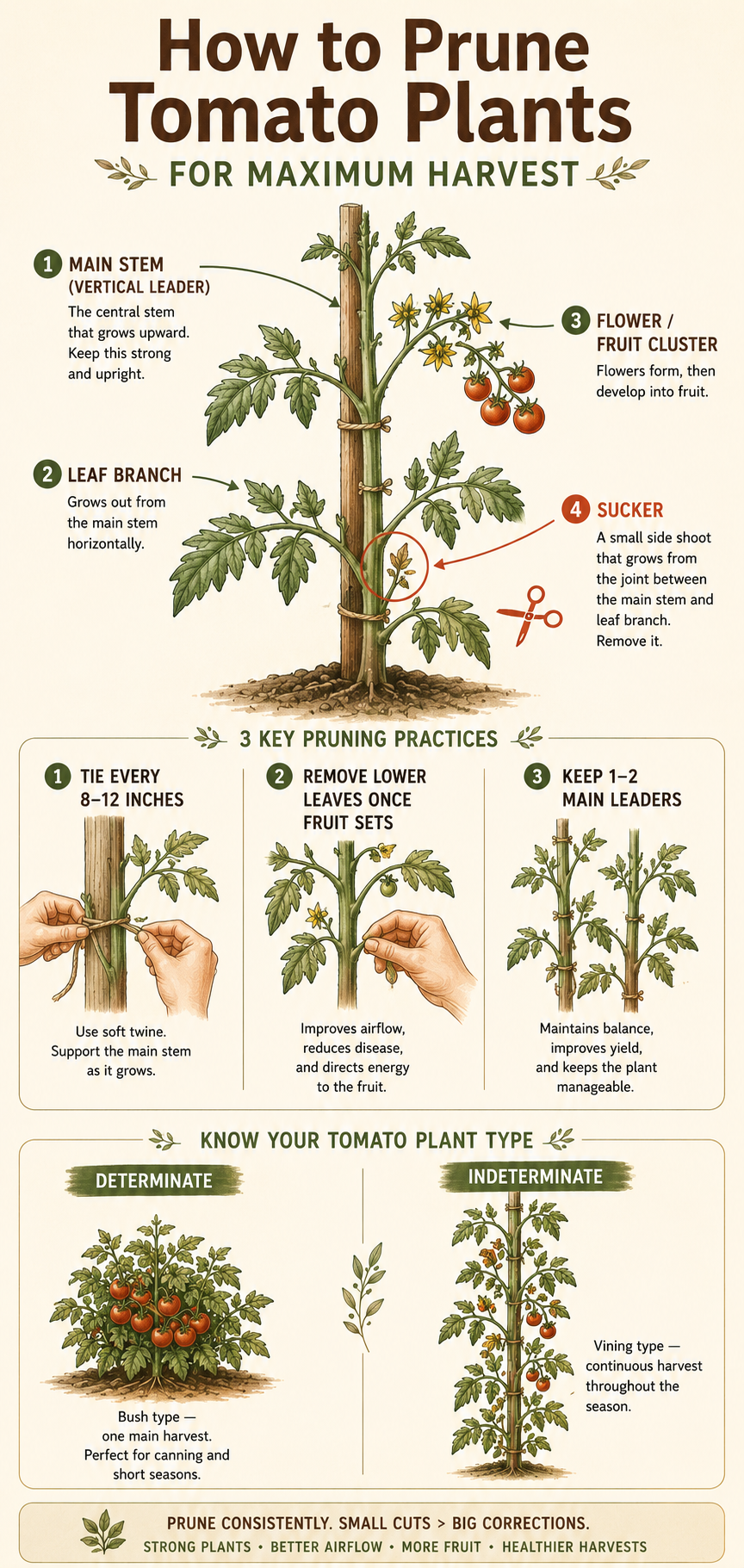
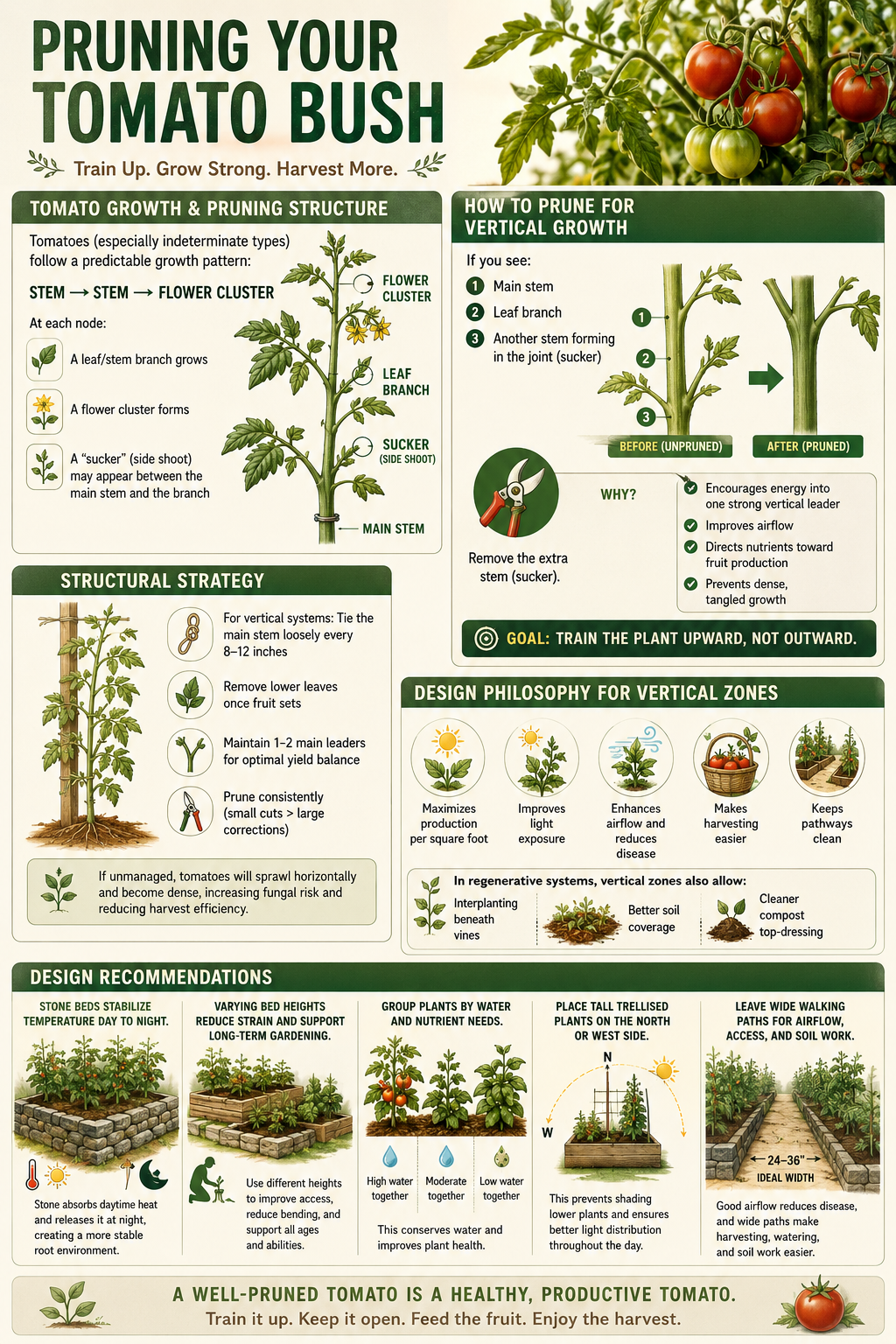
Tomatoes (especially indeterminate types) follow a predictable growth pattern: stem → leaf branch → flower cluster, repeating up the plant. At each node:
A leaf or stem branch grows from the main stem
A flower cluster forms (which becomes a fruit cluster)
A "sucker" — a side shoot that emerges from the joint where the leaf branch meets the main stem — may also appear
This sucker is the key structural element to understand. Left unmanaged, suckers grow into full additional stems with their own branches, leaves, and fruit clusters. The plant becomes dense, tangled, and divided across too many growing points to produce well.
How to prune for vertical growth
When you look at your tomato plant, identify:
The main stem (the central vertical leader)
A leaf or branch growing horizontally off the main stem
The joint between them — and any small new shoot emerging from that joint
Remove the sucker (the small shoot growing in the joint). Pinch it off with your fingers when it's still small (under 4 inches), or use clean pruning shears for larger growth.
Why this works: removing suckers concentrates the plant's energy into one strong vertical leader. Vertical growth improves airflow, directs nutrients toward fruit production rather than excess foliage, and prevents the dense tangled growth that creates conditions for fungal disease (especially in humid climates).
The goal: train the plant upward, not outward.
Structural strategy
For vertical growing systems (the most efficient approach for indeterminate tomatoes):
Tie the main stem loosely to a stake, trellis, or cage every 8–12 inches
Remove lower leaves once fruit sets on the lower clusters — this prevents soil-splash-borne diseases and improves airflow
Maintain 1–2 main leaders for optimal yield balance — more leaders create competing growth points
Prune consistently throughout the season — small frequent cuts are far better than occasional large corrections, which stress the plant
If unmanaged, tomatoes will sprawl horizontally and become dense, increasing fungal risk and reducing harvest efficiency.
Determinate vs. indeterminate tomatoes — know which you have
The pruning approach depends on which variety you're growing.
Determinate tomatoes (often labeled "bush" tomatoes):
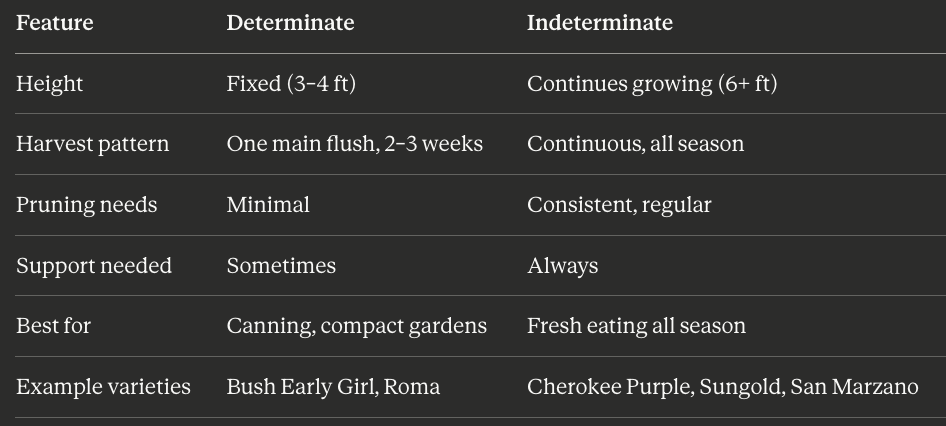
Grow to a genetically predetermined height (usually 3–4 feet)
Stop elongating once flowers form at the terminal tip
Stay compact and bush-like
Set most of their fruit at once in a concentrated 2–3 week window
Ideal for bulk harvest (canning, sauce-making, preserving)
Require minimal pruning — light tidying only
Best for: small spaces, short growing seasons, mechanical harvesting, single-batch canning.
Indeterminate tomatoes (most heirlooms, cherry tomatoes, vining varieties):
Continue growing throughout the season
Produce new leaves and flowers simultaneously
Can become very tall (6+ feet) or sprawling
Produce fruit continuously until frost
Staggered harvest over many weeks
Require staking or trellising and consistent pruning
Best for: long growing seasons, continuous fresh harvest, vertical gardening systems.
Design philosophy for vertical zones
Vertical growing systems maximize production per square foot, improve light exposure to all leaves, enhance airflow and reduce disease, make harvesting easier, and keep pathways clean.
In regenerative garden systems, vertical zones also allow for:
Interplanting beneath the vines (lettuces, herbs, root vegetables)
Better soil coverage and moisture retention
Cleaner compost top-dressing throughout the season
Design recommendations for your garden beds
Stone-edged beds stabilize temperature from day to night and last for decades
Varying bed heights reduce strain on your back and support long-term gardening
Group plants by water and nutrient needs (high-water tomatoes near other thirsty plants)
Place tall trellised plants (tomatoes, beans, cucumbers) on the north or west side of beds so they don't shade shorter crops
Leave wide walking paths for airflow, access, and soil work
Quick reference table
Make this pruning work part of your garden routine — 10 minutes a week is genuinely all it takes — and your tomato plants will reward you with weeks and weeks of harvest. Real food gardening is one of the most direct ways to reconnect with where your nourishment comes from, and the tomatoes from your own garden will be on a different level than anything from a supermarket. Use them in this recipe and you'll understand the structural difference real ingredients make.
<3 Anna, aka Food Marshall & Health Marshall