Harissa-Marinated Sirloin with Preserved Lemon
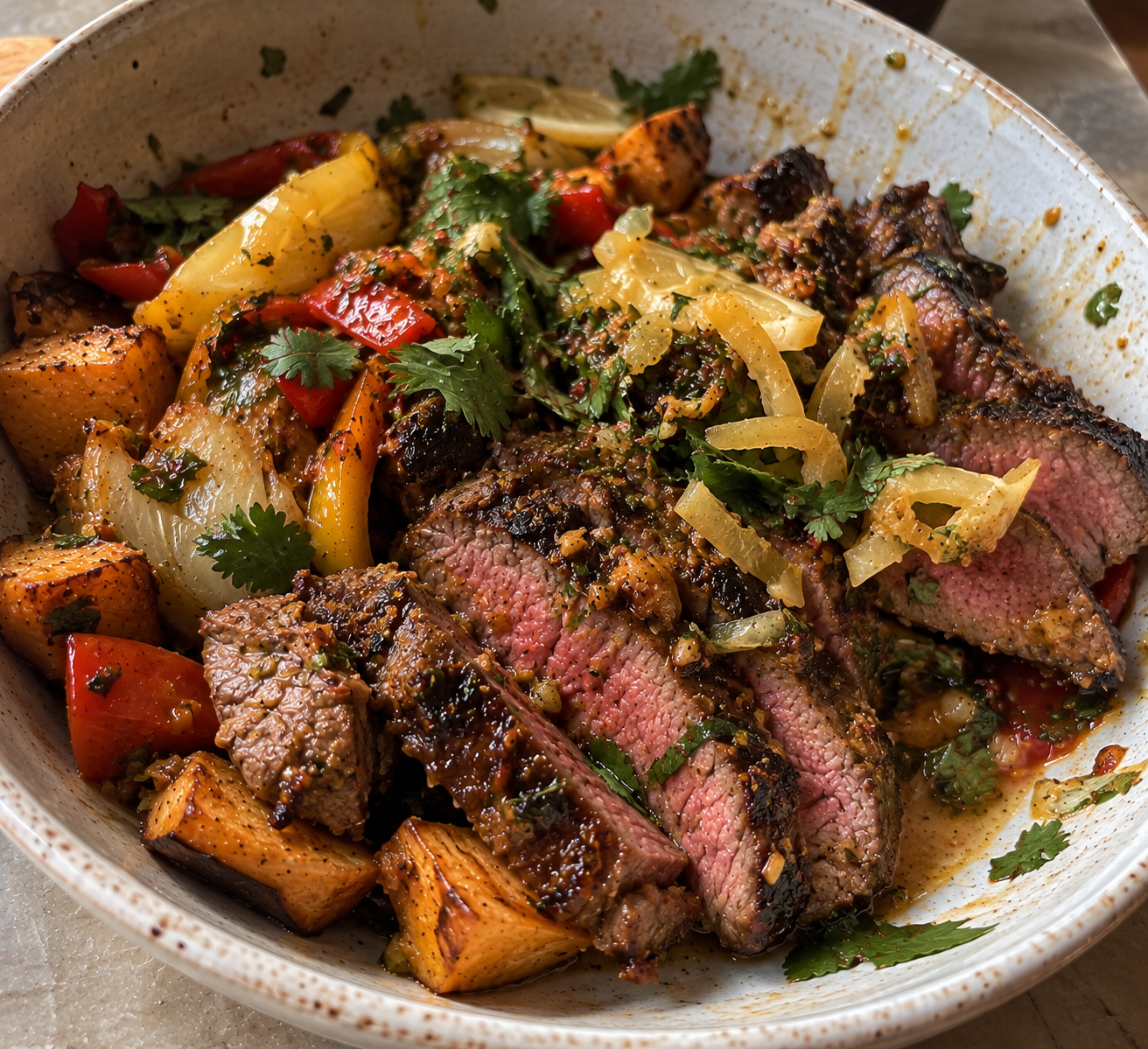
Grass-finished sirloin rubbed with smoky harissa, seared in cast iron, and finished with butter, soft shallots and onions, preserved lemon, and plenty of fresh parsley.
Yield: Serves 4 · Active: 15 min (plus 20 min for the harissa) · Total: 1½ hours, including marinating · Year-round, and especially warming in fall and winter · Cuisine: North African, Mediterranean · Best eaten: midday or early evening
Ingredients
Steak
2 grass-finished sirloin steaks (about 10 oz each, 1 inch thick)
1½ tbsp harissa, homemade (below) or store-bought
Baja Gold sea salt and black pepper
1 tbsp grass-fed ghee or tallow, for searing
2 tbsp grass-fed butter
1 small onion, thinly sliced
1 small shallot, finely diced
2 garlic cloves, minced
1 tbsp preserved lemon peel, very finely sliced (rinsed first, to reduce the salt)
2 tbsp fresh flat-leaf parsley, chopped, plus more to finish
Optional: zest of 1 lemon
Flaky salt, to finish
DIY Harissa
Makes about ¾ cup
6 dried chilies (baklouti if you can find them, or a mix of guajillo and ancho), stemmed and seeded
2–3 small dried chiles de árbol, for heat (optional)
1 tsp caraway seeds
1 tsp coriander seeds
½ tsp cumin seeds
3 garlic cloves
1 tsp smoked paprika
1 tbsp fresh lemon juice
¼ cup extra virgin olive oil, plus more to cover
½ tsp Baja Gold sea salt
Optional: 1 roasted red pepper, for a milder, sweeter harissa
Soak the chilies. Cover the dried chilies with boiling water, and soak 20 minutes, until soft. Drain, saving a little of the soaking water.
Toast the seeds. Toast the caraway, coriander, and cumin in a dry skillet for 1–2 minutes, until fragrant, then grind them.
Blend. Blend the chilies, ground spices, garlic, paprika, lemon juice, olive oil, salt, and roasted pepper (if using) into a thick paste, adding a spoonful of the soaking water if needed.
Store. Spoon it into a clean jar, and cover the top with a thin layer of olive oil. It keeps up to 2 weeks in the fridge (always use a clean spoon), or freeze it in small portions for up to 3 months.
Method
Marinate. Rub the harissa into both sides of the steaks, and season with salt and pepper. Marinate 1 hour at room temperature, or overnight in the fridge (take it out 30 minutes before cooking).
Soften the onions. Melt 1 tbsp of the butter in a heavy skillet (cast iron is ideal) over medium heat. Add the onion, shallot, and garlic, and cook 4–5 minutes, until soft and just starting to color. Move them to a plate.
Sear the steaks. Add the ghee to the skillet, and raise the heat to medium-high. When it shimmers, add the steaks, and sear 2–3 minutes per side, until deeply browned and 125–130°F inside for medium-rare. (The harissa browns quickly, so keep an eye on it.)
Finish the pan sauce. Lower the heat. Return the onions to the pan, and add the remaining 1 tbsp butter and the preserved lemon. Spoon the buttery onions over the steaks for about 30 seconds.
Rest the steaks on a board for 5 minutes, so the juices settle and the steak stays tender.
Slice and serve. Slice against the grain into ½-inch slices, and arrange them on a platter. Spoon the onions, preserved lemon, and pan butter over the top, then scatter with parsley, lemon zest (if using), and a pinch of flaky salt.
A note on preserved lemons: Use the peel, sliced very thin, and rinse it first; it’s salty, so a little goes a long way. To make your own: Quarter organic lemons almost to the base, pack them with sea salt, and press them into a clean jar, adding fresh lemon juice to cover. Let them cure at room temperature for 3–4 weeks, shaking the jar every few days, then refrigerate for up to a year.
Serve It With
A bed of greens, cauliflower purée (from my Velvet Vegetable Purées), or a shirazi salad of finely diced cucumber, tomato, and red onion with lime and dried mint (from my Lamb and Apricot Kebabs). A glass of cold sparkling water with fresh mint is lovely alongside.
Storage
Leftover steak: refrigerated up to 2 days. It’s wonderful sliced thin and cold over a salad, with extra parsley and a squeeze of lemon.
Marinated raw steak: up to 1 day in the fridge; the flavor only gets better.
Harissa: up to 2 weeks in the fridge, or 3 months frozen.
Nourishment Notes
Grass-finished sirloin — heme iron, zinc, B12, selenium, taurine, carnitine, and complete protein. Sirloin sits in the middle of the beef spectrum, leaner than ribeye but richer than tenderloin, which makes it a great everyday steak. Grass-finished beef has more omega-3s, CLA, beta-carotene, and vitamin E than grain-finished beef. Look for “grass-finished” or “100% grass-fed” on the label, since “grass-fed” alone can mean the cattle were finished on grain.
Harissa — a chili paste from Tunisia, also loved across Morocco and Algeria, traditionally made by pounding dried red chilies, garlic, caraway, coriander, cumin, olive oil, and salt in a stone mortar. Capsaicin from the chilies is studied for supporting circulation and metabolism, and the toasted seeds and garlic bring polyphenols and sulfur compounds. Many store-bought tubes are mostly tomato paste, so homemade, or a good brand like New York Shuk or Mina, makes a real difference.
Preserved lemon — one of the great ingredients of North African cooking. Curing lemons in salt and their own juice softens the rind, mellows its sharpness, and gives it a deep, savory, slightly fermented flavor that fresh lemon can’t match. The peel carries aromatic oils and flavonoids.
Grass-fed butter, ghee, and tallow — vitamins A, D, E, and K2, plus butyrate. Ghee and tallow handle the high heat of searing, while butter adds rich flavor to the pan sauce.
Onion, shallot, and garlic — quercetin and sulfur compounds.
Fresh parsley — vitamin K, folate, vitamin C, and apigenin, a flavonoid studied for its calming and anti-inflammatory effects. Its vitamin C also helps your body absorb the iron in the beef.
As a circadian food, this is best at midday or early dinner, when your body digests protein most easily. The bright lemon and herbs keep it lively enough for warm weather, and the warming harissa makes it especially welcome in fall and winter.
For your cycle: With heme iron, zinc, and B12, this steak is especially restorative during and just after your period, and the protein supports steady energy through the luteal phase.
Sourcing
Sirloin — 100% grass-fed and grass-finished, from a local rancher, US Wellness Meats, or White Oak Pastures
Grass-fed butter, ghee, and tallow — organic, from 100% grass-fed cows
Dried chilies — organic, from a spice shop or Latin market (baklouti chilies are sold by North African and specialty spice shops)
Harissa (if buying) — New York Shuk or Mina, with chilies (not tomato paste) as the first ingredient
Preserved lemons — homemade from organic lemons, or from a Middle Eastern grocer
Onion, shallot, garlic, parsley, and lemons — organic, from a farmers’ market
Whole spices — organic and non-irradiated caraway, coriander, cumin, and smoked paprika
Extra virgin olive oil — organic, single-estate, harvest-dated, in dark glass
Salt — Baja Gold sea salt; Maldon for finishing
— Anna aka Food Marshall