Velvet Vegetable Purées: A Foundation
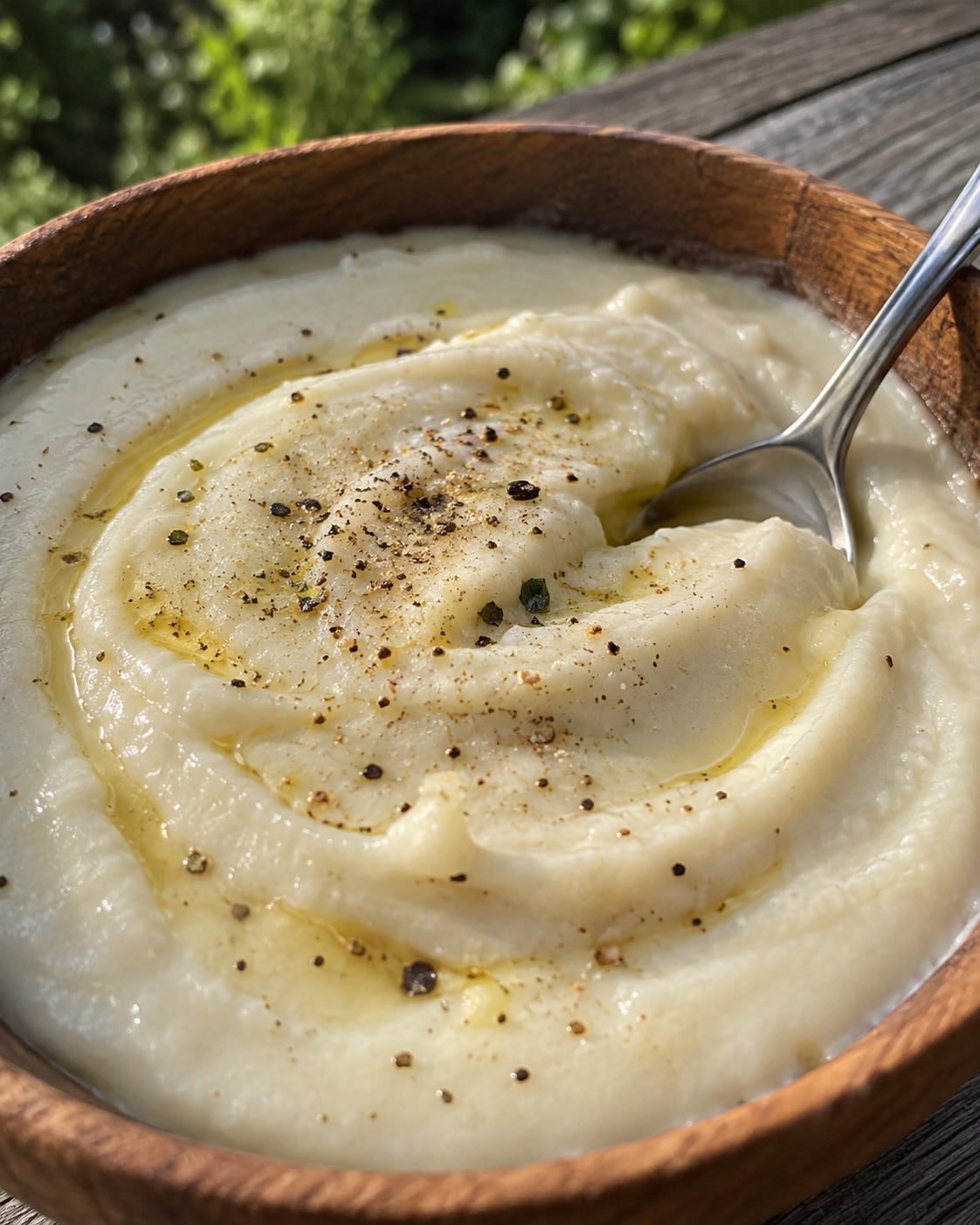
The simplest, most versatile side in my kitchen: vegetables steamed until meltingly tender, then blended with grass-fed butter and a pinch of salt until smooth, creamy, and velvety. Serve them under roast chicken, spoon them beside fish, or use them as a dip for meatballs. Little ones love them too: think of them as a homemade, nourishing alternative to jarred baby food.
Yield: About 3–4 cups (from 2 lb of vegetables) · Active: 10 min · Total: 30 min · Year-round, with the seasons · Best eaten: midday or early evening
There's something about a bowl of velvety purée that makes everyone at the table happy. Kids who push vegetables around their plate will happily dip a meatball into a swirl of golden carrot purée. Adults reach for it, too: a spoonful of silky cauliflower under a braise, or a pool of bright green pea purée beside a piece of fish, turns a simple dinner into something that feels restaurant-worthy.
And it couldn't be easier. There's no recipe to memorize, just a formula: steam, blend, butter, salt. Once you've made one, you can make any of them, with whatever's in season.
The Master Formula
2 lb vegetables (one kind, or a mix)
2 tbsp grass-fed butter
A pinch of Baja Gold sea salt (about ¼–½ tsp), to taste
Optional: ¼–½ cup bone broth (or a splash of the steaming water or cream), to thin
The Method
Cut evenly. Cut the vegetables into even pieces, so they cook at the same rate (florets, or 1-inch chunks).
Steam until very tender. Steam them over simmering water until a knife slides through with no resistance at all (see the times below). Steaming rather than boiling keeps the purée from turning watery, and keeps more of the vegetables' vitamins.
Drain well. Let them sit in the steamer basket for a minute, so the excess moisture evaporates. Watery vegetables make a thin purée, so for cauliflower especially, press it lightly with a clean towel.
Blend while hot. Transfer the hot vegetables to a high-speed blender or food processor, and add the butter and salt. Start on low, then blend on high for 1–2 minutes, scraping down the sides, until completely smooth and velvety. Add broth 1 tbsp at a time, only if it needs loosening.
Taste and adjust. Add more salt, butter, or broth, until it's just how you like it.
Steaming times (for 1-inch pieces):
Peas: 4–5 minutes
Zucchini: 6–8 minutes
Cauliflower and broccoli florets: 10–12 minutes
Parsnips: 12–15 minutes
Carrots, butternut squash, and sweet potatoes: 15–20 minutes
Celery root: 18–20 minutes
Beets: 25–35 minutes (or roast them whole, wrapped in parchment)
A note on potatoes: Starchy potatoes turn gluey in a blender, so mash or rice them instead, then stir in the butter. (Sweet potatoes blend beautifully.)
The Classic: Silky Cauliflower Purée
The grain-free silken base for everything: under braised meats, beside roasted fish, or with a pool of pan juices.
2 large heads cauliflower, cut into florets
2 garlic cloves, smashed
3 tbsp grass-fed butter, plus 1 tbsp for finishing
¼ cup raw or grass-fed heavy cream (or full-fat coconut cream, for dairy-free)
Baja Gold sea salt and white or black pepper
Optional: a pinch of freshly grated nutmeg
Optional: a drizzle of extra virgin olive oil, to finish
Steam the cauliflower with the garlic for 12–15 minutes, until completely tender, then drain it very well. Blend it hot with the butter, cream, salt, pepper, and nutmeg (if using), until it's as smooth as a savory custard. Spoon it into a wide bowl, make a well in the center, and drop in the last pat of butter. Finish with cracked pepper and a drizzle of olive oil. Serves 6–8.
Seasonal Variations
Use the master formula, with these combinations and add-ins:
Spring
Pea and mint: peas, with a handful of fresh mint blended in
Asparagus and leek: asparagus and sliced leeks, with a squeeze of lemon
Cauliflower and spring onion: cauliflower, with sautéed spring onions blended in
Summer
Zucchini and basil: zucchini, with fresh basil and a little Parmigiano
Carrot and roasted red pepper: carrots, with a roasted, peeled red pepper
Fall
Butternut and sage: butternut squash, with butter browned with a few sage leaves
Carrot and ginger: carrots, with 1 tsp fresh grated ginger
Parsnip and apple: parsnips, with 1 peeled apple steamed alongside
Sweet potato and cinnamon: sweet potatoes, with a pinch of Ceylon cinnamon
Winter
Celery root and garlic: celery root, with a few garlic cloves steamed alongside
Broccoli and Parmesan: broccoli, with a handful of grated Parmigiano-Reggiano
Golden beet and orange: golden beets, with a little orange zest (a gorgeous color that kids love)
Cauliflower and nutmeg: the classic, above
Kid favorites: sweet potato, butternut squash, carrot, and pea are naturally sweet and mild.
Ways to Serve
As a dip for roast chicken, chicken tenders, meatballs, or lamb patties
As a bed under braised short ribs, pot roast, slow-roasted lamb, or seared fish
As a quick soup: thin it with hot bone broth, for an instant, nourishing soup
As a sauce: spread it on the plate, then top it with roasted vegetables and a protein, like a restaurant
With eggs: a spoonful beside scrambled or fried eggs at breakfast
For Little Ones
These purées make wonderful first foods and everyday food for little ones, with real butter and no fillers.
For babies under 12 months, skip the salt, and never add honey. Butter is fine.
Thin it with breast milk, water, or bone broth, for the right texture for your baby's age, and leave it a little thicker or chunkier as they grow.
Freeze in ice cube trays, then pop the cubes into a labeled bag. Thaw a cube or two in the fridge overnight, or warm them gently.
Introduce new vegetables one at a time, and follow your pediatrician's guidance on when to start solids.
Meal Prep and Storage
Make two or three purées on a Sunday, and you'll have a nourishing base for meals all week.
Refrigerated: up to 4 days in airtight glass containers
Frozen: up to 3 months, in ice cube trays or small containers
To reheat: warm gently in a small saucepan with a splash of bone broth or water, stirring often. If it separates a little after freezing, whisk or re-blend it until smooth.
Nourishment Notes
Steaming keeps more of the vegetables' water-soluble vitamins, like vitamin C and folate, than boiling does, since they aren't lost in the cooking water. It also keeps the purée thick and creamy.
Grass-fed butter does more than add flavor. The beta-carotene in carrots, squash, and sweet potatoes, and the vitamin K in broccoli and greens, are fat-soluble, so a little butter greatly improves how much your body absorbs. Butter also brings its own vitamins A and K2, CLA, and butyrate, a fatty acid that nourishes the gut lining.
Bone broth (if using) adds gelatin, glycine, and minerals.
Cauliflower and broccoli — glucosinolates, the compounds that support the liver's detoxification pathways and estrogen metabolism, plus vitamin C, vitamin K, and choline. A shorter steaming time preserves more of the enzyme that activates them.
Carrots, butternut squash, and sweet potatoes — beta-carotene, which your body turns into vitamin A, plus potassium and fiber.
Peas — plant protein, fiber, vitamin K, and folate.
Celery root and parsnips — fiber, potassium, and vitamin C.
Beets — folate, nitrates, and betalains.
As a circadian food, these purées are lovely at midday or in the early evening, alongside a good protein. They're soothing, easy to digest, and nourishing for every age, from first foods to grandparents.
For your cycle: The root vegetable purées' steady carbohydrates are especially grounding in the luteal phase, and the brassica purées (cauliflower and broccoli) support estrogen metabolism in every phase.
More Sides
Looking for more ways to round out the plate? Try these:
Farm-to-Table Roasted Root Vegetables with Labneh, Dukkah, and Mint Gremolata
Grass-Fed Pot Roast, with more purées: carrot-ginger, broccoli, and smashed potatoes
Sourcing
Vegetables — organic and seasonal, from a farmers' market
Grass-fed butter — organic, cultured butter from 100% grass-fed cows, or raw butter from a farmer you know and trust
Bone broth — homemade (see my Broths 101), or Bonafide Provisions (organic, sold frozen)
Cream (optional) — raw or organic, grass-fed cream that isn't ultra-pasteurized
Coconut cream (optional) — organic and full-fat, with no guar gum
Parmigiano-Reggiano (optional) — DOP, aged 24+ months, made from raw milk by law
Herbs and spices — organic, fresh herbs; organic, non-irradiated spices (Ceylon cinnamon from Sri Lanka)
Salt — Baja Gold sea salt
— Anna aka Food Marshall