Homemade Ice Cream, the Nourishing Way: A Library of Flavors
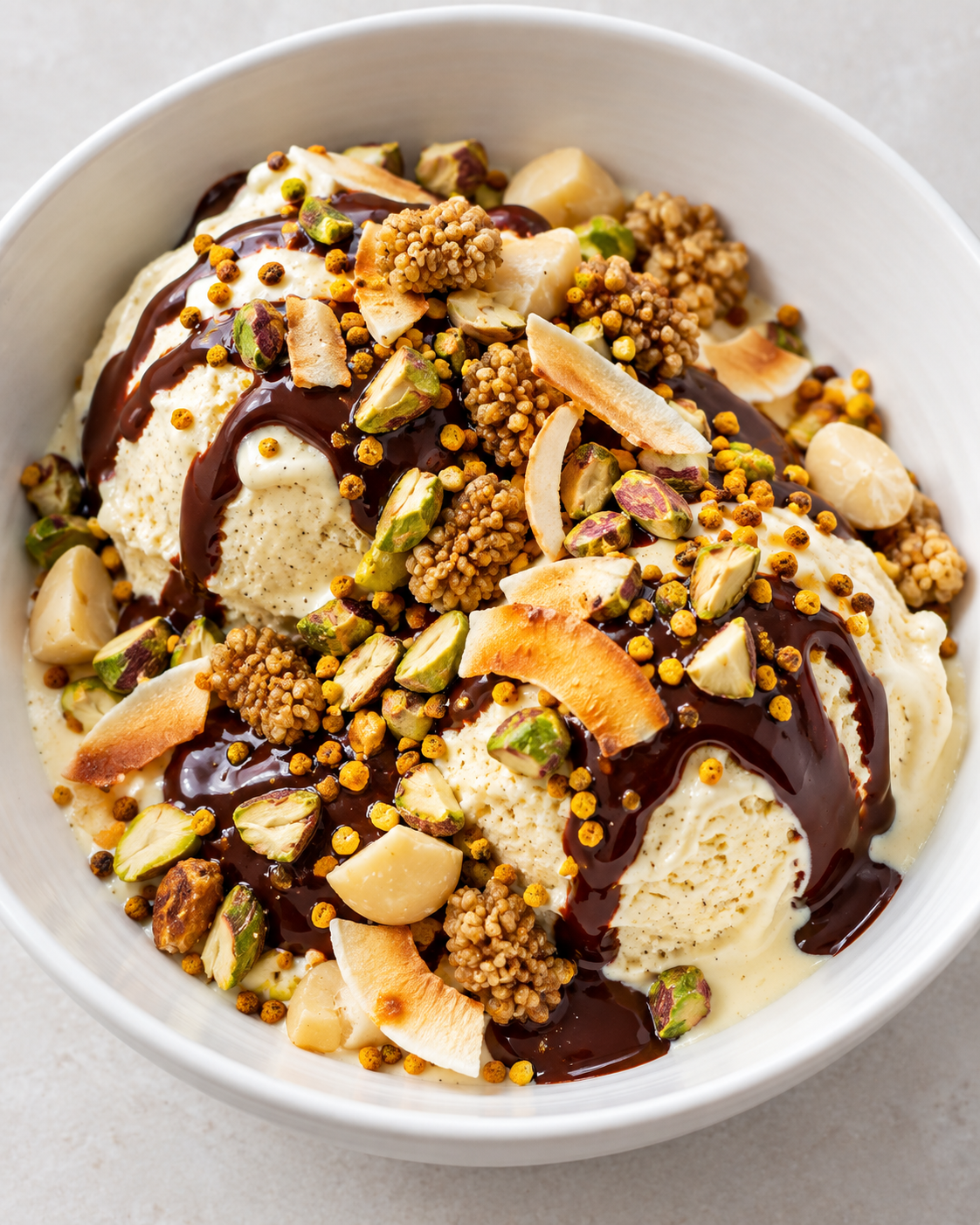
Raw cream, pasture-raised yolks, real sweeteners. Two parent methods and a small library of flavors.
Yield: about 1 quart per recipe · Active: 15-30 min · Total: 5 hours to overnight (with chilling and freezing) · Year-round (best in summer) · Cuisine: French, American, traditional foods · Best eaten: daytime
This is ice cream as a deeply nutrient-dense food: made from raw cream, pasture-raised egg yolks, and real sweeteners. It's a completely different food from commercial ice cream built on pasteurized dairy, refined sugar, gums, and synthetic stabilizers.
Before You Start
Freeze your ice cream maker's bowl for at least 24 hours. A half-frozen bowl gives you soup.
Make sure your base is fridge-cold before it goes into the machine.
No ice cream maker? Pour the base into a shallow glass dish, freeze it, and stir hard with a fork every 30 minutes for about 3 hours. It's a little icier, but still delicious.
Parent Method 1 — Raw Cold Base
The simplest version. No cooking, no tempering, and maximum preservation of raw cream's enzymes and live cultures. An honest note: because nothing here is cooked, use the freshest pasture-raised eggs and raw cream from a dairy you trust. If you're pregnant or serving little ones, reach for the French custard base, where the yolks are cooked.
Ingredients
3 cups raw, grass-fed heavy cream (not ultra-pasteurized)
4 large pasture-raised egg yolks
½ cup raw honey or pure maple syrup
2 tsp pure vanilla extract (or seeds of 1 vanilla bean)
Pinch of sea salt
Method
Whisk the egg yolks and honey (or maple syrup) together until smooth and pale. Raw honey stiffens in cold cream, so blending it into the yolks first keeps it from clumping.
Whisk in the cream, vanilla, and salt until completely smooth.
Pour into an ice cream maker and churn according to the manufacturer's instructions, usually 20–30 minutes.
Transfer to a glass container and freeze at least 4 hours for a scoopable texture.
Let sit at room temperature 5–10 minutes before scooping.
Parent Method 2 — French Custard (Crème Anglaise)
The silkier, richer base. Only 1 cup of the cream is cooked into a custard with the yolks; the rest gets stirred in cold. Most of your cream stays raw, and you still get the silky texture of true French ice cream.
Ingredients
3 cups raw, grass-fed heavy cream (or 2 cups cream + 1 cup whole raw milk), divided
4 large pasture-raised egg yolks
½ cup raw honey or pure maple syrup
2 tsp pure vanilla extract (or seeds of 1 vanilla bean)
Pinch of sea salt
Method
Set up. Pour 2 cups of the cold cream into a large glass bowl and set a fine-mesh sieve over it. Keep it in the fridge until you need it.
Warm. Gently warm the remaining 1 cup of cream (or the 1 cup of milk, if using) over very low heat to 110°F, just warm to the touch.
Whisk the yolks. In a separate bowl, whisk the egg yolks until pale.
Temper. Slowly drizzle the warm cream into the yolks while whisking constantly. Going slowly keeps the yolks from scrambling.
Cook. Pour it back into the saucepan and cook over low heat, stirring constantly with a silicone spatula, 8–10 minutes, until the custard coats the back of a spoon. Run your finger across it; if the trail holds, it's ready (about 170°F on a thermometer). Don't let it boil.
Strain into the cold cream. Pour the hot custard through the sieve into the bowl of cold cream and whisk. The cold cream cools it down fast and stays raw.
Sweeten. Whisk in the honey, vanilla, and salt. Adding the honey once everything is cool keeps its enzymes intact.
Chill. Refrigerate at least 4 hours, ideally overnight, until completely cold.
Churn in an ice cream maker according to the manufacturer's instructions, 20–30 minutes, until it looks like soft-serve.
Freeze in a glass container 4+ hours until firm.
Mix-Ins
Make these ahead and keep them in the freezer, ready to fold into any batch.
Raw Cookie Dough Chunks
Makes about 1½ cups, enough for two batches of ice cream (or one very generous one).
1 cup raw or sprouted cashews
½ cup raw or sprouted almonds
1 cup Medjool dates, pitted (about 8-10)
1 tsp pure vanilla extract
¼ tsp Baja Gold sea salt
¼ cup raw cacao nibs
If your dates are dry or firm, soak them in warm water for 5-10 minutes and drain well.
Pulse the cashews and almonds in a food processor into a fine, sandy crumb. Stop before it turns into nut butter.
Add the dates, vanilla, and salt and pulse until the mixture clumps into a soft, sticky dough.
Fold in the cacao nibs by hand.
Pinch the dough into small pieces (about ½ inch) and freeze them on a parchment-lined plate for 30 minutes so they hold their shape when folded in. Keep them small, since they firm up in the freezer.
Any extra keeps in the fridge for a week, and it's delicious straight off the spoon.
Raw Brownie Dough Crumbles
Makes about 1½ cups.
1½ cups raw or sprouted walnuts (or pecans)
1 cup Medjool dates, pitted (about 8-10)
⅓ cup raw cacao powder
¼ tsp Baja Gold sea salt
Soak the dates if they're dry, then drain well.
Pulse the walnuts into a fine crumb using short pulses. Walnuts are oily and turn to butter quickly.
Add the cacao powder and salt and pulse to combine.
Add the dates and pulse until the mixture looks like moist, fudgy crumbs that stick together when you pinch them.
Crumble into small clusters on a parchment-lined plate and freeze 20-30 minutes.
These are also wonderful scattered over any scoop.
Chocolate Cookie Crumbles
Makes about 2 cups. Fudgy-chewy chocolate cookie bits for Cookies & Cream.
1 cup Medjool dates, pitted (about 8-10)
¼ cup hot water
4 tbsp grass-fed butter, melted
1 pasture-raised egg
½ cup raw cacao powder (or cocoa powder)
2 tbsp honey
1 tsp pure vanilla extract
¼ tsp Baja Gold sea salt
Preheat the oven to 325°F and line a sheet pan with parchment.
Blend the dates and hot water in a food processor into a smooth paste, 1-2 minutes, scraping down the sides.
Add the melted butter, egg, honey, vanilla, and salt and blend until glossy.
Add the cacao powder and pulse just until combined. The batter will be thick.
Spread it into a thin layer (about ¼ inch) on the sheet pan and bake 15-20 minutes, until the top looks dry and set and the edges are firm.
Cool completely, chop into ½-inch pieces, and freeze 30 minutes before folding in. They stay soft and chewy in the ice cream, just like the cookie pieces in classic cookies & cream.
Snickerdoodle Crumbles
Full post with tips: Snickerdoodle Cookies
Makes about 24 cookies. You'll need about 1 cup crumbled for a batch of ice cream, which leaves plenty for the cookie jar.
3 cups blanched almond flour (or 2¾ cups for slightly chewier)
½ tsp sea salt
½ tsp baking soda
¼ tsp ground Ceylon cinnamon
½ cup coconut oil, melted (or grass-fed butter)
½ cup pure maple syrup
1 tbsp pure vanilla extract
Topping
¼ cup date sugar (or coconut sugar)
2 tsp ground Ceylon cinnamon
Preheat the oven to 350°F with the rack in the middle.
Stir together the dry ingredients in a medium bowl. Whisk together all the wet ingredients in a separate bowl and stir them into the dry.
Place 1–2 inch balls of dough on parchment-lined baking pans and lightly press them down.
Sprinkle with the date sugar and cinnamon mixture.
Bake 8–10 minutes, until just golden brown around the edges. For cookies you'll crumble into ice cream, give them a minute or two longer so they stay crisp.
Cool on a rack, then crumble into ½-inch pieces.
Flavor Library
Organized roughly by season, moving from spring and summer fruit into autumn, then the year-round classics.
Vanilla with Macerated Seasonal Berries
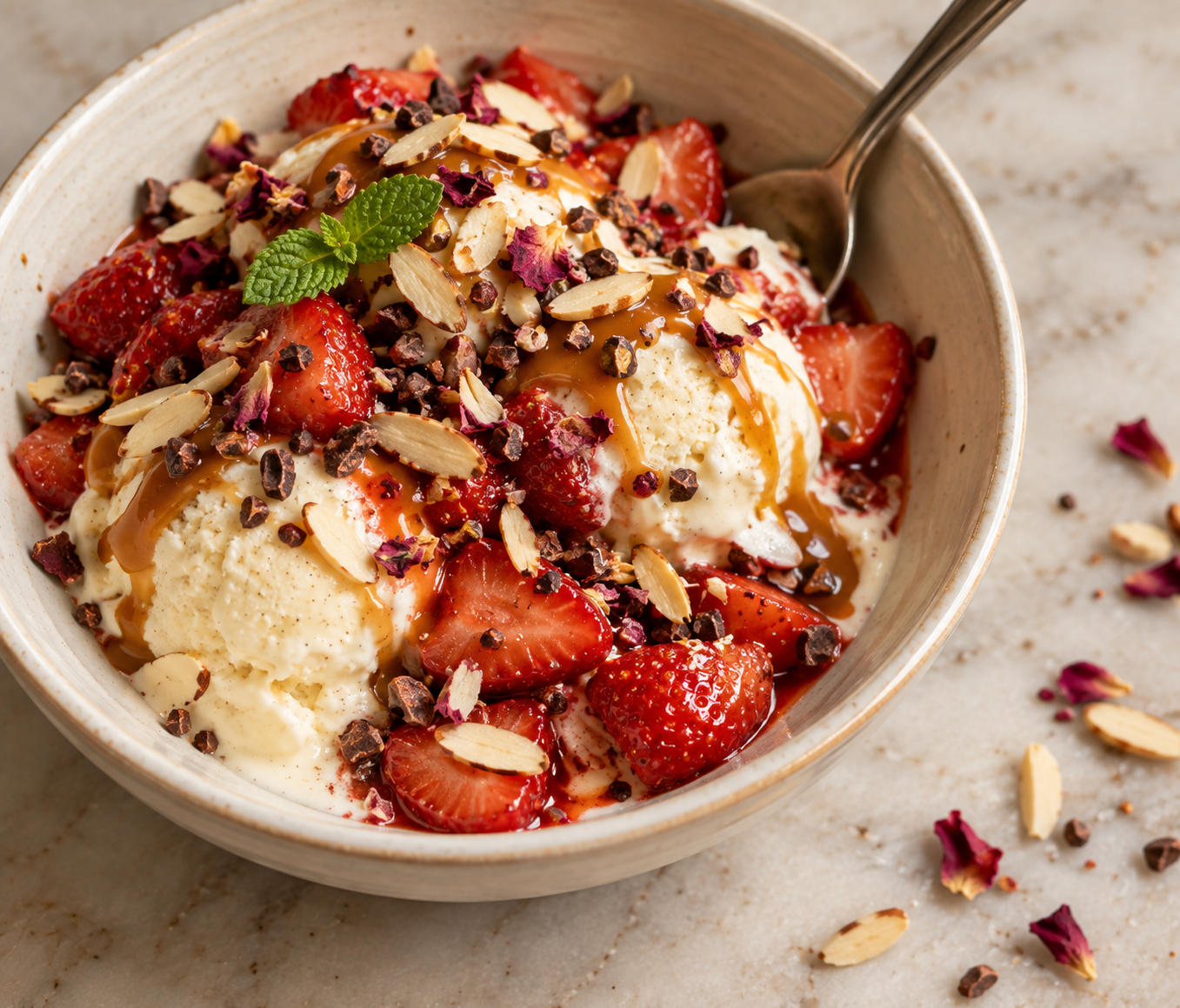
Spring through summer. Make either parent base as a simple vanilla. While it churns, toss 2 cups of whatever berries are in season (hulled and sliced strawberries, raspberries, blueberries, mulberries, or a mix) with 1 tbsp raw honey or maple syrup, 1 tbsp fresh lemon juice, and the zest of 1 lemon. Strawberries also love a splash of aged balsamic. Let the berries sit 15–20 minutes, lightly crushing a few with a fork, until they're swimming in their own syrup. Spoon them, syrup and all, over scoops of vanilla.
Make it à la mode: warm one of my Grain-Free Collagen Brownies for a few minutes, then top it with a scoop of vanilla, a spoonful of macerated berries, and a drizzle of raw chocolate sauce (below).
Mulberry
Late spring · early summer. The forgotten berry of the late-spring tree: sweet, slightly tannic, deep purple.
Ingredients — 2 cups raw, grass-fed heavy cream · 1 cup whole raw milk (or additional cream) · 4 large pasture-raised egg yolks · ½ cup raw honey or pure maple syrup · 1½ cups fresh mulberries (or frozen) · 1 tbsp fresh lemon juice · 1 tsp pure vanilla extract · pinch of sea salt. Garnish — fresh mulberries, dried mulberries, bee pollen, lightly toasted sliced almonds, fresh mint leaves.
Method: Combine the mulberries with lemon juice in a small saucepan over medium-low, and cook 5–7 minutes until the berries break down into a loose compote; cool completely. Whisk the egg yolks and honey until pale and smooth; whisk in the cream, milk, vanilla, and salt. Fold in the cooled compote. Churn in an ice cream maker 20–30 minutes, then freeze 2+ hours for a scoopable texture.
To finish, scatter each scoop with dried mulberries and a sprinkle of bee pollen. Dried white mulberries are crisp and honey-sweet, almost like tiny cookies, and bee pollen adds a floral crunch. Add both right before serving, since dried mulberries soften if they sit on the ice cream and bee pollen is crunchiest straight from the jar. An honest note: if you're new to bee pollen or have pollen allergies, start with just a few granules.
Mulberries are underrated in the modern American kitchen but have been a continuous food in Chinese, Persian, Turkish, and Mediterranean traditions for thousands of years. They carry resveratrol, anthocyanins, substantial vitamin C, and a meaningful dose of iron, which is unusual for a berry. If you have access to a mulberry tree, this is one of the best ways to honor the harvest.
Honey Lavender
Early summer. Floral, soft, and lovely in the late-afternoon sun. Steep 1 tbsp dried culinary lavender in the cream, either overnight in the fridge (keeps the cream fully raw) or in the warm cream for Parent Method 2 for 20 minutes, then strain. Don't push the steep longer, since lavender turns soapy fast. Make either base with raw honey as the sweetener; a wildflower or lavender honey is especially nice. Finish each scoop with a few lavender buds, a thread of raw honey, and a pinch of bee pollen.
Raspberry Rose Pistachio
Summer. Make either parent base, or the Pistachio base for a deeper version, and whisk in 1 tsp rose water (rose water strength varies, so taste and add up to 1 more tsp). Churn, adding ½ cup chopped raw pistachios in the last 5 minutes. As you transfer it to the freezer container, spoon in ½ cup Raspberry Sauce (see Sauces) or 1 cup fresh raspberries lightly crushed with a fork, in layers, and swirl once or twice with a knife. Finish with chopped pistachios and a few dried rose petals. For extra decadence, fold in chunks of Raspberry Rose White Chocolate Fudge from my Fudge Balls and Squares.
Key Lime Coconut
Peak summer. A scoop of key lime pie, minus the crust. Make either parent base, whisking the zest of 3 limes (key limes if you can find them) into the yolks and honey so the zest releases its oils into the sweetener. Just before churning, whisk in 3 tbsp fresh lime juice. It thickens the base slightly, which is exactly what you want. Churn, adding ½ cup toasted coconut chips in the last 5 minutes. Finish each scoop with more coconut chips and a little fresh zest. For a "pie crust" bite, fold in chunks of Macadamia White Chocolate Fudge or Coconut Bounty Fudge from my Fudge Balls and Squares.
Peaches and Cream
Peak summer. Dice 3 ripe peaches (about 1½ cups) and cook them in a small saucepan with 1 tbsp raw honey and 1 tbsp fresh lemon juice over medium-low for 5-7 minutes, until soft and syrupy. Cooking concentrates the flavor and keeps the fruit from freezing into icy chunks. Cool completely. Blend half the peaches into either parent base and churn. As you transfer it to the freezer container, fold in the rest of the peaches in layers. Finish with fresh peach slices and a pinch of Ceylon cinnamon.
Roasted Fig and Honey
Late summer into early autumn. Halve 8-10 fresh figs and toss them with 1 tbsp melted butter, 1 tbsp honey, and a pinch of salt (tuck in a sprig of fresh thyme if you have one). Roast cut-side up at 400°F for 15 minutes, until jammy and caramelized at the edges, then cool completely. Mash half the figs into either parent base and churn. As you transfer it to the freezer container, layer in the remaining figs, roughly chopped. Finish with a thread of raw honey, flaky sea salt, and chopped pistachios or toasted walnuts.
Pumpkin Spice with Snickerdoodle Crumbles
Autumn. Pumpkin pie in a scoop, with cinnamon-sugar cookie crumbles folded through — see full snickerdoodle cookie recipe here
Ingredients — 1½ cups raw, grass-fed heavy cream · 1 cup whole raw milk · 4 large pasture-raised egg yolks · ½ cup raw honey or pure maple syrup · ¾ cup pumpkin purée · 1½ tsp Ceylon cinnamon · ½ tsp ground ginger · ¼ tsp freshly grated nutmeg · ¼ tsp ground allspice · 1 tsp pure vanilla extract · pinch of sea salt · 1 cup Snickerdoodle Crumbles (see Mix-Ins).
Method: Whisk the egg yolks and honey until pale and smooth. Whisk in the pumpkin, spices, vanilla, and salt until smooth, then whisk in the cream and milk. Chill until fridge-cold, then churn 20–30 minutes, folding in the snickerdoodle crumbles in the last 5 minutes (save a handful for the top). Freeze 4+ hours.
For a custard version, warm the milk with the spices to 110°F and let it steep 10 minutes so the spices bloom, then follow Parent Method 2, stirring the pumpkin in with the cold cream. For the purée, roast a sugar pie pumpkin or kabocha squash and blend it smooth, or use organic canned pumpkin in a BPA-free can.
Mint Chocolate Chip
Year-round. Add ½ cup packed fresh mint leaves (lightly bruised) to the cream and let it steep in the fridge overnight, then strain and make either base. The cold steep keeps the cream fully raw and gives the brightest mint flavor. Short on time? Steep the mint in the warm cream for Parent Method 2 for 30 minutes and strain before tempering. Fold ½ cup shaved 100% dark chocolate into the base in the last few minutes of churning. For classic chocolate flecks, melt it instead and drizzle it slowly into the churning ice cream; it hardens into thin, crackly shards.
Cookie Dough
Year-round. Make either parent base as a simple vanilla. Fold ¾ cup Raw Cookie Dough Chunks (see Mix-Ins) into the churned ice cream in the last 5 minutes, or layer them in as you transfer it to the freezer container.
Cookies & Cream
Year-round. Make either parent base as a simple vanilla. Fold ¾ cup Chocolate Cookie Crumbles (see Mix-Ins) into the churned ice cream in the last 5 minutes, saving a handful to scatter on top. For a no-bake version, use the Raw Brownie Dough Crumbles instead.
Fudge Chunk
Year-round. Chop 4-6 pieces of any of my Fudge Balls and Squares into ½-inch chunks and fold them into the churned ice cream in the last 5 minutes. A few favorite matches: Vanilla Cacao Fudge in vanilla, Cacao Mint Fudge in Mint Chocolate Chip, Coconut Bounty Fudge in Key Lime Coconut, and Pistachio Tahini Caramel Fudge in the Salted Tahini Caramel Pistachio below.
Pistachio
Year-round. The Sicilian-Persian tradition: nut-forward, deeply green, naturally rich.
Ingredients — 2 cups raw, grass-fed heavy cream · 1 cup whole raw milk (or additional cream) · 4 large pasture-raised egg yolks · ½ cup raw honey or pure maple syrup · ¾ cup raw shelled pistachios (preferably Sicilian Bronte or Iranian Kerman, which are bright green) · ¼ cup raw shelled pistachios, roughly chopped, for the fold-in · 1 tsp pure vanilla extract · ¼ tsp almond extract (optional; it deepens the nutty character) · pinch of sea salt. Garnish — additional chopped pistachios, a thread of raw honey, a pinch of flaky sea salt.
Method: Blend the ¾ cup pistachios in a high-speed blender with 2–3 tbsp of the cream for 2–3 minutes until completely smooth: silky, deep green, like loose nut butter. Whisk the egg yolks and honey until pale; whisk in the remaining cream, milk, pistachio paste, vanilla, optional almond extract, and salt. Churn in an ice cream maker 20–30 minutes, folding in the chopped pistachios in the last 5 minutes. Freeze 2+ hours.
Sub: for a French custard version with deeper flavor, use Parent Method 2. Blend the pistachios into the portion you warm (the milk or 1 cup of cream), then temper and cook as directed. The gentle warming brings out more of the pistachio oils and produces a silkier base.
Pistachios are among the oldest cultivated nuts on earth, with archaeological evidence placing their cultivation in Iran and the Levant at roughly 6,000 BCE. They carry lutein and zeaxanthin, plus chlorophyll (the source of that green color), meaningful magnesium, copper, vitamin B6, and a favorable monounsaturated fat profile. The Sicilian and Persian pairing of pistachios with dairy and honey is at least a thousand years old; Sicily's Bronte pistachio even carries protected DOP status.
Salted Tahini Caramel Pistachio
Make the Pistachio ice cream above. Whisk 3 tbsp tahini with 1 tbsp pure maple syrup (or raw honey) and ¼ tsp flaky sea salt until smooth and glossy, loosening it with a teaspoon of warm water if needed. As you transfer the churned ice cream to the freezer container, drizzle in the tahini caramel in layers and swirl once or twice with a knife. For extra decadence, fold in chunks of Pistachio Tahini Caramel Fudge. Finish each scoop with a pinch of flaky salt.
Ginger Pecan
Year-round. Steep 1 tbsp grated fresh ginger in the cream (overnight in the fridge, or in the warm cream for Parent Method 2 for 30 minutes), then strain, since grated ginger turns stringy once frozen. Churn either base and add ½ cup toasted, chopped pecans in the last 5 minutes.
Carob Chip
Year-round, caffeine-free: the right choice for evening eating, for children, and for anyone with a sensitive nervous system. Make either parent base and add ¼ cup chopped carob chips during the last 5 minutes of churning. Look for unsweetened carob chips, since many brands add cane sugar.
Macadamia Nut
Year-round. A Hawaiian-Australian variation built on the highest-monounsaturated nut available. Blend 1 cup raw macadamia nut butter (or 1¼ cups whole macadamias blended with 2 tbsp coconut oil until smooth) with 1½ cups raw, grass-fed cream, ⅓ cup pure maple syrup or raw honey, 1 tsp vanilla, and a pinch of salt. Chill 1–2 hours, then churn 20–30 minutes. Add ½ cup chopped roasted macadamias in the last 5 minutes. Optional: a pinch of Ceylon cinnamon or 1 tsp cold-pressed macadamia oil for deeper flavor.
Banana
Year-round, a 5-minute alternative to the parent methods. Blend 4 cups frozen ripe bananas (sliced before freezing) with 4 pasture-raised egg yolks, 2 tsp vanilla, and a pinch of salt in a high-speed blender or food processor until completely smooth and ice-cream-like. Serve immediately, or freeze 1 hour for a firmer set. Enriched version: add 2 cups raw cream, 3 tbsp raw honey, and 1 tsp Ceylon cinnamon, then churn in an ice cream maker. Top with sprouted pecans, toasted coconut, and cacao nibs.
Banana Bread: Cube 2 thick slices of my Grain-Free Banana Bread into ¾-inch pieces and toast them in a skillet with a little butter until golden and crisp at the edges. Let them cool 10 minutes, since hot chunks would melt the ice cream, then fold them into the enriched banana ice cream in the last 5 minutes of churning. Want it truly warm? Serve a butter-toasted slice of banana bread with a scoop on top and a drizzle of salted maple caramel.
Sauces
Raw Chocolate Sauce
Whisk together ¼ cup raw cacao powder, ¼ cup melted virgin coconut oil, 1–2 tbsp pure maple syrup or raw honey (maple mixes in most smoothly), a pinch of sea salt, and a splash of vanilla until glossy. Drizzle it over cold ice cream and watch: the coconut oil sets it into a thin, crackly chocolate shell within a minute. Store it in a jar at room temperature for up to 2 weeks; if it firms up, set the jar in a bowl of warm water to loosen it.
Hot Fudge Sauce
½ cup heavy cream
⅓ cup pure maple syrup
2 tbsp grass-fed butter
2 oz 100% dark chocolate, chopped (or 85%)
3 tbsp raw cacao powder
1 tsp pure vanilla extract
Pinch of sea salt
Warm the cream, maple syrup, and butter in a small saucepan over low heat until the butter melts and the cream is steaming. Don't let it boil.
Take it off the heat, add the chopped chocolate, and let it sit 1 minute.
Whisk in the cacao powder, vanilla, and salt until thick and glossy. For a thicker fudge, return it to low heat and simmer gently 2-3 minutes, whisking.
Serve warm. It keeps in the fridge up to 2 weeks; rewarm gently in a small pan or a jar set in hot water.
Salted Maple Caramel Sauce
¾ cup pure maple syrup
3 tbsp grass-fed butter
⅓ cup heavy cream, warmed
½ tsp pure vanilla extract
½ tsp flaky sea salt
Pour the maple syrup into a heavy saucepan that's bigger than you think you need, since maple foams up as it cooks. Bring it to a boil over medium heat, then simmer 6-8 minutes, until it darkens, thickens, and the bubbles turn big and glossy (about 235°F on a thermometer).
Take the pan off the heat. Whisk in the butter, then slowly pour in the warm cream while whisking. It will bubble up hard, so go slowly.
Whisk in the vanilla and salt. The caramel thickens as it cools.
Keeps in the fridge up to 2 weeks; rewarm gently before serving.
No-cook date caramel: Blend 1 cup pitted Medjool dates, ½ cup warm water (or raw milk), 1 tbsp tahini or almond butter, 1 tsp vanilla, and ¼ tsp sea salt until silky. It's thick, raw, and lovely swirled into Salted Tahini Caramel Pistachio.
Carob Sauce (caffeine-free)
Combine 1 cup grass-fed heavy cream (or full-fat coconut milk), ½ cup grass-fed butter, ⅔ cup carob powder, ⅓ cup pure maple syrup, 1 tbsp vanilla, and a pinch of salt in a double boiler. Cook gently, whisking constantly, until the butter melts and the sauce is completely smooth (carob powder likes to clump, so keep whisking). Serve warm, or refrigerate up to 2 weeks and rewarm gently.
Raspberry Sauce
Process 12 oz frozen raspberries (partially thawed) with ½ cup pure maple syrup in a food processor until smooth. Gradually add ¼–½ cup filtered water until it reaches your desired consistency. Strain through a fine-mesh sieve for a seedless sauce, though raspberry seeds concentrate ellagic acid, so straining is a small trade-off. Stir in 1 tbsp fresh lemon juice if desired. Refrigerate up to 1 week, or freeze up to 3 months.
Toppings & Finishes
Set out a few of these and let everyone build their own bowl.
Sprouted nuts: pecans, walnuts, or almonds, roughly chopped.
Macadamia nuts: toasted in a dry skillet until golden, then chopped.
Toasted coconut chips or shreds: toast in a dry skillet over medium-low heat for 2–3 minutes, stirring constantly, until golden. They go from golden to burnt fast.
Any of the sauces above: raw chocolate, hot fudge, salted maple caramel, carob, or raspberry.
Any of the Mix-Ins: cookie dough chunks, brownie dough crumbles, chocolate cookie crumbles, or snickerdoodle crumbles.
Chopped Fudge Balls and Squares.
Dried mulberries, for a honey-sweet crunch.
Dried rose petals or lavender buds, for a floral finish.
Cacao nibs, for a bitter, crunchy contrast.
A thread of raw honey and a pinch of flaky sea salt.
Bee pollen, for a floral crunch.
Warm roasted stone fruit or figs: halve peaches, nectarines, or figs, roast at 400°F with a little butter and honey for 10–15 minutes, and spoon them over warm.
A drizzle of tahini or almond butter.
A dusting of Ceylon cinnamon.
Crumbled Grain-Free Collagen Brownies.
Affogato-style: pour a hot shot of espresso over a scoop of vanilla (an afternoon treat, not an evening one).
Nourishment Notes
Raw, grass-fed heavy cream is the heart of every recipe in this collection. From cows on green pasture, it carries the full complement of fat-soluble vitamins (A, D, E, and K2, specifically MK-4, which directs calcium into bone and teeth and away from arteries), butyrate (the short-chain fatty acid that feeds gut-lining cells), conjugated linoleic acid, and, crucially, the intact enzymes (lipase, lactase, phosphatase) and beneficial bacterial cultures that pasteurization destroys. The cold-base method preserves these enzymes completely; the French custard method cooks only 1 cup of the cream and stirs the rest in cold, so most of it stays raw. Either way, it's a huge step up over commercial ice cream made from boiled or ultra-pasteurized cream. Pasture-raised egg yolks layer in additional fat-soluble vitamins, choline (crucial for liver function and brain health), lecithin (the natural emulsifier that gives ice cream its smooth texture), lutein, and zeaxanthin; the last two concentrate in the macula and support the visual system's role in circadian entrainment.
The sweeteners and flavor agents are doing real work, not just flavor work. Raw honey contributes antimicrobial enzymes (glucose oxidase, invertase), pollen signatures from the local botanical environment, propolis traces, and a glycemic curve that is much gentler than refined sugar when delivered in a fat-and-protein matrix. Adding it cold, in both parent methods, preserves what would otherwise be denatured. Pure maple syrup contributes manganese, zinc, and the polyphenols developed during the boiling-down process. Each fruit variation brings its own profile: strawberries deliver vitamin C in a quantity that exceeds oranges by weight, plus anthocyanins and ellagic acid; raspberries carry one of the highest polyphenol profiles of any fruit, with ellagitannins concentrated in the seeds; blueberries are dense in anthocyanins; mulberries contribute resveratrol and unusual iron content, and dried mulberries concentrate that iron along with fiber. Peaches bring beta-carotene, vitamin C, and potassium; figs carry calcium, potassium, fiber, and polyphenols; rose petals add gentle polyphenols; and lavender brings linalool, traditionally valued for calm. Pumpkin brings beta-carotene, potassium, and fiber, and its warming spices carry their own gifts: Ceylon cinnamon for blood-sugar support, ginger's gingerols, and the aromatic oils of nutmeg and allspice. Bee pollen is traditionally prized for its protein, B vitamins, and flavonoids. Each nut variation has its own logic: pistachios deliver lutein, zeaxanthin, and magnesium; macadamias have the lowest polyunsaturated fat content of any commonly eaten nut: predominantly stable monounsaturated fat (the same profile as olive oil), with palmitoleic acid associated with metabolic flexibility. From a mitochondrial standpoint this matters: PUFA-rich foods oxidize and accumulate in cellular membranes, where they alter membrane fluidity and electron transport efficiency. Macadamias avoid that load. The raw doughs bring their own nourishment: Medjool dates carry potassium, magnesium, and fiber-bound sweetness; cashews add magnesium, copper, and zinc; almonds bring vitamin E; walnuts contribute ALA omega-3s and polyphenols; and cacao nibs add magnesium and crunch. Tahini brings sesame lignans and calcium, and lime and lemon zest carry d-limonene, which supports Phase 2 liver detoxification. Carob is the powdered pod of the Mediterranean Ceratonia siliqua tree, a traditional food across Egyptian, Greek, and Roman kitchens, naturally caffeine-free, sweet, and containing pinitol (studied for blood-sugar-modulating effects) along with calcium and substantial fiber. Raw cacao brings magnesium, iron, and polyphenols, along with theobromine, its gentle natural stimulant, so the chocolate sauces belong to the afternoon scoop.
As a circadian food, ice cream lands cleanly in the afternoon and early evening: the natural sugars metabolize most gracefully in daylight, when blood-sugar handling is most efficient and the sweetness pairs with peak daytime light exposure. The fat content of raw cream slows sugar absorption considerably, producing a more graceful glycemic curve than any industrial counterpart. Late-night ice cream pushes the body's cooling and melatonin curve back; afternoon ice cream sits cleanly within the body's active digestive window. Carob is the exception: caffeine-free and theobromine-free, it is the right choice for evening eating, for children, and for anyone with a sensitive nervous system. As a seasonal practice, ice cream belongs to summer. A small scoop of nutrient-dense cream is one of the most satisfying ways to cool down at peak heat, and the warm months are when raw dairy from pastured cows is at its most nutrient-dense, with green grass producing the year's highest concentrations of K2, beta-carotene, and CLA.
Storage: Homemade ice cream keeps in the freezer up to 2 weeks. The limited shelf life is one of the markers of a real dessert built on whole foods rather than industrial stabilizers; commercial ice cream lasts for months because of the gums and emulsifiers it contains. Let sit at room temperature 5–10 minutes before scooping for the cleanest texture.
— Anna aka Food Marshall